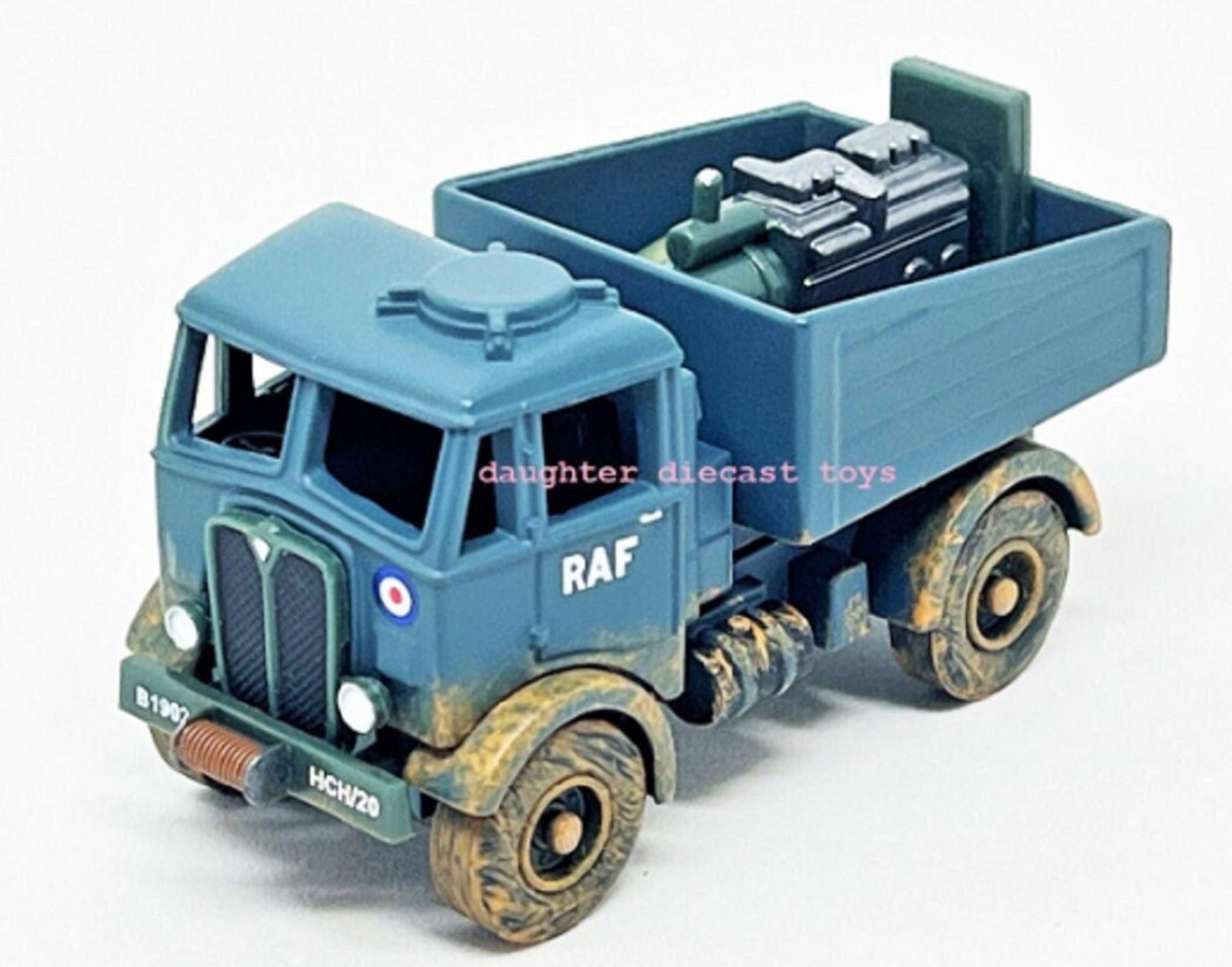
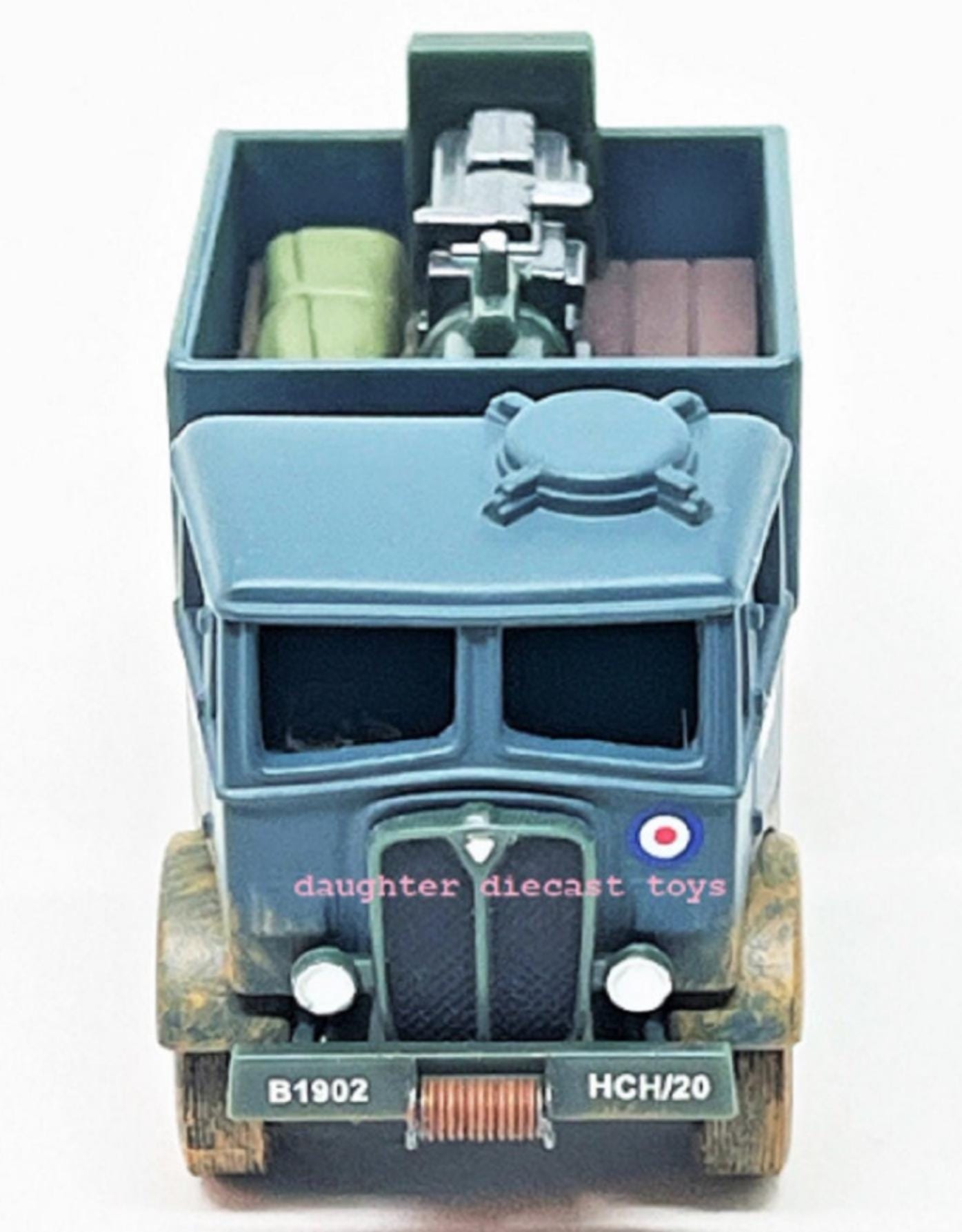
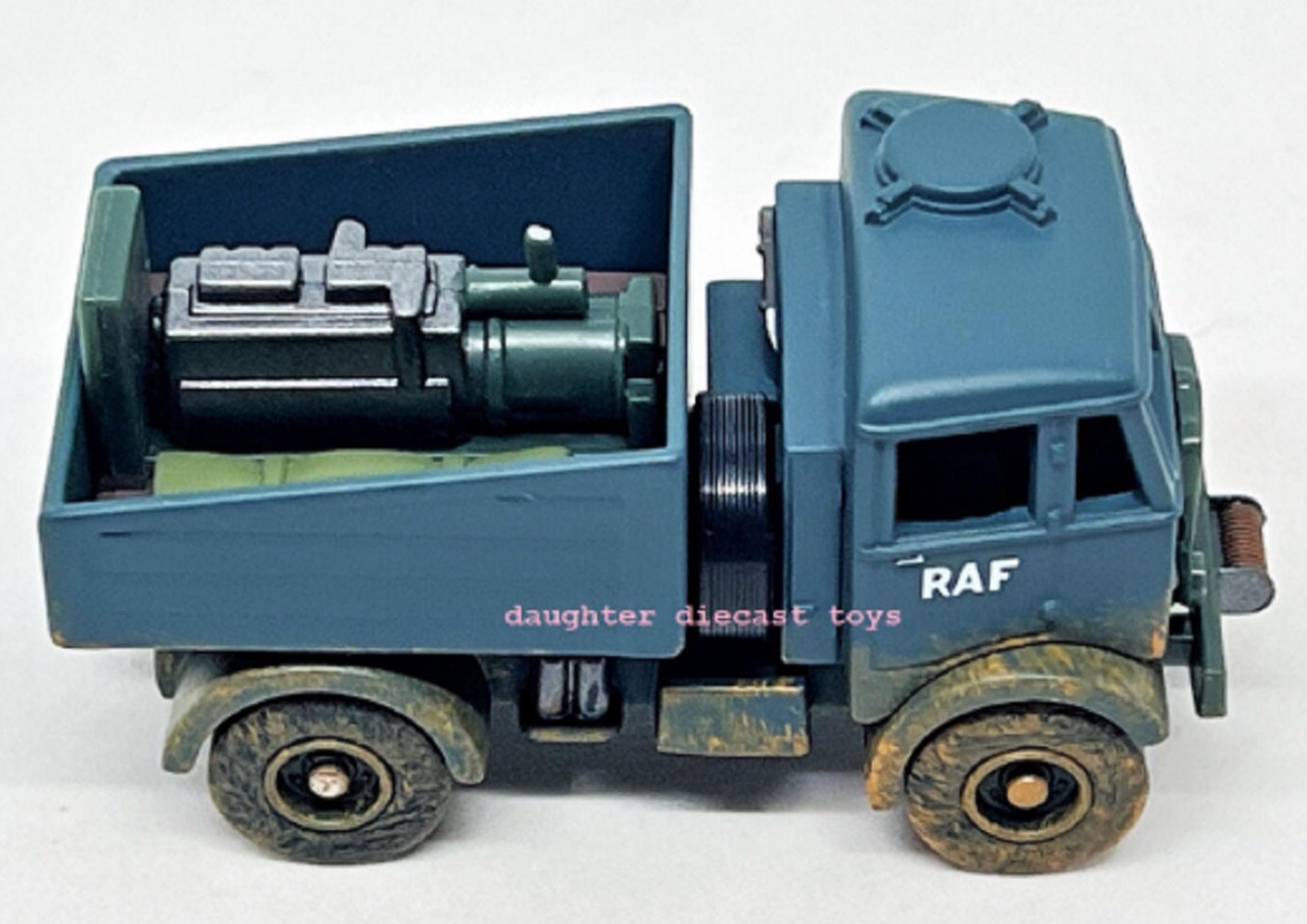
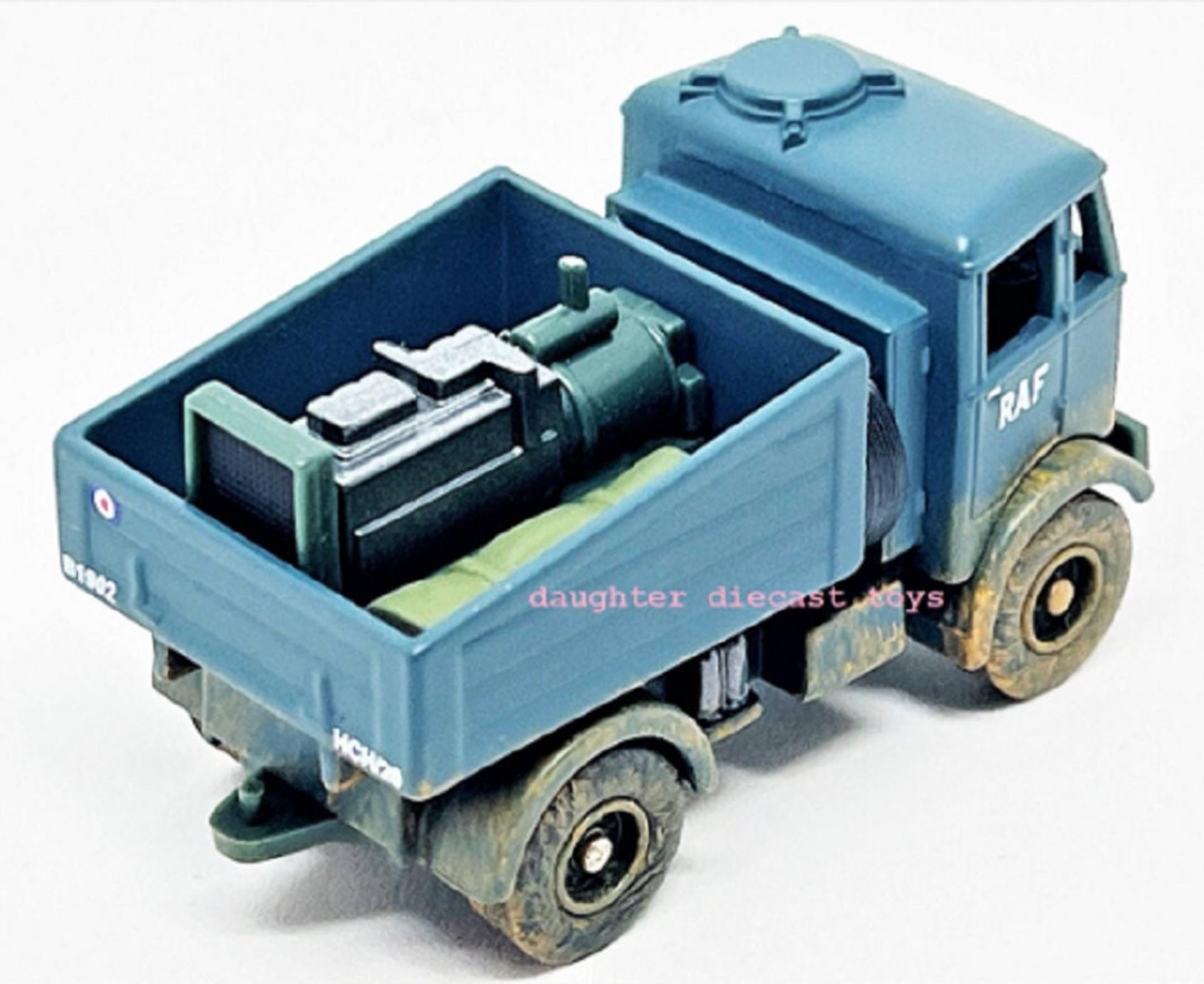
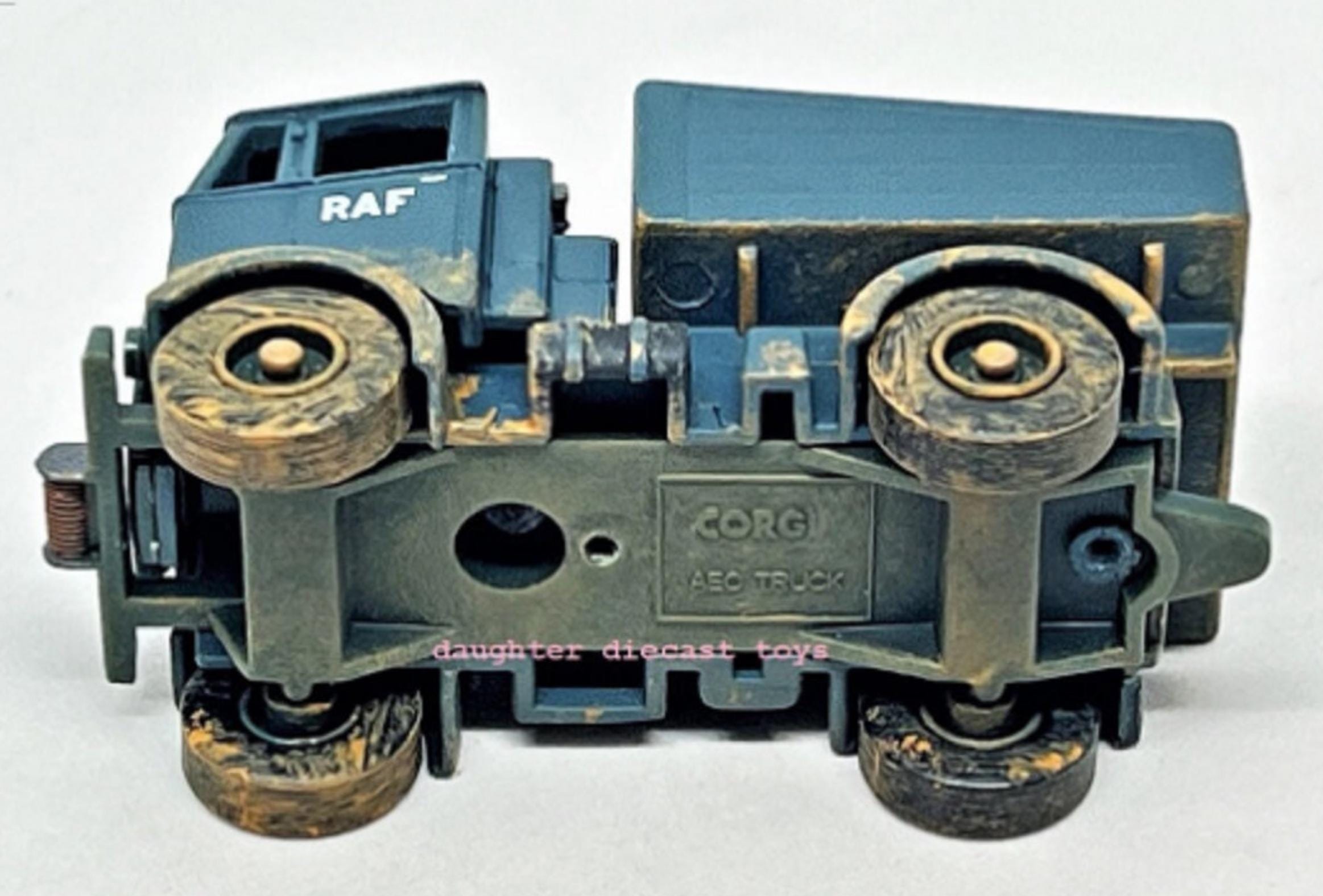

W.W.I.I RAF BALLISTICS UNIT Truck - Intricate Diecast Metal-Pristine Condition-Perfect Gift for Adult Collectors & Military History Buffs!
$ 39.99

Awesome! WWII BRITISH AEC MATADOR AIRFIELD BALLISTICS UNIT TRUCK. Highly sought
after, Intricately-detailed Diecast Metal Replica/Adult Collectors Model-Made by Corgi. Measures 2 5/8"L x 1 1/4"W x 1 1/2"H. Pristine condition model-has never been displayed until today for the photos in this listing (see all 5 using arrows on sides of the listing photo). Sold loose-comes in collector bag. Perfect gift for vintage toy/tank collectors and Military history buffs! 100% happiness guaranteed. We ship fast & safe worldwide everyday! Read truck bio below....Note: My dad owned a Diecast toy store for 30 years. I inherited the store inventory when he passed away several years ago. I am (just now) able to bring myself to begin selling his cars-so they can be shared with the world. All pristine and mint condition vintage models will (eventually) be listed here on ETSY. All the inventory is NEW (vintage) merchandise-which was intended for retail sale. Please know-our diecast toys have NEVER been "played-with” we do not sell used, or damaged toys.
•
•
•FOR A LIMITED TIME
•
•
•Purchases totaling $35 and above qualify for FREE shipping to USA! Add more items to your Etsy shopping cart to save $$$.Matador BIO:The AEC Matador was a heavy 4×4 truck and medium artillery tractor built by the Associated Equipment Company for British and Commonwealth forces during World War II. AEC had already built a 4×2 lorry, also known as the Matador (all AEC lorries received 'M' names). DescriptionThe Matador was distinctive with its flat fronted cab with gently curved roof, wheels at the corners and a flat load carrying area covered by a canvas or tarpaulin tilt. As an artillery tractor, rather than a cargo vehicle, the wooden sides were fixed in place without folding down, but did have a narrow crew door on each side.[i] Two transverse bench seats were provided for the gun crew, accessed through the side doors, at the 1st side bay on the left and the 2nd on the right.The cab was framed in ash and clad in steel. It was equipped with a winch (7-ton load in its case) like all artillery tractors. The O853 provided the basis for the 'Dorchester' armoured command vehicle.AEC also produced a larger 6×6 vehicle, model O854, based on components from both the AEC Marshal 6x4 and the 4×4 Matador. These were produced in both petrol and diesel and were also referred to as Matadors.[citation needed] The O854 provided the basis for the O857.A small number of Petrol engined 4x4 Matadors were also built. These were given the model number 853.[citation needed] Service Preserved Matador artillery tractor, Beltring 2011About 9,000 Matadors were built, some going to the Royal Air Force (RAF).For the British Army, it fulfilled a role between field artillery tractors (FATs) such as the Morris C8 Quad, which towed smaller guns such as the 25-pounder gun-howitzer, and the Scammell Pioneer, used for towing the 7.2-inch howitzer. It was commonly used to tow the 5.5-inch medium gun and the QF 3.7-inch AA gun. The Matador was found to be a generally useful vehicle and was adapted for other roles, including carrying a 25-pounder gun.[1][2] AEC 854 refueling an Avro Lancaster, 1944The RAF used Matadors in the flat bed form for load carrying. The 6-wheeler Matador Type A with refuelling pumps and equipment by Zwicky Ltd, was used as a refuelling tanker, capable of carrying 2,500 Imperial gallons of fuel and also for towing ashore Short Sunderland flying boats at their stations.Six armoured flamethrowers, the 'Heavy Cockatrice' on the 6×6 chassis, were used by the RAF for airfield defence.In 1942/43, for the North African campaign, some Matadors mounted the 6-pounder anti-tank gun to give the AEC Mk1 Gun Carrier "Deacon".The Canadian Army used the Matador during World War II.Post-warBus recovery truck, converted and civil registered in 1970Post-war, the Matador was found in civilian use as a recovery truck, a showman's vehicle, and general contractor use. It was also useful for forestry work because of its good off-road performance. When used as a bus fleet recovery truck, many were fitted with lifting jibs for suspended towing and re-bodied with semi-enclosed bodies, often based on bodywork from scrapped buses.
after, Intricately-detailed Diecast Metal Replica/Adult Collectors Model-Made by Corgi. Measures 2 5/8"L x 1 1/4"W x 1 1/2"H. Pristine condition model-has never been displayed until today for the photos in this listing (see all 5 using arrows on sides of the listing photo). Sold loose-comes in collector bag. Perfect gift for vintage toy/tank collectors and Military history buffs! 100% happiness guaranteed. We ship fast & safe worldwide everyday! Read truck bio below....Note: My dad owned a Diecast toy store for 30 years. I inherited the store inventory when he passed away several years ago. I am (just now) able to bring myself to begin selling his cars-so they can be shared with the world. All pristine and mint condition vintage models will (eventually) be listed here on ETSY. All the inventory is NEW (vintage) merchandise-which was intended for retail sale. Please know-our diecast toys have NEVER been "played-with” we do not sell used, or damaged toys.
•
•
•FOR A LIMITED TIME
•
•
•Purchases totaling $35 and above qualify for FREE shipping to USA! Add more items to your Etsy shopping cart to save $$$.Matador BIO:The AEC Matador was a heavy 4×4 truck and medium artillery tractor built by the Associated Equipment Company for British and Commonwealth forces during World War II. AEC had already built a 4×2 lorry, also known as the Matador (all AEC lorries received 'M' names). DescriptionThe Matador was distinctive with its flat fronted cab with gently curved roof, wheels at the corners and a flat load carrying area covered by a canvas or tarpaulin tilt. As an artillery tractor, rather than a cargo vehicle, the wooden sides were fixed in place without folding down, but did have a narrow crew door on each side.[i] Two transverse bench seats were provided for the gun crew, accessed through the side doors, at the 1st side bay on the left and the 2nd on the right.The cab was framed in ash and clad in steel. It was equipped with a winch (7-ton load in its case) like all artillery tractors. The O853 provided the basis for the 'Dorchester' armoured command vehicle.AEC also produced a larger 6×6 vehicle, model O854, based on components from both the AEC Marshal 6x4 and the 4×4 Matador. These were produced in both petrol and diesel and were also referred to as Matadors.[citation needed] The O854 provided the basis for the O857.A small number of Petrol engined 4x4 Matadors were also built. These were given the model number 853.[citation needed] Service Preserved Matador artillery tractor, Beltring 2011About 9,000 Matadors were built, some going to the Royal Air Force (RAF).For the British Army, it fulfilled a role between field artillery tractors (FATs) such as the Morris C8 Quad, which towed smaller guns such as the 25-pounder gun-howitzer, and the Scammell Pioneer, used for towing the 7.2-inch howitzer. It was commonly used to tow the 5.5-inch medium gun and the QF 3.7-inch AA gun. The Matador was found to be a generally useful vehicle and was adapted for other roles, including carrying a 25-pounder gun.[1][2] AEC 854 refueling an Avro Lancaster, 1944The RAF used Matadors in the flat bed form for load carrying. The 6-wheeler Matador Type A with refuelling pumps and equipment by Zwicky Ltd, was used as a refuelling tanker, capable of carrying 2,500 Imperial gallons of fuel and also for towing ashore Short Sunderland flying boats at their stations.Six armoured flamethrowers, the 'Heavy Cockatrice' on the 6×6 chassis, were used by the RAF for airfield defence.In 1942/43, for the North African campaign, some Matadors mounted the 6-pounder anti-tank gun to give the AEC Mk1 Gun Carrier "Deacon".The Canadian Army used the Matador during World War II.Post-warBus recovery truck, converted and civil registered in 1970Post-war, the Matador was found in civilian use as a recovery truck, a showman's vehicle, and general contractor use. It was also useful for forestry work because of its good off-road performance. When used as a bus fleet recovery truck, many were fitted with lifting jibs for suspended towing and re-bodied with semi-enclosed bodies, often based on bodywork from scrapped buses.
Other Products