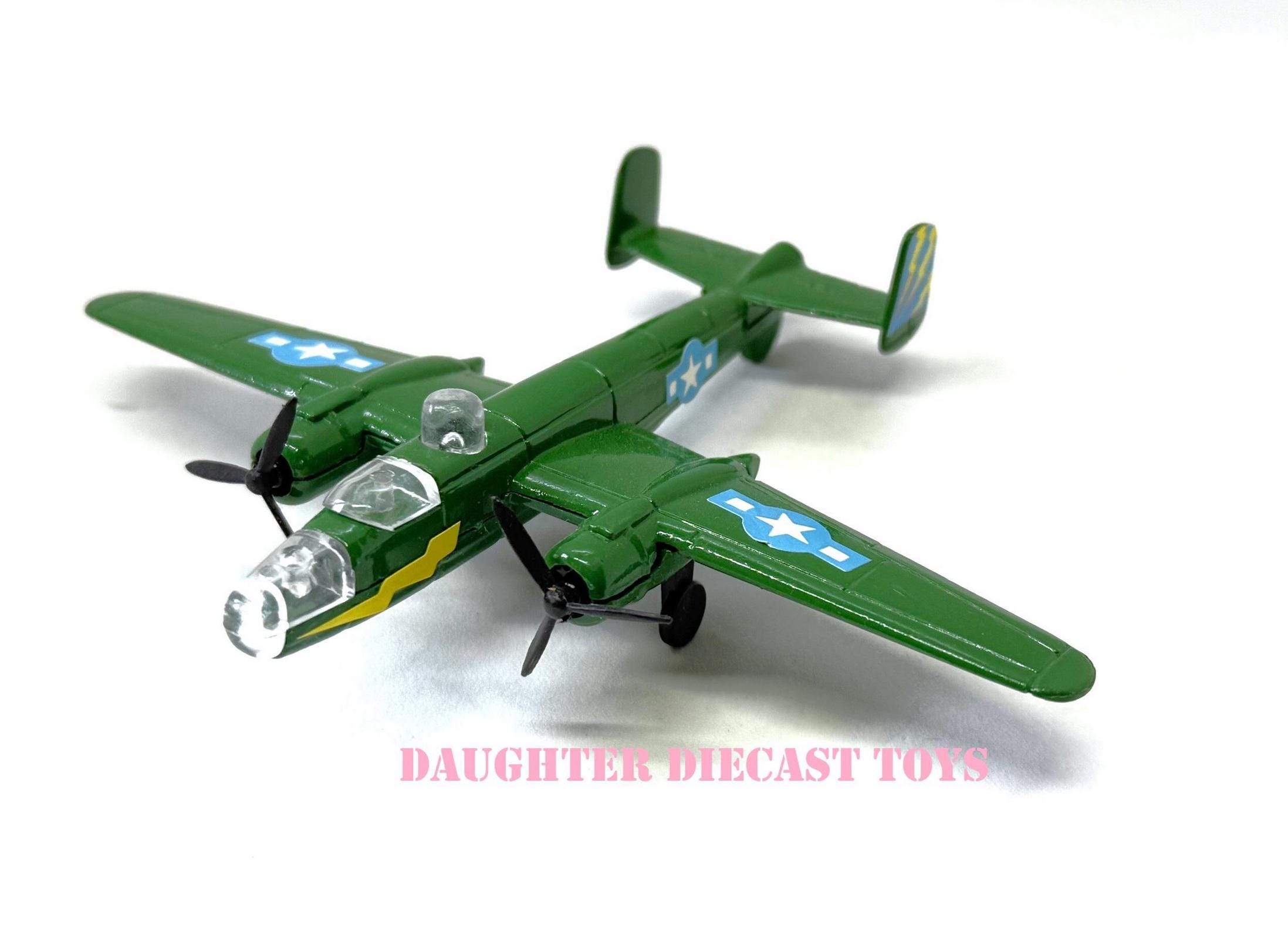
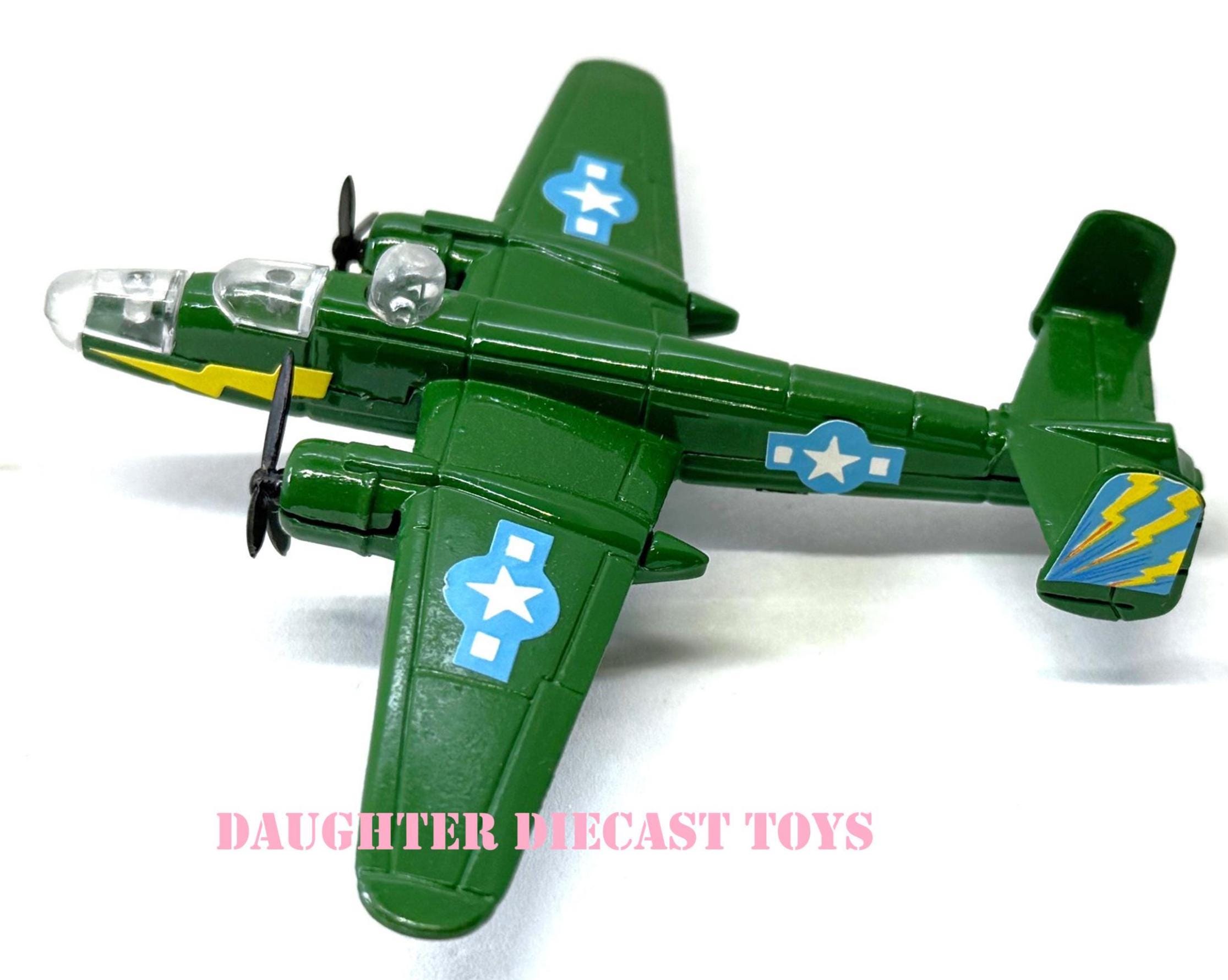
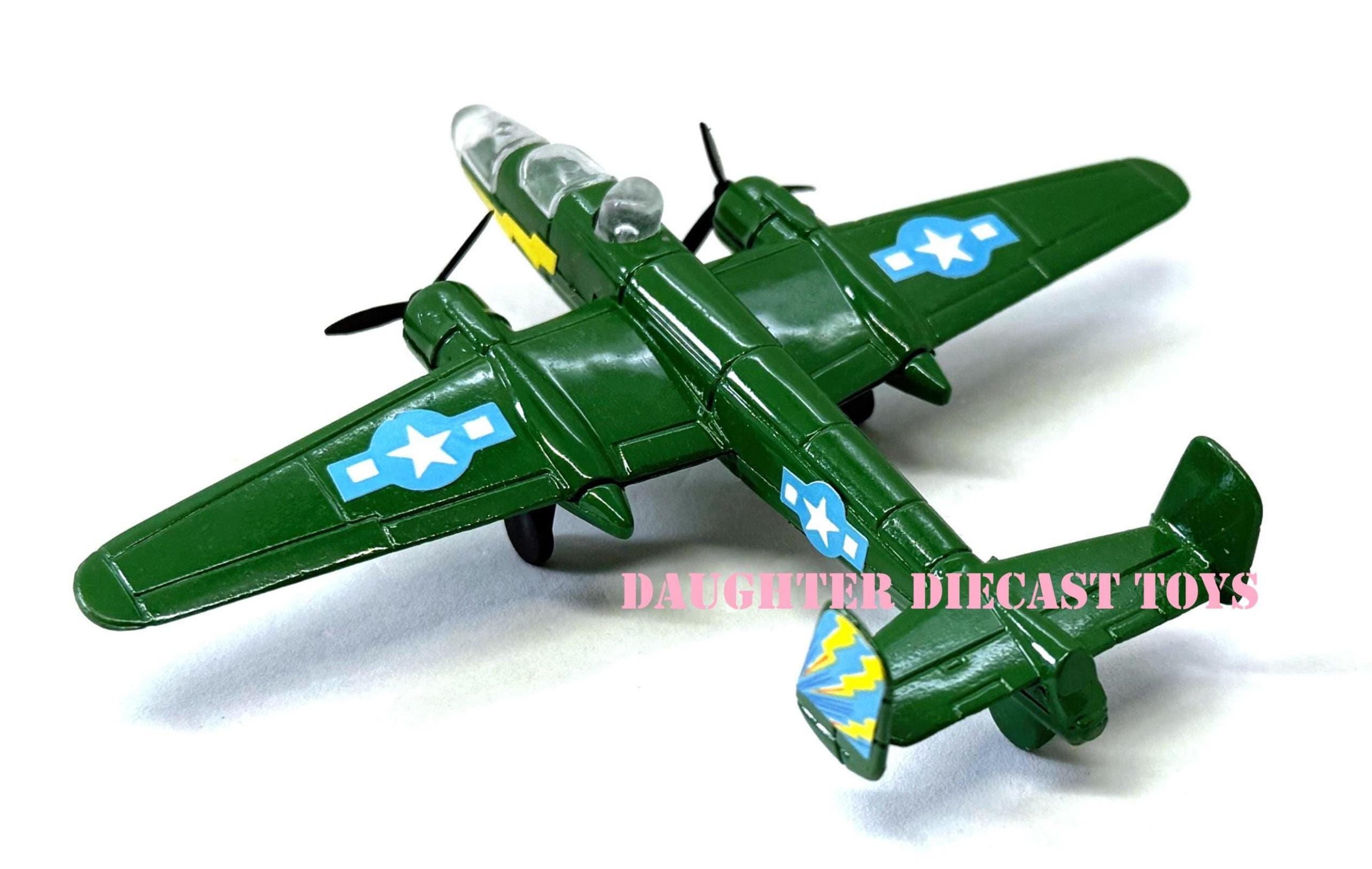
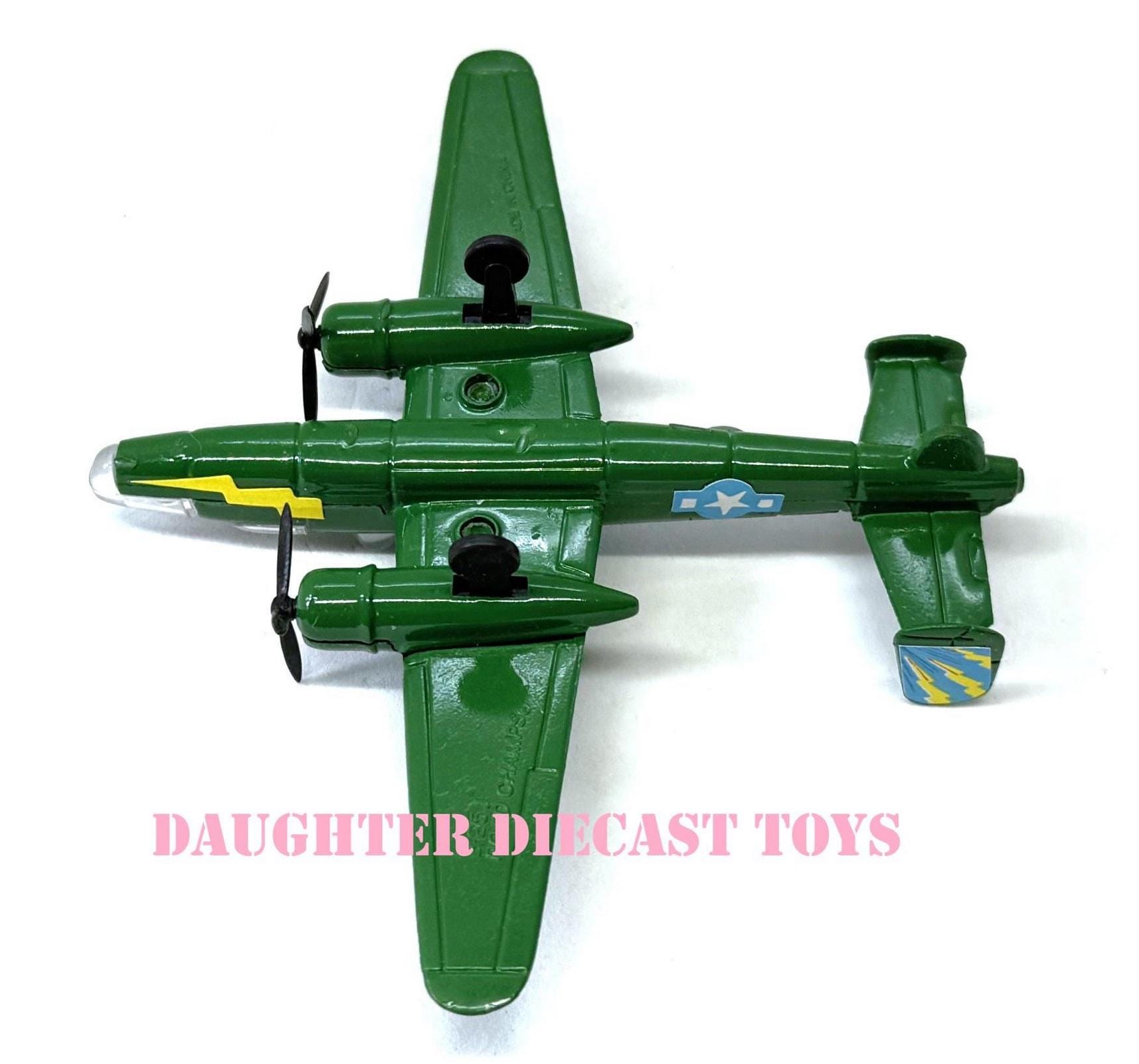

Vintage Mitchell B-25J BOMBER Diecast Metal Airplane Mint Condition/Factory Sealed! Road Champs Toys - Perfect Gift for Collectors!
$ 34.99

Great looking MITCHELL B-25J BOMBER. Made by Road Champs. Constructed of die
cast metal. Highly sought-after, hard to find vintage model! Nice size...measures 4 1/8"L x 5 1/4 "W x 1 1/4 "H. Beautiful/factory mint condition. Sold loose in collectors' bag. Perfect gift for Road Champs, aircraft, and vintage toy collectors! We ship fast & safe worldwide every day! Read Aircraft bio below...
•
•
•FOR A LIMITED TIME
•
•
•Purchases totaling $35 and above qualify for FREE shipping to USA! Add more items to your Etsy shopping cart to save $$$.NOTE: My dad owned a Diecast toy store for 30 years. I inherited the store inventory when he passed away many years ago. I am just now, beginning to sell the mint condition vintage models. All are store-inventory is new-old-stock, models have never been "played with". Please visit often-as I am adding more cool stuff every day!AIRCRAFT BIO:Mention the B-25 or “Mitchell” to many people and they are likely to respond: “Oh, the Doolittle Raid”. While the attack on mainland Japan on April 18, 1942 was the most famous of its missions, North American Aviation’s magnificent medium bomber played a much larger part in World War II.The B-25 was in production before the U.S. entry into the war through VJ-Day. About 9,815 B-25’s were built. This was the largest production of U.S. twin-engine combat airplanes in World War II. B-25’s were used in all theaters of war from Alaska to North Africa, China, Europe and the Southwest Pacific. They were flown by the U.S. Army Air Forces and U.S. Marine Corps, as well as the air forces of Britain, Canada, Australia, Russia, China, Brazil and the Netherland East Indies. Post war, B-25’s soldiered on in other roles as well as combat with the U.S. Air Force and the air forces of Canada, Indonesia and many Latin American countries.The B-25 was designed as a medium bomber to operate at altitudes between 8,000 and 12,000 thousand feet. Powered by two 1700 hp Wright R-2600 engines, the basic configuration stayed the same throughout production. However, there were many changes in armament to improve both offensive and defensive capabilities. These variations included 75 mm cannon, rockets and up to eighteen .50 caliber machine guns. The armament modifications varied on the B-25’s depending on the squadron mission. Some B-25’s were modified to carry torpedoes, both standard aerial and glide versions. Tactics used in the South and Southwest Pacific included low altitude strikes with strafing and skip-bombing against shipping and para-frag bombs against airfield targets. The airplane was also used for photomapping, an advanced trainer and fast transport..
cast metal. Highly sought-after, hard to find vintage model! Nice size...measures 4 1/8"L x 5 1/4 "W x 1 1/4 "H. Beautiful/factory mint condition. Sold loose in collectors' bag. Perfect gift for Road Champs, aircraft, and vintage toy collectors! We ship fast & safe worldwide every day! Read Aircraft bio below...
•
•
•FOR A LIMITED TIME
•
•
•Purchases totaling $35 and above qualify for FREE shipping to USA! Add more items to your Etsy shopping cart to save $$$.NOTE: My dad owned a Diecast toy store for 30 years. I inherited the store inventory when he passed away many years ago. I am just now, beginning to sell the mint condition vintage models. All are store-inventory is new-old-stock, models have never been "played with". Please visit often-as I am adding more cool stuff every day!AIRCRAFT BIO:Mention the B-25 or “Mitchell” to many people and they are likely to respond: “Oh, the Doolittle Raid”. While the attack on mainland Japan on April 18, 1942 was the most famous of its missions, North American Aviation’s magnificent medium bomber played a much larger part in World War II.The B-25 was in production before the U.S. entry into the war through VJ-Day. About 9,815 B-25’s were built. This was the largest production of U.S. twin-engine combat airplanes in World War II. B-25’s were used in all theaters of war from Alaska to North Africa, China, Europe and the Southwest Pacific. They were flown by the U.S. Army Air Forces and U.S. Marine Corps, as well as the air forces of Britain, Canada, Australia, Russia, China, Brazil and the Netherland East Indies. Post war, B-25’s soldiered on in other roles as well as combat with the U.S. Air Force and the air forces of Canada, Indonesia and many Latin American countries.The B-25 was designed as a medium bomber to operate at altitudes between 8,000 and 12,000 thousand feet. Powered by two 1700 hp Wright R-2600 engines, the basic configuration stayed the same throughout production. However, there were many changes in armament to improve both offensive and defensive capabilities. These variations included 75 mm cannon, rockets and up to eighteen .50 caliber machine guns. The armament modifications varied on the B-25’s depending on the squadron mission. Some B-25’s were modified to carry torpedoes, both standard aerial and glide versions. Tactics used in the South and Southwest Pacific included low altitude strikes with strafing and skip-bombing against shipping and para-frag bombs against airfield targets. The airplane was also used for photomapping, an advanced trainer and fast transport..
Other Products