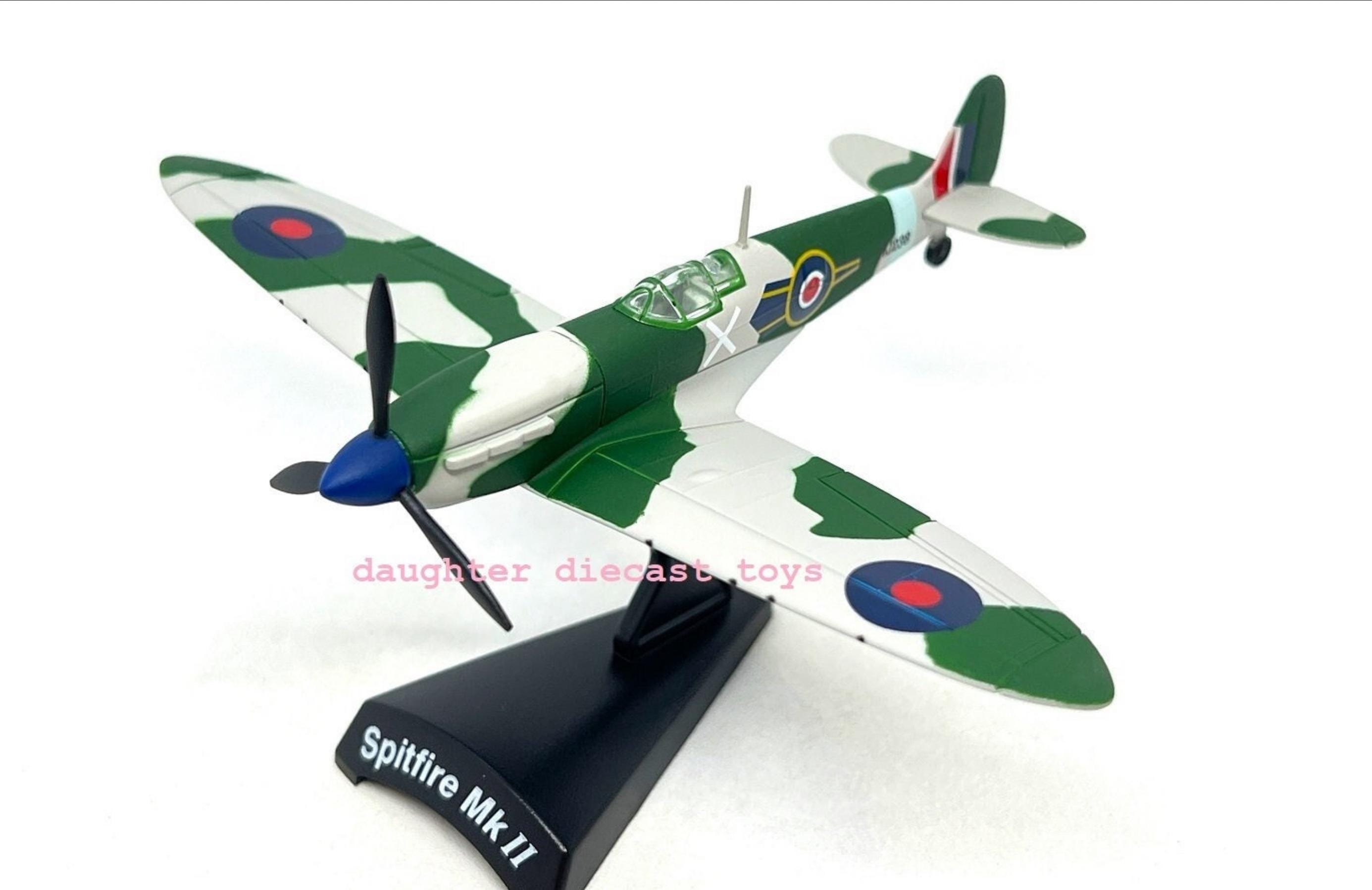
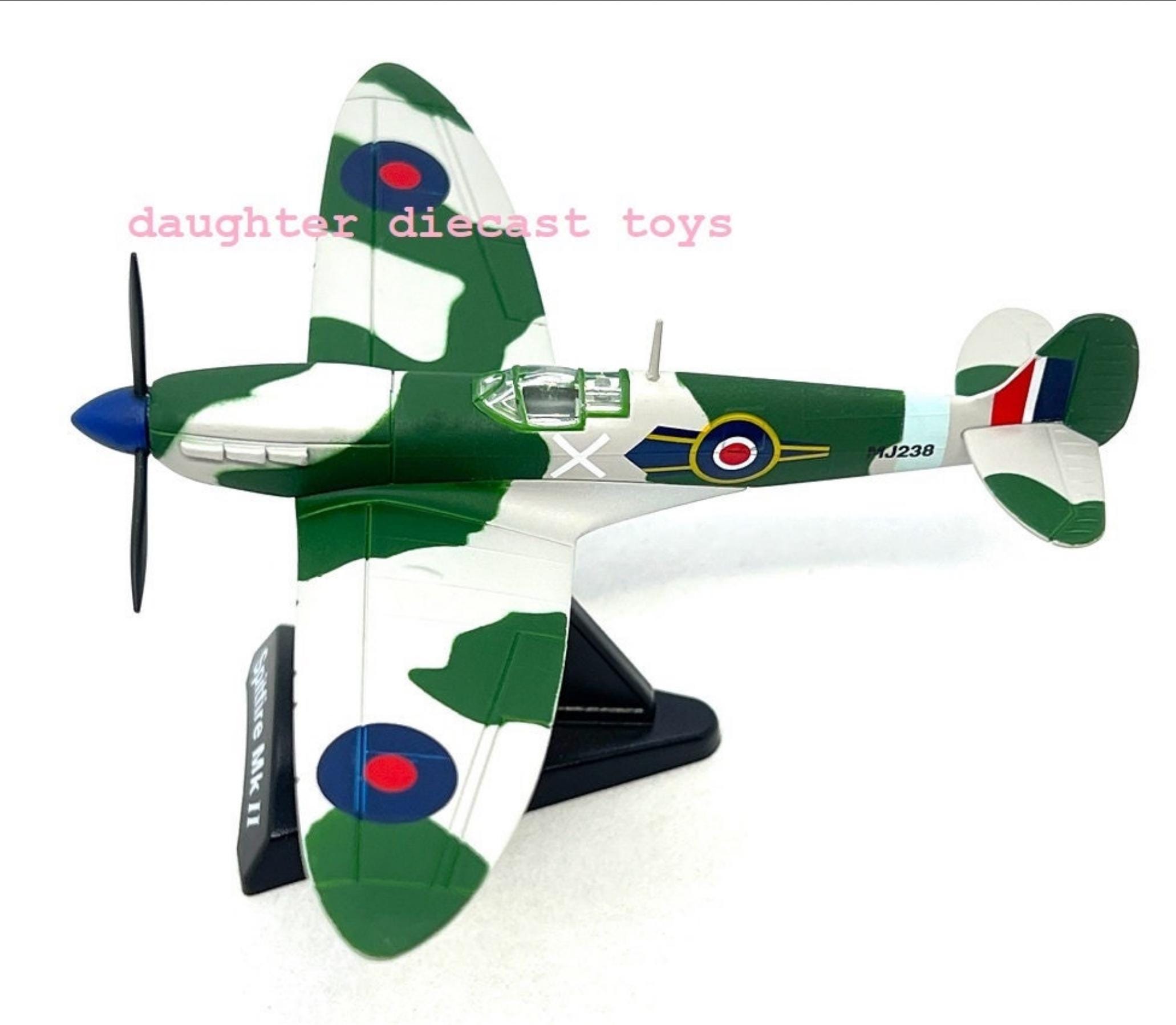
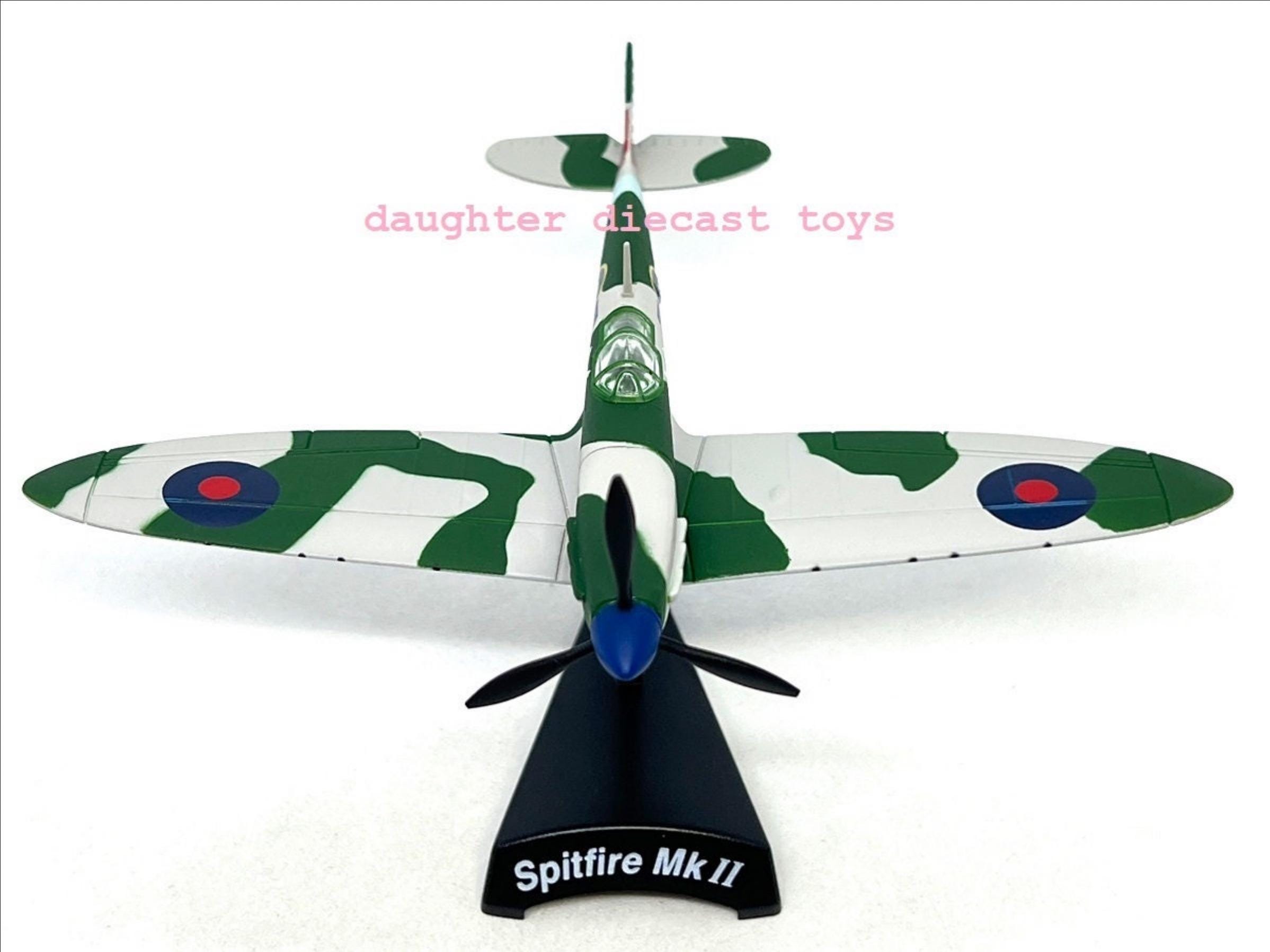
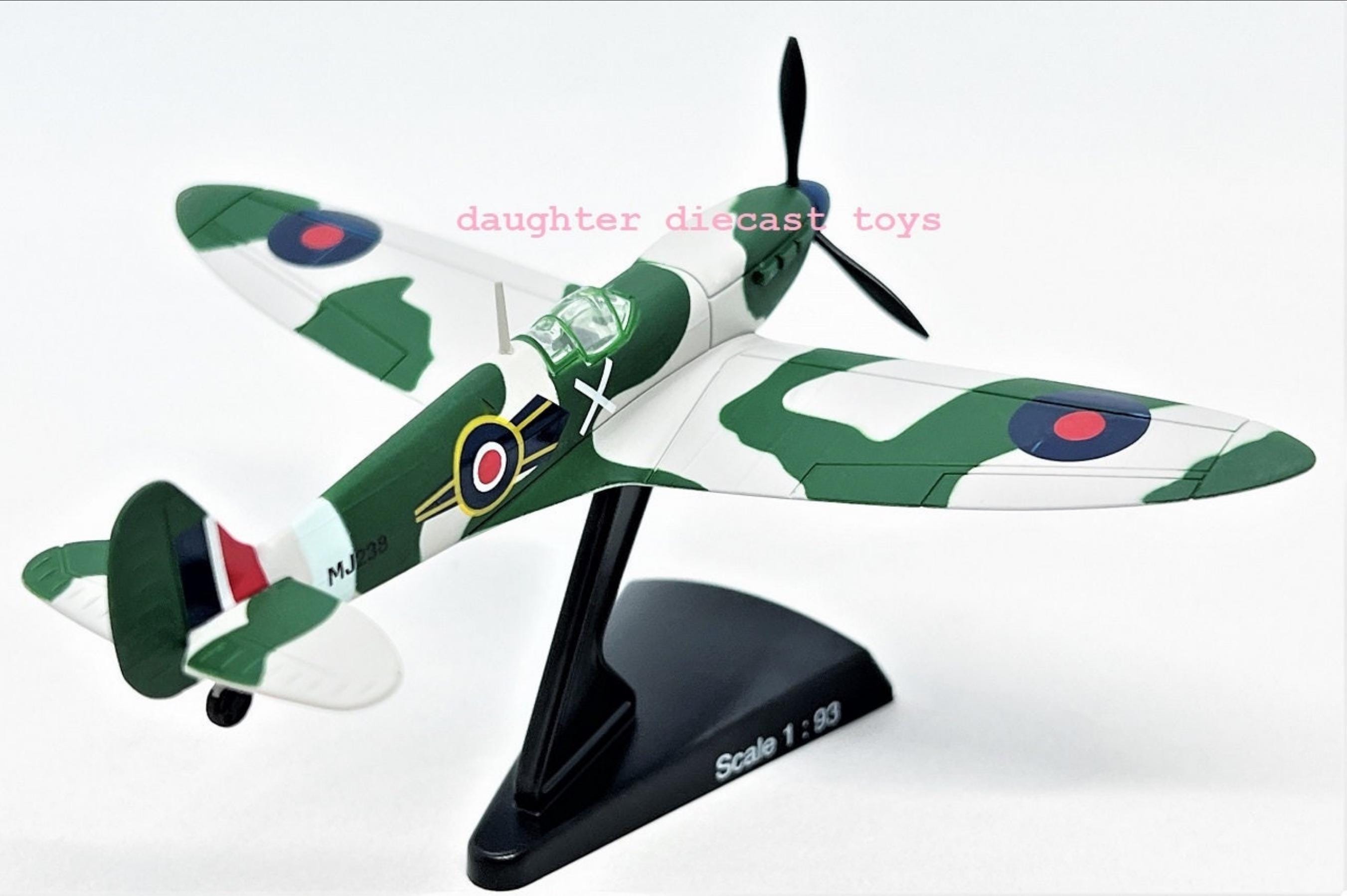
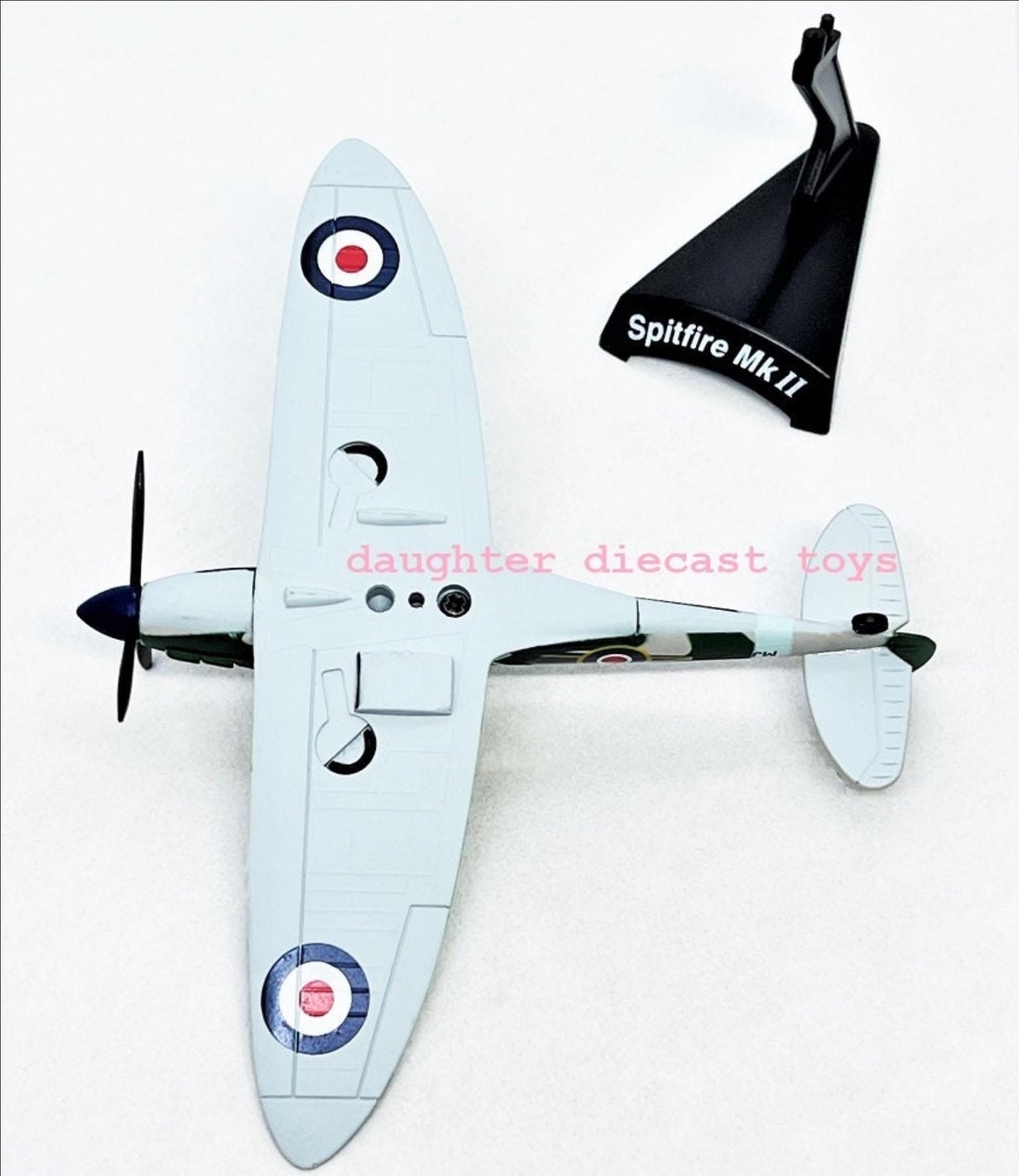

Mint! Vintage WWII BRITISH FIGHTER Airplane-Heavy Diecast Metal-Adult Collector Model-Perfect gift for Collectors & Military Aircraft Fans!
$ 60.00

Fantastic! VINTAGE WWII BRITISH SPITFIRE MKII FIGHTER PLANE. Premium quality,
intricately detailed Adult Collector-constructed of (very heavy) diecast metal-by Model Power Co. Scale= 1/93, measures 4"L x 5" W x 2 1/2"H (mounted). Pristine condition model-This airplane has never been removed from its factory-sealed packaging until today for the photos in our listing. Aircraft comes complete with desktop display stand and is enclosed in a protective plastic clam shell case for safe shipping. Perfect gift for vintage toy collectors, military history enthusiasts, war diorama creators, and airshow fans (like me)! We offer FREE shipping to anywhere in the continental USA. International shipping is available. 100% happiness guaranteed. Read plane bio below....Purchases totaling $35 and above qualify for FREE shipping to USA! Add more items to your Etsy shopping cart to save $$$.Note: My dad owned a Diecast toy store for 30 years. I inherited the store inventory when he passed away several years ago. I am (just now) able to bring myself to begin selling his toys-so they can be shared with the world. All the inventory is NEW (vintage) merchandise-which was intended for retail sale. Please know-our diecast toys have NEVER been "played-with” we do not sell used, or damaged merchandise. AIRCRAFT BIO:Role: Fighter / Interceptor aircraft National origin: United Kingdom Manufacturer: Supermarine Designer: R. J. Mitchell First flight: 5 March 1936 Introduction: 4 August 1938 Retired: 1961 (Irish Air Corps) Primary users: Royal Air Force, Royal Canadian Air Force, Free French Air Force, United States Army Air Forces Produced: 1938–1948 Number built: 20,351 Variants: Supermarine Seafire Developed into: Supermarine SpitefulThe Supermarine Spitfire is a British single-seat fighter aircraft used by the Royal Air Force and other Allied countries before, during, and after World War II. Many variants of the Spitfire were built, from the Mk 1 to the Rolls-Royce Griffon-engined Mk 24 using several wing configurations and guns. It was the only British fighter produced continuously throughout the war. The Spitfire remains popular among enthusiasts; around 70 remain airworthy, and many more are static exhibits in aviation museums throughout the world.The Spitfire was designed as a short-range, high-performance interceptor aircraft by R. J. Mitchell, chief designer at Supermarine Aviation Works, which operated as a subsidiary of Vickers-Armstrong from 1928. Mitchell developed the Spitfire's distinctive elliptical wing (designed by Beverley Shenstone) with innovative sunken rivets to have the thinnest possible cross-section, achieving a potential top speed greater than that of several contemporary fighter aircraft, including the Hawker Hurricane. Mitchell continued to refine the design until his death in 1937, whereupon his colleague Joseph Smith took over as chief designer, overseeing the Spitfire's development through many variants.During the Battle of Britain (July–October 1940), the public perceived the Spitfire to be the main RAF fighter; however, the more numerous Hurricane shouldered more of the burden of resisting the Luftwaffe. Nevertheless, the Spitfire was a better fighter aircraft than the Hurricane. Spitfire units had a lower attrition rate and a higher victory-to-loss ratio than those flying Hurricanes, probably because of the Spitfire's higher performance. During the battle, Spitfires generally engaged Luftwaffe fighters—mainly Messerschmitt Bf 109E–series aircraft, which were a close match for them.After the Battle of Britain, the Spitfire superseded the Hurricane as the principal aircraft of RAF Fighter Command, and it was used in the European, Mediterranean, Pacific, and South-East Asian theatres. Much loved by its pilots, the Spitfire operated in several roles, including interceptor, photo-reconnaissance, fighter-bomber, and trainer, and it continued to do so until the 1950s. The Seafire was an aircraft carrier–based adaptation of the Spitfire, used in the Fleet Air Arm from 1942 until the mid-1950s. The original airframe was designed to be powered by a Rolls-Royce Merlin engine producing 1,030 hp (768 kW). It was strong enough and adaptable enough to use increasingly powerful Merlins, and in later marks, Rolls-Royce Griffon engines producing up to 2,340 hp (1,745 kW). As a result, the Spitfire's performance and capabilities improved over the course of its service life.
intricately detailed Adult Collector-constructed of (very heavy) diecast metal-by Model Power Co. Scale= 1/93, measures 4"L x 5" W x 2 1/2"H (mounted). Pristine condition model-This airplane has never been removed from its factory-sealed packaging until today for the photos in our listing. Aircraft comes complete with desktop display stand and is enclosed in a protective plastic clam shell case for safe shipping. Perfect gift for vintage toy collectors, military history enthusiasts, war diorama creators, and airshow fans (like me)! We offer FREE shipping to anywhere in the continental USA. International shipping is available. 100% happiness guaranteed. Read plane bio below....Purchases totaling $35 and above qualify for FREE shipping to USA! Add more items to your Etsy shopping cart to save $$$.Note: My dad owned a Diecast toy store for 30 years. I inherited the store inventory when he passed away several years ago. I am (just now) able to bring myself to begin selling his toys-so they can be shared with the world. All the inventory is NEW (vintage) merchandise-which was intended for retail sale. Please know-our diecast toys have NEVER been "played-with” we do not sell used, or damaged merchandise. AIRCRAFT BIO:Role: Fighter / Interceptor aircraft National origin: United Kingdom Manufacturer: Supermarine Designer: R. J. Mitchell First flight: 5 March 1936 Introduction: 4 August 1938 Retired: 1961 (Irish Air Corps) Primary users: Royal Air Force, Royal Canadian Air Force, Free French Air Force, United States Army Air Forces Produced: 1938–1948 Number built: 20,351 Variants: Supermarine Seafire Developed into: Supermarine SpitefulThe Supermarine Spitfire is a British single-seat fighter aircraft used by the Royal Air Force and other Allied countries before, during, and after World War II. Many variants of the Spitfire were built, from the Mk 1 to the Rolls-Royce Griffon-engined Mk 24 using several wing configurations and guns. It was the only British fighter produced continuously throughout the war. The Spitfire remains popular among enthusiasts; around 70 remain airworthy, and many more are static exhibits in aviation museums throughout the world.The Spitfire was designed as a short-range, high-performance interceptor aircraft by R. J. Mitchell, chief designer at Supermarine Aviation Works, which operated as a subsidiary of Vickers-Armstrong from 1928. Mitchell developed the Spitfire's distinctive elliptical wing (designed by Beverley Shenstone) with innovative sunken rivets to have the thinnest possible cross-section, achieving a potential top speed greater than that of several contemporary fighter aircraft, including the Hawker Hurricane. Mitchell continued to refine the design until his death in 1937, whereupon his colleague Joseph Smith took over as chief designer, overseeing the Spitfire's development through many variants.During the Battle of Britain (July–October 1940), the public perceived the Spitfire to be the main RAF fighter; however, the more numerous Hurricane shouldered more of the burden of resisting the Luftwaffe. Nevertheless, the Spitfire was a better fighter aircraft than the Hurricane. Spitfire units had a lower attrition rate and a higher victory-to-loss ratio than those flying Hurricanes, probably because of the Spitfire's higher performance. During the battle, Spitfires generally engaged Luftwaffe fighters—mainly Messerschmitt Bf 109E–series aircraft, which were a close match for them.After the Battle of Britain, the Spitfire superseded the Hurricane as the principal aircraft of RAF Fighter Command, and it was used in the European, Mediterranean, Pacific, and South-East Asian theatres. Much loved by its pilots, the Spitfire operated in several roles, including interceptor, photo-reconnaissance, fighter-bomber, and trainer, and it continued to do so until the 1950s. The Seafire was an aircraft carrier–based adaptation of the Spitfire, used in the Fleet Air Arm from 1942 until the mid-1950s. The original airframe was designed to be powered by a Rolls-Royce Merlin engine producing 1,030 hp (768 kW). It was strong enough and adaptable enough to use increasingly powerful Merlins, and in later marks, Rolls-Royce Griffon engines producing up to 2,340 hp (1,745 kW). As a result, the Spitfire's performance and capabilities improved over the course of its service life.
Other Products