
CROP DUSTER BIPLANE-Diecast Metal Airplane with Runway-Mint Condition/Factory Package-Perfect Gift for Collectors!
$ 19.99

WWI SE5 BIPLANE FIGHTER-Diecast Metal Airplane with Runway-Mint
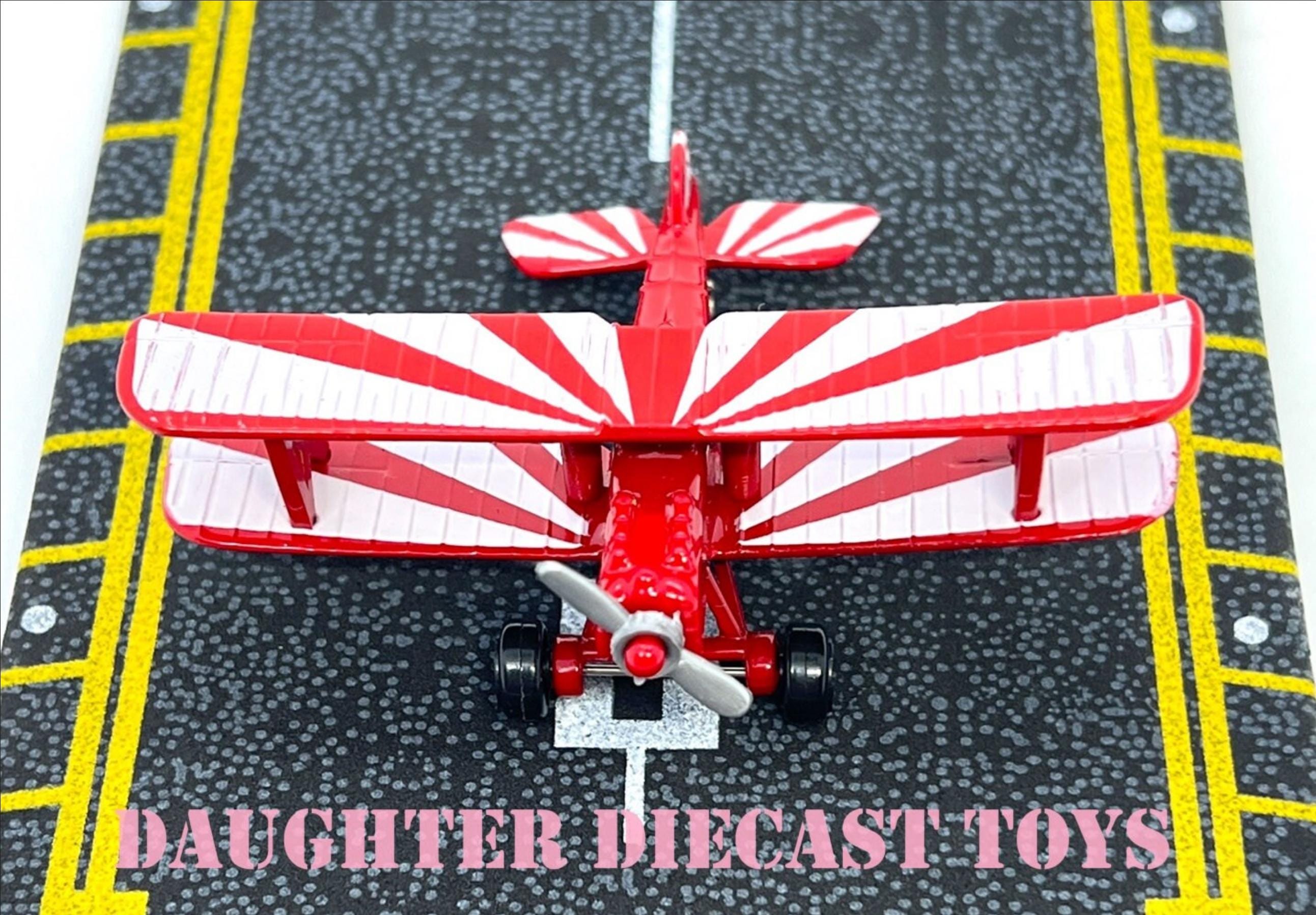
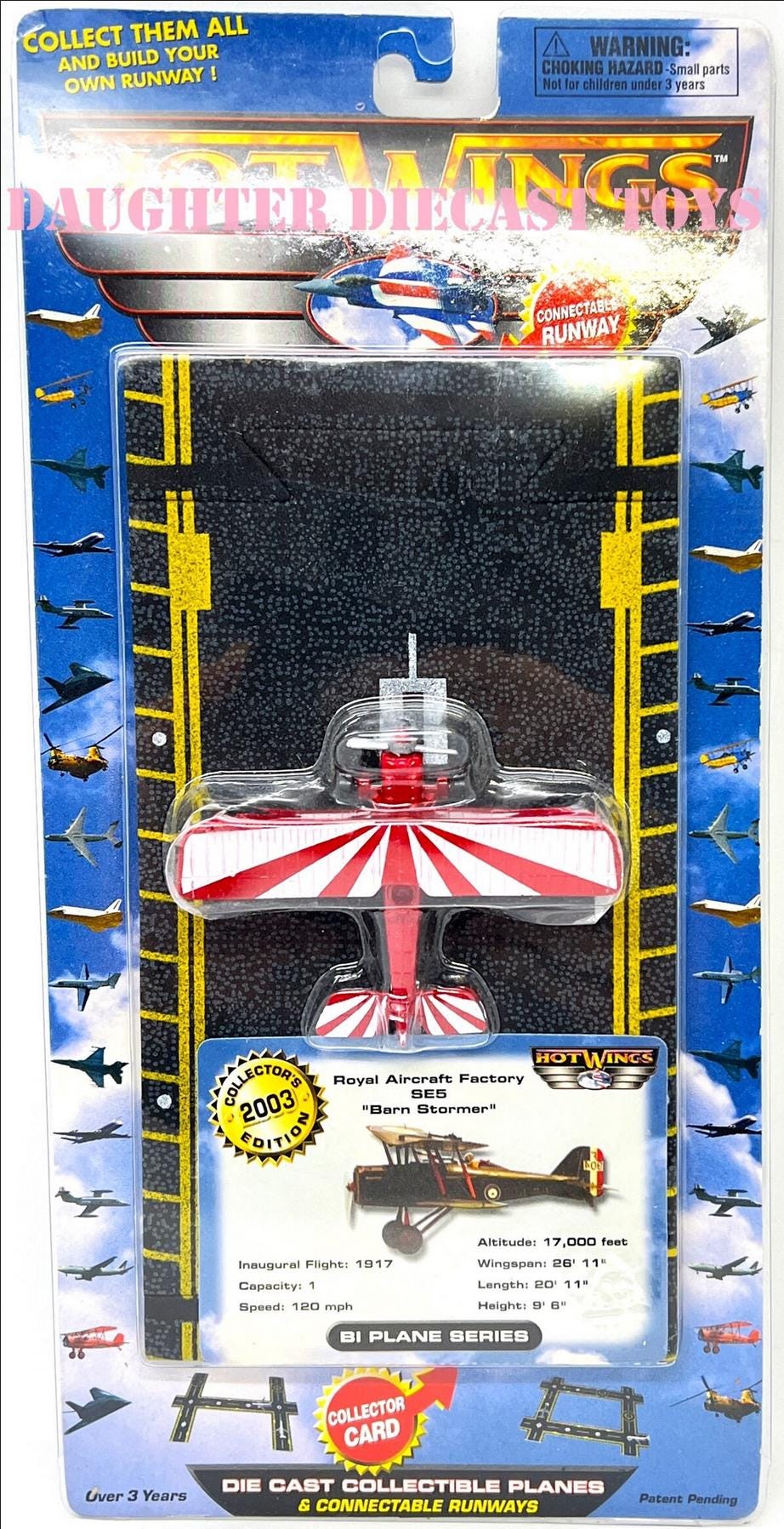
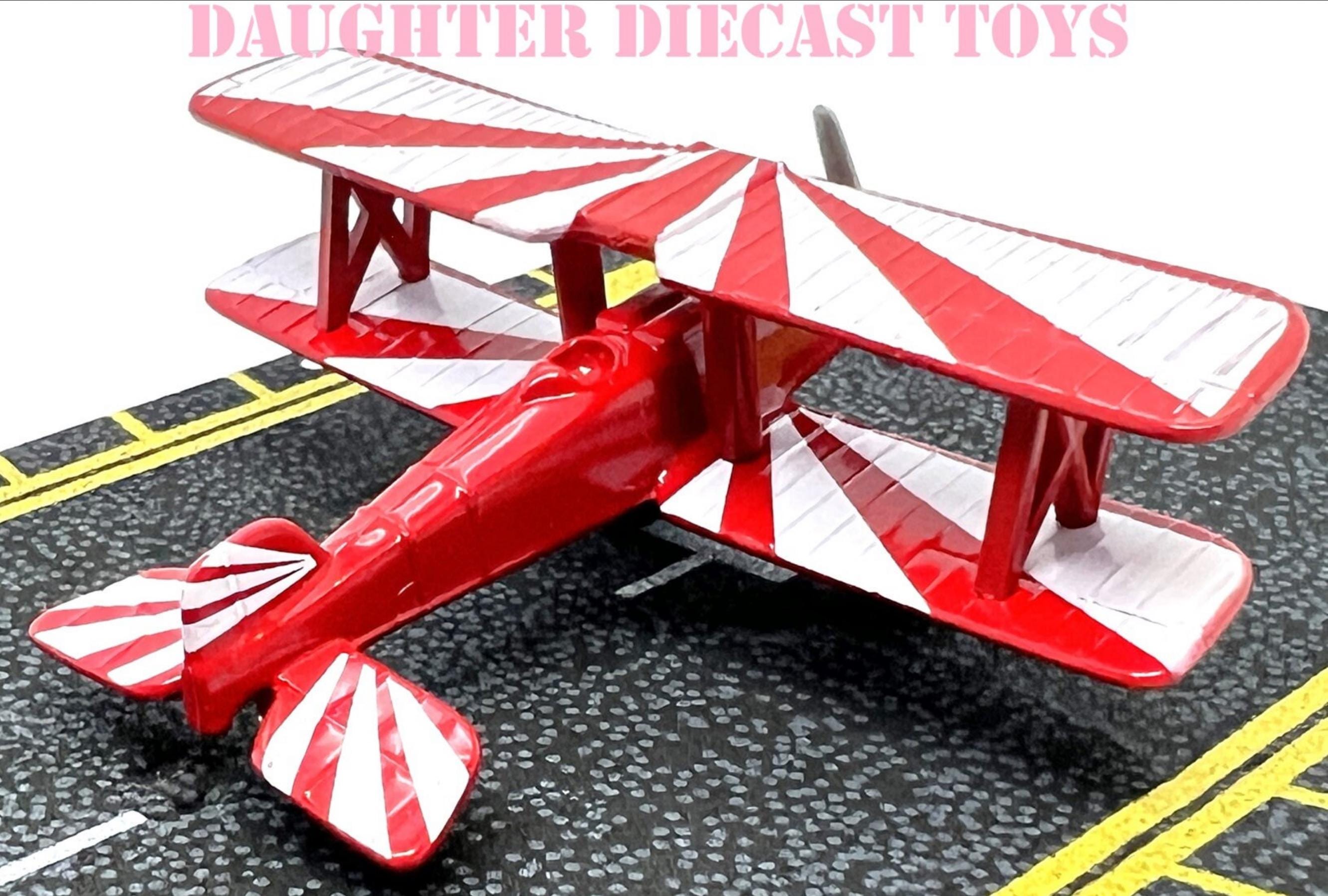
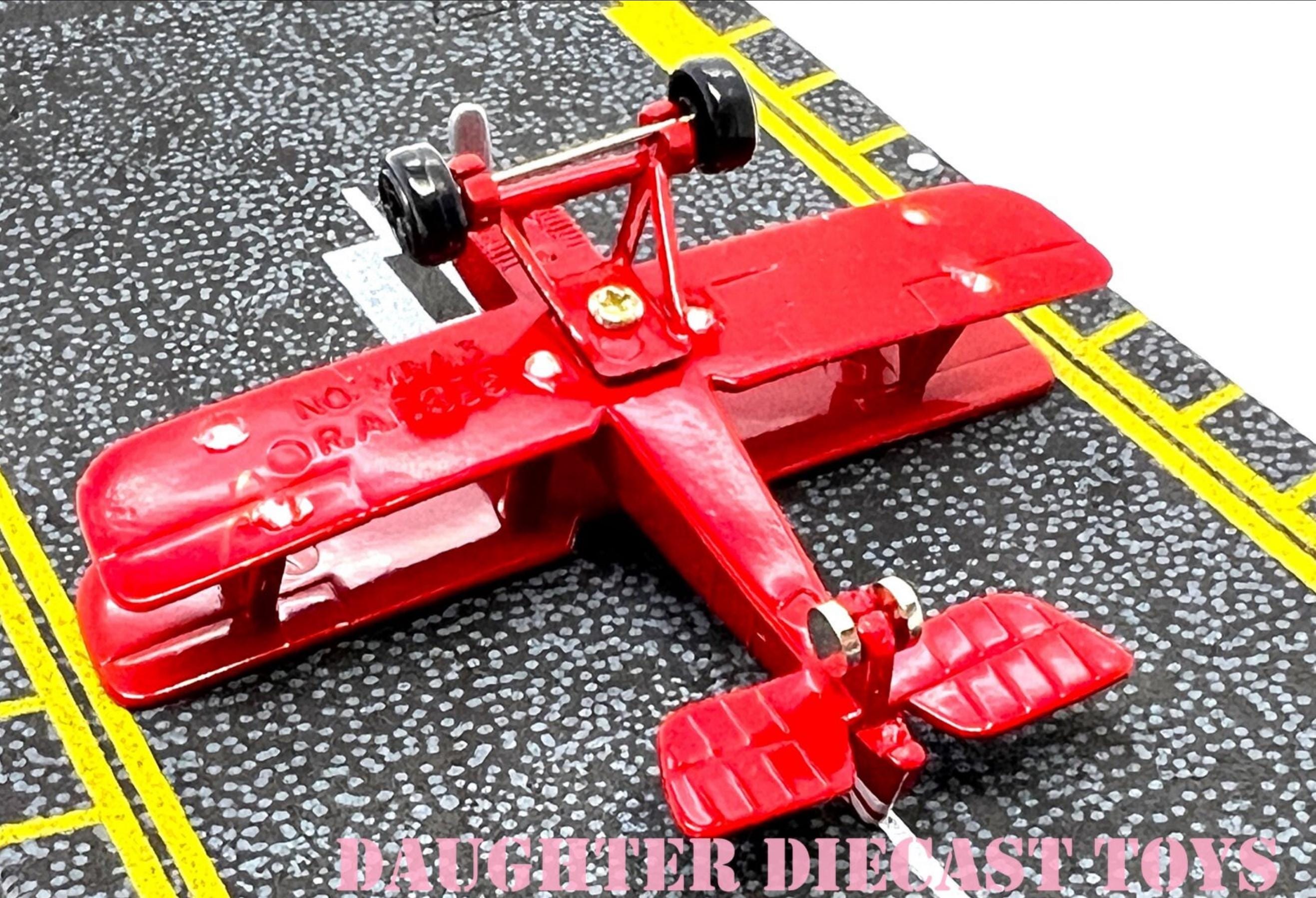
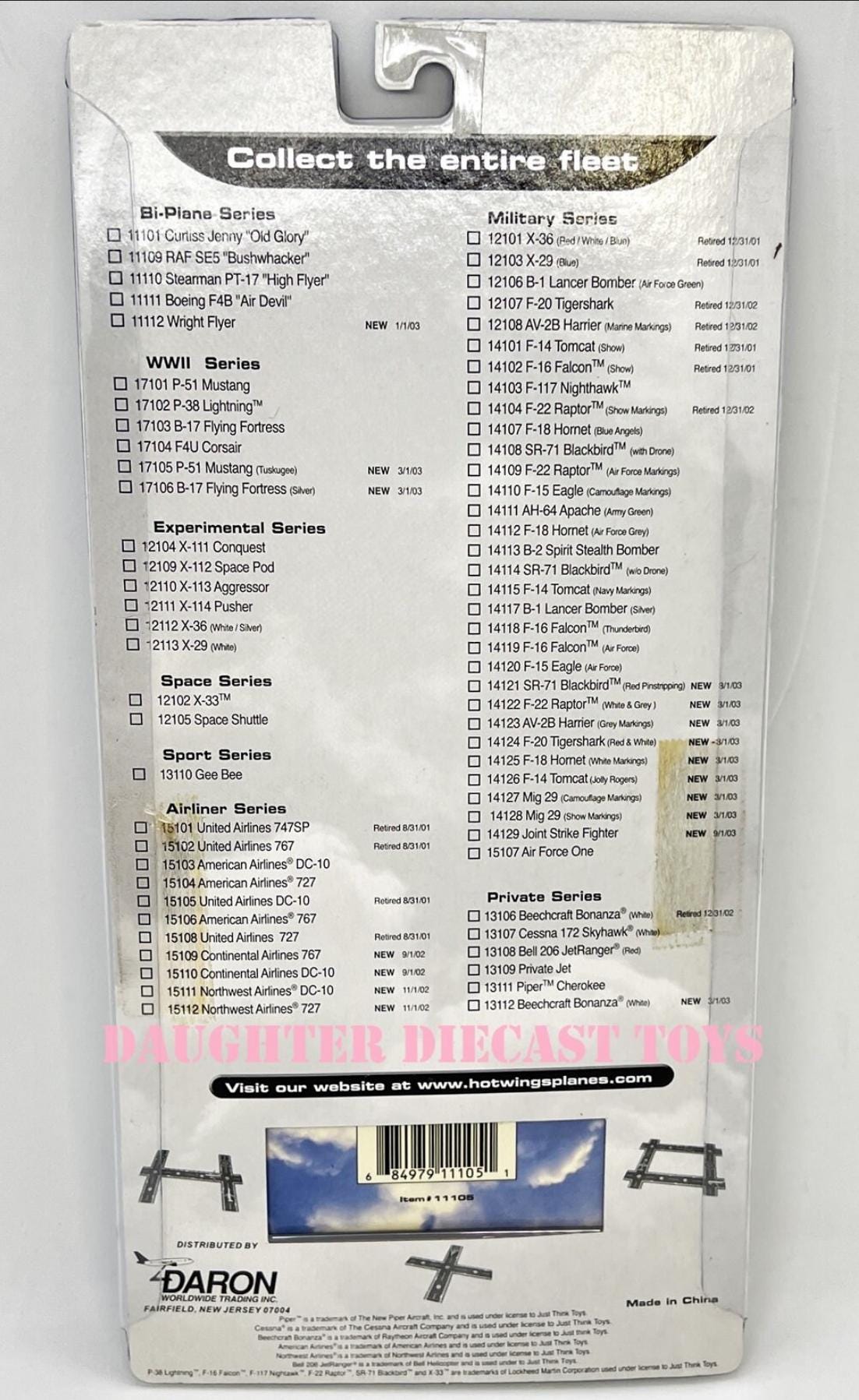
Condition/Factory Package-Perfect Gift for Collectors!Awesome! WWI SE5 BIPLANE FIGHTER. Made by Just Think Toys. Made of die cast metal. Hard to find model! Measures 3"W x 2 1/2"L x 1 1/4"H and comes with 7"x4" connectible foam runway. Pristine/mint condition never opened from its factory sealed package until today for the photos in this listing. The perfect gift for crop dusters, toy collectors, fans of airshow and vintage aircraft (like me!).Note: My dad owned a Diecast toy store for 30 years. I inherited the store inventory when he passed away several years ago. I am (just now) able to bring myself to begin selling his cars-so they can be shared with the world. All pristine and mint condition vintage models will (eventually) be listed here on ETSY. All the inventory is NEW (vintage) merchandise-which was intended for retail sale. Please know-our diecast toys have NEVER been "played-with” we do not sell used, or damaged toys.
•
•
•FOR A LIMITED TIME
•
•
•Purchases totaling $35 and above qualify for FREE shipping to USA! Add more items to your Etsy shopping cart to save $$$.AIRCRAFT BIO:The Royal Aircraft Factory S.E.5 is a British biplane fighter aircraft of the First World War. It was developed at the Royal Aircraft Factory by a team consisting of Henry Folland, John Kenworthy and Major Frank Goodden. It was one of the fastest aircraft of the war, while being both stable and relatively maneuverable. According to aviation author Robert Jackson, the S.E.5 was: "the nimble fighter that has since been described as the 'Spitfire of World War One'".[2]In most respects the S.E.5 had superior performance to the rival Sopwith Camel, although it was less immediately responsive to the controls. Problems with its Hispano-Suiza engine, particularly the geared-output H-S 8B-powered early versions, meant that there was a chronic shortage of the type until well into 1918. Thus, while the first examples had reached the Western Front before the Camel, there were fewer squadrons equipped with the S.E.5 than with the Sopwith fighter.Together with the Camel, the S.E.5 was instrumental in regaining allied air superiority in mid-1917 and maintaining it for the rest of the war, ensuring there was no repetition of "Bloody April" 1917 when losses in the Royal Flying Corps were much heavier than in the Luftstreitkräfte. The S.E.5s remained in RAF service for some time following the Armistice that ended the conflict; some were transferred to various overseas military operators, while a number were also adopted by civilian operators.OPERATIONAL HISTORYIn March 1917, the S.E.5 entered service with No. 56 Squadron RFC, although the squadron did not deploy to the Western Front until the following month.[14] Everyone was suspicious of the large "greenhouse" windscreens fitted to the first production models. These were designed to protect the pilot in his unusually high seating position, which was in turn intended to improve vision over the upper wing. The squadron did not fly its first patrol with the S.E.5 until 22 April,[15] by which time, on the insistence of Major Blomfield, 56 squadron's commanding officer,[4] all aircraft had been fitted with small rectangular screens of conventional design. The problem of the high seating position was solved by simply lowering it, pilots in any case preferring a more conventional (and comfortable) seating position. No complaints seem to have been made about the view from the cockpit; in fact, this was often cited as one of the strong points of the type.While pilots, some of whom were initially disappointed with the S.E.5, quickly came to appreciate its strength and fine flying qualities, it was popularly judged to have been underpowered; this failing was addressed by the introduction of the more powerful S.E.5a. In June 1917, the S.E.5a entered service and quickly began to replace the S.E.5.[14] At this time 56 Squadron was still the only unit flying the new fighter; in fact it was the only operational unit to be fully equipped with the initial 150 hp S.E.5 – all other S.E.5 squadrons officially used the 200 hp S.E.5a from the outset – although a few S.E.5s were issued to other squadrons due to an acute shortage of the S.E.5a. Deliveries of the S.E.5a suffered from delays due to a shortage of available engines with which to power the type.[14]Due to the shortage of aircraft, there was a very slow initial build-up of new S.E.5a squadrons, which lasted well into 1918. Once the Wolseley Viper-powered model became plentiful, many more units were re-equipped with the type. By the end of the war, the S.E.5a was employed by a total of 21 British Empire squadrons as well as two U.S. units. Many of the top Allied aces of the Great War flew this fighter, including Billy Bishop, Andrew Beauchamp-Proctor, Edward Mannock and James McCudden. Legendary British ace Albert Ball was initially disparaging of the S.E.5, but in the end claimed 11 of his 44 victories flying it. McCudden wrote of the S.E.5: "It was very fine to be in a machine that was faster than the Huns, and to know that one could run away just as things got too hot."[16]Sholto Douglas who commanded No. 84 Squadron RFC which was initially equipped with the S.E.5a, listed the type's qualities as being: "Comfortable, with a good all-round view, retaining its performance and maneuverability at high level, steady and quick to gather speed in the dive, capable of a very fine zoom, useful in both offence and defence, strong in design and construction, [and] possessing a reliable engine".[citation needed]Soon after the Armistice the S.E.5a was withdrawn from RAF service. It was retained for a time in Canada, and in 1921 a Viper-engine S.E.5a was taken to Japan by the British Aviation Mission to the Imperial Japanese Navy.[17]Australia received 35 S.E.5a under the Imperial Gift in 1919, and the type went on to be the newly formed R.A.A.F.’s main fighter type until the late 1920’s.A number of machines found roles in civilian flying after the war. On 30 May 1922, the first use of skywriting for advertising occurred when Cyril Turner, a former RAF officer, spelt out "London Daily Mail" in black smoke from an S.E.5a at The Derby.[18] Others were used for air racing; one such privately owned aircraft won the Morris Cup race in 1927.[19]
Condition/Factory Package-Perfect Gift for Collectors!Awesome! WWI SE5 BIPLANE FIGHTER. Made by Just Think Toys. Made of die cast metal. Hard to find model! Measures 3"W x 2 1/2"L x 1 1/4"H and comes with 7"x4" connectible foam runway. Pristine/mint condition never opened from its factory sealed package until today for the photos in this listing. The perfect gift for crop dusters, toy collectors, fans of airshow and vintage aircraft (like me!).Note: My dad owned a Diecast toy store for 30 years. I inherited the store inventory when he passed away several years ago. I am (just now) able to bring myself to begin selling his cars-so they can be shared with the world. All pristine and mint condition vintage models will (eventually) be listed here on ETSY. All the inventory is NEW (vintage) merchandise-which was intended for retail sale. Please know-our diecast toys have NEVER been "played-with” we do not sell used, or damaged toys.
•
•
•FOR A LIMITED TIME
•
•
•Purchases totaling $35 and above qualify for FREE shipping to USA! Add more items to your Etsy shopping cart to save $$$.AIRCRAFT BIO:The Royal Aircraft Factory S.E.5 is a British biplane fighter aircraft of the First World War. It was developed at the Royal Aircraft Factory by a team consisting of Henry Folland, John Kenworthy and Major Frank Goodden. It was one of the fastest aircraft of the war, while being both stable and relatively maneuverable. According to aviation author Robert Jackson, the S.E.5 was: "the nimble fighter that has since been described as the 'Spitfire of World War One'".[2]In most respects the S.E.5 had superior performance to the rival Sopwith Camel, although it was less immediately responsive to the controls. Problems with its Hispano-Suiza engine, particularly the geared-output H-S 8B-powered early versions, meant that there was a chronic shortage of the type until well into 1918. Thus, while the first examples had reached the Western Front before the Camel, there were fewer squadrons equipped with the S.E.5 than with the Sopwith fighter.Together with the Camel, the S.E.5 was instrumental in regaining allied air superiority in mid-1917 and maintaining it for the rest of the war, ensuring there was no repetition of "Bloody April" 1917 when losses in the Royal Flying Corps were much heavier than in the Luftstreitkräfte. The S.E.5s remained in RAF service for some time following the Armistice that ended the conflict; some were transferred to various overseas military operators, while a number were also adopted by civilian operators.OPERATIONAL HISTORYIn March 1917, the S.E.5 entered service with No. 56 Squadron RFC, although the squadron did not deploy to the Western Front until the following month.[14] Everyone was suspicious of the large "greenhouse" windscreens fitted to the first production models. These were designed to protect the pilot in his unusually high seating position, which was in turn intended to improve vision over the upper wing. The squadron did not fly its first patrol with the S.E.5 until 22 April,[15] by which time, on the insistence of Major Blomfield, 56 squadron's commanding officer,[4] all aircraft had been fitted with small rectangular screens of conventional design. The problem of the high seating position was solved by simply lowering it, pilots in any case preferring a more conventional (and comfortable) seating position. No complaints seem to have been made about the view from the cockpit; in fact, this was often cited as one of the strong points of the type.While pilots, some of whom were initially disappointed with the S.E.5, quickly came to appreciate its strength and fine flying qualities, it was popularly judged to have been underpowered; this failing was addressed by the introduction of the more powerful S.E.5a. In June 1917, the S.E.5a entered service and quickly began to replace the S.E.5.[14] At this time 56 Squadron was still the only unit flying the new fighter; in fact it was the only operational unit to be fully equipped with the initial 150 hp S.E.5 – all other S.E.5 squadrons officially used the 200 hp S.E.5a from the outset – although a few S.E.5s were issued to other squadrons due to an acute shortage of the S.E.5a. Deliveries of the S.E.5a suffered from delays due to a shortage of available engines with which to power the type.[14]Due to the shortage of aircraft, there was a very slow initial build-up of new S.E.5a squadrons, which lasted well into 1918. Once the Wolseley Viper-powered model became plentiful, many more units were re-equipped with the type. By the end of the war, the S.E.5a was employed by a total of 21 British Empire squadrons as well as two U.S. units. Many of the top Allied aces of the Great War flew this fighter, including Billy Bishop, Andrew Beauchamp-Proctor, Edward Mannock and James McCudden. Legendary British ace Albert Ball was initially disparaging of the S.E.5, but in the end claimed 11 of his 44 victories flying it. McCudden wrote of the S.E.5: "It was very fine to be in a machine that was faster than the Huns, and to know that one could run away just as things got too hot."[16]Sholto Douglas who commanded No. 84 Squadron RFC which was initially equipped with the S.E.5a, listed the type's qualities as being: "Comfortable, with a good all-round view, retaining its performance and maneuverability at high level, steady and quick to gather speed in the dive, capable of a very fine zoom, useful in both offence and defence, strong in design and construction, [and] possessing a reliable engine".[citation needed]Soon after the Armistice the S.E.5a was withdrawn from RAF service. It was retained for a time in Canada, and in 1921 a Viper-engine S.E.5a was taken to Japan by the British Aviation Mission to the Imperial Japanese Navy.[17]Australia received 35 S.E.5a under the Imperial Gift in 1919, and the type went on to be the newly formed R.A.A.F.’s main fighter type until the late 1920’s.A number of machines found roles in civilian flying after the war. On 30 May 1922, the first use of skywriting for advertising occurred when Cyril Turner, a former RAF officer, spelt out "London Daily Mail" in black smoke from an S.E.5a at The Derby.[18] Others were used for air racing; one such privately owned aircraft won the Morris Cup race in 1927.[19]
Other Products