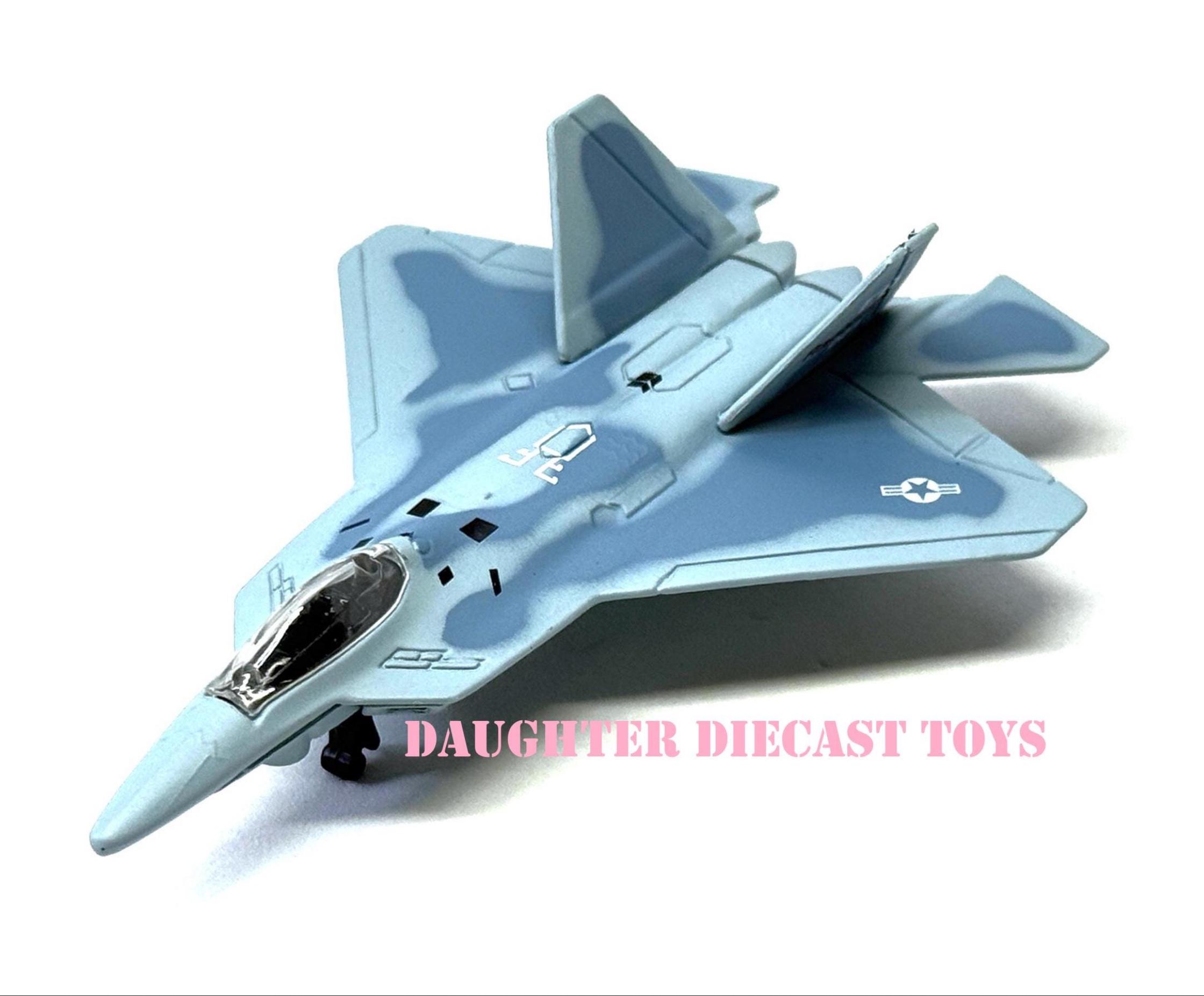
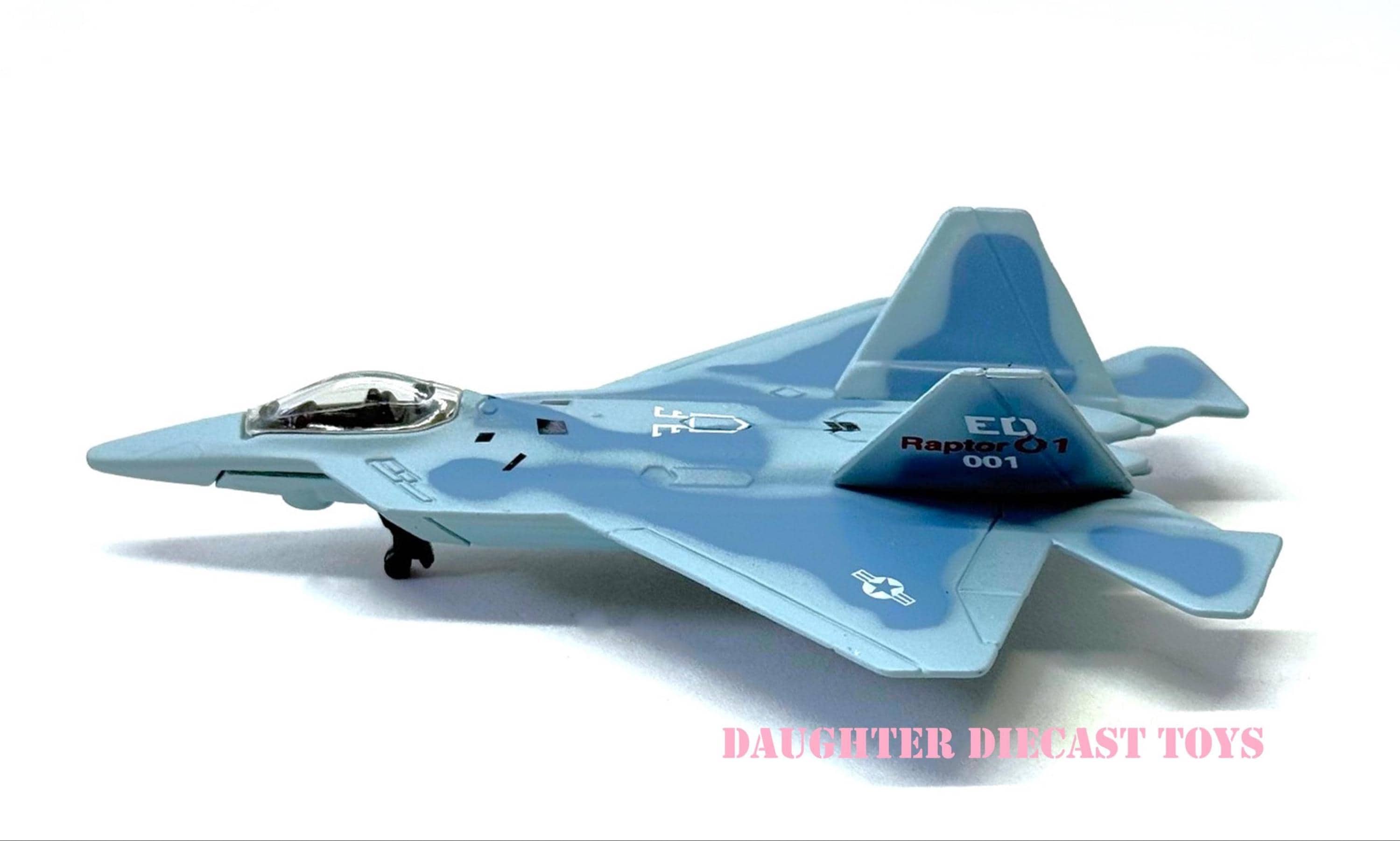
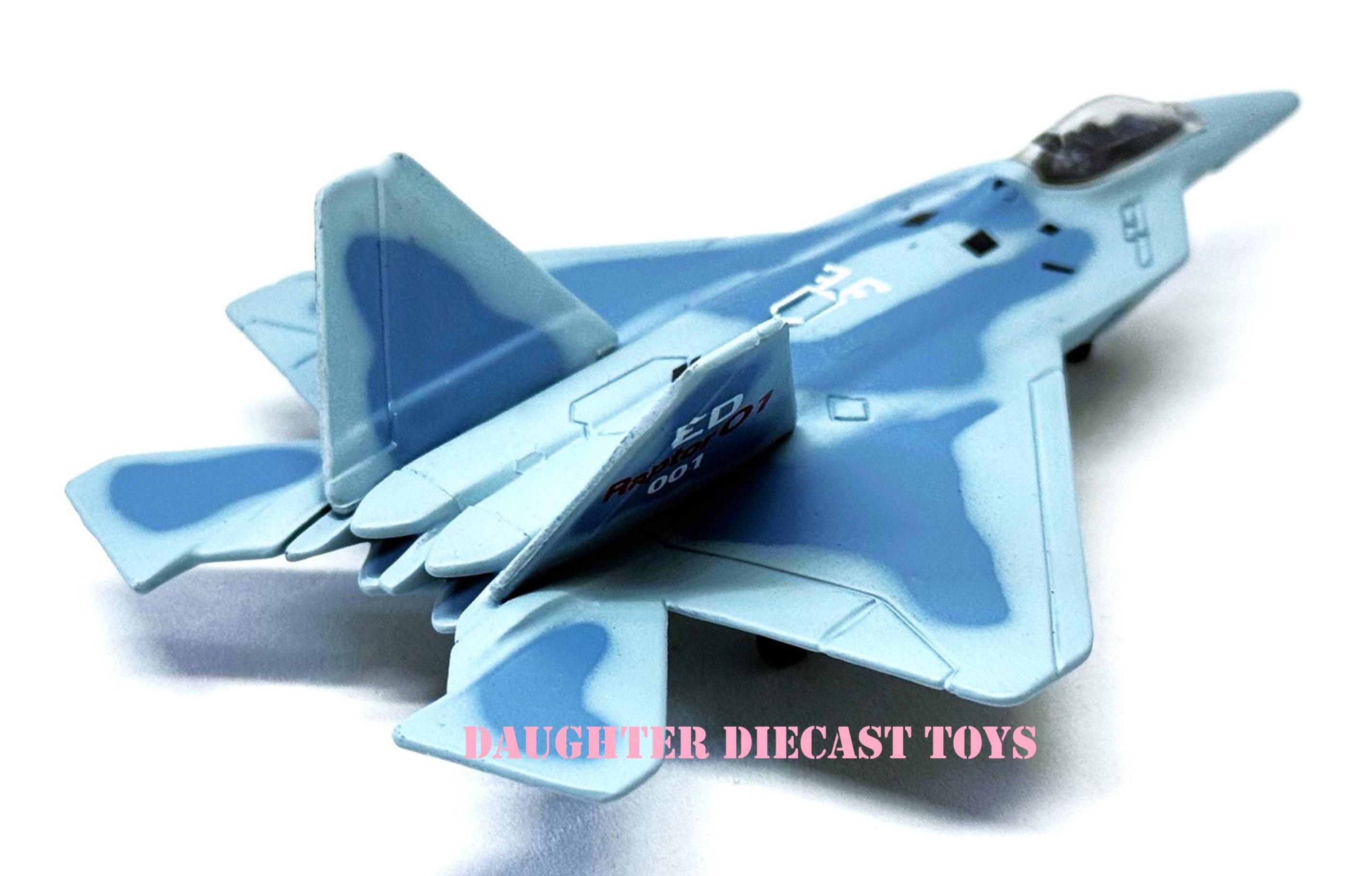
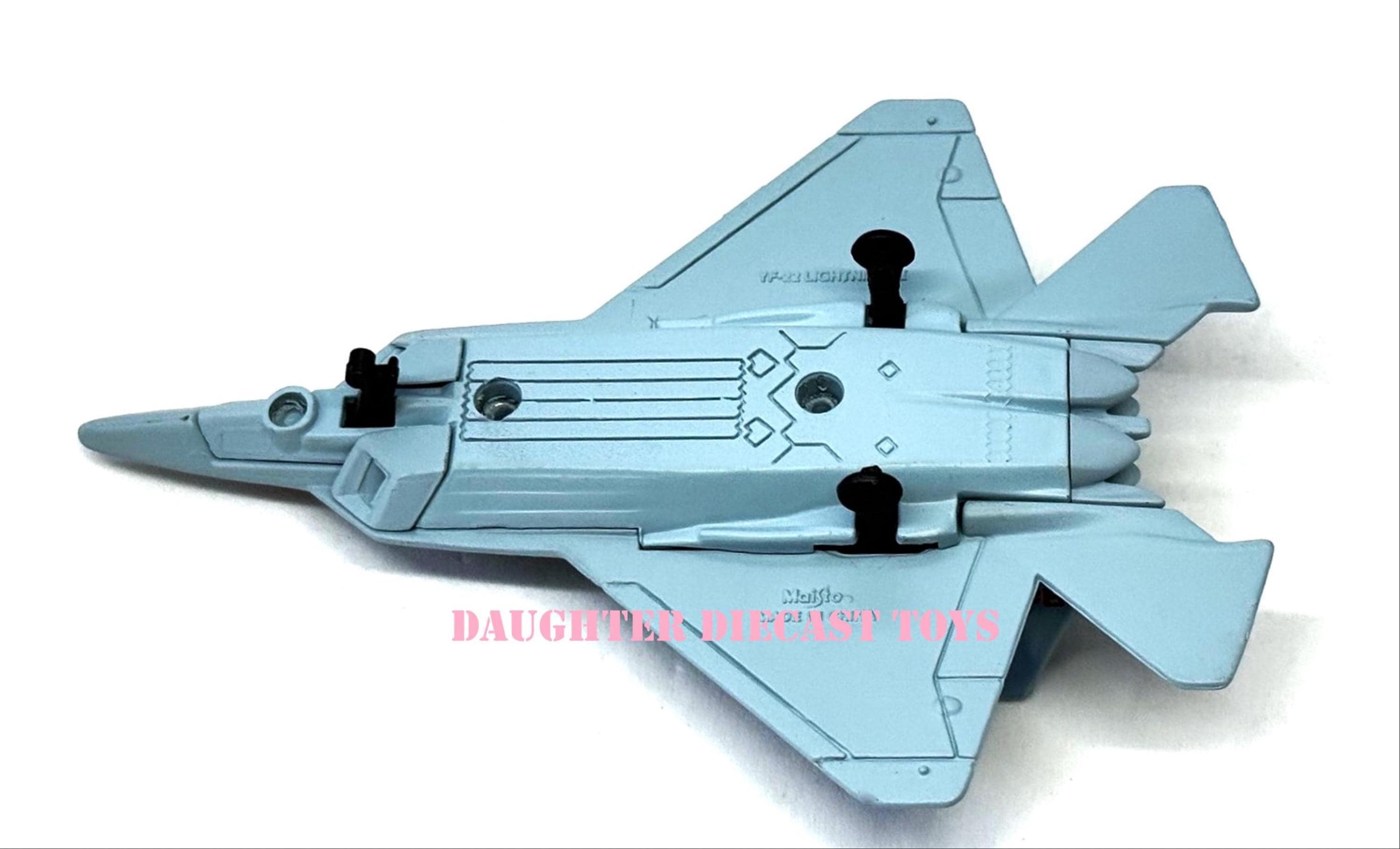

U.S.A.F. YF-22 Lightning II STEALTH Combat Jet Airplane-Adult Collector Diecast Metal-Pristine Condition-Perfect Gift for Collectors!
$ 34.99

Awesome! U.S.A.F. YF-22 LIGHTNING II STEALTH COMBAT JET AIRPLANE. Adult
collector model, weighty, constructed of diecast metal. Intricately detailed, made by Maisto. Scale=1/72 prox, measures: 4 3/4"L x 3 1/4"W x 1 "H. Pristine condition model-never handled or displayed (until today for photos in this listing). Ships in collectors bag. The perfect gift for toy aircraft collectors, veterans, and fans of aviation history (like me)! We ship fast & safe worldwide every day. Read Aircraft Bio below....
•
•
•FOR A LIMITED TIME
•
•
•Purchases totaling $35 and above qualify for FREE shipping to USA! Add more items to your Etsy shopping cart to save $$$.NOTE: My dad owned a Diecast toy store for 30 years. I inherited the store inventory when he passed away many years ago. I am just now, beginning to sell the mint condition vintage models. All are store-inventory is new-old-stock, models have never been "played with". Please visit often-as I am adding more cool stuff every day!AIRCRAFT BIO:The Lockheed–Boeing–General Dynamics YF-22 is an American single-seat, twin-engine, stealth fighter prototype technology demonstrator designed for the United States Air Force (USAF). The design team, with Lockheed as the prime contractor, was a finalist in the USAF's Advanced Tactical Fighter (ATF) competition, and two prototypes were built for the demonstration and validation phase. The YF-22 team won the contest against the Northrop-led YF-23 team for full-scale development and the design was developed into the Lockheed Martin F-22.[N 1] The YF-22 has a similar aerodynamic layout and configuration as the F-22, but with notable differences in the overall shaping such as the position and design of the cockpit, tail fins and wings, and in internal structural layout.In the 1980s, the USAF began looking for a replacement for its fighter aircraft to counter emerging threats such as the advanced Soviet Su-27 and MiG-29. A number of companies submitted their proposals, with the competition narrowing down to Lockheed and Northrop as the two finalists for demonstration/validation. Northrop teamed with McDonnell Douglas to develop the YF-23; Lockheed teamed with Boeing and General Dynamics to develop the YF-22, which, although marginally slower and having a larger radar cross-section, was more agile than the YF-23. The Lockheed team was picked by the Air Force as the winner of the ATF competition in April 1991. The U.S. Navy considered adopting a naval version of the ATF, but these plans were later canceled due to cost.Following the selection, the first prototype was retired as an exhibit at the Air Force Flight Test Museum, while the second continued flight testing until an accident relegated it to the role of an antenna test vehicle and it was later stored.General characteristicsCrew: 1 Length: 64 ft 2 in (19.56 m) Wingspan: 43 ft 0 in (13.1 m) Height: 17 ft 8.9 in (5.41 m) Wing area: 840 sq ft (78.04 m2) Empty weight: 31,000 lb (14,061 kg) contractor weight (without engines) Gross weight: 62,000 lb (28,123 kg) takeoff Powerplant: 2 × Pratt & Whitney YF119-PW-100L or General Electric YF120-GE-100L afterburning turbofans, 23,500 lbf (105 kN) thrust each (YF120) dry, 30,000 or 35,000 lbf (130 or 160 kN) with afterburner PerformanceMaximum speed: Mach 2.2, 1,452 mph (1,262 kn; 2,337 km/h) at altitude Supercruise: Mach 1.58, 1,043 mph (906 kn; 1,679 km/h) at altitude (military power only) Range: 2,000 nmi (2,300 mi, 3,700 km) Combat range: 700–800 nmi (810–920 mi, 1,300–1,500 km) Service ceiling: 65,000 ft (19,800 m) g limits: +7.9 g (highest tested) Wing loading: 73.8 lb/sq ft (360 kg/m2) (61.9 lb/sq ft at combat weight) Thrust/weight: 1.13 (1.35 at combat weight) Armament Provisions made for:1 × 20 mm (0.79 in) M61 Vulcan cannon 4 × AIM-120 AMRAAM medium-range air-to-air missiles 2 × AIM-9 Sidewinder short-range air-to-air missiles
collector model, weighty, constructed of diecast metal. Intricately detailed, made by Maisto. Scale=1/72 prox, measures: 4 3/4"L x 3 1/4"W x 1 "H. Pristine condition model-never handled or displayed (until today for photos in this listing). Ships in collectors bag. The perfect gift for toy aircraft collectors, veterans, and fans of aviation history (like me)! We ship fast & safe worldwide every day. Read Aircraft Bio below....
•
•
•FOR A LIMITED TIME
•
•
•Purchases totaling $35 and above qualify for FREE shipping to USA! Add more items to your Etsy shopping cart to save $$$.NOTE: My dad owned a Diecast toy store for 30 years. I inherited the store inventory when he passed away many years ago. I am just now, beginning to sell the mint condition vintage models. All are store-inventory is new-old-stock, models have never been "played with". Please visit often-as I am adding more cool stuff every day!AIRCRAFT BIO:The Lockheed–Boeing–General Dynamics YF-22 is an American single-seat, twin-engine, stealth fighter prototype technology demonstrator designed for the United States Air Force (USAF). The design team, with Lockheed as the prime contractor, was a finalist in the USAF's Advanced Tactical Fighter (ATF) competition, and two prototypes were built for the demonstration and validation phase. The YF-22 team won the contest against the Northrop-led YF-23 team for full-scale development and the design was developed into the Lockheed Martin F-22.[N 1] The YF-22 has a similar aerodynamic layout and configuration as the F-22, but with notable differences in the overall shaping such as the position and design of the cockpit, tail fins and wings, and in internal structural layout.In the 1980s, the USAF began looking for a replacement for its fighter aircraft to counter emerging threats such as the advanced Soviet Su-27 and MiG-29. A number of companies submitted their proposals, with the competition narrowing down to Lockheed and Northrop as the two finalists for demonstration/validation. Northrop teamed with McDonnell Douglas to develop the YF-23; Lockheed teamed with Boeing and General Dynamics to develop the YF-22, which, although marginally slower and having a larger radar cross-section, was more agile than the YF-23. The Lockheed team was picked by the Air Force as the winner of the ATF competition in April 1991. The U.S. Navy considered adopting a naval version of the ATF, but these plans were later canceled due to cost.Following the selection, the first prototype was retired as an exhibit at the Air Force Flight Test Museum, while the second continued flight testing until an accident relegated it to the role of an antenna test vehicle and it was later stored.General characteristicsCrew: 1 Length: 64 ft 2 in (19.56 m) Wingspan: 43 ft 0 in (13.1 m) Height: 17 ft 8.9 in (5.41 m) Wing area: 840 sq ft (78.04 m2) Empty weight: 31,000 lb (14,061 kg) contractor weight (without engines) Gross weight: 62,000 lb (28,123 kg) takeoff Powerplant: 2 × Pratt & Whitney YF119-PW-100L or General Electric YF120-GE-100L afterburning turbofans, 23,500 lbf (105 kN) thrust each (YF120) dry, 30,000 or 35,000 lbf (130 or 160 kN) with afterburner PerformanceMaximum speed: Mach 2.2, 1,452 mph (1,262 kn; 2,337 km/h) at altitude Supercruise: Mach 1.58, 1,043 mph (906 kn; 1,679 km/h) at altitude (military power only) Range: 2,000 nmi (2,300 mi, 3,700 km) Combat range: 700–800 nmi (810–920 mi, 1,300–1,500 km) Service ceiling: 65,000 ft (19,800 m) g limits: +7.9 g (highest tested) Wing loading: 73.8 lb/sq ft (360 kg/m2) (61.9 lb/sq ft at combat weight) Thrust/weight: 1.13 (1.35 at combat weight) Armament Provisions made for:1 × 20 mm (0.79 in) M61 Vulcan cannon 4 × AIM-120 AMRAAM medium-range air-to-air missiles 2 × AIM-9 Sidewinder short-range air-to-air missiles
Other Products