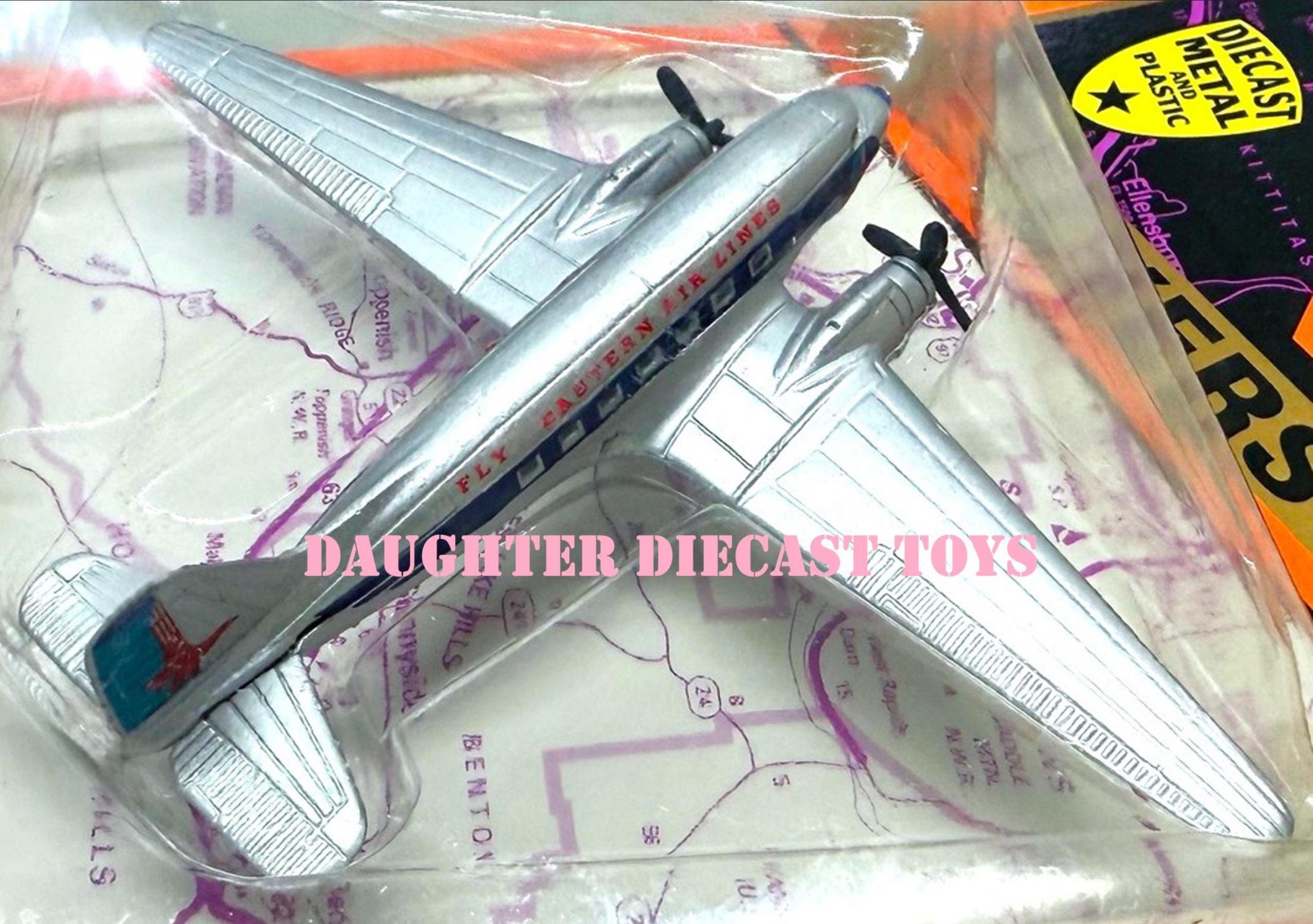


Vintage 1936 EASTERN AIRLINES DC-3 Diecast Metal Airplane Mint Condition/Factory Sealed! Road Champs Toys - Perfect Gift for Collectors!
$ 34.99

Vintage 1936 EASTERN AIRLINES DC-3 Diecast Metal Airplane Mint Condition/Factory
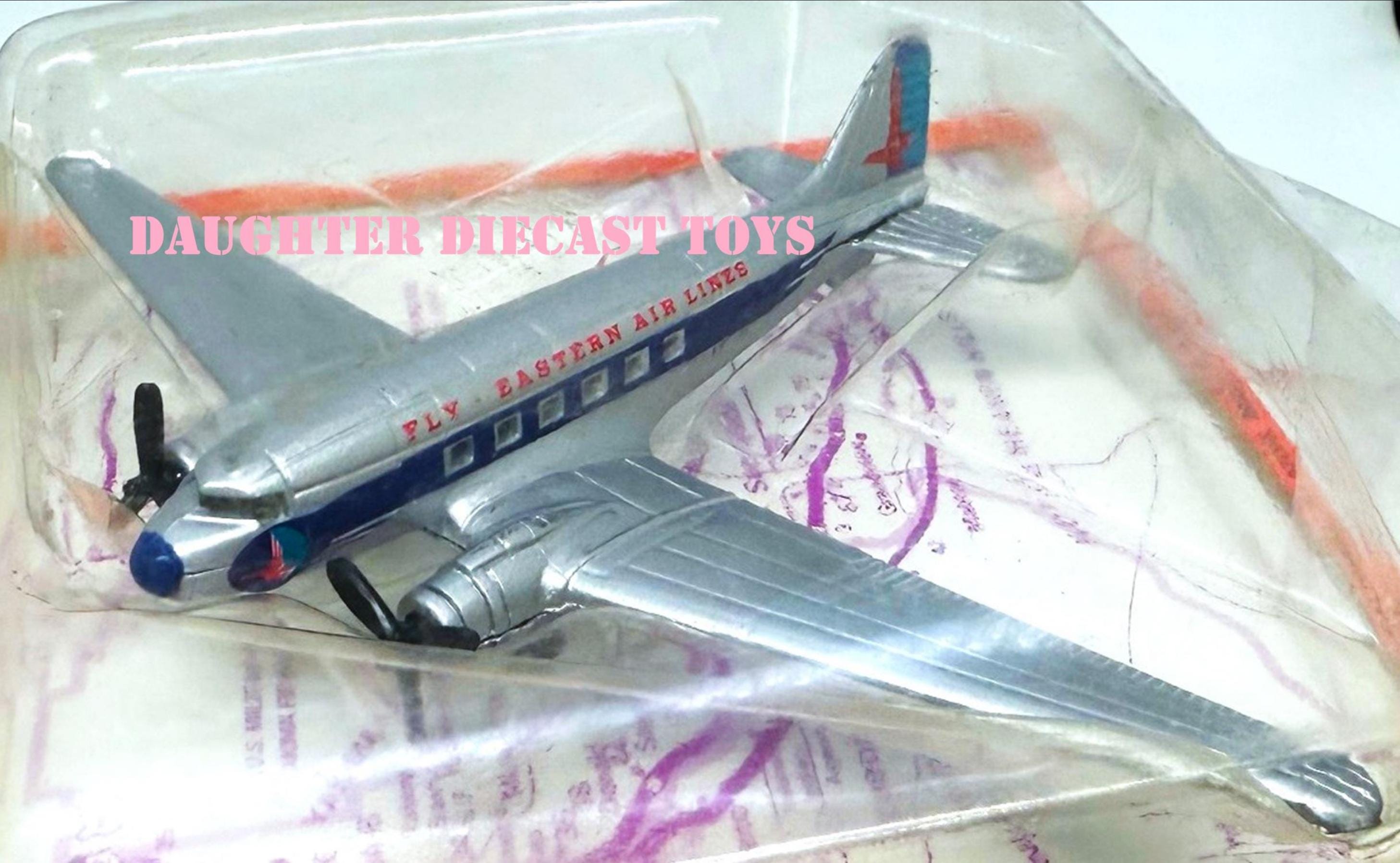
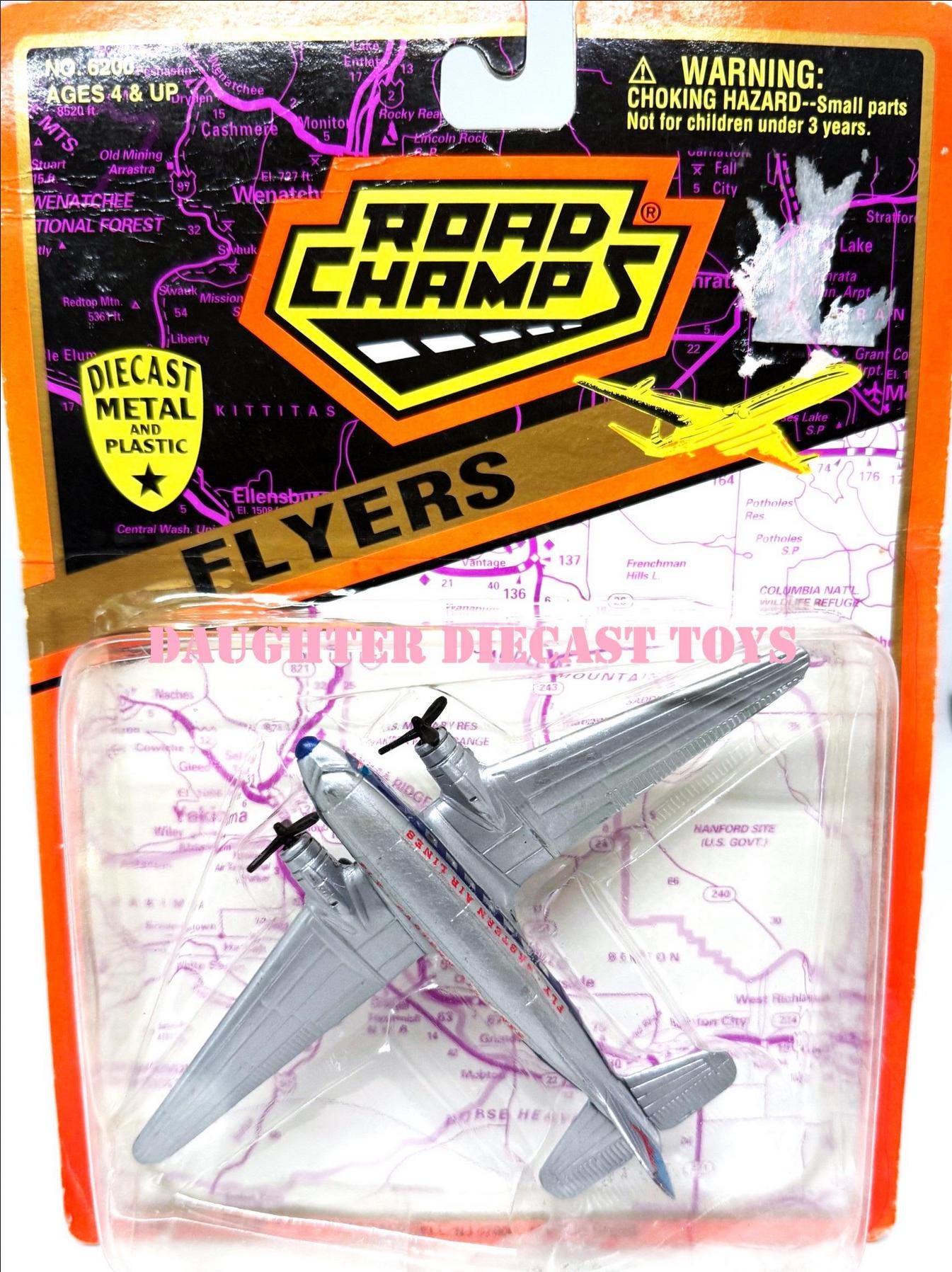
Sealed! Road Champs Toys - Perfect Gift for Collectors!Super Cool! Vintage 1936 EASTERN AIRLINES DC-3 Diecast Metal Airplane (see bio below). Adult collector model-made by Road Champs. Constructed of die cast metal. Highly sought-after, hard to find vintage model! Nice size...measures 4"L x 5 1/2"W x 1 1/2 "H, mounted on rolling wheels. Beautiful/mint condition. Never removed from its factory-sealed card. Perfect gift for Road Champs, aircraft, and vintage toy collectors! We ship fast & safe worldwide every day! See t Aircraft bio below:Note: My dad owned a Diecast toy store for 30 years. I inherited the store inventory when he passed away several years ago. I am (just now) able to bring myself to begin selling his cars-so they can be shared with the world. All pristine and mint condition vintage models will (eventually) be listed here on ETSY. All the inventory is NEW (vintage) merchandise-which was intended for retail sale. Please know-our diecast toys have NEVER been "played-with” we do not sell used, or damaged toys.
•
•
•FOR A LIMITED TIME
•
•
•Purchases totaling $35 and above qualify for FREE shipping to USA! Add more items to your Etsy shopping cart to save $$$.AIRCRAFT BIO:The Douglas DC-3 is a propeller-driven airliner manufactured by the Douglas Aircraft Company, which had a lasting effect on the airline industry in the 1930s to 1940s and World War II. It was developed as a larger, improved 14-bed sleeper version of the Douglas DC-2. It is a low-wing metal monoplane with conventional landing gear, powered by two radial piston engines of 1,000–1,200 hp (750–890 kW). Although the DC-3s originally built for civil service had the Wright R-1820 Cyclone, later civilian DC-3s used the Pratt & Whitney R-1830 Twin Wasp engine.[2] The DC-3 has a cruising speed of 207 mph (333 km/h), a capacity of 21 to 32 passengers or 6,000 lbs (2,700 kg) of cargo, and a range of 1,500 mi (2,400 km), and can operate from short runways.The DC-3 had many exceptional qualities compared to previous aircraft. It was fast, had a good range, was more reliable, and carried passengers in greater comfort. Before World War II, it pioneered many air travel routes. It was able to cross the continental United States from New York to Los Angeles in 18 hours, with only three stops. It is one of the first airliners that could profitably carry only passengers without relying on mail subsidies.[3][4] In 1939, at the peak of its dominance in the airliner market, around ninety percent of airline flights on the planet were by a DC-3 or some variant.[5]Following the war, the airliner market was flooded with surplus transport aircraft, and the DC-3 was no longer competitive because it was smaller and slower than aircraft built during the war. It was made obsolete on main routes by more advanced types such as the Douglas DC-4 and Convair 240, but the design proved adaptable and was still useful on less commercially demanding routes.Civilian DC-3 production ended in 1943 at 607 aircraft. Military versions, including the C-47 Skytrain (the Dakota in British RAF service), and Soviet- and Japanese-built versions, brought total production to over 16,000. Many continued to be used in a variety of niche roles; 2,000 DC-3s and military derivatives were estimated to be still flying in 2013;[6] by 2017 more than 300 were still flying.[7] As of 2023, it was estimated about 150 were still flying.[8]General characteristicsCrew: two Capacity: 21–32 passengers Length: 64 ft 5 in (19.7 m) Wingspan: 95 ft 0 in (29.0 m) Height: 16 ft 9 in (5.16 m) (level attitude) 23 ft 6 in Wing area: 987 sq ft (91.7 m2) Aspect ratio: 9.17 Airfoil: NACA2215 / NACA2206 Empty weight: 16,865 lb (7,650 kg) Gross weight: 25,200 lb (11,431 kg) payload w/full fuel, 3,446 lb Fuel capacity: 822 US gal (3,111.6 L) Powerplant: 2 × Pratt & Whitney R-1830-S1C3G Twin Wasp 14-cyl. air-cooled two row radial piston engine, 1,200 hp (890 kW) each Propellers: 3-bladed Hamilton Standard 23E50 series, 11 ft 6 in (3.5 m) diameter hydraulically controlled constant speed, featheringPerformanceMaximum speed: 223 kn (257 mph, 413 km/h) at 8,500 ft (2,590 m) Cruise speed: 183 kn (211 mph, 339 km/h) Stall speed: 68.0 kn (78.2 mph, 125.9 km/h) Never exceed speed: 223 kn (257 mph, 413 km/h) Minimum control speed: 77 kn (89 mph, 143 km/h) with one engine inoperative Range: 1,370 nmi (1,580 mi, 2,540 km) (maximum fuel, 3500 lb payload), cruise speed/range at 10,000 ft ASL, cruise fuel consumption of 94 gph at 50% power, 157kt IAS, 1,740 nm Service ceiling: 23,200 ft (7,100 m) , with one engine operative, 9,000 ft Rate of climb: 1,140 ft/min (5.8 m/s) , rate of climb at sea level with one engine operative, 200 fpm Wing loading: 25.5 lb/sq ft (125 kg/m2) Power/mass: 0.0952 hp/lb (156.5 W/kg)[61]
Sealed! Road Champs Toys - Perfect Gift for Collectors!Super Cool! Vintage 1936 EASTERN AIRLINES DC-3 Diecast Metal Airplane (see bio below). Adult collector model-made by Road Champs. Constructed of die cast metal. Highly sought-after, hard to find vintage model! Nice size...measures 4"L x 5 1/2"W x 1 1/2 "H, mounted on rolling wheels. Beautiful/mint condition. Never removed from its factory-sealed card. Perfect gift for Road Champs, aircraft, and vintage toy collectors! We ship fast & safe worldwide every day! See t Aircraft bio below:Note: My dad owned a Diecast toy store for 30 years. I inherited the store inventory when he passed away several years ago. I am (just now) able to bring myself to begin selling his cars-so they can be shared with the world. All pristine and mint condition vintage models will (eventually) be listed here on ETSY. All the inventory is NEW (vintage) merchandise-which was intended for retail sale. Please know-our diecast toys have NEVER been "played-with” we do not sell used, or damaged toys.
•
•
•FOR A LIMITED TIME
•
•
•Purchases totaling $35 and above qualify for FREE shipping to USA! Add more items to your Etsy shopping cart to save $$$.AIRCRAFT BIO:The Douglas DC-3 is a propeller-driven airliner manufactured by the Douglas Aircraft Company, which had a lasting effect on the airline industry in the 1930s to 1940s and World War II. It was developed as a larger, improved 14-bed sleeper version of the Douglas DC-2. It is a low-wing metal monoplane with conventional landing gear, powered by two radial piston engines of 1,000–1,200 hp (750–890 kW). Although the DC-3s originally built for civil service had the Wright R-1820 Cyclone, later civilian DC-3s used the Pratt & Whitney R-1830 Twin Wasp engine.[2] The DC-3 has a cruising speed of 207 mph (333 km/h), a capacity of 21 to 32 passengers or 6,000 lbs (2,700 kg) of cargo, and a range of 1,500 mi (2,400 km), and can operate from short runways.The DC-3 had many exceptional qualities compared to previous aircraft. It was fast, had a good range, was more reliable, and carried passengers in greater comfort. Before World War II, it pioneered many air travel routes. It was able to cross the continental United States from New York to Los Angeles in 18 hours, with only three stops. It is one of the first airliners that could profitably carry only passengers without relying on mail subsidies.[3][4] In 1939, at the peak of its dominance in the airliner market, around ninety percent of airline flights on the planet were by a DC-3 or some variant.[5]Following the war, the airliner market was flooded with surplus transport aircraft, and the DC-3 was no longer competitive because it was smaller and slower than aircraft built during the war. It was made obsolete on main routes by more advanced types such as the Douglas DC-4 and Convair 240, but the design proved adaptable and was still useful on less commercially demanding routes.Civilian DC-3 production ended in 1943 at 607 aircraft. Military versions, including the C-47 Skytrain (the Dakota in British RAF service), and Soviet- and Japanese-built versions, brought total production to over 16,000. Many continued to be used in a variety of niche roles; 2,000 DC-3s and military derivatives were estimated to be still flying in 2013;[6] by 2017 more than 300 were still flying.[7] As of 2023, it was estimated about 150 were still flying.[8]General characteristicsCrew: two Capacity: 21–32 passengers Length: 64 ft 5 in (19.7 m) Wingspan: 95 ft 0 in (29.0 m) Height: 16 ft 9 in (5.16 m) (level attitude) 23 ft 6 in Wing area: 987 sq ft (91.7 m2) Aspect ratio: 9.17 Airfoil: NACA2215 / NACA2206 Empty weight: 16,865 lb (7,650 kg) Gross weight: 25,200 lb (11,431 kg) payload w/full fuel, 3,446 lb Fuel capacity: 822 US gal (3,111.6 L) Powerplant: 2 × Pratt & Whitney R-1830-S1C3G Twin Wasp 14-cyl. air-cooled two row radial piston engine, 1,200 hp (890 kW) each Propellers: 3-bladed Hamilton Standard 23E50 series, 11 ft 6 in (3.5 m) diameter hydraulically controlled constant speed, featheringPerformanceMaximum speed: 223 kn (257 mph, 413 km/h) at 8,500 ft (2,590 m) Cruise speed: 183 kn (211 mph, 339 km/h) Stall speed: 68.0 kn (78.2 mph, 125.9 km/h) Never exceed speed: 223 kn (257 mph, 413 km/h) Minimum control speed: 77 kn (89 mph, 143 km/h) with one engine inoperative Range: 1,370 nmi (1,580 mi, 2,540 km) (maximum fuel, 3500 lb payload), cruise speed/range at 10,000 ft ASL, cruise fuel consumption of 94 gph at 50% power, 157kt IAS, 1,740 nm Service ceiling: 23,200 ft (7,100 m) , with one engine operative, 9,000 ft Rate of climb: 1,140 ft/min (5.8 m/s) , rate of climb at sea level with one engine operative, 200 fpm Wing loading: 25.5 lb/sq ft (125 kg/m2) Power/mass: 0.0952 hp/lb (156.5 W/kg)[61]
Other Products