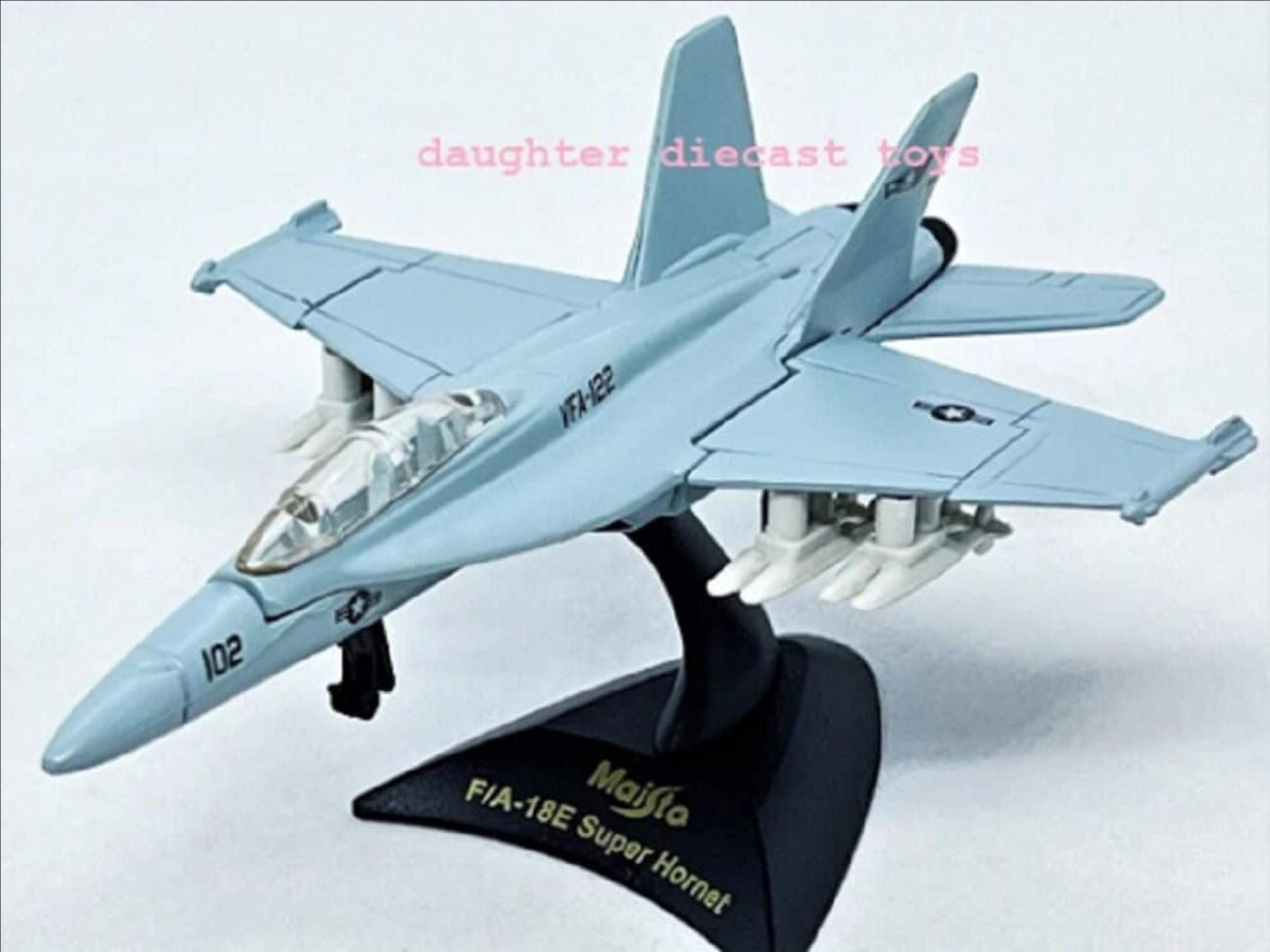

NAVY F/A 18E SUPER HORNET Supersonic Jet Airplane -Adult Collector Diecast Metal-w/Stand-Pristine Condition-Perfect Gift for Collectors!
$ 34.99

NAVY F/A 18E SUPER HORNET Supersonic Jet Airplane -Adult Collector Diecast
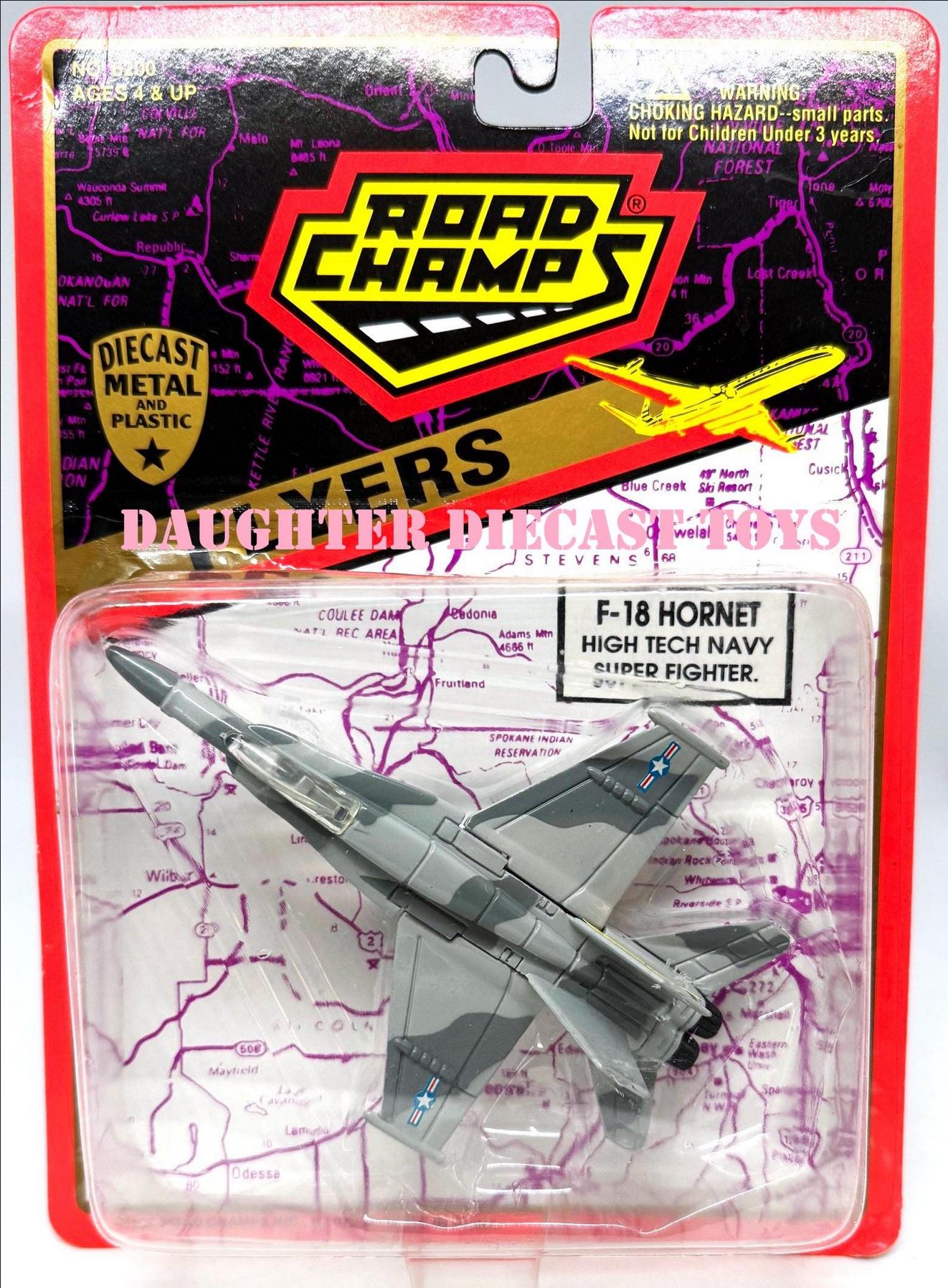
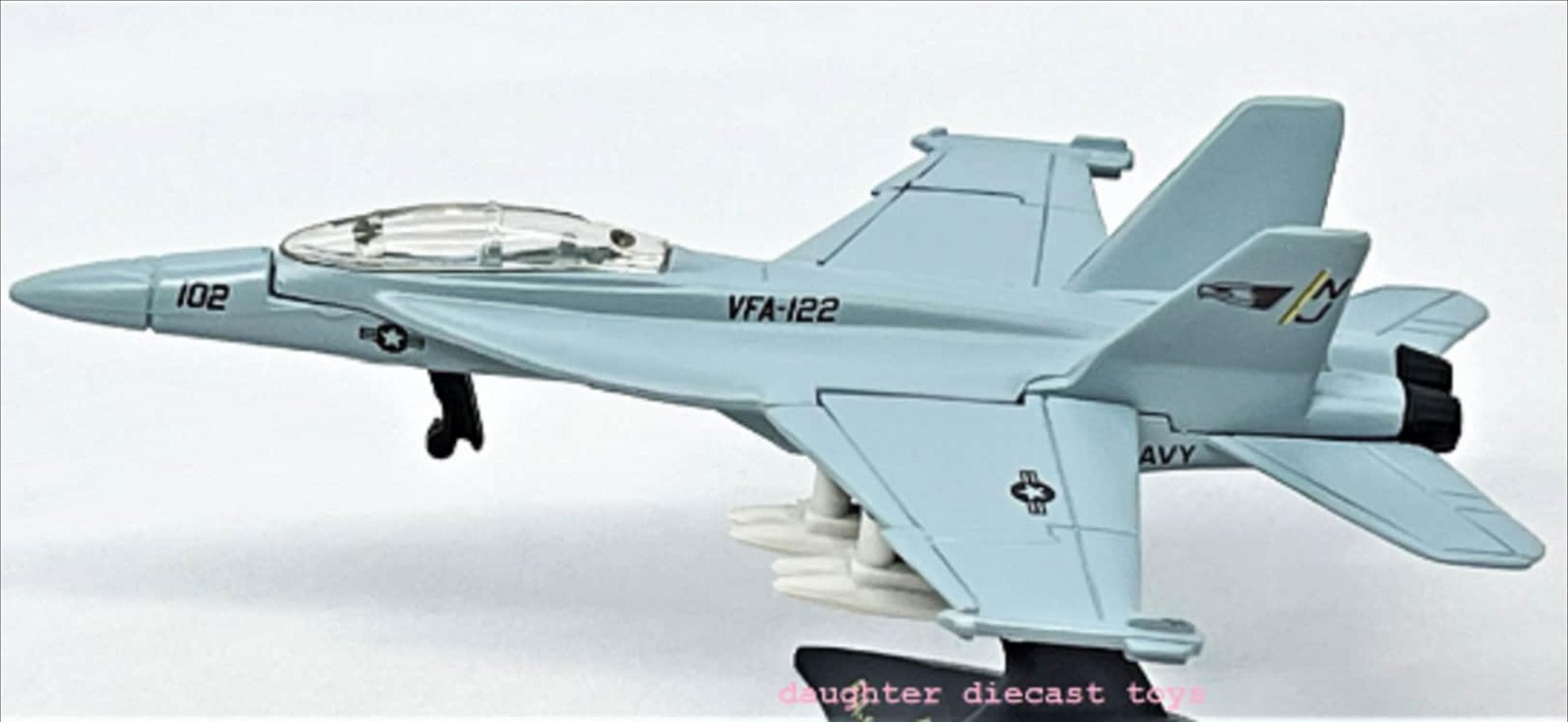
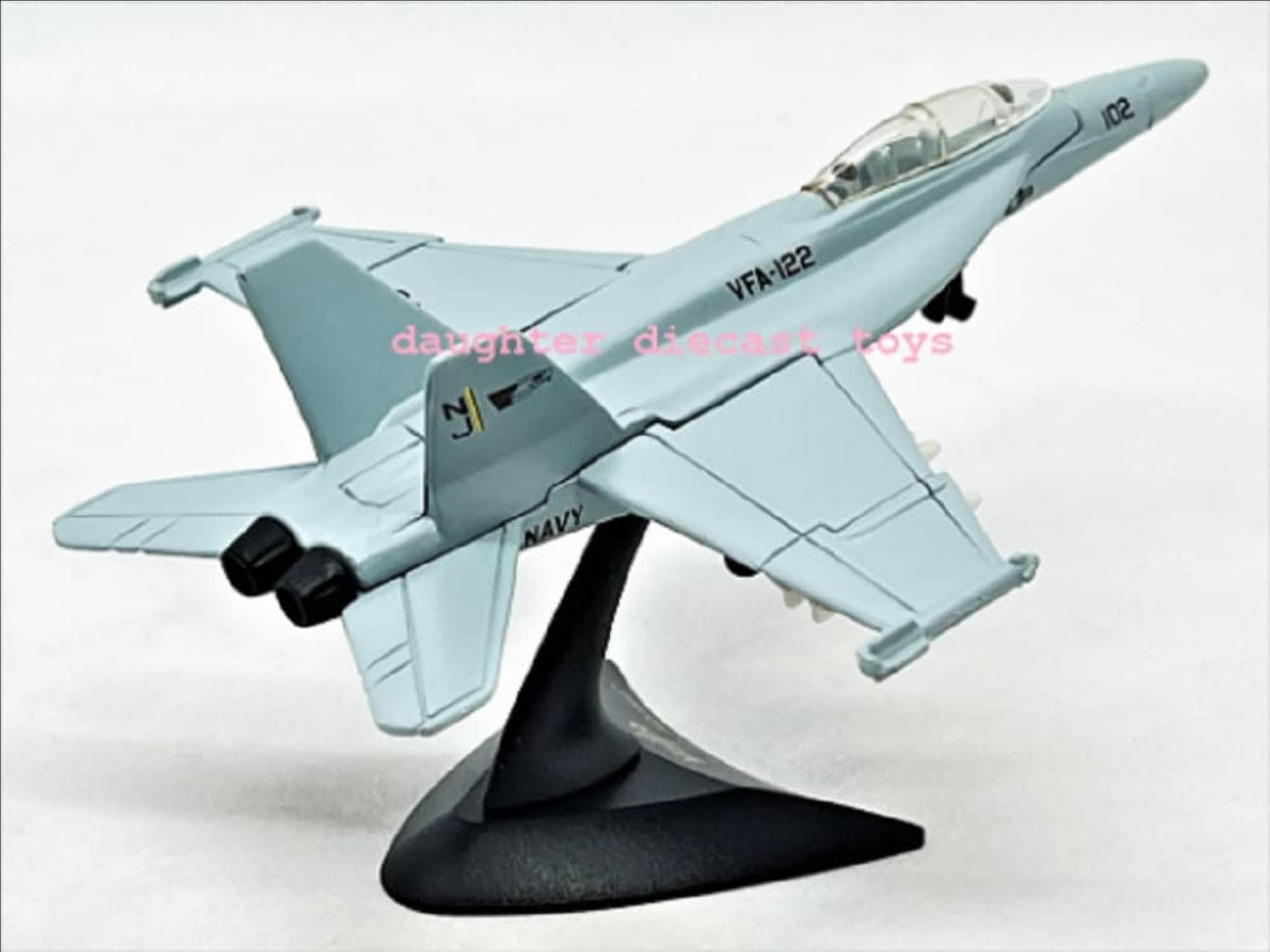
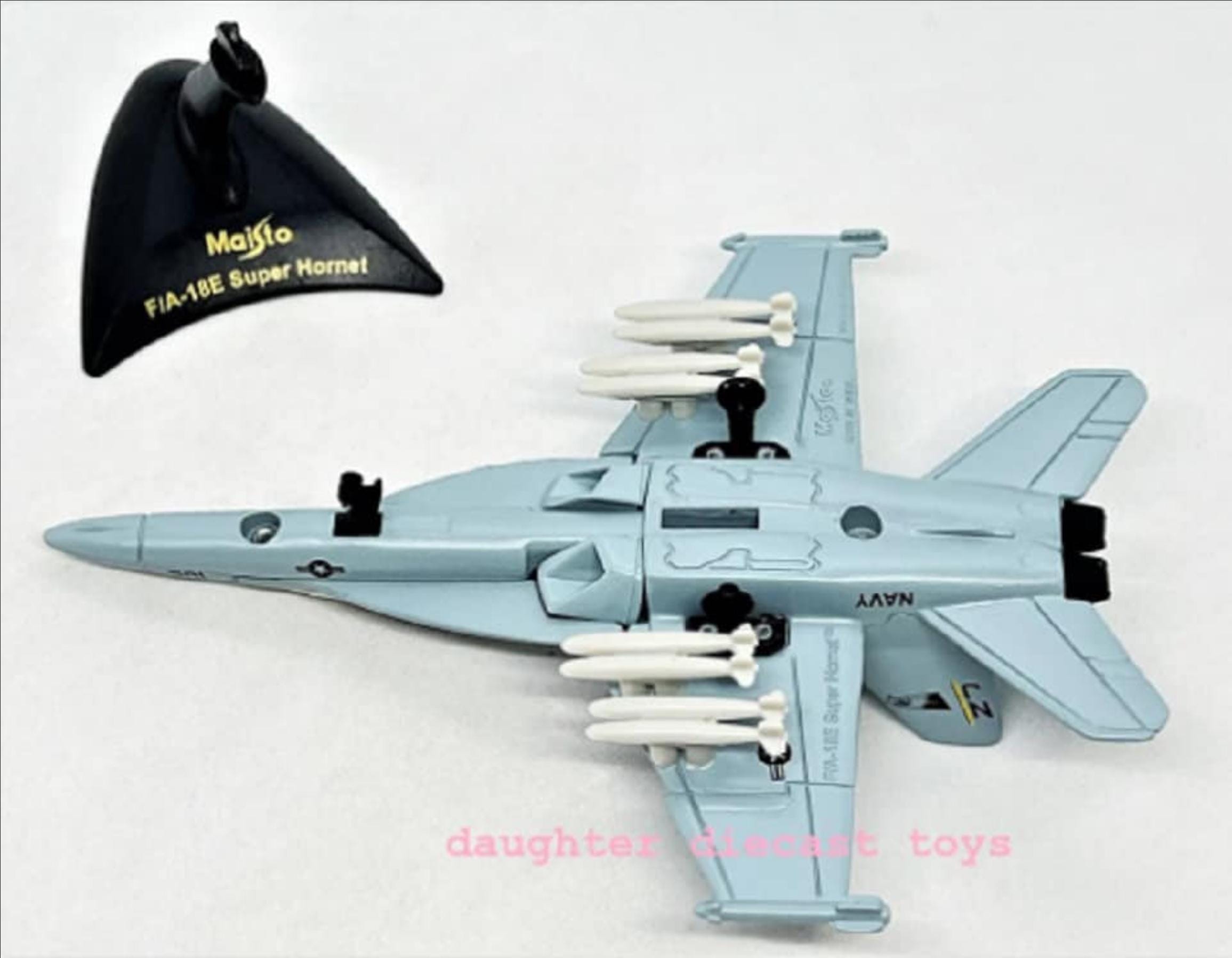
Metal-w/Stand-Pristine Condition-Perfect Gift for Collectors!Super sexy...and fast! NAVY F/A 18E SUPER HORNET-SUPERSONIC MUTI-ROLE JET FIGHTER. Adult collector model-weighty, constructed of diecast metal. Intricately-detailed, made by Maisto. Hard to find vintage model! Desktop display model-comes with-easy to set up stand (also, looks great off-stand). Scale=1/72 prox, measures: 5"L x 3 3/4"W x 2 1/2"H (mounted). Pristine/mint condition model-never previously handled or displayed (until today for our photos). Sold loose in collectors' bag with stand. The perfect gift for vintage toy collectors, veterans and aviation history buffs (like me)! We ship fast & safe worldwide every day. Read Aircraft Bio below....
•
•
•FOR A LIMITED TIME
•
•
•Purchases totaling $35 and above qualify for FREE shipping to USA! Add more items to your Etsy shopping cart to save $$$.NOTE: My dad owned a Diecast toy store for 30 years. I inherited the store inventory when he passed away many years ago. I am just now, beginning to sell the mint condition vintage models. All are store-inventory is new-old-stock, models have never been "played with". Please visit often-as I am adding more cool stuff every day!486.1486.1 AIRCRAFT BIO:The Boeing F/A-18E and F/A-18F Super Hornet are supersonic twin-engine, carrier-capable, multirole fighter aircraft variants derived from the McDonnell Douglas F/A-18 Hornet series. The F/A-18E single-seat and F/A-18F tandem-seat variants are larger and more advanced versions of the F/A-18C and D Hornet.The Super Hornet has an internal 20mm M61A2 rotary cannon and can carry air-to-air missiles, air-to-surface and a variety of other weapons. Additional fuel can be carried in up to five external fuel tanks and the aircraft can be configured as an airborne tanker by adding an external air-to-air refueling system.Designed and initially produced by McDonnell Douglas, the Super Hornet first flew in 1995. Low-rate production began in early 1997 with full-rate production starting in September 1997, after the merger of McDonnell Douglas and Boeing the previous month. The Super Hornet entered fleet service with the United States Navy in 1999, replacing the Grumman F-14 Tomcat, which was retired in 2006; the Super Hornet has served alongside the original Hornet. The Royal Australian Air Force (RAAF), which has operated the F/A-18A as its main fighter since 1984, ordered the F/A-18F in 2007 to replace its aging General Dynamics F-111C fleet. RAAF Super Hornets entered service in December 2010. In February 2023, Boeing announced plans to end production of the Super Hornet in 2025.Operational historyIn support of Operation Freedom, VFA-14, VFA-41 and VFA-115 flew close air support, strike, escort, SEAD and aerial refueling sorties. Two F/A-18Es from VFA-14 and two F/A-18Fs from VFA-41 were forward deployed to Abraham Lincoln. The VFA-14 aircraft flew mostly as aerial refuelers and the VFA-41 fighters as Forward Air Controller (Airborne) or FAC(A)s. On 6 April 2005, VFA-154 and VFA-147 (the latter squadron then still operating F/A-18Cs) dropped two 500-pound (230 kg) laser-guided bombs on an enemy insurgent location east of Baghdad.[citation needed] On 8 September 2006, VFA-211 F/A-18Fs expended GBU-12 and GBU-38 bombs against Taliban fighters and Taliban fortifications west and northwest of Kandahar. This was the first time the unit had participated in an active combat capacity using the Super Hornet.[80][81]F/A-18F take-off, in-flight refueling and landing on the USS Carl Vinson During the 2006–2007 cruise with Dwight D. Eisenhower, VFA-103 and VFA-143 supported Operations Freedom, Enduring Freedom and operations off the Somali coast. Alongside "Legacy Hornet" squadrons, VFA-131 and VFA-83, they dropped 140 precision guided weapons and performed nearly 70 strafing runs.[82] The Super Hornet can operate from the French nuclear carrier Charles de Gaulle (R91).[83]In 2007, Boeing proposed additional F/A-18E/Fs to the U.S. Navy in a multi-year contract.[84] By October 2008, Boeing had delivered 367 Super Hornets to the U.S. Navy.[85] On 6 April 2009, Defense Secretary Robert Gates announced that the Department of Defense (DOD) intended to acquire 31 F/A-18s in FY2010.[86] Congress requested the DoD study a further multi-year contract so that a projected fighter shortfall could be averted;[87] in 2006, the Navy was 60 fighters below its validated requirement.[88] The FY2010 budget bill authorized a multiyear purchase agreement for additional Super Hornets.[89][90] A multi-year contract was finalized on 28 September 2010, reported as saving $600 million over individual yearly contracts, for 66 Super Hornets and 58 Growlers to mitigate a four-year delay in the F-35 program.[91]The decision to take direct action was made to protect U.S. personnel in the city of Irbil and to ensure the safety of transport aircraft making airdrops to Yazidi civilians. Early on 8 August, two Super Hornets took off from George H.W. Bush and dropped 500 lb laser-guided bombs on a "mobile artillery piece" the militants had been using to shell Kurdish forces defending the city.[92][93] Later that day, four more aircraft struck a seven-vehicle convoy and a mortar position.[94] F/A-18F being refueled over Afghanistan in 2009 On 18 June 2017, a U.S. Navy F/A-18E shot down a Syrian Air Force Su-22 fighter-bomber that allegedly had bombed a position held by U.S.-supported Syrian Democratic Forces (SDF) near Tabqa; the Syrian government claimed the Su-22 was bombing an IS position. This was the first aerial kill of a crewed aircraft by an American fighter since 1999, the first by the Navy since the 1991 Persian Gulf War, the first kill by a Super Hornet, and the third kill by an F/A-18.[95] An E-3 Sentry issued several warnings to the Su-22 and, after it dropped bombs near SDF fighters, the F/A-18E, piloted by Lieutenant Commander Michael "MOB" Tremel, a pilot assigned to Strike Fighter Squadron 87 aboard the carrier George H.W. Bush, independently chose to shoot it down based on established rules of engagement. The F/A-18E first missed with an AIM-9X Sidewinder, then hit the Su-22 with an AIM-120 AMRAAM; the encounter lasted eight minutes.[96]In 2018, Boeing was awarded a contract to convert nine single-seat F/A-18E Super Hornets and two F/A-18F two-seaters for Blue Angels use; these are to be completed by 2021.[97]Royal Australian Air Force On 3 May 2007, the Australian Government signed an A$2.9 billion contract to acquire 24 F/A-18Fs as an interim replacement for the Royal Australian Air Force's (RAAF) aging F-111s.[98] It was reported that the order would also address any difficulties that might be caused by a need to quickly replace the RAAF's existing fleet of classic F/A-18A/B Hornets in the event of delays to the F-35 program.[99] The total cost of the purchase, with training and support over 10 years, was expected to be A$6 billion (US$4.6 billion).[100] An F-111C (at left) with one of the RAAF's first two F/A-18Fs[101] The order was controversial; Air Vice Marshal (retired) Peter Criss, said that he was "absolutely astounded" that $6 billion would be spent on an interim aircraft,[102] and cited the US Senate Armed Services Committee, to the effect that the "excess power" of the Block I Super Hornet was inferior to that of the MiG-29 and Su-30, both of which were being operated by, or were on order for, air forces in South East Asia.[103] Another former senior RAAF officer, Air Commodore (ret.) Ted Bushell stated that the F/A-18F could not perform the strategic deterrent/strike role of the F-111C and the latter could continue to operate until 2020 at least.[102] On 31 December 2007, the new Australian Labor government announced a review of the RAAF's aircraft procurement plans citing suitability concerns, the lack of a proper review process, and beliefs that an interim fighter was not needed.[104]On 17 March 2008, the Government announced that it would proceed to acquire 24 F/A-18Fs.[105] Defence Minister Joel Fitzgibbon called the Super Hornet an "excellent aircraft",[105] and indicated that costs and logistical factors contributed to the decision: the F-111's retirement was "irreversible"; "only" the F/A-18F could meet the timeframe and that termination involved "significant financial penalties and create understandable tensions between the contract partners."[106][107] The Block II aircraft offered include installed engines and six spares, APG-79 AESA radars, Link 16 connectivity, LAU-127 guided missile launchers, AN/ALE-55 fiber optic towed decoys and other equipment.[108] On 27 February 2009, Fitzgibbon announced that 12 of the 24 F/A-18Fs would be wired on the production line for future modification as Boeing EA-18G Growlers at an additional cost of A$35 million. The final decision on the EA-18G conversion, at a cost of A$300 million, would be made in 2012.[109]The first RAAF F/A-18F made its first flight from Boeing's factory in St. Louis, Missouri, on 21 July 2009.[110] RAAF crews began training in the U.S. in 2009. The first five F/A-18Fs arrived at their home base, RAAF Base Amberley in Queensland, on 26 March 2010;[111] and were joined by six more aircraft on 7 July 2010.[112] After four more aircraft arrived in December 2010, the first RAAF F/A-18F squadron was declared operational on 9 December 2010.[113]In 2008, U.S. export approval was sought for EA-18G Growlers.[114] In December 2012, Australia sought cost information on acquiring a further 24 F/A-18Fs, which may be bought to avoid a capability gap due to F-35 delays.[115] In February 2013, the U.S. Defense Security Cooperation Agency notified Congress of a possible Foreign Military Sale to Australia for up to 12 F/A-18E/Fs and 12 EA-18Gs with associated equipment, training and logistical support.[116] In May 2013, Australia announced the order of 12 new EA-18Gs instead of converting any F/A-18Fs.[117] In June 2014, Boeing received a contract for 12 EA-18Gs; the first was rolled out on 29 July 2015.[118][119]On 8 December 2020, F/A-18F A44-223 rolled into a ditch while attempting to take off at RAAF Base Amberley, the crew ejected. An eyewitness reportedly observed smoke from one of the engines.[125] A day after the incident, the RAAF grounded the fleet of 24 Super Hornets and 11 Growlers while the incident was investigated.[126] The cause was determined to be pilot error.[12
Metal-w/Stand-Pristine Condition-Perfect Gift for Collectors!Super sexy...and fast! NAVY F/A 18E SUPER HORNET-SUPERSONIC MUTI-ROLE JET FIGHTER. Adult collector model-weighty, constructed of diecast metal. Intricately-detailed, made by Maisto. Hard to find vintage model! Desktop display model-comes with-easy to set up stand (also, looks great off-stand). Scale=1/72 prox, measures: 5"L x 3 3/4"W x 2 1/2"H (mounted). Pristine/mint condition model-never previously handled or displayed (until today for our photos). Sold loose in collectors' bag with stand. The perfect gift for vintage toy collectors, veterans and aviation history buffs (like me)! We ship fast & safe worldwide every day. Read Aircraft Bio below....
•
•
•FOR A LIMITED TIME
•
•
•Purchases totaling $35 and above qualify for FREE shipping to USA! Add more items to your Etsy shopping cart to save $$$.NOTE: My dad owned a Diecast toy store for 30 years. I inherited the store inventory when he passed away many years ago. I am just now, beginning to sell the mint condition vintage models. All are store-inventory is new-old-stock, models have never been "played with". Please visit often-as I am adding more cool stuff every day!486.1486.1 AIRCRAFT BIO:The Boeing F/A-18E and F/A-18F Super Hornet are supersonic twin-engine, carrier-capable, multirole fighter aircraft variants derived from the McDonnell Douglas F/A-18 Hornet series. The F/A-18E single-seat and F/A-18F tandem-seat variants are larger and more advanced versions of the F/A-18C and D Hornet.The Super Hornet has an internal 20mm M61A2 rotary cannon and can carry air-to-air missiles, air-to-surface and a variety of other weapons. Additional fuel can be carried in up to five external fuel tanks and the aircraft can be configured as an airborne tanker by adding an external air-to-air refueling system.Designed and initially produced by McDonnell Douglas, the Super Hornet first flew in 1995. Low-rate production began in early 1997 with full-rate production starting in September 1997, after the merger of McDonnell Douglas and Boeing the previous month. The Super Hornet entered fleet service with the United States Navy in 1999, replacing the Grumman F-14 Tomcat, which was retired in 2006; the Super Hornet has served alongside the original Hornet. The Royal Australian Air Force (RAAF), which has operated the F/A-18A as its main fighter since 1984, ordered the F/A-18F in 2007 to replace its aging General Dynamics F-111C fleet. RAAF Super Hornets entered service in December 2010. In February 2023, Boeing announced plans to end production of the Super Hornet in 2025.Operational historyIn support of Operation Freedom, VFA-14, VFA-41 and VFA-115 flew close air support, strike, escort, SEAD and aerial refueling sorties. Two F/A-18Es from VFA-14 and two F/A-18Fs from VFA-41 were forward deployed to Abraham Lincoln. The VFA-14 aircraft flew mostly as aerial refuelers and the VFA-41 fighters as Forward Air Controller (Airborne) or FAC(A)s. On 6 April 2005, VFA-154 and VFA-147 (the latter squadron then still operating F/A-18Cs) dropped two 500-pound (230 kg) laser-guided bombs on an enemy insurgent location east of Baghdad.[citation needed] On 8 September 2006, VFA-211 F/A-18Fs expended GBU-12 and GBU-38 bombs against Taliban fighters and Taliban fortifications west and northwest of Kandahar. This was the first time the unit had participated in an active combat capacity using the Super Hornet.[80][81]F/A-18F take-off, in-flight refueling and landing on the USS Carl Vinson During the 2006–2007 cruise with Dwight D. Eisenhower, VFA-103 and VFA-143 supported Operations Freedom, Enduring Freedom and operations off the Somali coast. Alongside "Legacy Hornet" squadrons, VFA-131 and VFA-83, they dropped 140 precision guided weapons and performed nearly 70 strafing runs.[82] The Super Hornet can operate from the French nuclear carrier Charles de Gaulle (R91).[83]In 2007, Boeing proposed additional F/A-18E/Fs to the U.S. Navy in a multi-year contract.[84] By October 2008, Boeing had delivered 367 Super Hornets to the U.S. Navy.[85] On 6 April 2009, Defense Secretary Robert Gates announced that the Department of Defense (DOD) intended to acquire 31 F/A-18s in FY2010.[86] Congress requested the DoD study a further multi-year contract so that a projected fighter shortfall could be averted;[87] in 2006, the Navy was 60 fighters below its validated requirement.[88] The FY2010 budget bill authorized a multiyear purchase agreement for additional Super Hornets.[89][90] A multi-year contract was finalized on 28 September 2010, reported as saving $600 million over individual yearly contracts, for 66 Super Hornets and 58 Growlers to mitigate a four-year delay in the F-35 program.[91]The decision to take direct action was made to protect U.S. personnel in the city of Irbil and to ensure the safety of transport aircraft making airdrops to Yazidi civilians. Early on 8 August, two Super Hornets took off from George H.W. Bush and dropped 500 lb laser-guided bombs on a "mobile artillery piece" the militants had been using to shell Kurdish forces defending the city.[92][93] Later that day, four more aircraft struck a seven-vehicle convoy and a mortar position.[94] F/A-18F being refueled over Afghanistan in 2009 On 18 June 2017, a U.S. Navy F/A-18E shot down a Syrian Air Force Su-22 fighter-bomber that allegedly had bombed a position held by U.S.-supported Syrian Democratic Forces (SDF) near Tabqa; the Syrian government claimed the Su-22 was bombing an IS position. This was the first aerial kill of a crewed aircraft by an American fighter since 1999, the first by the Navy since the 1991 Persian Gulf War, the first kill by a Super Hornet, and the third kill by an F/A-18.[95] An E-3 Sentry issued several warnings to the Su-22 and, after it dropped bombs near SDF fighters, the F/A-18E, piloted by Lieutenant Commander Michael "MOB" Tremel, a pilot assigned to Strike Fighter Squadron 87 aboard the carrier George H.W. Bush, independently chose to shoot it down based on established rules of engagement. The F/A-18E first missed with an AIM-9X Sidewinder, then hit the Su-22 with an AIM-120 AMRAAM; the encounter lasted eight minutes.[96]In 2018, Boeing was awarded a contract to convert nine single-seat F/A-18E Super Hornets and two F/A-18F two-seaters for Blue Angels use; these are to be completed by 2021.[97]Royal Australian Air Force On 3 May 2007, the Australian Government signed an A$2.9 billion contract to acquire 24 F/A-18Fs as an interim replacement for the Royal Australian Air Force's (RAAF) aging F-111s.[98] It was reported that the order would also address any difficulties that might be caused by a need to quickly replace the RAAF's existing fleet of classic F/A-18A/B Hornets in the event of delays to the F-35 program.[99] The total cost of the purchase, with training and support over 10 years, was expected to be A$6 billion (US$4.6 billion).[100] An F-111C (at left) with one of the RAAF's first two F/A-18Fs[101] The order was controversial; Air Vice Marshal (retired) Peter Criss, said that he was "absolutely astounded" that $6 billion would be spent on an interim aircraft,[102] and cited the US Senate Armed Services Committee, to the effect that the "excess power" of the Block I Super Hornet was inferior to that of the MiG-29 and Su-30, both of which were being operated by, or were on order for, air forces in South East Asia.[103] Another former senior RAAF officer, Air Commodore (ret.) Ted Bushell stated that the F/A-18F could not perform the strategic deterrent/strike role of the F-111C and the latter could continue to operate until 2020 at least.[102] On 31 December 2007, the new Australian Labor government announced a review of the RAAF's aircraft procurement plans citing suitability concerns, the lack of a proper review process, and beliefs that an interim fighter was not needed.[104]On 17 March 2008, the Government announced that it would proceed to acquire 24 F/A-18Fs.[105] Defence Minister Joel Fitzgibbon called the Super Hornet an "excellent aircraft",[105] and indicated that costs and logistical factors contributed to the decision: the F-111's retirement was "irreversible"; "only" the F/A-18F could meet the timeframe and that termination involved "significant financial penalties and create understandable tensions between the contract partners."[106][107] The Block II aircraft offered include installed engines and six spares, APG-79 AESA radars, Link 16 connectivity, LAU-127 guided missile launchers, AN/ALE-55 fiber optic towed decoys and other equipment.[108] On 27 February 2009, Fitzgibbon announced that 12 of the 24 F/A-18Fs would be wired on the production line for future modification as Boeing EA-18G Growlers at an additional cost of A$35 million. The final decision on the EA-18G conversion, at a cost of A$300 million, would be made in 2012.[109]The first RAAF F/A-18F made its first flight from Boeing's factory in St. Louis, Missouri, on 21 July 2009.[110] RAAF crews began training in the U.S. in 2009. The first five F/A-18Fs arrived at their home base, RAAF Base Amberley in Queensland, on 26 March 2010;[111] and were joined by six more aircraft on 7 July 2010.[112] After four more aircraft arrived in December 2010, the first RAAF F/A-18F squadron was declared operational on 9 December 2010.[113]In 2008, U.S. export approval was sought for EA-18G Growlers.[114] In December 2012, Australia sought cost information on acquiring a further 24 F/A-18Fs, which may be bought to avoid a capability gap due to F-35 delays.[115] In February 2013, the U.S. Defense Security Cooperation Agency notified Congress of a possible Foreign Military Sale to Australia for up to 12 F/A-18E/Fs and 12 EA-18Gs with associated equipment, training and logistical support.[116] In May 2013, Australia announced the order of 12 new EA-18Gs instead of converting any F/A-18Fs.[117] In June 2014, Boeing received a contract for 12 EA-18Gs; the first was rolled out on 29 July 2015.[118][119]On 8 December 2020, F/A-18F A44-223 rolled into a ditch while attempting to take off at RAAF Base Amberley, the crew ejected. An eyewitness reportedly observed smoke from one of the engines.[125] A day after the incident, the RAAF grounded the fleet of 24 Super Hornets and 11 Growlers while the incident was investigated.[126] The cause was determined to be pilot error.[12
Other Products