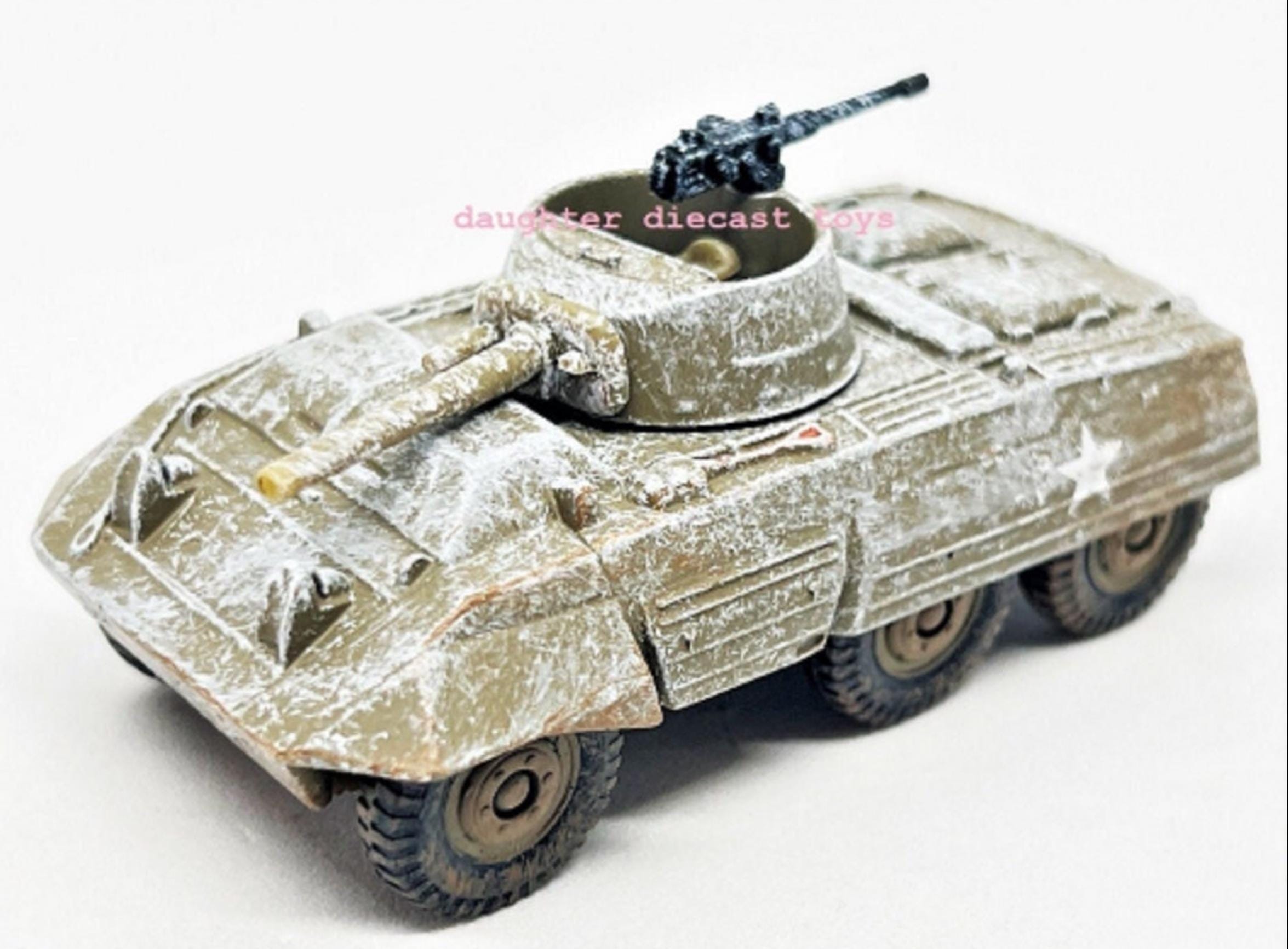

Army WWII M8 Armored Car-with Display Base & Data Card! Adult Collector Model/Intricately Detailed Diecast Metal-Pristine Condition! Corgi
$ 39.99

Awesome! Vintage Army WWII M8 ARMORED CAR. Highly sought after, intricately
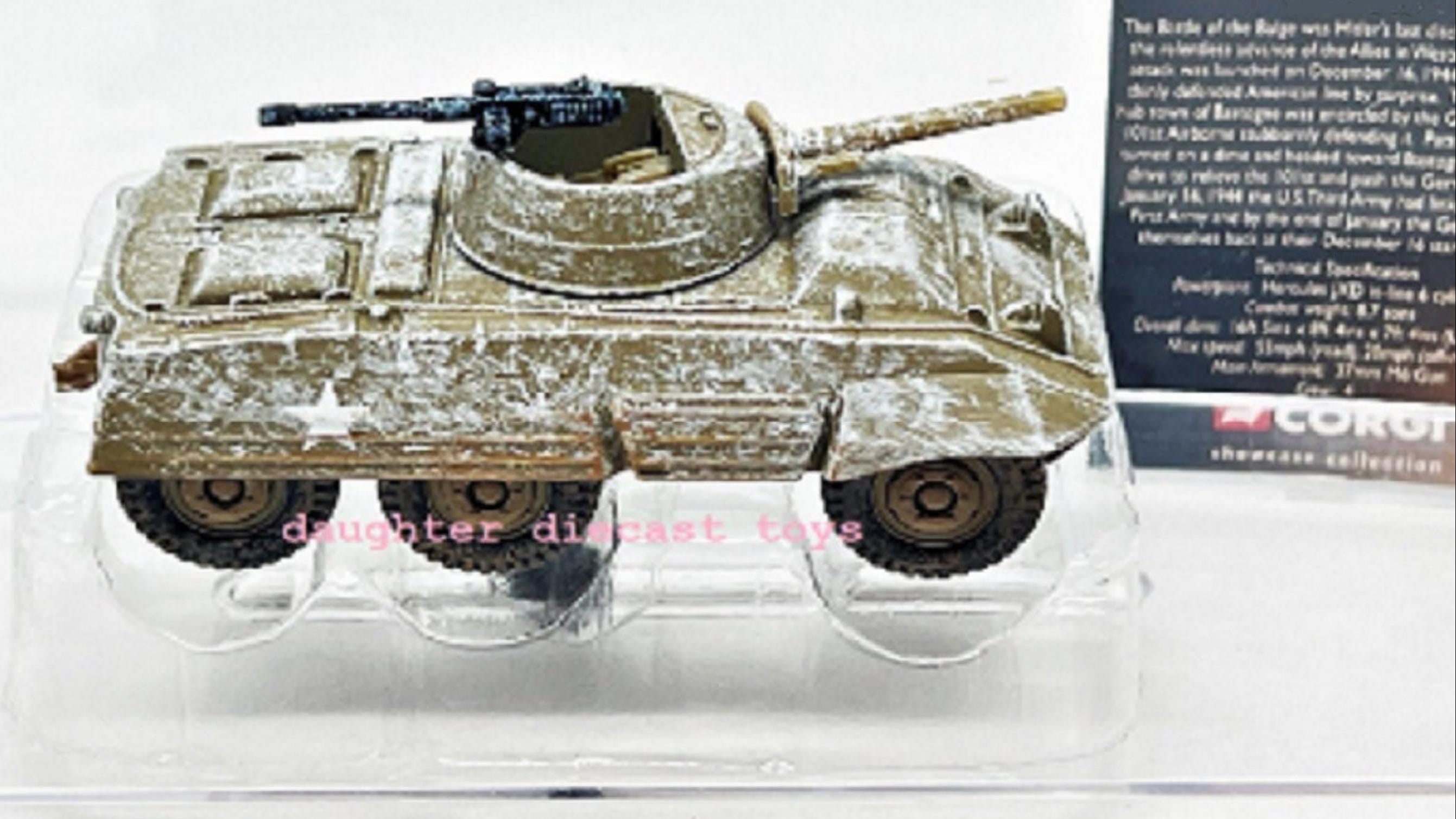
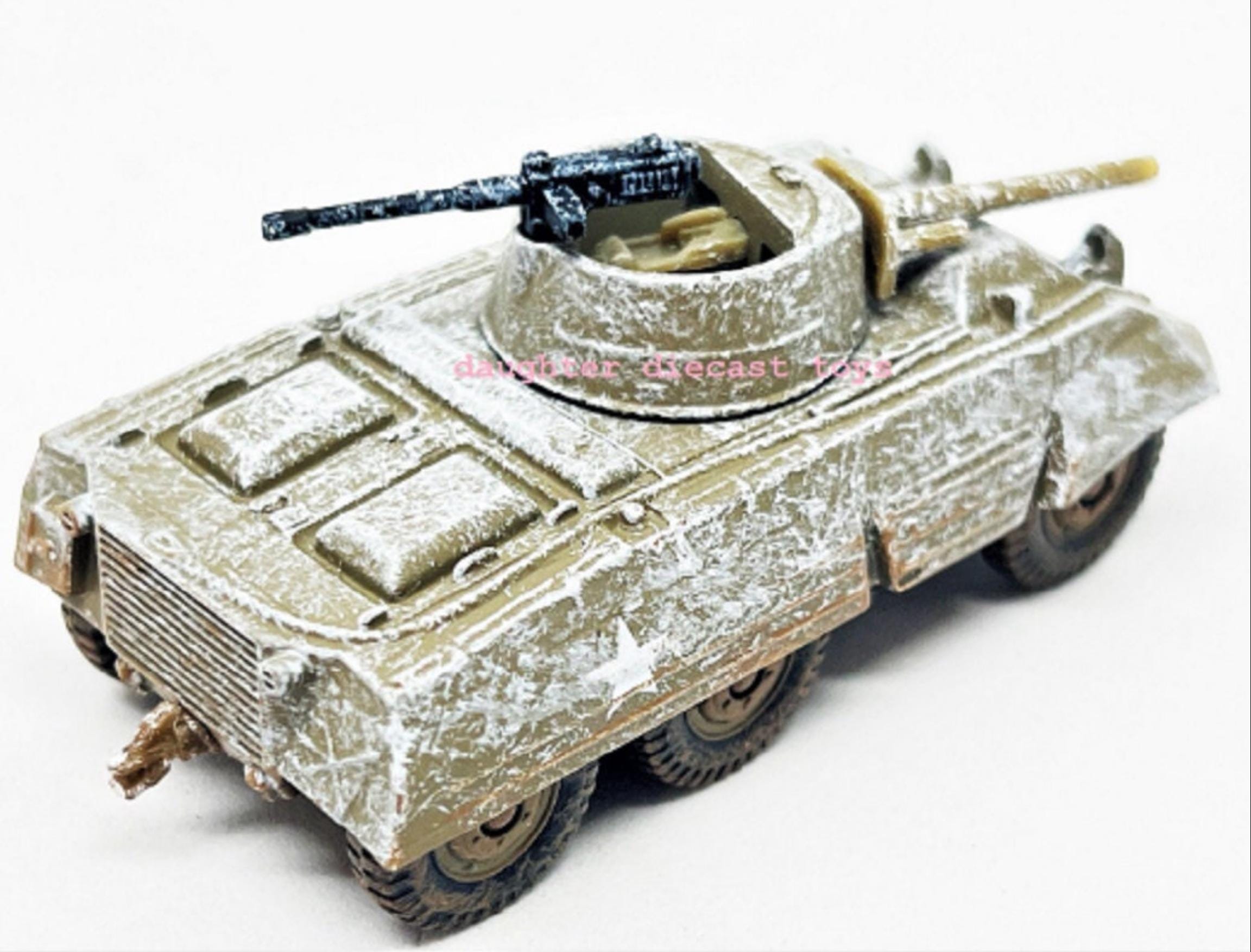
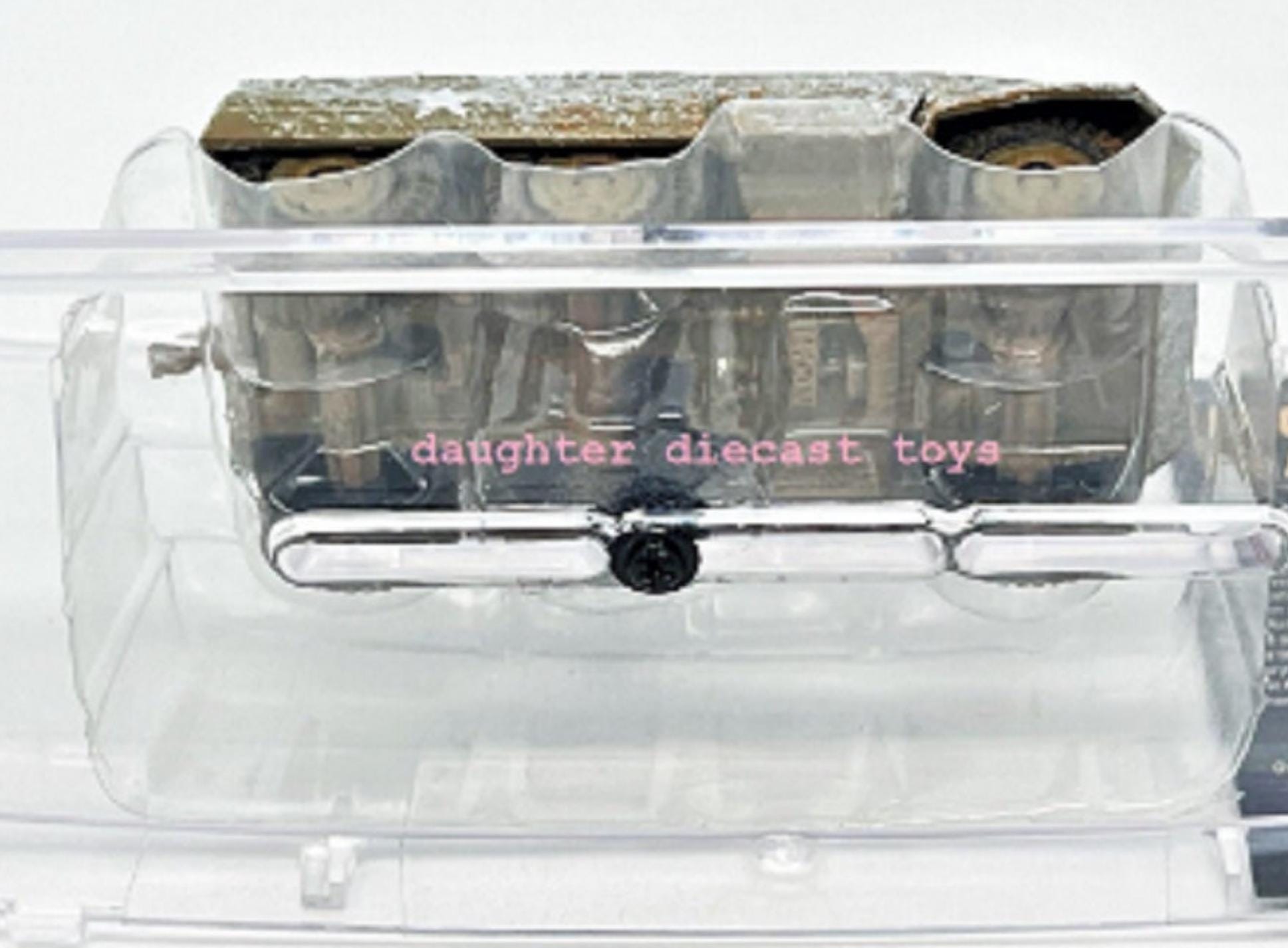
detailed Diecast Metal Truck/Adult Collectors Model-which comes with Display base & Data Card (see photo 2). The model can be removed from the stand if so desired (see photo 4). Made by Corgi. Vehicle measures 2 3/4"L x 1 3/8"W x 1 1/2"H. Pristine condition model-has never been displayed until today for the photos in this listing (see all 5 pics-using arrows on sides of the main listing photo). Sold loose-on stand with data card. Perfect gift for vintage/military toy collectors, history buffs, and Veterans! 100% happiness guaranteed. We ship fast & safe worldwide every day! Read Armored car bio below....Note: My dad owned a Diecast toy store for 30 years. I inherited the store inventory when he passed away several years ago. I am (just now) able to bring myself to begin selling his cars-so they can be shared with the world. All pristine and mint condition vintage models will (eventually) be listed here on ETSY. All the inventory is NEW (vintage) merchandise-which was intended for retail sale. Please know-our diecast toys have NEVER been "played-with” we do not sell used, or damaged toys.
•
•
•FOR A LIMITED TIME
•
•
•Purchases totaling $35 and above qualify for FREE shipping to USA! Add more items to your Etsy shopping cart to save $$$.Vehicle bio:The M8 light armored car is a 6×6 armored car produced by the Ford Motor Company during World War II. It was used from 1943 by United States and British forces in Europe and the Pacific until the end of the war.[1] The vehicle was widely exported and as of 2006 still remained in service with some countries.[1]In British service, the M8 was known as the "Greyhound", a nickname seldom, if ever, used by the US. The British Army found it too lightly armored, particularly the hull floor, which anti-tank mines could easily penetrate (the crews' solution was lining the floor of the crew compartment with sandbags). Nevertheless, it was produced in large numbers. The M8 Greyhound's excellent on-road mobility made it a great supportive element in the advancing American and British armored columns. It was marginal off-road, especially in mud.Service history: World War IIThe M8 light armored car entered combat service with the Allies in Sicily in 1943. It was purpose designed to serve as the primary basic command and communication combat vehicle of the U.S. Cavalry Reconnaissance troops. It was subsequently used by the US Army in Italy, Northwest Europe and the Pacific. In the latter theater, it was used mostly on Okinawa and the Philippines, and was even employed in its original tank destroyer role, as most Japanese tanks had armor that was vulnerable to its 37 mm gun. Over 1,000 were supplied via Lend-Lease to US allies; the United Kingdom, Free France and Brazil. American troops in an M8 passing the Arc de Triomphe after the liberation of ParisIn the European Theater, the M8 received "varied acceptance." Its on-road performance was generally good, and it was armed and armored well enough for reconnaissance missions. On the contrary, the turning radius was considered too wide, and the engine was considered underpowered, routinely experiencing problems such as overheating from being run at high output continuously and/or having its ventilation louvers obstructed by personal equipment stored on the rear of the vehicle. Large numbers were regularly under repair, gaining the vehicle a reputation of being unreliable. Off-road mobility, especially on soft ground like mud or snow, was poor;[5] in the mountainous terrain of Italy and in the Northwest European winter, the M8 was more or less restricted to roads, which greatly reduced its value as a reconnaissance vehicle. It was also very vulnerable to landmines. In February 1944, an add-on armor kit was designed to provide an extra quarter-inch of belly armor to reduce landmine vulnerability. Some crews also placed sandbags on the floor to make up for the thin belly armor. Another problem was that commanders often used their reconnaissance squadrons for fire support missions, for which the thinly-armored M8 was ill-suited. When it encountered German armored reconnaissance units, the M8 could easily penetrate their armor with its 37 mm gun. Conversely, its own thin armor was vulnerable to the 20 mm autocannons that German scout cars were equipped with.Due to mobility problems with the M8, namely with regards to its suspension, the US Army's Special Armored Vehicle Board recommended the development of a new six-wheeled armored car which matched the M8's dimensions and size but was equipped with an articulated, independently sprung suspension system.[6] Two prototypes, the Studebaker T27 and Chevrolet T28 were trialled by the US and also reviewed by the British Armed Forces.[6] The new armored car program was shelved and then permanently cancelled due to the end of the war, as impetus and funding for new military development projects had plummeted.[6] The fleet of preexisting M8 and M20 armored cars was then considered more than adequate for the postwar US Army, which was demobilizing thousands of personnel and already had large stockpiles of equipment surplus to its requirements.[6]
detailed Diecast Metal Truck/Adult Collectors Model-which comes with Display base & Data Card (see photo 2). The model can be removed from the stand if so desired (see photo 4). Made by Corgi. Vehicle measures 2 3/4"L x 1 3/8"W x 1 1/2"H. Pristine condition model-has never been displayed until today for the photos in this listing (see all 5 pics-using arrows on sides of the main listing photo). Sold loose-on stand with data card. Perfect gift for vintage/military toy collectors, history buffs, and Veterans! 100% happiness guaranteed. We ship fast & safe worldwide every day! Read Armored car bio below....Note: My dad owned a Diecast toy store for 30 years. I inherited the store inventory when he passed away several years ago. I am (just now) able to bring myself to begin selling his cars-so they can be shared with the world. All pristine and mint condition vintage models will (eventually) be listed here on ETSY. All the inventory is NEW (vintage) merchandise-which was intended for retail sale. Please know-our diecast toys have NEVER been "played-with” we do not sell used, or damaged toys.
•
•
•FOR A LIMITED TIME
•
•
•Purchases totaling $35 and above qualify for FREE shipping to USA! Add more items to your Etsy shopping cart to save $$$.Vehicle bio:The M8 light armored car is a 6×6 armored car produced by the Ford Motor Company during World War II. It was used from 1943 by United States and British forces in Europe and the Pacific until the end of the war.[1] The vehicle was widely exported and as of 2006 still remained in service with some countries.[1]In British service, the M8 was known as the "Greyhound", a nickname seldom, if ever, used by the US. The British Army found it too lightly armored, particularly the hull floor, which anti-tank mines could easily penetrate (the crews' solution was lining the floor of the crew compartment with sandbags). Nevertheless, it was produced in large numbers. The M8 Greyhound's excellent on-road mobility made it a great supportive element in the advancing American and British armored columns. It was marginal off-road, especially in mud.Service history: World War IIThe M8 light armored car entered combat service with the Allies in Sicily in 1943. It was purpose designed to serve as the primary basic command and communication combat vehicle of the U.S. Cavalry Reconnaissance troops. It was subsequently used by the US Army in Italy, Northwest Europe and the Pacific. In the latter theater, it was used mostly on Okinawa and the Philippines, and was even employed in its original tank destroyer role, as most Japanese tanks had armor that was vulnerable to its 37 mm gun. Over 1,000 were supplied via Lend-Lease to US allies; the United Kingdom, Free France and Brazil. American troops in an M8 passing the Arc de Triomphe after the liberation of ParisIn the European Theater, the M8 received "varied acceptance." Its on-road performance was generally good, and it was armed and armored well enough for reconnaissance missions. On the contrary, the turning radius was considered too wide, and the engine was considered underpowered, routinely experiencing problems such as overheating from being run at high output continuously and/or having its ventilation louvers obstructed by personal equipment stored on the rear of the vehicle. Large numbers were regularly under repair, gaining the vehicle a reputation of being unreliable. Off-road mobility, especially on soft ground like mud or snow, was poor;[5] in the mountainous terrain of Italy and in the Northwest European winter, the M8 was more or less restricted to roads, which greatly reduced its value as a reconnaissance vehicle. It was also very vulnerable to landmines. In February 1944, an add-on armor kit was designed to provide an extra quarter-inch of belly armor to reduce landmine vulnerability. Some crews also placed sandbags on the floor to make up for the thin belly armor. Another problem was that commanders often used their reconnaissance squadrons for fire support missions, for which the thinly-armored M8 was ill-suited. When it encountered German armored reconnaissance units, the M8 could easily penetrate their armor with its 37 mm gun. Conversely, its own thin armor was vulnerable to the 20 mm autocannons that German scout cars were equipped with.Due to mobility problems with the M8, namely with regards to its suspension, the US Army's Special Armored Vehicle Board recommended the development of a new six-wheeled armored car which matched the M8's dimensions and size but was equipped with an articulated, independently sprung suspension system.[6] Two prototypes, the Studebaker T27 and Chevrolet T28 were trialled by the US and also reviewed by the British Armed Forces.[6] The new armored car program was shelved and then permanently cancelled due to the end of the war, as impetus and funding for new military development projects had plummeted.[6] The fleet of preexisting M8 and M20 armored cars was then considered more than adequate for the postwar US Army, which was demobilizing thousands of personnel and already had large stockpiles of equipment surplus to its requirements.[6]
Other Products