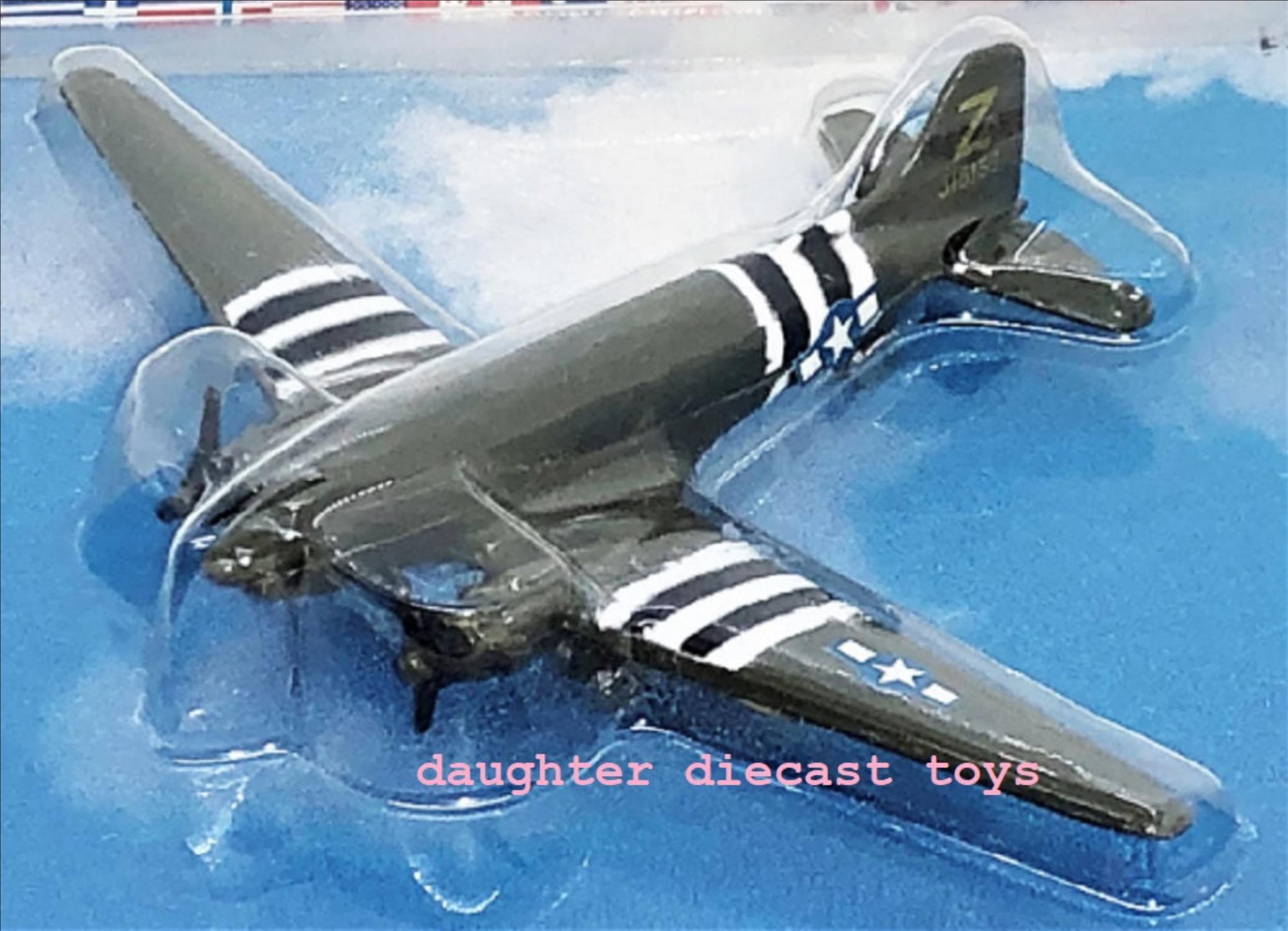
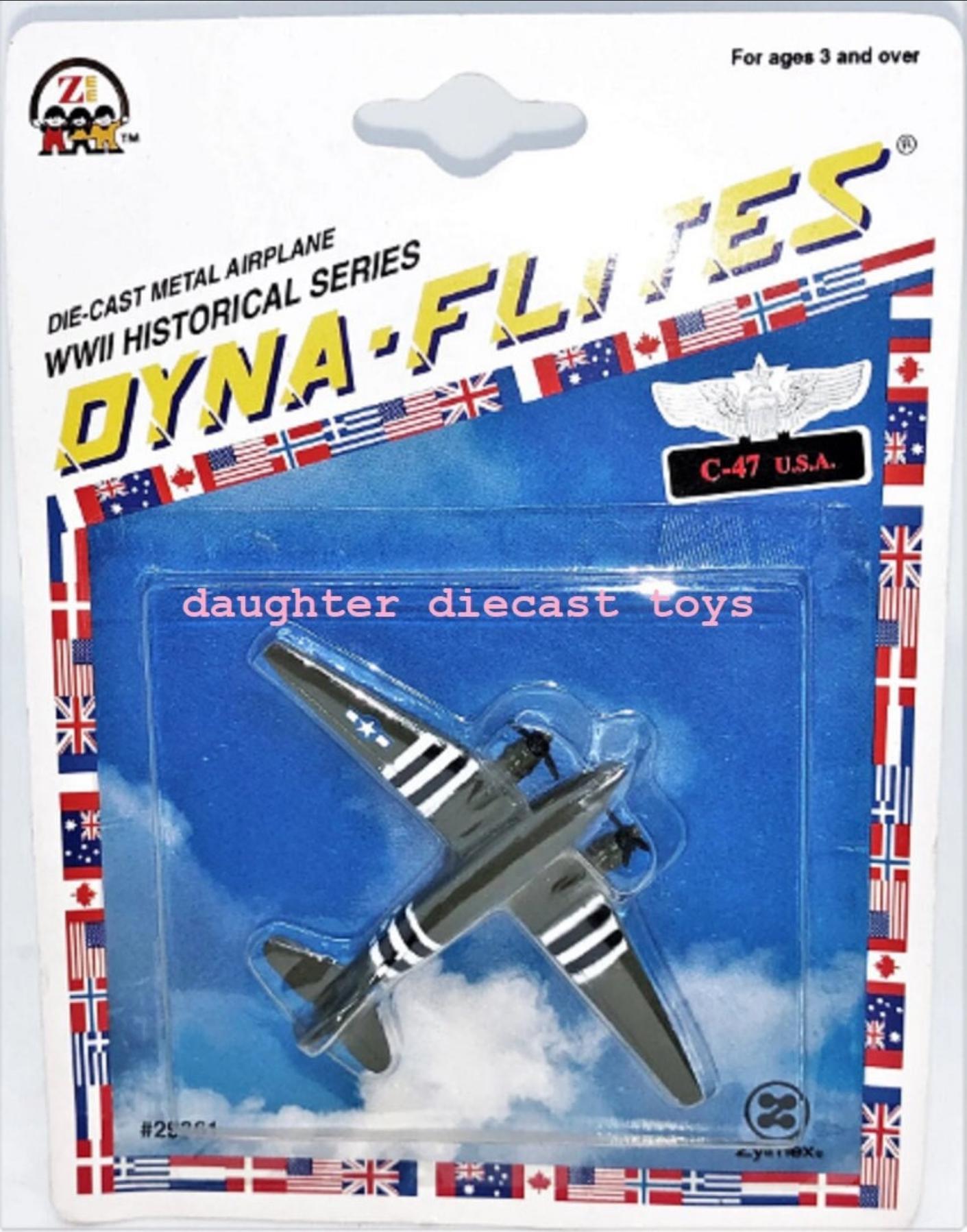
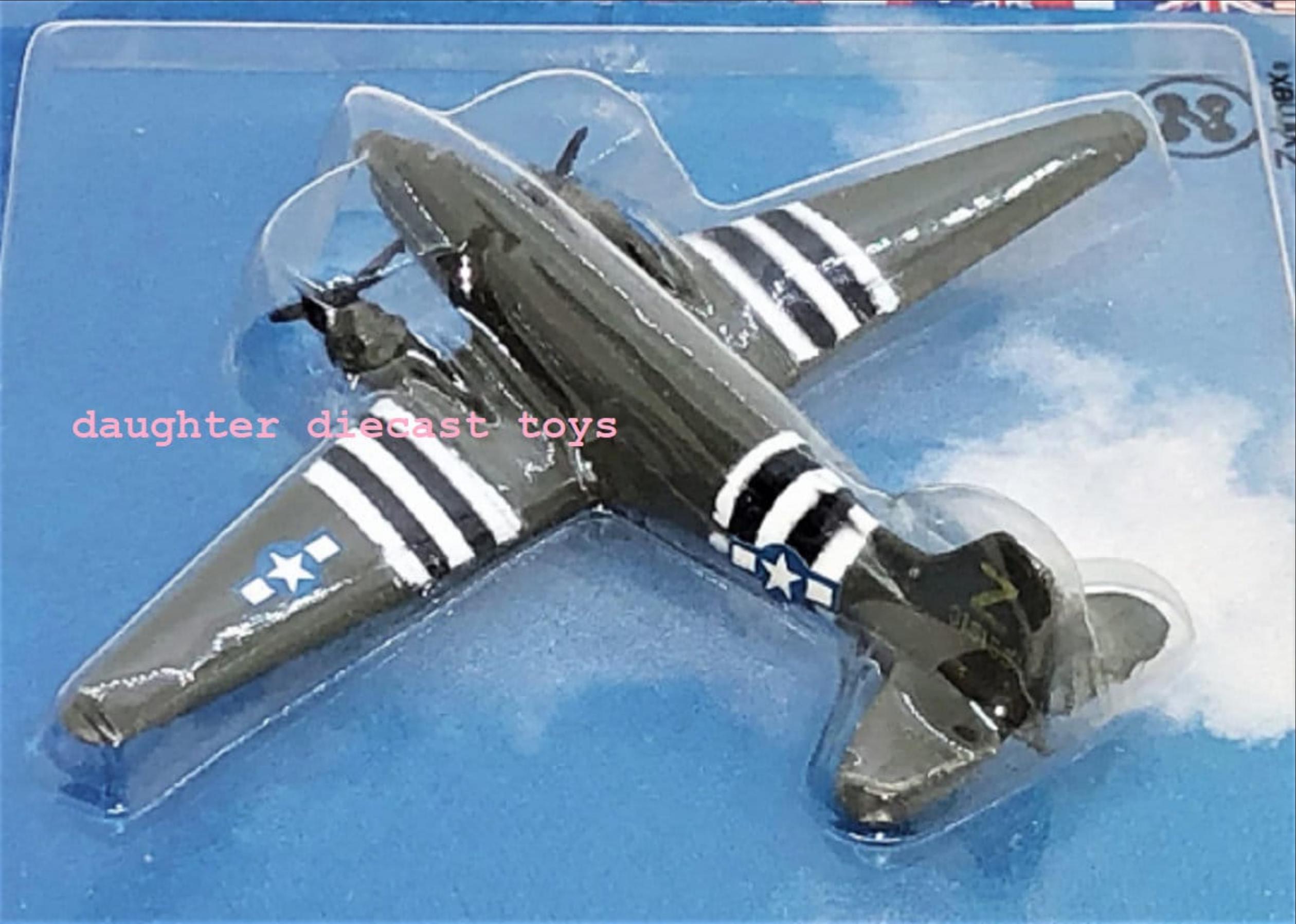
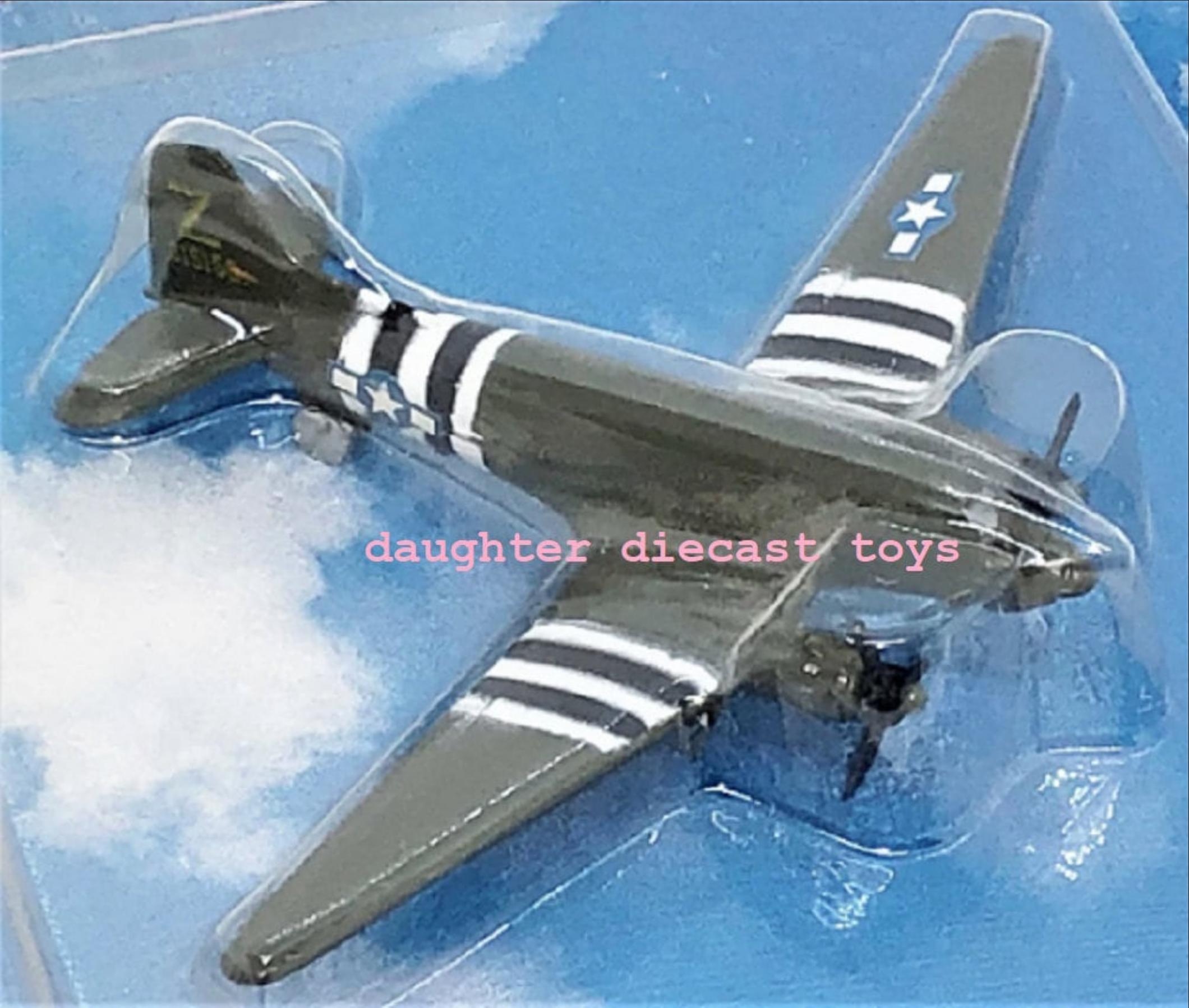

Vintage DOUGLAS C-47 SKYTRAIN TRANSPORT - Diecast Metal Airplane Mint Condition/Factory Sealed! Zlymex Zee Toys Perfect Gift for Collectors!
$ 24.99

Fantastic looking DOUGLAS C-47 SKYTRAIN Transport Airplane (See aircraft bio
below). Made by Zee Toys. Constructed of die cast metal. Highly sought-after, hard to find vintage model! Measures 2 1/2"L x 3 3/4"W x 1 "H. Beautiful/mint condition. Never removed from its factory-sealed card. Perfect gift for ZEE, aircraft, and vintage toy collectors! We ship fast & safe worldwide every day! See Aircraft Bio below....Note: My dad owned a Diecast toy store for 30 years. I inherited the store inventory when he passed away several years ago. I am (just now) able to bring myself to begin selling his cars-so they can be shared with the world. All pristine and mint condition vintage models will (eventually) be listed here on ETSY. All the inventory is NEW (vintage) merchandise-which was intended for retail sale. Please know-our diecast toys have NEVER been "played-with” we do not sell used, or damaged toys.
•
•
•FOR A LIMITED TIME
•
•
•Purchases totaling $35 and above qualify for FREE shipping to USA! Add more items to your Etsy shopping cart to save $$$.AIRCRAFT BIO: Design and developmentThe C-47 differed from the civilian DC-3 in numerous modifications, including being fitted with a cargo door, hoist attachment, and strengthened floor, along with a shortened tail cone for glider-towing shackles, and an astrodome in the cabin roof.[3][4]During World War II, the armed forces of many countries used the C-47 and modified DC-3s for the transport of troops, cargo, and wounded. The U.S. naval designation was R4D. More than 10,000 aircraft were produced in Long Beach and Santa Monica, California and Oklahoma City, Oklahoma. Between March 1943 and August 1945, the Oklahoma City plant produced 5,354 C-47s.[2][5]The specialized C-53 Skytrooper troop transport started production in October 1941 at Douglas Aircraft's Santa Monica plant. It lacked the cargo door, hoist attachment, and reinforced floor of the C-47. Only 380 aircraft were produced in all because the C-47 was found to be more versatile. Operational history World War II U.S. Army Pathfinders and USAAF flight crew prior to D-Day, June 1944, in front of a C-47 Skytrain at RAF North WithamThe C-47 was vital to the success of many Allied campaigns, in particular, those at Guadalcanal and in the jungles of New Guinea and Burma, where the C-47 and its naval version, the R4D, made it possible for Allied troops to counter the mobility of the light-traveling Japanese Army. C-47s were used to airlift supplies to the encircled American forces during the Battle of Bastogne in Belgium. Possibly its most influential role in military aviation, however, was flying "The Hump" from India into China. The expertise gained flying "The Hump" was later used in the Berlin Airlift, in which the C-47 played a major role until the aircraft were replaced by Douglas C-54 Skymasters.[citation needed]In Europe, the C-47 and a specialized paratroop variant, the C-53 Skytrooper, were used in vast numbers in the later stages of the war, particularly to tow gliders and drop paratroops. During the invasion of Sicily in July 1943, C-47s dropped 4,381 Allied paratroops. More than 50,000 paratroops were dropped by C-47s during the first few days of the D-Day campaign also known as the invasion of Normandy, France, in June 1944.[6] In the Pacific War, with careful use of the island landing strips of the Pacific Ocean, C-47s were used for ferrying soldiers serving in the Pacific theater back to the United States. C-47s unloading at Tempelhof Airport during the Berlin AirliftAbout 2,000 C-47s (received under Lend-Lease) in British and Commonwealth service took the name "Dakota", possibly inspired by the acronym "DACoTA" for Douglas Aircraft Company Transport Aircraft.[7]The C-47 also earned the informal nickname "gooney bird" in the European theatre of operations.[8] Other sources[9] attribute this name to the first aircraft, a USMC R2D—the military version of the DC-2—being the first aircraft to land on Midway Island, previously home to the long-winged albatross known as the gooney bird which was native to Midway. Postwar eraThe United States Air Force's Strategic Air Command had Skytrains in service from 1946 through 1967. The US Air Force's 6th Special Operations Squadron was flying the C-47 until 2008.With all of the aircraft and pilots having been part of the Indian Air Force prior to independence, both the Indian Air Force and Pakistan Air Force used C-47s to transport supplies to their soldiers fighting in the Indo-Pakistan War of 1947.After World War II, thousands of surplus C-47s were converted to civil airline use, some remaining in operation in 2012, as well as being used as private aircraft. Vietnam WarSeveral C-47 variations were used in the Vietnam War by the United States Air Force, including three advanced electronic-warfare variations, which sometimes were called "electric gooneys" designated EC-47N, EC-47P, or EC-47Q depending on the engine used. In addition, HC-47s were used by the 9th Special Operations Squadron to conduct psychological warfare operations over South Vietnam and Laos. Miami Air International, Miami International Airport was a USAF military depot used to convert the commercial DC-3s/C-47s into military use. They came in as commercial aircraft purchased from third-world airlines and were completely stripped, rebuilt, and reconditioned. Long-range fuel tanks were installed, along with upgraded avionics and gun mounts. They left as first-rate military aircraft headed for combat in Vietnam in a variety of missions. [Note 1] EC-47s were also operated by the Vietnamese, Laotian, and Cambodian Air Forces.[11] A gunship variation, using three 7.62 mm miniguns, designated AC-47 "Spooky", often nicknamed "Puff the magic dragon", also was deployed.[8] Super DC-3 (R4D-8).ks Role Fighter National origin United States Manufacturer North American Aviation First flight 26 October 1940[1] Introduction January 1942 (RAF)[2] Status Retired from military service 1984 (Dominican Air Force)[3] Primary users United States Army Air Forces Royal Air Force Royal New Zealand Air Force Royal Canadian Air Force Number built More than 15,000[4] Unit cost US$50,985 in 1945[5] (equivalent to $590,000 in 2019) Variants North American A-36 Apache Rolls-Royce Mustang Mk.X Cavalier Mustang Developed into North American F-82 Twin Mustang Piper PA-48 Enforcer
below). Made by Zee Toys. Constructed of die cast metal. Highly sought-after, hard to find vintage model! Measures 2 1/2"L x 3 3/4"W x 1 "H. Beautiful/mint condition. Never removed from its factory-sealed card. Perfect gift for ZEE, aircraft, and vintage toy collectors! We ship fast & safe worldwide every day! See Aircraft Bio below....Note: My dad owned a Diecast toy store for 30 years. I inherited the store inventory when he passed away several years ago. I am (just now) able to bring myself to begin selling his cars-so they can be shared with the world. All pristine and mint condition vintage models will (eventually) be listed here on ETSY. All the inventory is NEW (vintage) merchandise-which was intended for retail sale. Please know-our diecast toys have NEVER been "played-with” we do not sell used, or damaged toys.
•
•
•FOR A LIMITED TIME
•
•
•Purchases totaling $35 and above qualify for FREE shipping to USA! Add more items to your Etsy shopping cart to save $$$.AIRCRAFT BIO: Design and developmentThe C-47 differed from the civilian DC-3 in numerous modifications, including being fitted with a cargo door, hoist attachment, and strengthened floor, along with a shortened tail cone for glider-towing shackles, and an astrodome in the cabin roof.[3][4]During World War II, the armed forces of many countries used the C-47 and modified DC-3s for the transport of troops, cargo, and wounded. The U.S. naval designation was R4D. More than 10,000 aircraft were produced in Long Beach and Santa Monica, California and Oklahoma City, Oklahoma. Between March 1943 and August 1945, the Oklahoma City plant produced 5,354 C-47s.[2][5]The specialized C-53 Skytrooper troop transport started production in October 1941 at Douglas Aircraft's Santa Monica plant. It lacked the cargo door, hoist attachment, and reinforced floor of the C-47. Only 380 aircraft were produced in all because the C-47 was found to be more versatile. Operational history World War II U.S. Army Pathfinders and USAAF flight crew prior to D-Day, June 1944, in front of a C-47 Skytrain at RAF North WithamThe C-47 was vital to the success of many Allied campaigns, in particular, those at Guadalcanal and in the jungles of New Guinea and Burma, where the C-47 and its naval version, the R4D, made it possible for Allied troops to counter the mobility of the light-traveling Japanese Army. C-47s were used to airlift supplies to the encircled American forces during the Battle of Bastogne in Belgium. Possibly its most influential role in military aviation, however, was flying "The Hump" from India into China. The expertise gained flying "The Hump" was later used in the Berlin Airlift, in which the C-47 played a major role until the aircraft were replaced by Douglas C-54 Skymasters.[citation needed]In Europe, the C-47 and a specialized paratroop variant, the C-53 Skytrooper, were used in vast numbers in the later stages of the war, particularly to tow gliders and drop paratroops. During the invasion of Sicily in July 1943, C-47s dropped 4,381 Allied paratroops. More than 50,000 paratroops were dropped by C-47s during the first few days of the D-Day campaign also known as the invasion of Normandy, France, in June 1944.[6] In the Pacific War, with careful use of the island landing strips of the Pacific Ocean, C-47s were used for ferrying soldiers serving in the Pacific theater back to the United States. C-47s unloading at Tempelhof Airport during the Berlin AirliftAbout 2,000 C-47s (received under Lend-Lease) in British and Commonwealth service took the name "Dakota", possibly inspired by the acronym "DACoTA" for Douglas Aircraft Company Transport Aircraft.[7]The C-47 also earned the informal nickname "gooney bird" in the European theatre of operations.[8] Other sources[9] attribute this name to the first aircraft, a USMC R2D—the military version of the DC-2—being the first aircraft to land on Midway Island, previously home to the long-winged albatross known as the gooney bird which was native to Midway. Postwar eraThe United States Air Force's Strategic Air Command had Skytrains in service from 1946 through 1967. The US Air Force's 6th Special Operations Squadron was flying the C-47 until 2008.With all of the aircraft and pilots having been part of the Indian Air Force prior to independence, both the Indian Air Force and Pakistan Air Force used C-47s to transport supplies to their soldiers fighting in the Indo-Pakistan War of 1947.After World War II, thousands of surplus C-47s were converted to civil airline use, some remaining in operation in 2012, as well as being used as private aircraft. Vietnam WarSeveral C-47 variations were used in the Vietnam War by the United States Air Force, including three advanced electronic-warfare variations, which sometimes were called "electric gooneys" designated EC-47N, EC-47P, or EC-47Q depending on the engine used. In addition, HC-47s were used by the 9th Special Operations Squadron to conduct psychological warfare operations over South Vietnam and Laos. Miami Air International, Miami International Airport was a USAF military depot used to convert the commercial DC-3s/C-47s into military use. They came in as commercial aircraft purchased from third-world airlines and were completely stripped, rebuilt, and reconditioned. Long-range fuel tanks were installed, along with upgraded avionics and gun mounts. They left as first-rate military aircraft headed for combat in Vietnam in a variety of missions. [Note 1] EC-47s were also operated by the Vietnamese, Laotian, and Cambodian Air Forces.[11] A gunship variation, using three 7.62 mm miniguns, designated AC-47 "Spooky", often nicknamed "Puff the magic dragon", also was deployed.[8] Super DC-3 (R4D-8).ks Role Fighter National origin United States Manufacturer North American Aviation First flight 26 October 1940[1] Introduction January 1942 (RAF)[2] Status Retired from military service 1984 (Dominican Air Force)[3] Primary users United States Army Air Forces Royal Air Force Royal New Zealand Air Force Royal Canadian Air Force Number built More than 15,000[4] Unit cost US$50,985 in 1945[5] (equivalent to $590,000 in 2019) Variants North American A-36 Apache Rolls-Royce Mustang Mk.X Cavalier Mustang Developed into North American F-82 Twin Mustang Piper PA-48 Enforcer
Other Products