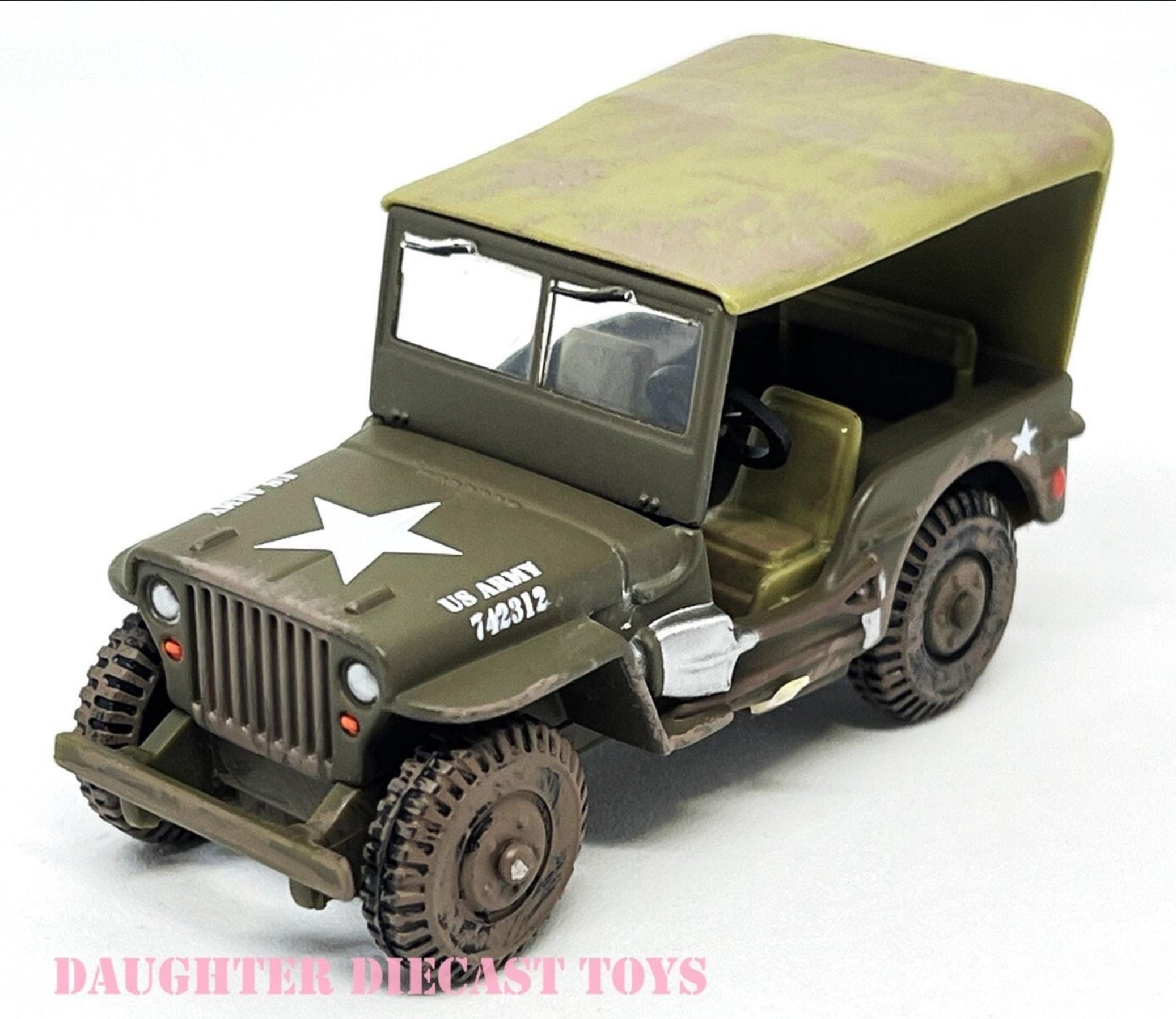
WWII ARMY JEEP 4x4 with Display Base & History Card! Intricate Diecast Metal Truck-Pristine Condition-Corgi-Perfect Gift for Veterans
$ 49.99

WWII 1941-1945 ARMY JEEP 4x4 with Display Base & History Card! Intricate Diecast
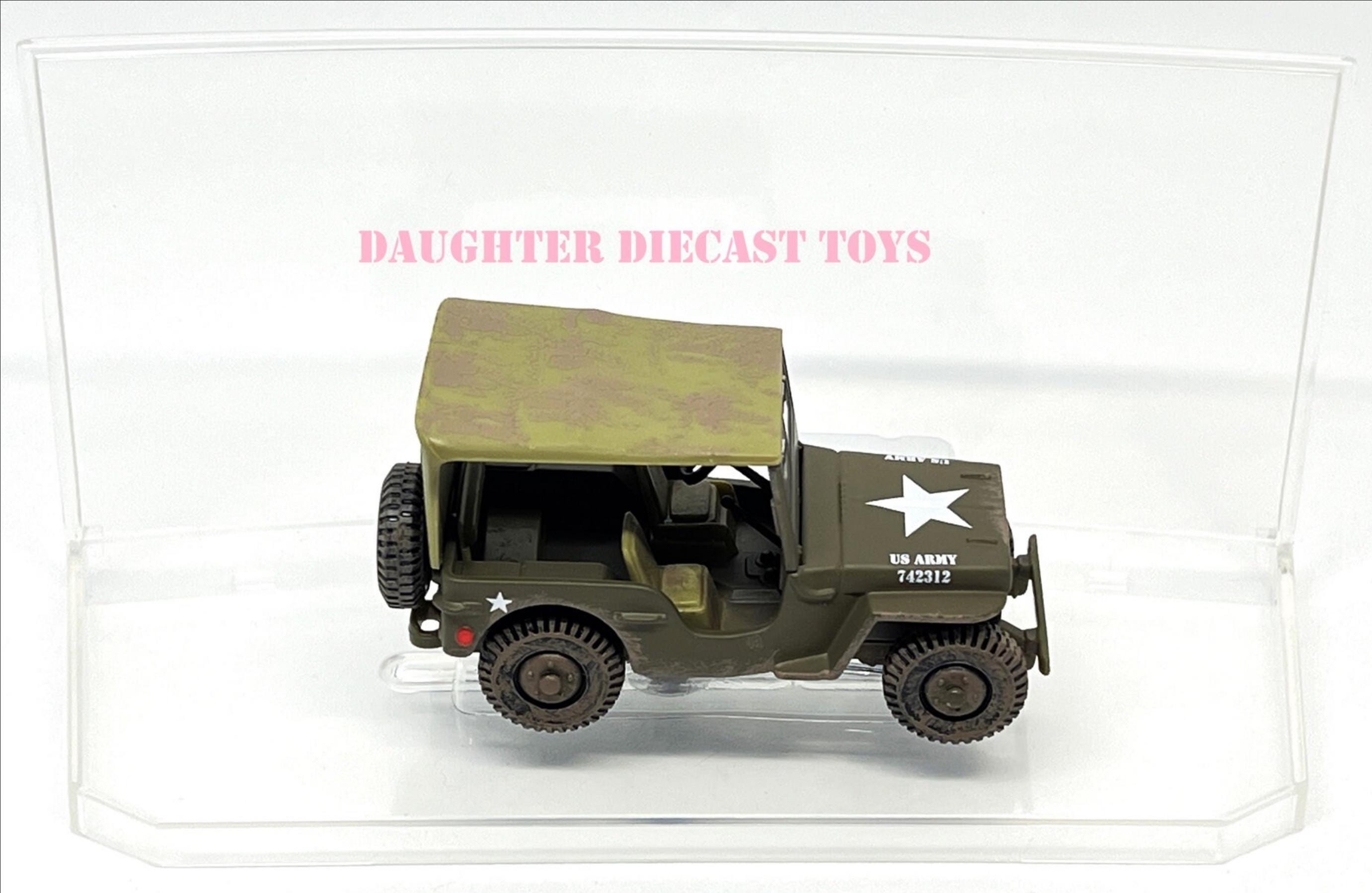
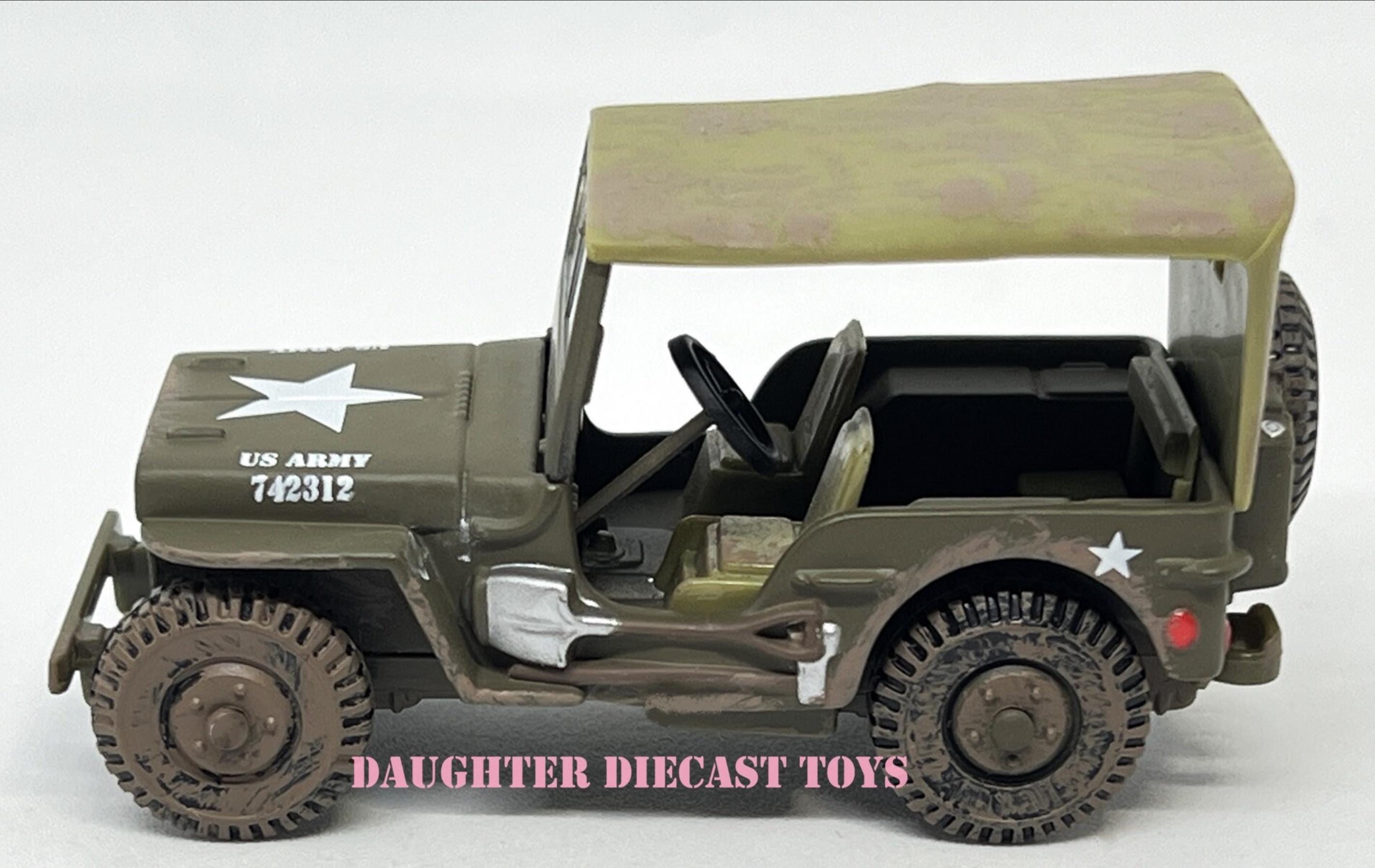
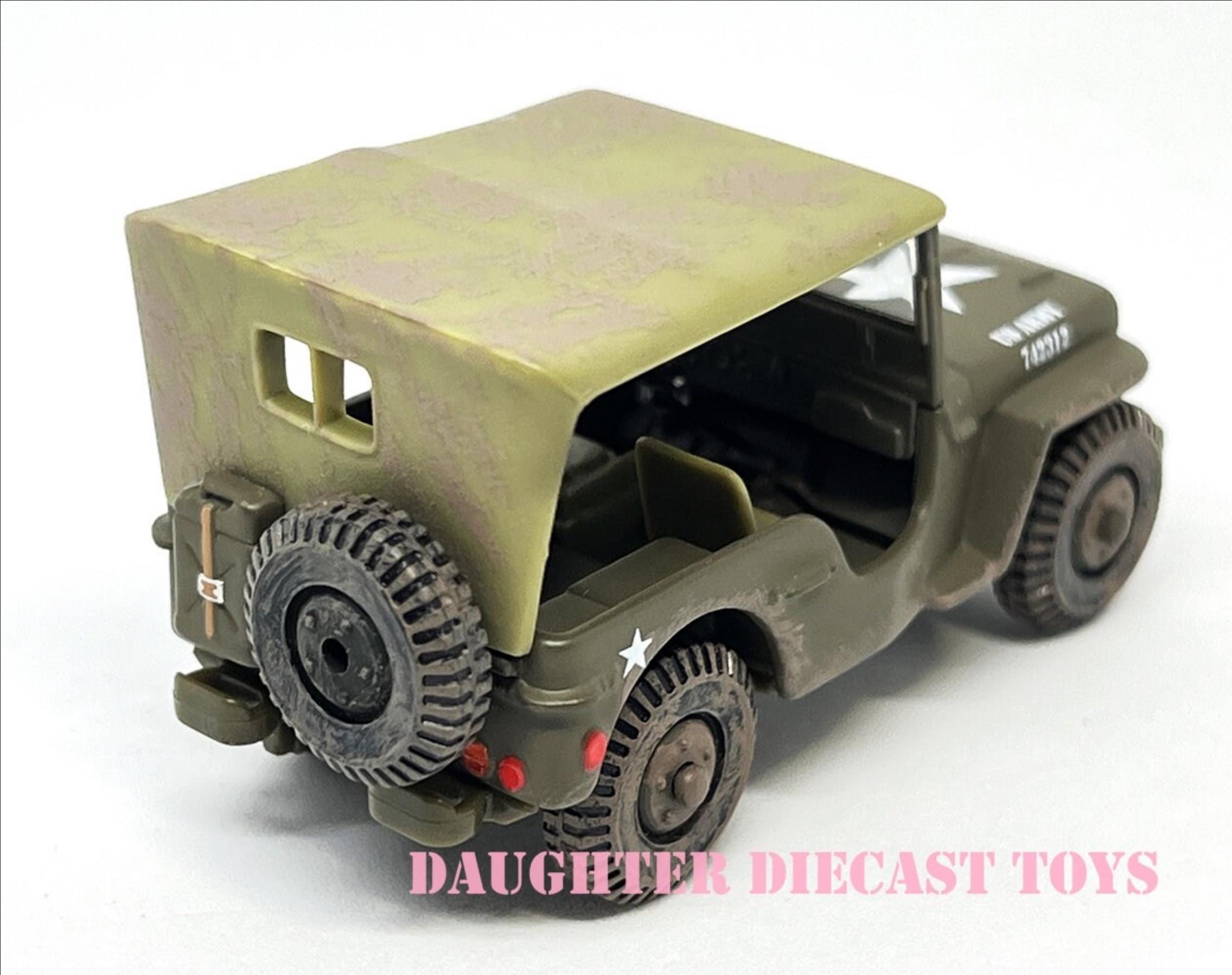
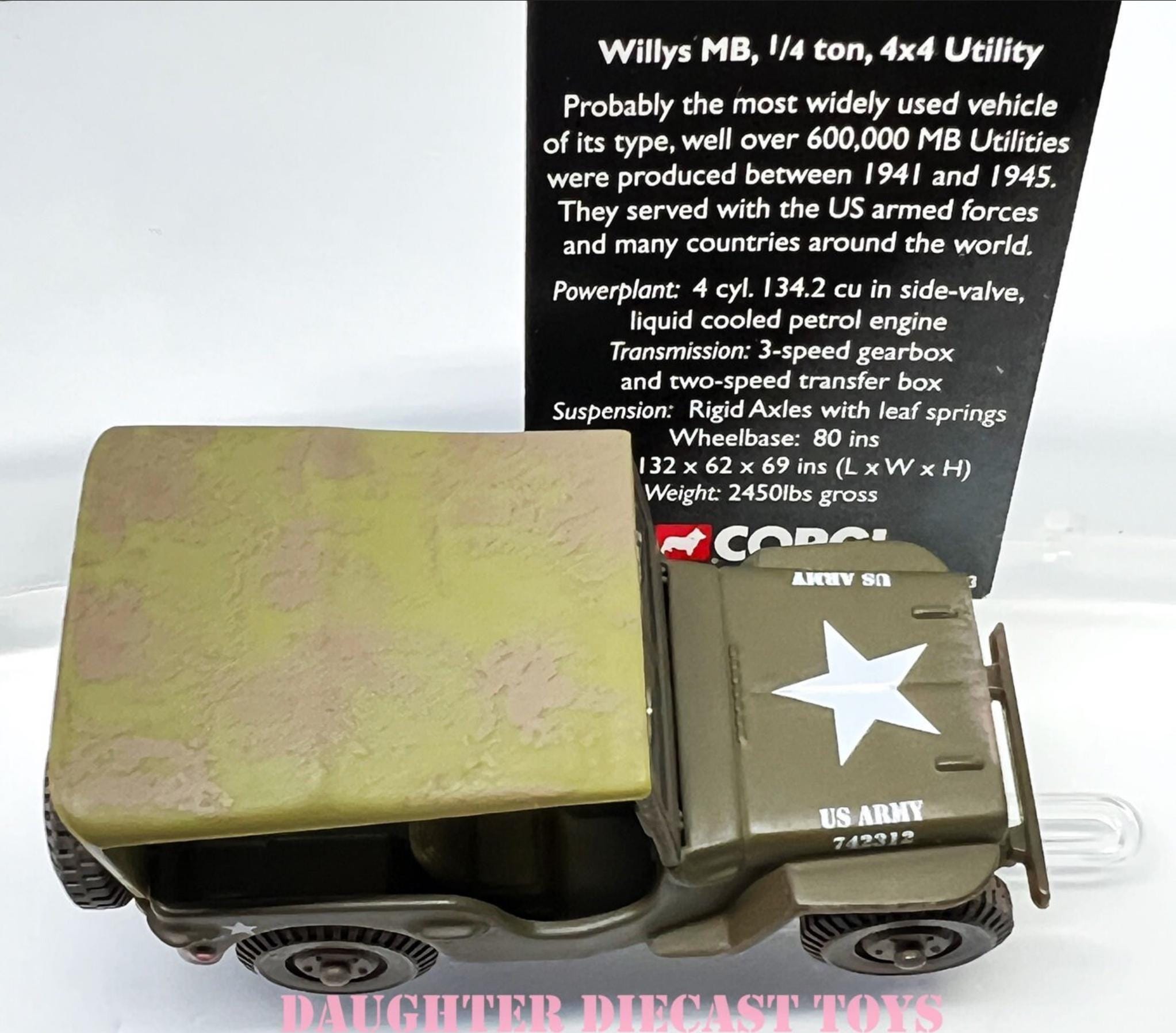
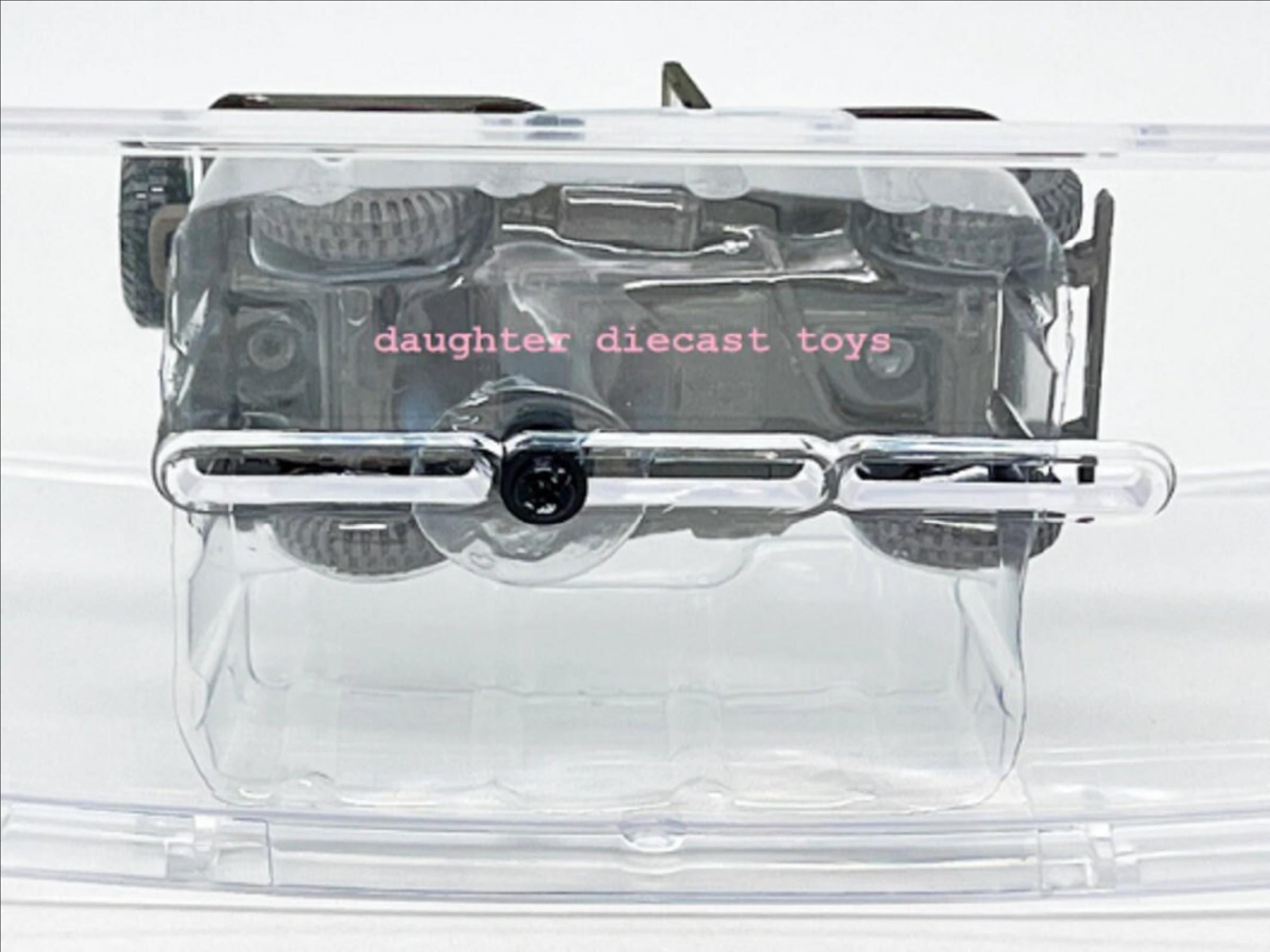
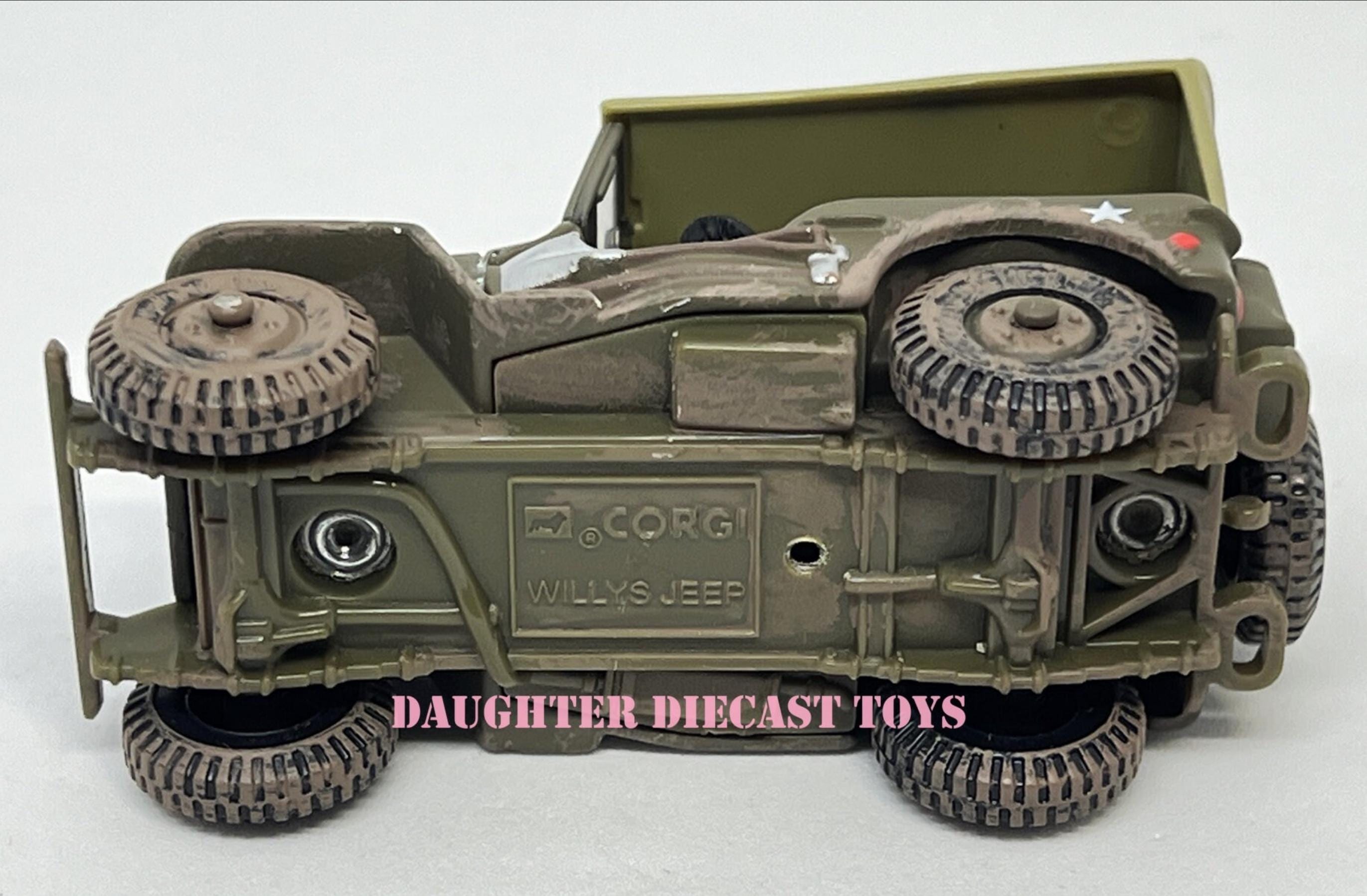
Metal Truck-Pristine Condition-Corgi-Perfect Gift for VeteransAwesome! Vintage WWII 1941-1945 US ARMY WILLYS JEEP MB 4x4 1/4 Ton, 4x4 Utility. Highly sought after, intricately detailed Diecast Metal Truck/Adult Collectors Model-which comes with Display base & Data Card (see photo 2). Model has rolling wheels and detachable roof. The Jeep can be removed from the stand if so desired (see photo 6). Made by Corgi. Measures 3 1/2"L x 1 1/4"W x 1 1/2"H. Pristine condition model-has never been displayed until today for the photos in this listing (see all 6 pics-using arrows on sides of the main listing photo). Sold loose-on stand with data card. Perfect gift for military toy collectors, history buffs, Veterans and Medical personnel! 100% happiness guaranteed. Our shipping origin is Rolling Prairie, Indiana USA. We ship fast & safe worldwide every day! See pic of my favorite queen during WWII (photo 6)Note: My dad owned a Diecast toy store for 30 years. I inherited the store inventory when he passed away several years ago. I am (just now) able to bring myself to begin selling his cars-so they can be shared with the world. All pristine and mint condition vintage models will (eventually) be listed here on ETSY. All the inventory is NEW (vintage) merchandise-which was intended for retail sale. Please know-our diecast toys have NEVER been "played-with” we do not sell used, or damaged toys.
•
•
•FOR A LIMITED TIME
•
•
•Purchases totaling $35 and above qualify for FREE shipping to USA! Add more items to your Etsy shopping cart to save $$$.Vehicle bio:The U.S. Army Truck, 1⁄4-ton, 4×4, Command Reconnaissance,[4][5] commonly known as the Willys Jeep,[nb 3] Jeep, or jeep,[7] and sometimes referred to by its supply catalogue designation G503,[nb 4] were highly successful American off-road capable light military utility vehicles, built in large numbers to a single standardized design, for the United States and the Allied forces in World War II from 1941 until 1945.The jeep became the primary light-wheeled multi-role vehicle of the United States military and its allies, with President Eisenhower once calling it "one of three decisive weapons the U.S. had during WWII."[8] It was the world's first mass-produced light four-wheel drive car. With almost 650,000 units built, the jeep constituted a quarter of the total U.S. non-combat motor vehicles produced during the war,[nb 5] or almost two-thirds of the 988,000 light 4WD vehicles produced, when counted together with the Dodge WC series. Large numbers of jeeps were provided to U.S. allies, including the Soviet Union at the time. Aside from large amounts of 11⁄2- and 21⁄2‑ton trucks, and 25,000 3⁄4‑ton Dodges – some 50,000 1⁄4‑ton jeeps were shipped to help Russia during WWII – against Nazi-Germany's total production of just over 50,000 Kübelwagens, the jeep's primary counterpart.[11]Historian Charles K. Hyde wrote: "In many respects, the jeep became the iconic vehicle of World War II, with an almost mythological reputation of toughness, durability, and versatility."[9] Not only did it become the workhorse of the American military, as it replaced the use of horses and other draft animals (still heavily used in World War I) in every role, from cavalry units to supply trains, but improvised field modifications also made the jeep capable of just about any other function G.I.s could think of.[12] Moreover: military jeeps were adopted by countries all over the world, to this day – so much that they have become the most widely used and recognizable military vehicle in history.[13]Dwight D. Eisenhower, who was Supreme Commander of the Allied Expeditionary Force in Europe in World War II, wrote in his memoirs that most senior officers regarded it as one of the five pieces of equipment most vital to success in Africa and Europe.[nb 6] General George Marshall, Chief of Staff of the US Army during the war, called the vehicle "America's greatest contribution to modern warfare."[15][16][17] In 1991, the MB Jeep was designated an "International Historic Mechanical Engineering Landmark" by the American Society of Mechanical Engineers.[2]After WWII, the original jeep continued to serve, in the Korean War and other conflicts, until it was updated in the form of the M38 Willys MC and M38A1 Willys MD (in 1949 and 1952 respectively), and received a complete redesign by Ford in the form of the 1960-introduced M151 jeep. Its influence, however, was much greater than that — manufacturers around the world began building jeeps and similar designs, either under license or not — at first primarily for military purposes, but later also for the civilian market. Willys turned the MB into the civilian Jeep CJ-2A in 1945, making the world's first mass-produced civilian four-wheel drive. The "Jeep" name was trademarked, and grew into a successful, and highly valued brand.The success of the jeep inspired both an entire category of recreational 4WDs and SUVs, making "four-wheel drive" a household term, and numerous incarnations of military light utility vehicles. In 2010, the American Enterprise Institute called the jeep "one of the most influential designs in automotive history". Its "sardine tin on wheels" silhouette and slotted grille are perhaps even more instantly recognizable than the VW Beetle, and it has evolved into the currently produced Jeep Wrangler still largely designed like the original jeep design.[17]Full production – Willys MB and Ford GPW Standard 1944 cabin and engine Three pedals and three sticks – for shifting gears, engaging front- / four-wheel drive, and high or low gearing Willys "Go Devil" engineBy July 1941, the War Department desired to standardize and decided to select a single manufacturer to supply them with the next order for 16,000 vehicles. Willys won the contract mostly due to its much more powerful 60 hp engine (the L134 "Go Devil"), which soldiers raved about, and its lower cost and silhouette. The design features in the Bantam and Ford entries which represented an improvement over Willys's design were incorporated into the Willys, moving it from an "MA" designation to "MB". Most obvious is the front design from the Ford GP, with a wide, flat hood, and the headlights moved inward from the fenders to under the hood, protected by a single wide, straight front grille and a brush guard.The jeep, once it entered mass production, introduced several new automotive technologies. Having four-wheel drive for the first time introduced the need for a transfer case, and the use of constant-velocity joints on the driven front wheels and axle, to a regular production car-sized vehicle.[67]Early October 1941, it became clear that Willys-Overland could not keep up with procurement needs, and Ford received government contracts to build 30,000 units,[68] according to Willys' blueprints, drawings, specifications, and patents, including the more powerful Willys engine.[69] When Ford offered to increase the displacement and power of the tractor engine in their GP model, the government declined and insisted on Ford duplicating jeeps identical to the Willys, both for the much stronger engine, and for complete commonality/interchangeability of the components. Willys received no license fees, and Ford complied. The Ford was designated "GPW", with the "W" indicating the "Willys" licensed design and engine. Ford retooled at a cost of $4 million to build Willys engines, and produced the first GPW as quickly as 2 January 1942. Just days before, in late December 1941, the Quartermaster Corps had ordered another 63,146 GPWs.[68]One extra condition to Ford's jeep orders was to manufacture them in several different Ford assembly plants, in addition to Ford's primary 'River Rouge' plant in Dearborn (Michigan). The QC expressly demanded Ford decentralize their jeep manufacturing to facilitate the Army's logistics, shipping from all three coasts. Besides Dearborn, Ford also assembled jeeps in their Louisville, Chester (Pennsylvania), Dallas (Texas), and Richmond (California) plants. Ford's Edgewater (New Jersey) plant also built jeeps in the first four months of 1943.[68]During World War II, Willys produced 363,000 Jeeps and Ford some 280,000. Some 50,000 were exported to the USSR under the Lend-Lease program.[11] Ford's assembly across plants distributed as: River Rouge 21,559; Dallas and Louisville almost tied at 93,748 and 93,364 units respectively; Chester 18,533, and Edgewater just 1,333 units.[70] Bantam stopped further jeep production and made two-wheel jeep trailers. This was sufficient to keep the firm going it was taken over in 1956.[71]Ford built jeeps with functionally interchangeable parts and components, in part facilitated by using components from common sources: frames from Midland Steel, wheels from Kelsey-Hayes, and axles and transfer cases from Spicer.[69] However, Ford had replaced the welded grate front grille by a single pressed/stamped sheet steel part, with nine vertical open slots to ventilate the radiator, and circular openings in front of the lights, to simplify production, and save costs. Willys also adopted this in their production of the MB after unit 25,808. Predictably, there were still many minor differences; the Ford chassis had an inverted U-shaped front cross member instead of a tubular bar, and a Ford script letter "F" was stamped onto many small parts.Many body detail differences remained for as long as January 1944, when a composite body, fabricated by American Central, was finally agreed upon by both Ford and Willys. American Central had been making the jeep's bodies from the first 1500 units order for the Willys MA, and had also built Ford's jeep bodies for two years already, but until January 1944, Ford and Willys contracts retained detail differences. However, from then on features of both designs were integrated.[54] Through the chaotic circumstances of war, sometimes peculiar deviations from regular mass-production came off the assembly line, that are now prized by collectors. For instance: the earliest Ford GPWs had a Willys design frame, and in late-1943, some GPWs came with an unmodified Willys body; and in 1945 Willys produced some MBs with a deep mud exhaust system, vacuum windshield wipers, and a Jeep CJ‑style parking brake.[72]Service Early production 1⁄4-tons like this American Bantam BRC-40 in the Philippines, were the first to see action, with allied British or Soviet forces (1941). The British SAS used heavily armed jeeps in North Africa missions. External image image icon Over flat terrain, the jeep would transport up to six soldiers} with backpacks, if necessary.The USA provided jeeps to almost all of the Allies in World War II. Britain, Canada,[nb 16] Australia, India, the Free French, USSR, and China all received jeeps, mostly under the American Lend-Lease program.[16] Some 182,500 units were provided to Allies under Lend-Lease alone. Almost 105,000 to the British Empire,[nb 17] including Australia and India, plus over 8,000 to Canada, and some 50,000 to the Soviet Union.[11] The Free French (almost 10,000) and China (almost 7,000) were medium takers, and many other countries received a small number.[11] America shipped a total of 77,972 various "jeeps" to the Soviet Union – consisting of 49,250 1⁄4‑tons,[nb 18] 25,200 Dodge 3⁄4‑tons,[nb 19] and 3,520 Ford GPA.[127][11][73] Two jeeps leading a British column of Universal Carriers and a Sexton self-propelled gun. Caen, 1944In the deserts of the North African campaign, the jeep's abilities so far surpassed those of British vehicles that it wasn't unusual for jeeps to rescue a three-ton truck stuck in the sand. In combat, the British would use their jeeps in groups of up to fifty or sixty to raid Rommel's supply lines by surprise, exploiting the jeep's low silhouette; able to remain unseen, hide behind dunes, and surprise the enemy.[128]Within the U.S. military, jeeps were used by every branch. In the U.S. Army, an average of 145 units were assigned to each infantry regiment.[129] Around the world, jeeps served in every overseas theater of operation, in every environment, under all weather and climatic conditions — in North Africa and the Pacific Theater, the Western Allied invasion of Europe in 1944, as well as the Eastern Front. From deserts to mountains, from jungles to beachheads, jeeps could be pulled out of thick mud by their riders, and they were even flown into battle on light glider planes.[13] In the European theater, they were so ubiquitous that some German troops believed that each American soldier was issued their own jeep.[130][nb 20]Jeeps served as indefatigable pack horses for troop transport and towing supply trailers, carrying water, fuel, and ammunition, and pulling through the most difficult terrain. They performed nimble scout and reconnaissance duty, were frequent ambulances for the wounded, and did hearse service. They also doubled as mobile field command headquarters or weapons platforms – either with mounted machine guns or pulling small artillery pieces into "unreachable" areas over inhospitable terrain.[17] The Jeep's flat hood was used as a commander's map table, a chaplain's field altar, the G.I.s' poker table, or even for field surgery. In the cauldron of war, the jeeps served every purpose imaginable: as a power plant, light source, improvised stove for field rations, or a hot water source for shaving. Equipped with the proper tools, it would plow snow, or dig long furrows for laying heavy electrical cable along jungle airfields – laid by another jeep following it.[17]Battle-hardened warriors learned to weld a roof-top height vertical cutter-bar to the front of their jeeps, to cut any trip wires tied across roads or trails by the Germans, placed to snap the necks of unsuspecting jeepers.[15] Fitted with flanged steel wheels, they could pull railroad cars.[15][16][17] In Europe, "The service of this vehicle was excellent, considering all the abuse it was obliged to take from bad roads, high speeds, overloading, and lack of maintenance. It performed tasks that it was never intended to perform, from carrying ammunition to locations where other wheeled vehicles could not travel, to serving as a cross-country ambulance traversing roads and country considered practically impassible."[133] Pulitzer Prize–winning war journalist Ernie Pyle wrote: "It does everything. It goes everywhere. It's as faithful as a dog, as strong as a mule and as agile as a goat. It constantly carries twice what it was designed for, and still keeps on going."[9]Despite some shortcomings, the jeep was generally well-liked, seen as versatile, maneuverable, reliable, and almost indestructible.[16] The seats were found uncomfortable, sometimes caused the so-called "Jeep riders' disease" and cramped in the rear, but many soldiers enjoyed driving the nimble jeep, appreciating its powerful engine; and with its light weight, low-cut body sides, bucket seats, and manual floor-shifter, it was as close to a sportscar as most GIs had ever driven.[15] Enzo Ferrari called the Jeep "America's only real sports car."[130] Nazi generals admired the jeep more than any other U.S. materiel, and it was the vehicle the most liked to capture for general use.[134]
Metal Truck-Pristine Condition-Corgi-Perfect Gift for VeteransAwesome! Vintage WWII 1941-1945 US ARMY WILLYS JEEP MB 4x4 1/4 Ton, 4x4 Utility. Highly sought after, intricately detailed Diecast Metal Truck/Adult Collectors Model-which comes with Display base & Data Card (see photo 2). Model has rolling wheels and detachable roof. The Jeep can be removed from the stand if so desired (see photo 6). Made by Corgi. Measures 3 1/2"L x 1 1/4"W x 1 1/2"H. Pristine condition model-has never been displayed until today for the photos in this listing (see all 6 pics-using arrows on sides of the main listing photo). Sold loose-on stand with data card. Perfect gift for military toy collectors, history buffs, Veterans and Medical personnel! 100% happiness guaranteed. Our shipping origin is Rolling Prairie, Indiana USA. We ship fast & safe worldwide every day! See pic of my favorite queen during WWII (photo 6)Note: My dad owned a Diecast toy store for 30 years. I inherited the store inventory when he passed away several years ago. I am (just now) able to bring myself to begin selling his cars-so they can be shared with the world. All pristine and mint condition vintage models will (eventually) be listed here on ETSY. All the inventory is NEW (vintage) merchandise-which was intended for retail sale. Please know-our diecast toys have NEVER been "played-with” we do not sell used, or damaged toys.
•
•
•FOR A LIMITED TIME
•
•
•Purchases totaling $35 and above qualify for FREE shipping to USA! Add more items to your Etsy shopping cart to save $$$.Vehicle bio:The U.S. Army Truck, 1⁄4-ton, 4×4, Command Reconnaissance,[4][5] commonly known as the Willys Jeep,[nb 3] Jeep, or jeep,[7] and sometimes referred to by its supply catalogue designation G503,[nb 4] were highly successful American off-road capable light military utility vehicles, built in large numbers to a single standardized design, for the United States and the Allied forces in World War II from 1941 until 1945.The jeep became the primary light-wheeled multi-role vehicle of the United States military and its allies, with President Eisenhower once calling it "one of three decisive weapons the U.S. had during WWII."[8] It was the world's first mass-produced light four-wheel drive car. With almost 650,000 units built, the jeep constituted a quarter of the total U.S. non-combat motor vehicles produced during the war,[nb 5] or almost two-thirds of the 988,000 light 4WD vehicles produced, when counted together with the Dodge WC series. Large numbers of jeeps were provided to U.S. allies, including the Soviet Union at the time. Aside from large amounts of 11⁄2- and 21⁄2‑ton trucks, and 25,000 3⁄4‑ton Dodges – some 50,000 1⁄4‑ton jeeps were shipped to help Russia during WWII – against Nazi-Germany's total production of just over 50,000 Kübelwagens, the jeep's primary counterpart.[11]Historian Charles K. Hyde wrote: "In many respects, the jeep became the iconic vehicle of World War II, with an almost mythological reputation of toughness, durability, and versatility."[9] Not only did it become the workhorse of the American military, as it replaced the use of horses and other draft animals (still heavily used in World War I) in every role, from cavalry units to supply trains, but improvised field modifications also made the jeep capable of just about any other function G.I.s could think of.[12] Moreover: military jeeps were adopted by countries all over the world, to this day – so much that they have become the most widely used and recognizable military vehicle in history.[13]Dwight D. Eisenhower, who was Supreme Commander of the Allied Expeditionary Force in Europe in World War II, wrote in his memoirs that most senior officers regarded it as one of the five pieces of equipment most vital to success in Africa and Europe.[nb 6] General George Marshall, Chief of Staff of the US Army during the war, called the vehicle "America's greatest contribution to modern warfare."[15][16][17] In 1991, the MB Jeep was designated an "International Historic Mechanical Engineering Landmark" by the American Society of Mechanical Engineers.[2]After WWII, the original jeep continued to serve, in the Korean War and other conflicts, until it was updated in the form of the M38 Willys MC and M38A1 Willys MD (in 1949 and 1952 respectively), and received a complete redesign by Ford in the form of the 1960-introduced M151 jeep. Its influence, however, was much greater than that — manufacturers around the world began building jeeps and similar designs, either under license or not — at first primarily for military purposes, but later also for the civilian market. Willys turned the MB into the civilian Jeep CJ-2A in 1945, making the world's first mass-produced civilian four-wheel drive. The "Jeep" name was trademarked, and grew into a successful, and highly valued brand.The success of the jeep inspired both an entire category of recreational 4WDs and SUVs, making "four-wheel drive" a household term, and numerous incarnations of military light utility vehicles. In 2010, the American Enterprise Institute called the jeep "one of the most influential designs in automotive history". Its "sardine tin on wheels" silhouette and slotted grille are perhaps even more instantly recognizable than the VW Beetle, and it has evolved into the currently produced Jeep Wrangler still largely designed like the original jeep design.[17]Full production – Willys MB and Ford GPW Standard 1944 cabin and engine Three pedals and three sticks – for shifting gears, engaging front- / four-wheel drive, and high or low gearing Willys "Go Devil" engineBy July 1941, the War Department desired to standardize and decided to select a single manufacturer to supply them with the next order for 16,000 vehicles. Willys won the contract mostly due to its much more powerful 60 hp engine (the L134 "Go Devil"), which soldiers raved about, and its lower cost and silhouette. The design features in the Bantam and Ford entries which represented an improvement over Willys's design were incorporated into the Willys, moving it from an "MA" designation to "MB". Most obvious is the front design from the Ford GP, with a wide, flat hood, and the headlights moved inward from the fenders to under the hood, protected by a single wide, straight front grille and a brush guard.The jeep, once it entered mass production, introduced several new automotive technologies. Having four-wheel drive for the first time introduced the need for a transfer case, and the use of constant-velocity joints on the driven front wheels and axle, to a regular production car-sized vehicle.[67]Early October 1941, it became clear that Willys-Overland could not keep up with procurement needs, and Ford received government contracts to build 30,000 units,[68] according to Willys' blueprints, drawings, specifications, and patents, including the more powerful Willys engine.[69] When Ford offered to increase the displacement and power of the tractor engine in their GP model, the government declined and insisted on Ford duplicating jeeps identical to the Willys, both for the much stronger engine, and for complete commonality/interchangeability of the components. Willys received no license fees, and Ford complied. The Ford was designated "GPW", with the "W" indicating the "Willys" licensed design and engine. Ford retooled at a cost of $4 million to build Willys engines, and produced the first GPW as quickly as 2 January 1942. Just days before, in late December 1941, the Quartermaster Corps had ordered another 63,146 GPWs.[68]One extra condition to Ford's jeep orders was to manufacture them in several different Ford assembly plants, in addition to Ford's primary 'River Rouge' plant in Dearborn (Michigan). The QC expressly demanded Ford decentralize their jeep manufacturing to facilitate the Army's logistics, shipping from all three coasts. Besides Dearborn, Ford also assembled jeeps in their Louisville, Chester (Pennsylvania), Dallas (Texas), and Richmond (California) plants. Ford's Edgewater (New Jersey) plant also built jeeps in the first four months of 1943.[68]During World War II, Willys produced 363,000 Jeeps and Ford some 280,000. Some 50,000 were exported to the USSR under the Lend-Lease program.[11] Ford's assembly across plants distributed as: River Rouge 21,559; Dallas and Louisville almost tied at 93,748 and 93,364 units respectively; Chester 18,533, and Edgewater just 1,333 units.[70] Bantam stopped further jeep production and made two-wheel jeep trailers. This was sufficient to keep the firm going it was taken over in 1956.[71]Ford built jeeps with functionally interchangeable parts and components, in part facilitated by using components from common sources: frames from Midland Steel, wheels from Kelsey-Hayes, and axles and transfer cases from Spicer.[69] However, Ford had replaced the welded grate front grille by a single pressed/stamped sheet steel part, with nine vertical open slots to ventilate the radiator, and circular openings in front of the lights, to simplify production, and save costs. Willys also adopted this in their production of the MB after unit 25,808. Predictably, there were still many minor differences; the Ford chassis had an inverted U-shaped front cross member instead of a tubular bar, and a Ford script letter "F" was stamped onto many small parts.Many body detail differences remained for as long as January 1944, when a composite body, fabricated by American Central, was finally agreed upon by both Ford and Willys. American Central had been making the jeep's bodies from the first 1500 units order for the Willys MA, and had also built Ford's jeep bodies for two years already, but until January 1944, Ford and Willys contracts retained detail differences. However, from then on features of both designs were integrated.[54] Through the chaotic circumstances of war, sometimes peculiar deviations from regular mass-production came off the assembly line, that are now prized by collectors. For instance: the earliest Ford GPWs had a Willys design frame, and in late-1943, some GPWs came with an unmodified Willys body; and in 1945 Willys produced some MBs with a deep mud exhaust system, vacuum windshield wipers, and a Jeep CJ‑style parking brake.[72]Service Early production 1⁄4-tons like this American Bantam BRC-40 in the Philippines, were the first to see action, with allied British or Soviet forces (1941). The British SAS used heavily armed jeeps in North Africa missions. External image image icon Over flat terrain, the jeep would transport up to six soldiers} with backpacks, if necessary.The USA provided jeeps to almost all of the Allies in World War II. Britain, Canada,[nb 16] Australia, India, the Free French, USSR, and China all received jeeps, mostly under the American Lend-Lease program.[16] Some 182,500 units were provided to Allies under Lend-Lease alone. Almost 105,000 to the British Empire,[nb 17] including Australia and India, plus over 8,000 to Canada, and some 50,000 to the Soviet Union.[11] The Free French (almost 10,000) and China (almost 7,000) were medium takers, and many other countries received a small number.[11] America shipped a total of 77,972 various "jeeps" to the Soviet Union – consisting of 49,250 1⁄4‑tons,[nb 18] 25,200 Dodge 3⁄4‑tons,[nb 19] and 3,520 Ford GPA.[127][11][73] Two jeeps leading a British column of Universal Carriers and a Sexton self-propelled gun. Caen, 1944In the deserts of the North African campaign, the jeep's abilities so far surpassed those of British vehicles that it wasn't unusual for jeeps to rescue a three-ton truck stuck in the sand. In combat, the British would use their jeeps in groups of up to fifty or sixty to raid Rommel's supply lines by surprise, exploiting the jeep's low silhouette; able to remain unseen, hide behind dunes, and surprise the enemy.[128]Within the U.S. military, jeeps were used by every branch. In the U.S. Army, an average of 145 units were assigned to each infantry regiment.[129] Around the world, jeeps served in every overseas theater of operation, in every environment, under all weather and climatic conditions — in North Africa and the Pacific Theater, the Western Allied invasion of Europe in 1944, as well as the Eastern Front. From deserts to mountains, from jungles to beachheads, jeeps could be pulled out of thick mud by their riders, and they were even flown into battle on light glider planes.[13] In the European theater, they were so ubiquitous that some German troops believed that each American soldier was issued their own jeep.[130][nb 20]Jeeps served as indefatigable pack horses for troop transport and towing supply trailers, carrying water, fuel, and ammunition, and pulling through the most difficult terrain. They performed nimble scout and reconnaissance duty, were frequent ambulances for the wounded, and did hearse service. They also doubled as mobile field command headquarters or weapons platforms – either with mounted machine guns or pulling small artillery pieces into "unreachable" areas over inhospitable terrain.[17] The Jeep's flat hood was used as a commander's map table, a chaplain's field altar, the G.I.s' poker table, or even for field surgery. In the cauldron of war, the jeeps served every purpose imaginable: as a power plant, light source, improvised stove for field rations, or a hot water source for shaving. Equipped with the proper tools, it would plow snow, or dig long furrows for laying heavy electrical cable along jungle airfields – laid by another jeep following it.[17]Battle-hardened warriors learned to weld a roof-top height vertical cutter-bar to the front of their jeeps, to cut any trip wires tied across roads or trails by the Germans, placed to snap the necks of unsuspecting jeepers.[15] Fitted with flanged steel wheels, they could pull railroad cars.[15][16][17] In Europe, "The service of this vehicle was excellent, considering all the abuse it was obliged to take from bad roads, high speeds, overloading, and lack of maintenance. It performed tasks that it was never intended to perform, from carrying ammunition to locations where other wheeled vehicles could not travel, to serving as a cross-country ambulance traversing roads and country considered practically impassible."[133] Pulitzer Prize–winning war journalist Ernie Pyle wrote: "It does everything. It goes everywhere. It's as faithful as a dog, as strong as a mule and as agile as a goat. It constantly carries twice what it was designed for, and still keeps on going."[9]Despite some shortcomings, the jeep was generally well-liked, seen as versatile, maneuverable, reliable, and almost indestructible.[16] The seats were found uncomfortable, sometimes caused the so-called "Jeep riders' disease" and cramped in the rear, but many soldiers enjoyed driving the nimble jeep, appreciating its powerful engine; and with its light weight, low-cut body sides, bucket seats, and manual floor-shifter, it was as close to a sportscar as most GIs had ever driven.[15] Enzo Ferrari called the Jeep "America's only real sports car."[130] Nazi generals admired the jeep more than any other U.S. materiel, and it was the vehicle the most liked to capture for general use.[134]
Other Products