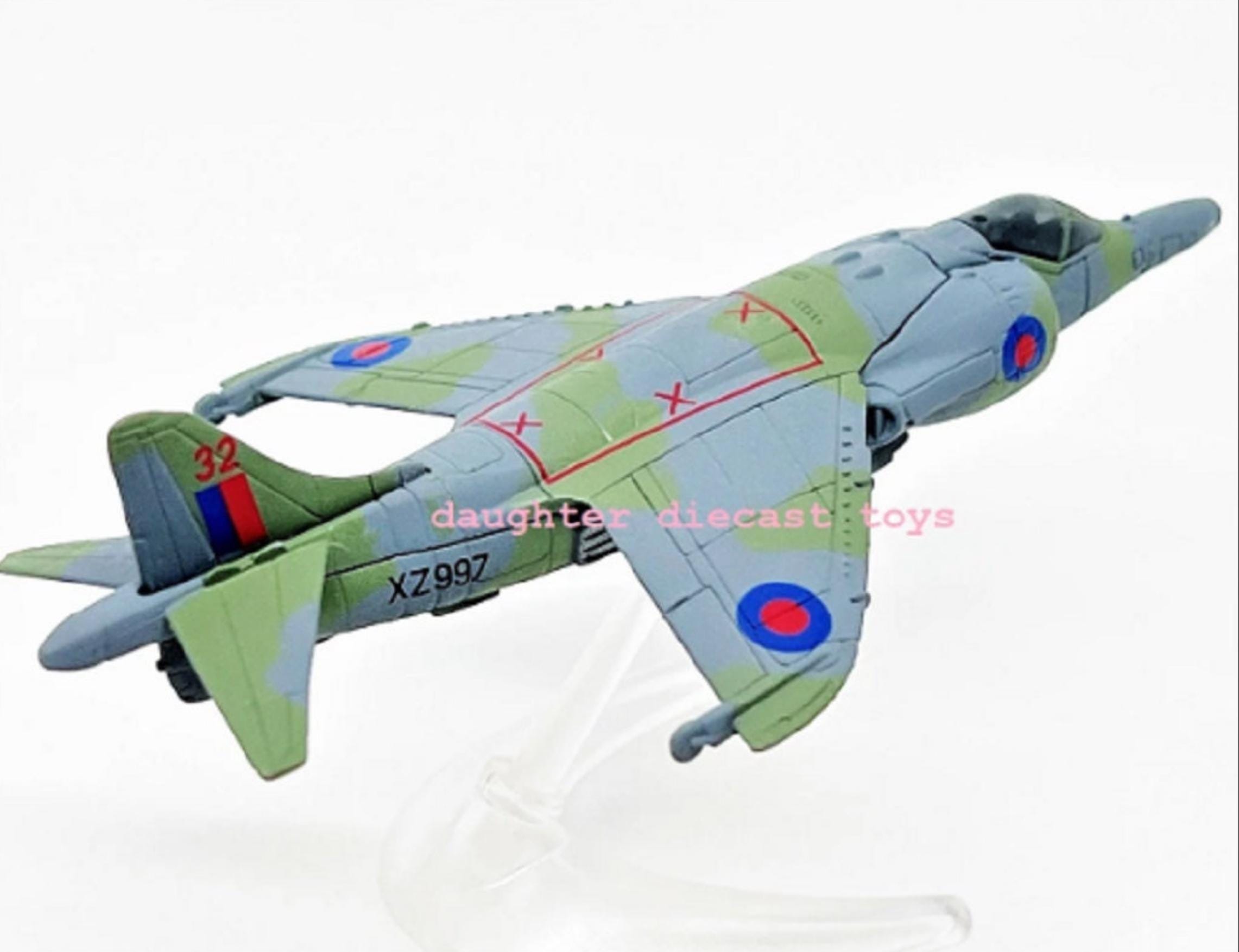
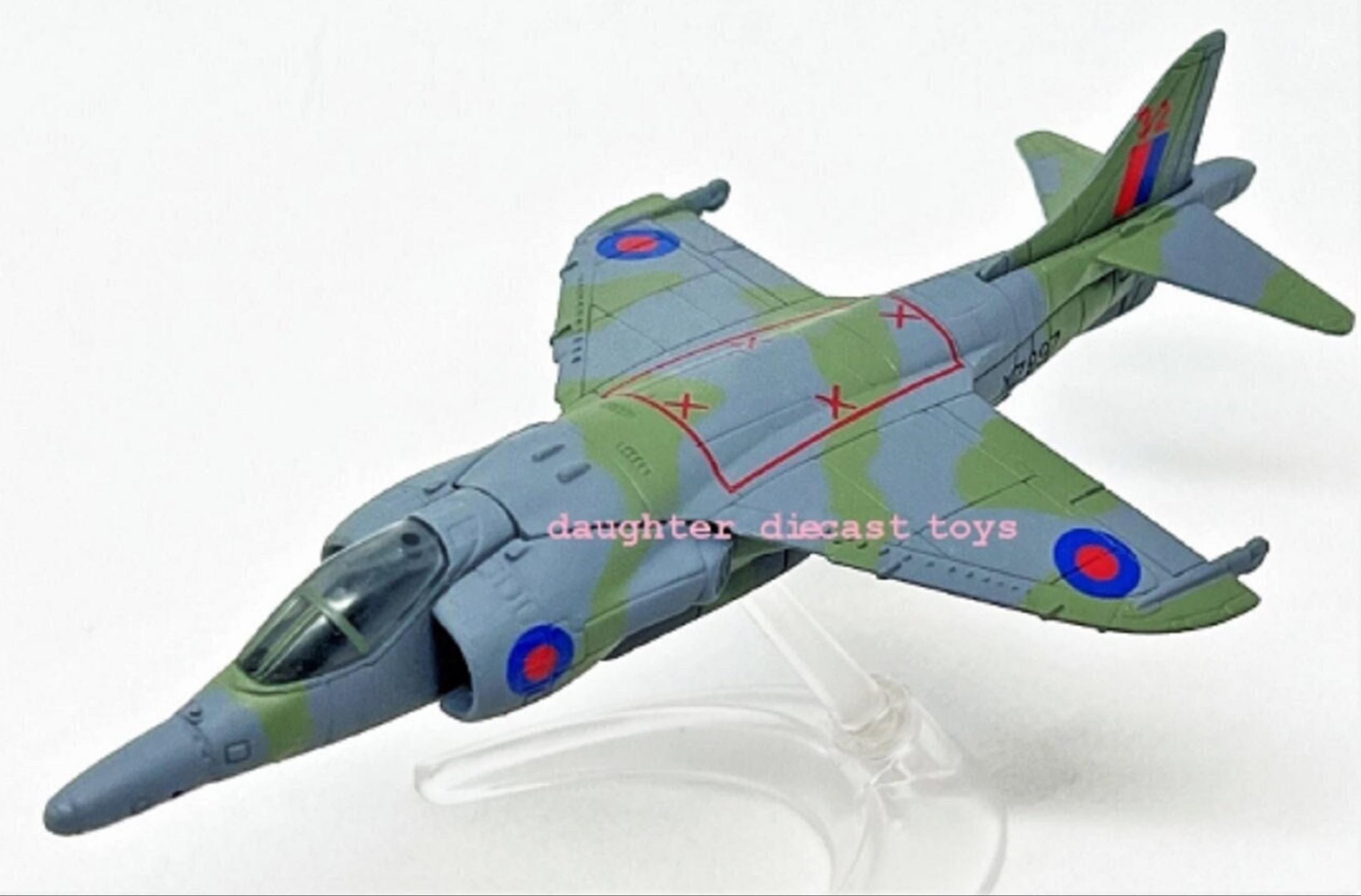
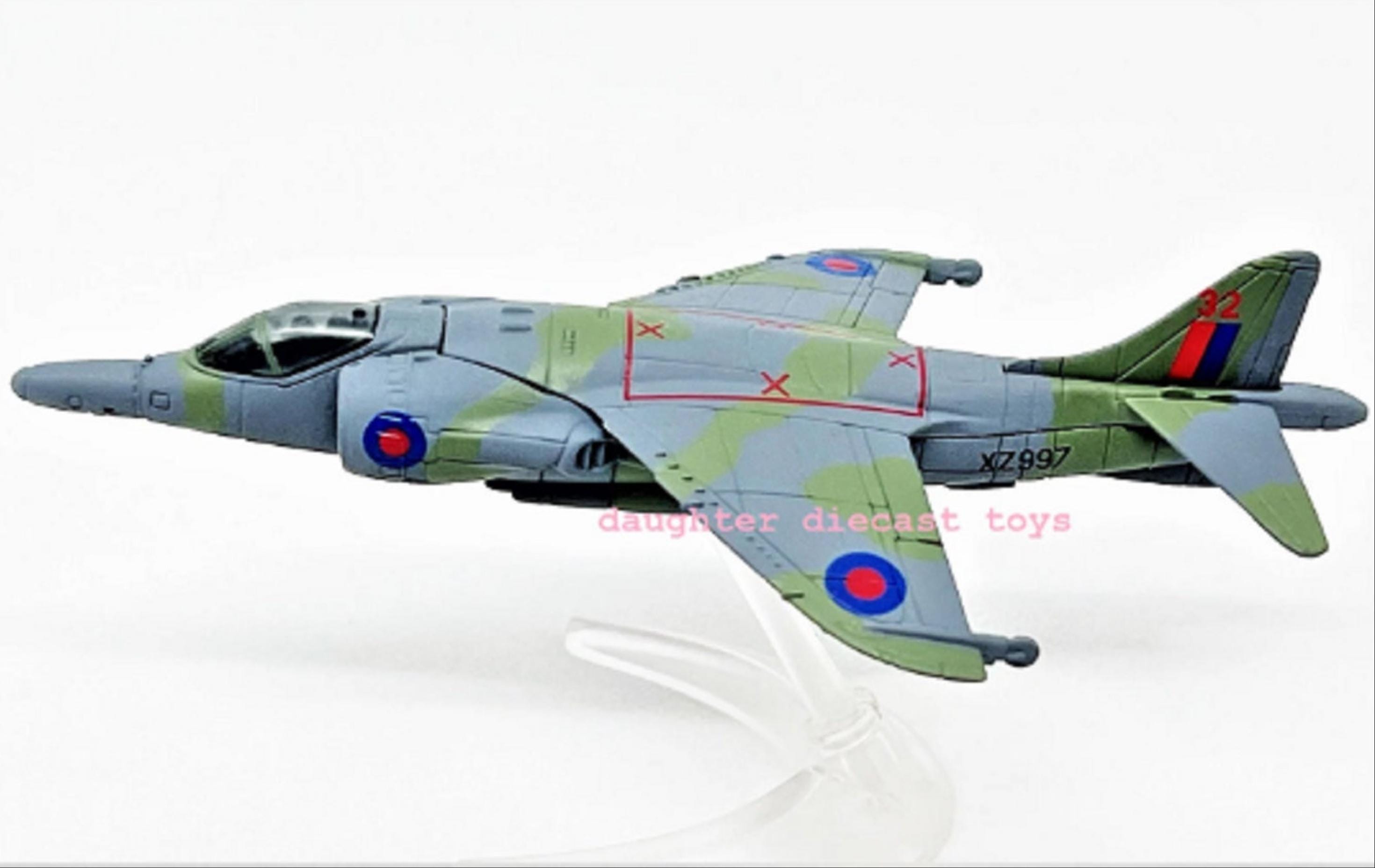
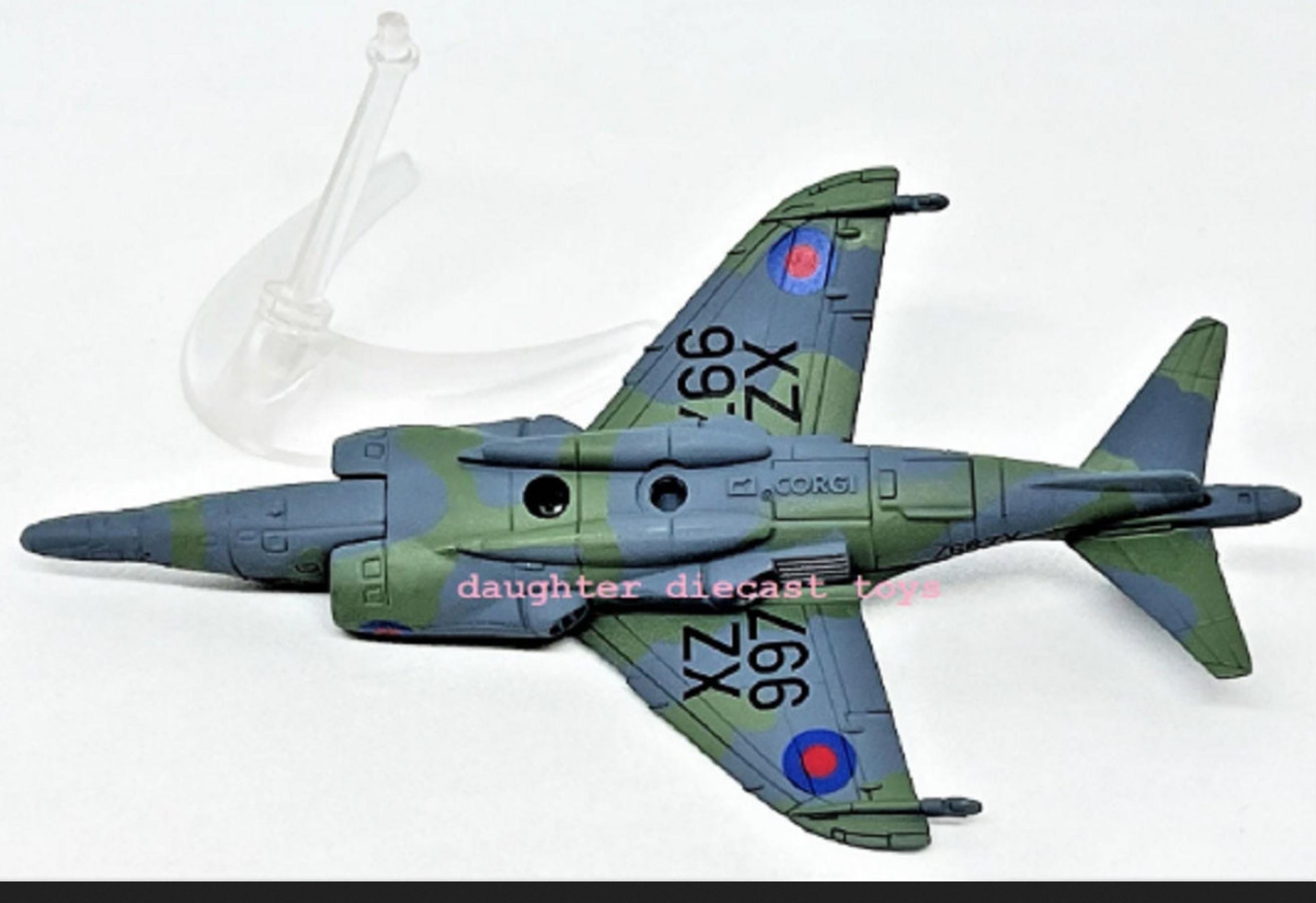

RAF HARRIER GR3 Ground Attack Aircraft-ADULT Collector Diecast Metal-w/Stand-Pristine Condition/Corgi-Perfect Gift for Collectors!
$ 34.99

AF HARRIER GR3 GROUND ATTACK AIRCRAFT-ADULT COLLECTOR Diecast
Metal-w/Stand-Pristine Condition/CORGI-Perfect Gift for Collectors!Gorgeous! RAF HARRIER GR3 GROUND ATTACK AIRCRAFT. Weighty, constructed of diecast metal. Intricately detailed, Adult Collector-made by Corgi. Gray/Green ski-camo paint depicts the aircraft as it appeared in use during the Falkland Island War. Hard to find vintage model! Desktop display model-comes with (easy to set up) stand. Measures 4 3/4"L x 2 3/4"W x 2 1/2 "H (mounted). Pristine condition model-never previously handled or displayed (until today for our photos). Sold loose in collectors' bag with stand. The perfect gift for aviation history fans, vintage toy collectors, and veterans. We ship fast & safe worldwide every day. See Aircraft Bio below.... Note: My dad owned a Diecast toy store for 30 years. I inherited the store inventory when he passed away several years ago. I am (just now) able to bring myself to begin selling his cars-so they can be shared with the world. All pristine and mint condition vintage models will (eventually) be listed here on ETSY. All the inventory is NEW (vintage) merchandise-which was intended for retail sale. Please know-our diecast toys have NEVER been "played-with” we do not sell used, or damaged toys.
•
•
•FOR A LIMITED TIME
•
•
•Purchases totaling $35 and above qualify for FREE shipping to USA! Add more items to your Etsy shopping cart to save $$$. AIRCRAFT BIO:Harrier GR.1, GR.3 AV-8A/C Harrier, AV-8S Matador Role :V/STOL ground-attack aircraft National origin United Kingdom Manufacturer Hawker Siddeley First fligh 28 December 1967 Introduction 1 April 1969 Retired 2006 Status Retired Primary users Royal Air Force (historical) United States Marine Corps (historical) Spanish Navy (historical) Royal Thai Navy (historical) Produced 1967–1970s Number built 278 Developed from Hawker Siddeley P.1127/Kestrel Developed into British Aerospace Sea Harrier McDonnell Douglas AV-8B Harrier II British Aerospace Harrier IIThe Hawker Siddeley Harrier is a British military aircraft. It was the first of the Harrier series of aircraft and was developed in the 1960s as the first operational ground attack and reconnaissance aircraft with vertical/short takeoff and landing (V/STOL) capabilities and the only truly successful V/STOL design of that era. The Harrier was developed directly from the Hawker Siddeley Kestrel prototype aircraft, following the cancellation of a more advanced supersonic aircraft, the Hawker Siddeley P.1154. In the late 1960s, the Harrier GR.1 and GR.3 variants were ordered by the British government for the Royal Air Force (RAF). It was exported to the United States as the AV-8A, for use by the US Marine Corps (USMC), in the 1970s.During the Harrier's service the RAF positioned the bulk of the aircraft in West Germany to defend against a potential invasion of Western Europe by the Warsaw Pact forces; the unique abilities of the Harrier allowed the RAF to disperse their forces away from vulnerable airbases. The USMC used their Harriers primarily for close air support, operating from amphibious assault ships, and, if needed, forward operating bases. Harrier squadrons saw several deployments overseas. The Harrier's ability to operate with minimal ground facilities and very short runways allowed it to be used at locations unavailable to other fixed-wing aircraft. The Harrier received criticism for having a high accident rate and for a time-consuming maintenance process.In the 1970s the British Aerospace Sea Harrier was developed from the Harrier for use by the Royal Navy (RN) on Invincible-class aircraft carriers. The Sea Harrier and the Harrier fought in the 1982 Falklands War, in which the aircraft proved to be crucial and versatile. The RN Sea Harriers provided fixed-wing air defence while the RAF Harriers focused on ground-attack missions in support of the advancing British land force. The Harrier was also extensively redesigned as the AV-8B Harrier II and British Aerospace Harrier II by the team of McDonnell Douglas and British Aerospace.Royal Air ForceIn RAF service, the Harrier was used in close air support (CAS), reconnaissance, and other ground-attack roles. The flexibility of the Harrier led to a long-term heavy deployment in West Germany as a conventional deterrent and potential strike weapon against Soviet aggression; from camouflaged rough bases the Harrier was expected to launch attacks on advancing armour columns from East Germany.[86] Harriers were also deployed to bases in Norway and Belize, a former British colony.[86] No. 1 Squadron was specifically earmarked for Norwegian operations in the event of war, operating as part of Allied Forces Northern Europe. The Harrier's capabilities were necessary in the Belize deployment, as it was the only RAF combat aircraft capable of safely operating from the airport's short runway;[87] British forces had been stationed in Belize for several years due to tensions over a Guatemalan claim to Belizean territory; the forces were withdrawn in 1993, two years after Guatemala recognized the independence of Belize.[88]In the Falklands War (Spanish: Guerra de las Malvinas) in 1982, 10 Harrier GR.3s of No. 1 Squadron operated from the aircraft carrier HMS Hermes.[89] As the RAF Harrier GR.3 had not been designed for naval service, the 10 aircraft had to be rapidly modified prior to the departure of the task force. Special sealants against corrosion were applied and a new deck-based inertial guidance aid was devised to allow the RAF Harrier to land on a carrier as easily as the Sea Harrier.[90] Transponders to guide aircraft back to the carriers during night-time operations were also installed, along with flares and chaff dispensers.[91]
Metal-w/Stand-Pristine Condition/CORGI-Perfect Gift for Collectors!Gorgeous! RAF HARRIER GR3 GROUND ATTACK AIRCRAFT. Weighty, constructed of diecast metal. Intricately detailed, Adult Collector-made by Corgi. Gray/Green ski-camo paint depicts the aircraft as it appeared in use during the Falkland Island War. Hard to find vintage model! Desktop display model-comes with (easy to set up) stand. Measures 4 3/4"L x 2 3/4"W x 2 1/2 "H (mounted). Pristine condition model-never previously handled or displayed (until today for our photos). Sold loose in collectors' bag with stand. The perfect gift for aviation history fans, vintage toy collectors, and veterans. We ship fast & safe worldwide every day. See Aircraft Bio below.... Note: My dad owned a Diecast toy store for 30 years. I inherited the store inventory when he passed away several years ago. I am (just now) able to bring myself to begin selling his cars-so they can be shared with the world. All pristine and mint condition vintage models will (eventually) be listed here on ETSY. All the inventory is NEW (vintage) merchandise-which was intended for retail sale. Please know-our diecast toys have NEVER been "played-with” we do not sell used, or damaged toys.
•
•
•FOR A LIMITED TIME
•
•
•Purchases totaling $35 and above qualify for FREE shipping to USA! Add more items to your Etsy shopping cart to save $$$. AIRCRAFT BIO:Harrier GR.1, GR.3 AV-8A/C Harrier, AV-8S Matador Role :V/STOL ground-attack aircraft National origin United Kingdom Manufacturer Hawker Siddeley First fligh 28 December 1967 Introduction 1 April 1969 Retired 2006 Status Retired Primary users Royal Air Force (historical) United States Marine Corps (historical) Spanish Navy (historical) Royal Thai Navy (historical) Produced 1967–1970s Number built 278 Developed from Hawker Siddeley P.1127/Kestrel Developed into British Aerospace Sea Harrier McDonnell Douglas AV-8B Harrier II British Aerospace Harrier IIThe Hawker Siddeley Harrier is a British military aircraft. It was the first of the Harrier series of aircraft and was developed in the 1960s as the first operational ground attack and reconnaissance aircraft with vertical/short takeoff and landing (V/STOL) capabilities and the only truly successful V/STOL design of that era. The Harrier was developed directly from the Hawker Siddeley Kestrel prototype aircraft, following the cancellation of a more advanced supersonic aircraft, the Hawker Siddeley P.1154. In the late 1960s, the Harrier GR.1 and GR.3 variants were ordered by the British government for the Royal Air Force (RAF). It was exported to the United States as the AV-8A, for use by the US Marine Corps (USMC), in the 1970s.During the Harrier's service the RAF positioned the bulk of the aircraft in West Germany to defend against a potential invasion of Western Europe by the Warsaw Pact forces; the unique abilities of the Harrier allowed the RAF to disperse their forces away from vulnerable airbases. The USMC used their Harriers primarily for close air support, operating from amphibious assault ships, and, if needed, forward operating bases. Harrier squadrons saw several deployments overseas. The Harrier's ability to operate with minimal ground facilities and very short runways allowed it to be used at locations unavailable to other fixed-wing aircraft. The Harrier received criticism for having a high accident rate and for a time-consuming maintenance process.In the 1970s the British Aerospace Sea Harrier was developed from the Harrier for use by the Royal Navy (RN) on Invincible-class aircraft carriers. The Sea Harrier and the Harrier fought in the 1982 Falklands War, in which the aircraft proved to be crucial and versatile. The RN Sea Harriers provided fixed-wing air defence while the RAF Harriers focused on ground-attack missions in support of the advancing British land force. The Harrier was also extensively redesigned as the AV-8B Harrier II and British Aerospace Harrier II by the team of McDonnell Douglas and British Aerospace.Royal Air ForceIn RAF service, the Harrier was used in close air support (CAS), reconnaissance, and other ground-attack roles. The flexibility of the Harrier led to a long-term heavy deployment in West Germany as a conventional deterrent and potential strike weapon against Soviet aggression; from camouflaged rough bases the Harrier was expected to launch attacks on advancing armour columns from East Germany.[86] Harriers were also deployed to bases in Norway and Belize, a former British colony.[86] No. 1 Squadron was specifically earmarked for Norwegian operations in the event of war, operating as part of Allied Forces Northern Europe. The Harrier's capabilities were necessary in the Belize deployment, as it was the only RAF combat aircraft capable of safely operating from the airport's short runway;[87] British forces had been stationed in Belize for several years due to tensions over a Guatemalan claim to Belizean territory; the forces were withdrawn in 1993, two years after Guatemala recognized the independence of Belize.[88]In the Falklands War (Spanish: Guerra de las Malvinas) in 1982, 10 Harrier GR.3s of No. 1 Squadron operated from the aircraft carrier HMS Hermes.[89] As the RAF Harrier GR.3 had not been designed for naval service, the 10 aircraft had to be rapidly modified prior to the departure of the task force. Special sealants against corrosion were applied and a new deck-based inertial guidance aid was devised to allow the RAF Harrier to land on a carrier as easily as the Sea Harrier.[90] Transponders to guide aircraft back to the carriers during night-time operations were also installed, along with flares and chaff dispensers.[91]
Other Products