
RAF WWII BIPLANE-Diecast Metal Airplane with Runway-Mint Condition/Factory Package-Perfect Gift for Collectors!
$ 19.99

RAF WWII BIPLANE-Diecast Metal Airplane with Runway-Mint Condition/Factory
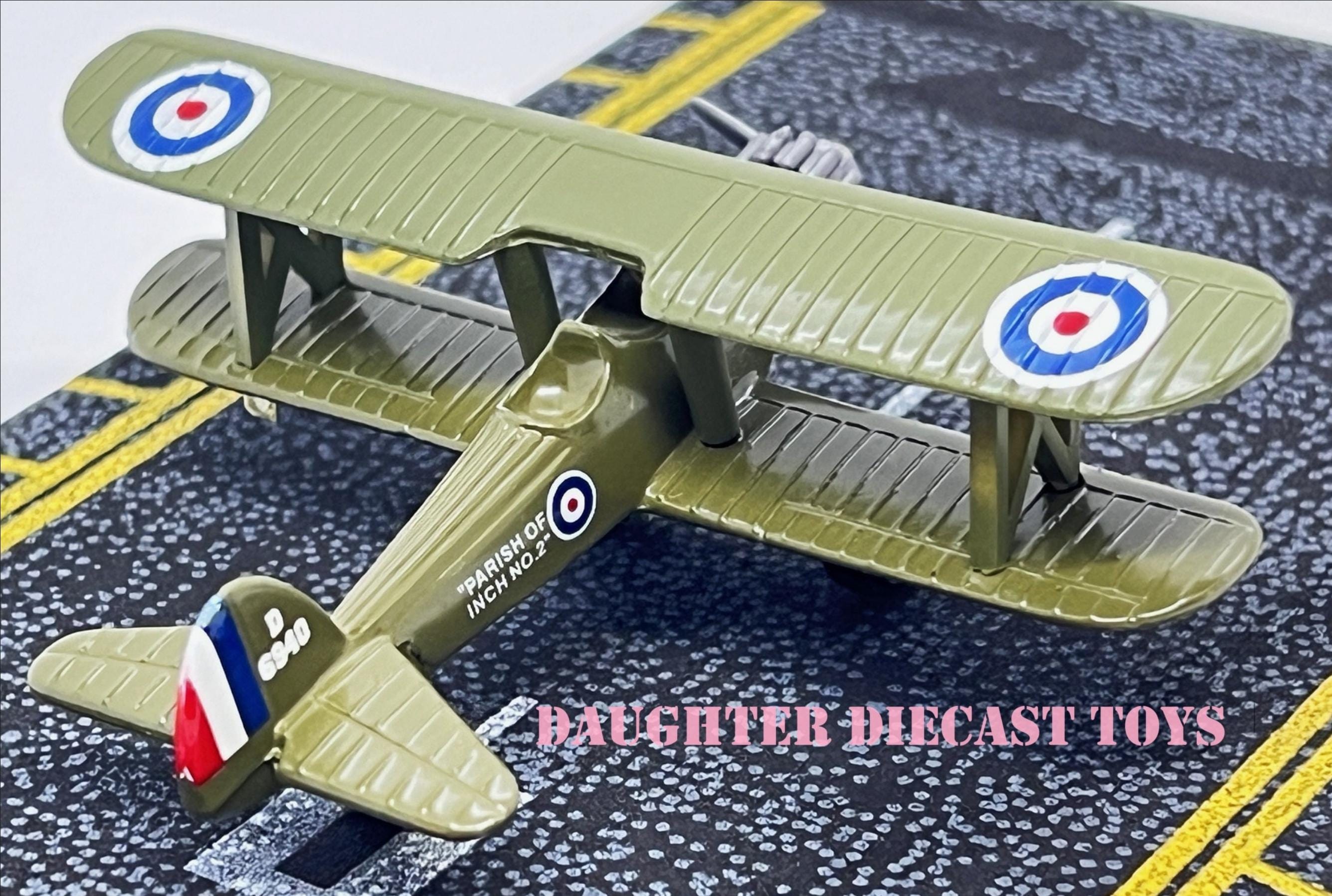
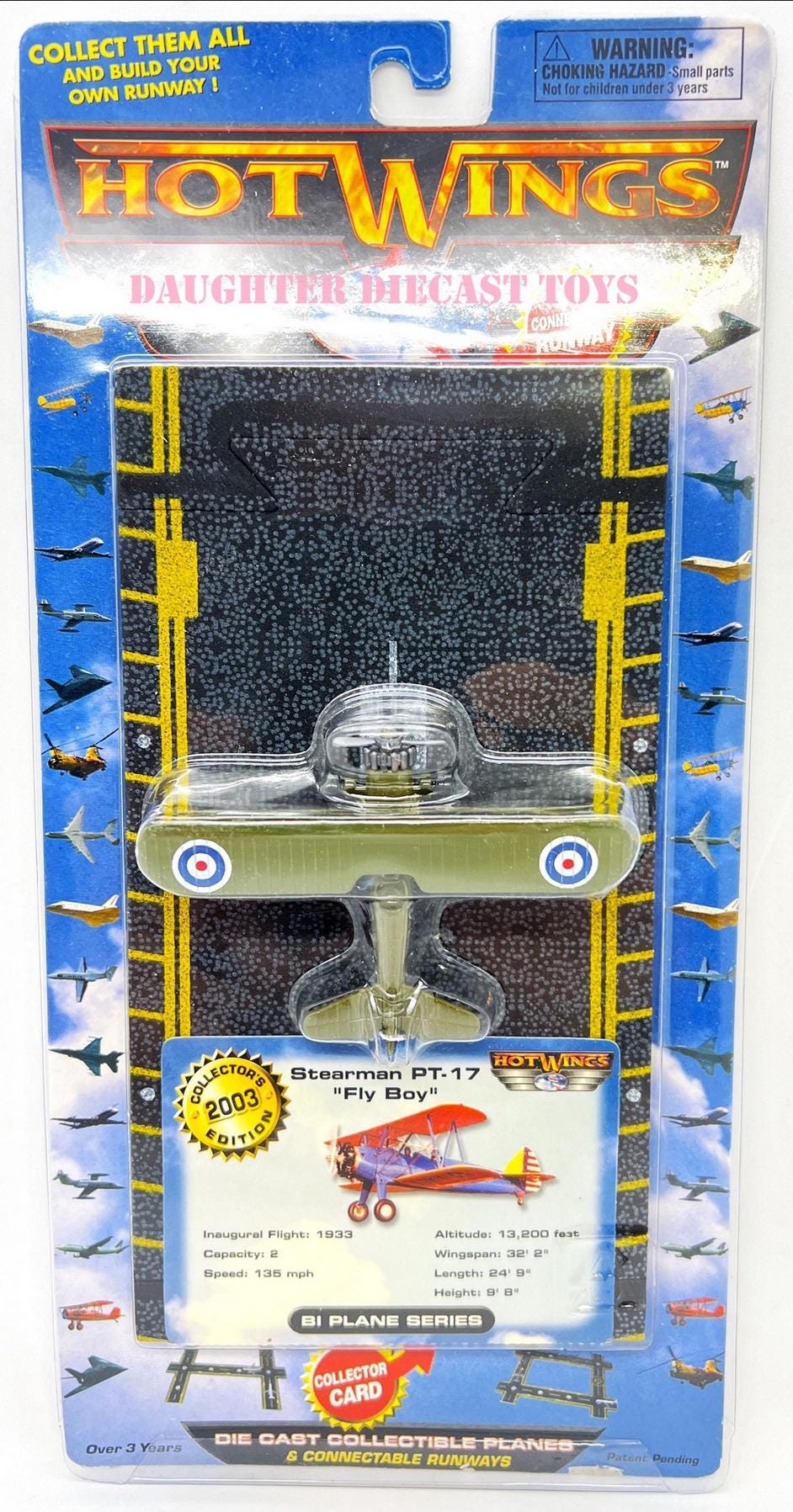
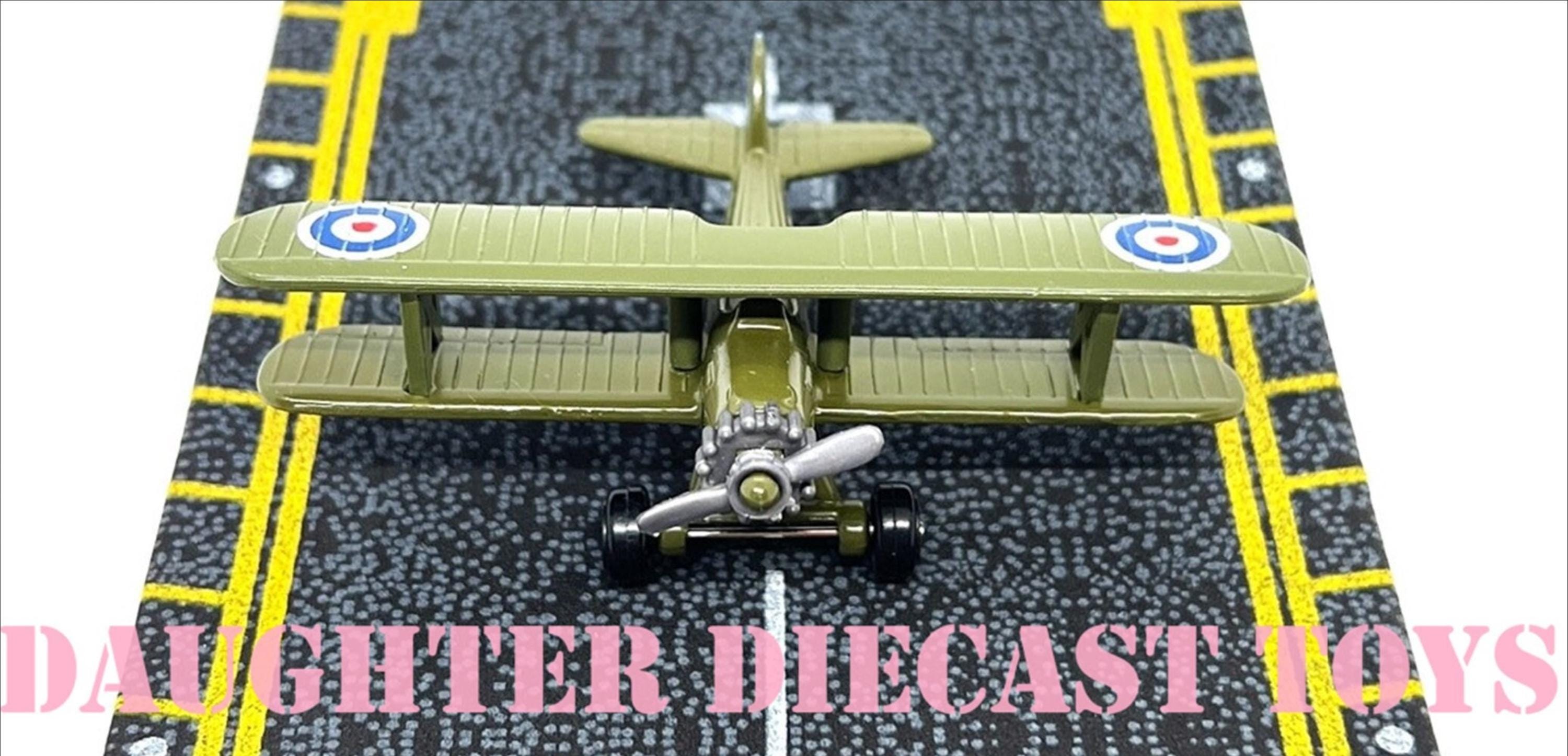
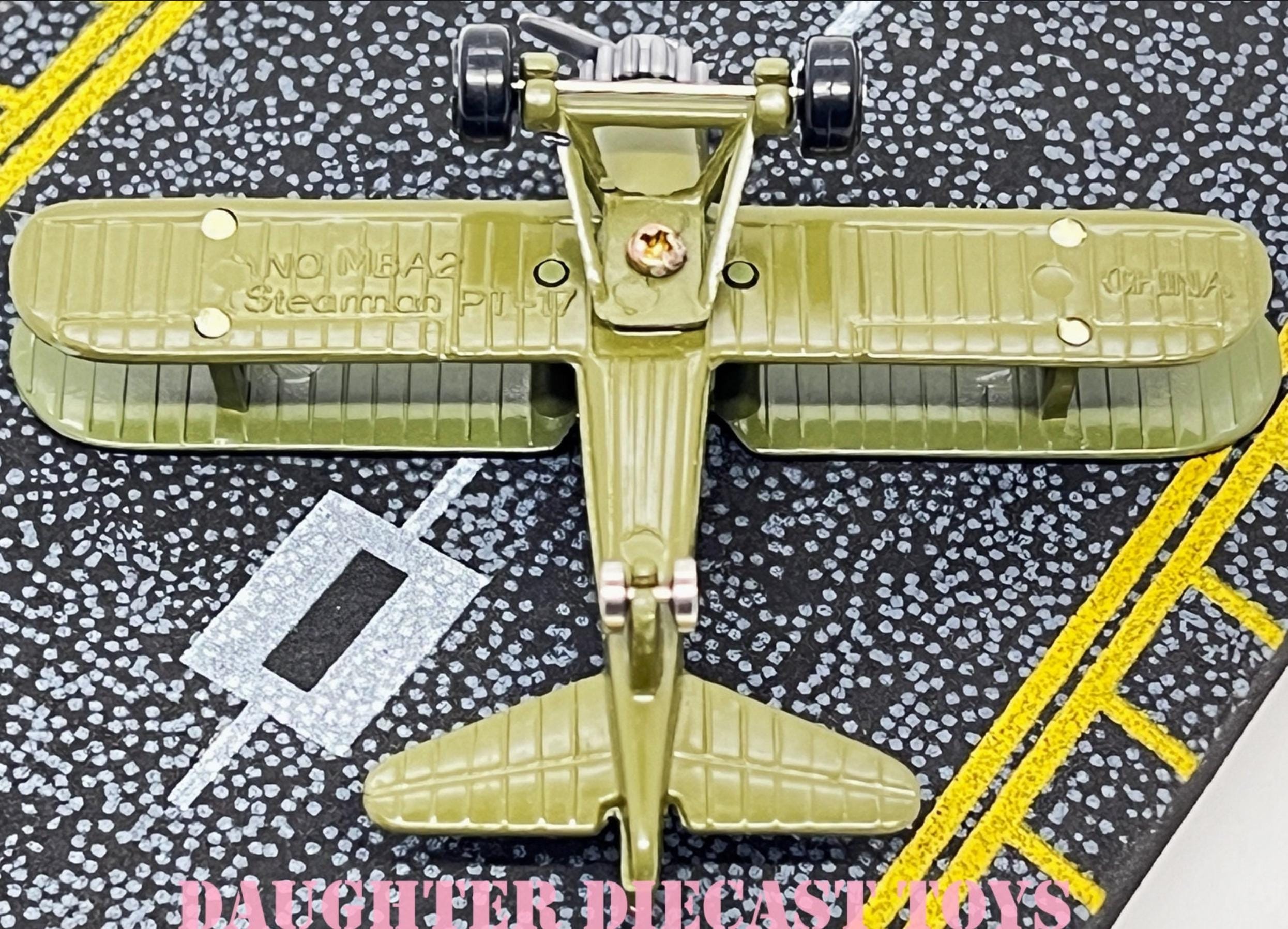
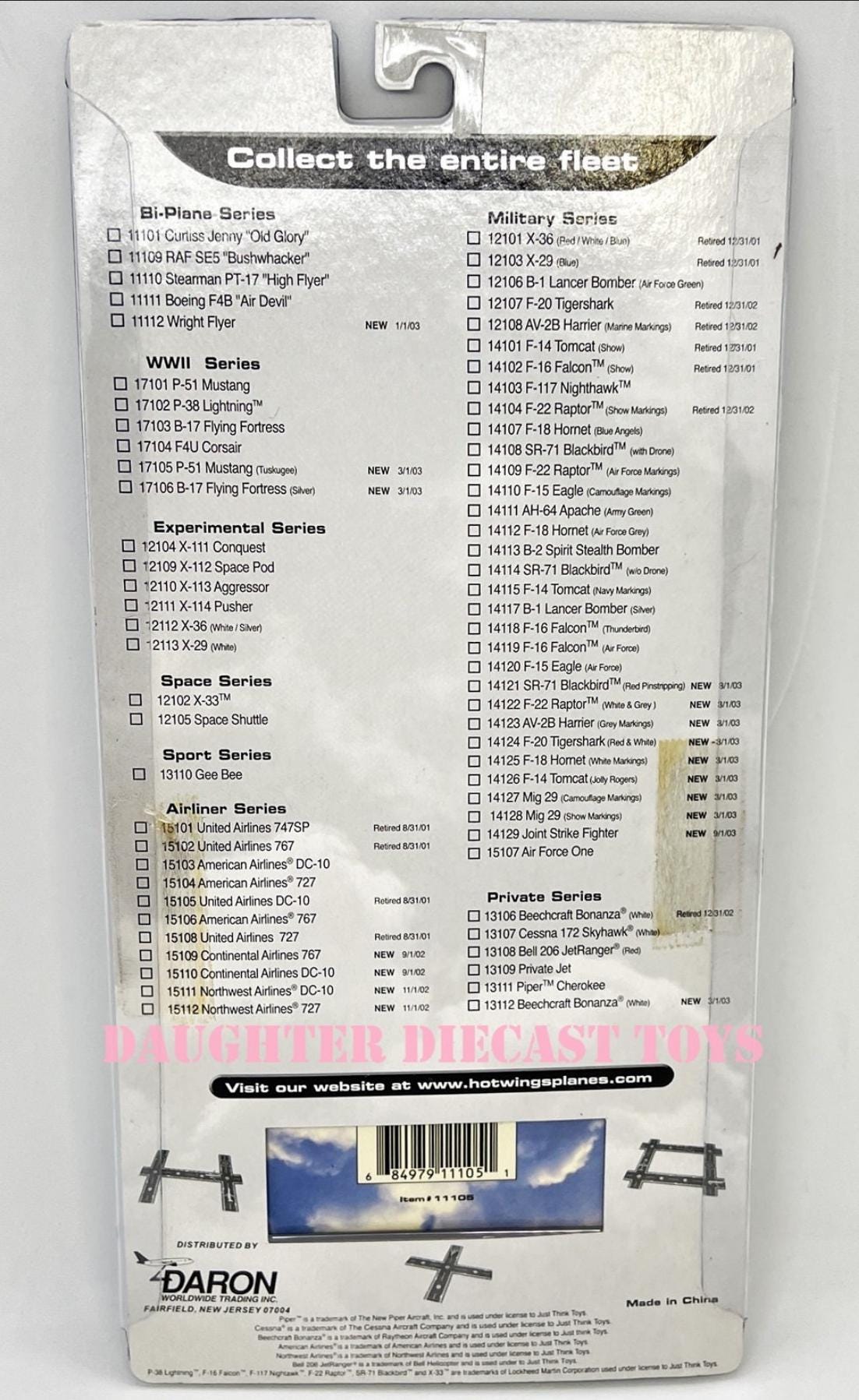
Package-Perfect Gift for Collectors!Awesome! RAF WWI PT-17 STEARMAN BIPLANE. Made by Just Think Toys. Made of die cast metal. Hard to find model! Comes with 7"x4" connectible foam runway. Pristine/mint condition never opened from its factory sealed package until today for the photos in this listing. The perfect gift for crop dusters, toy collectors, fans of airshow and vintage aircraft (like me!). Located in Midwest USA-our shipping origin is Rolling Prairie, IN-we ship fast & safe coast to coast in USA & worldwide every day. See Aircraft Bio below....Note: My dad owned a Diecast toy store for 30 years. I inherited the store inventory when he passed away several years ago. I am (just now) able to bring myself to begin selling his cars-so they can be shared with the world. All pristine and mint condition vintage models will (eventually) be listed here on ETSY. All the inventory is NEW (vintage) merchandise-which was intended for retail sale. Please know-our diecast toys have NEVER been "played-with” we do not sell used, or damaged toys.
•
•
•FOR A LIMITED TIME
•
•
•Purchases totaling $35 and above qualify for FREE shipping to USA! Add more items to your Etsy shopping cart to save $$$.AIRCRAFT BIO:PT-17 is a variant of the Stearman (Boeing) Model 75 is an American biplane formerly used as a military trainer aircraft, of which at least 10,626 were built in the United States during the 1930s and 1940s. Stearman Aircraft became a subsidiary of Boeing in 1934. Widely known as the Stearman, Boeing Stearman, or Kaydet, it served as a primary trainer for the United States Army Air Forces, the United States Navy with the Royal Canadian Air Force as the Kaydet throughout World War II. After the conflict was over, thousands of surplus aircraft were sold on the civilian market. In the immediate postwar years, they became popular as crop dusters and sports planes, and for aerobatic and wing walking use in air shows.Design and development:Boeing Stearman PT-17 Kaydet – Aeronautics Museum of Maracay In late 1933, Stearman engineers Mac Short, Harold W. Zipp, and J. Jack Clark took a 1931 Lloyd Stearman design, and added cantilever landing gear and adjustable elevator trim tabs, to produce the Model 70. Able to withstand +12g and -9g, the aircraft was powered by a 210-hp Lycoming R-680, first flew on 1 January 1934, before flight tests were conducted at Wright Field, Naval Air Station Anacostia, and Pensacola. The Navy then requested a similar model built to Navy specifications, including a 200-hp Wright J-5 engine. The resultant Model 73, was designated NS-1 by the Navy, of which 41 were ordered, including enough spares to build another 20 aircraft.[3]In the summer of 1934, Stearman engineers refined the Model 73 into the Model X75. The Army Air Corps evaluated the plane that autumn, powered by a 225-hp Wright R-760 or a 225-hp Lycoming R-680. In July 1935, the Army Air Corps ordered 26 with the Lycoming engine, designated the PT-13A, while the navy ordered an additional 20. In August 1936, the Army ordered an additional 50 PT-13As, followed by another 30 in October, and another 28 in December. Simultaneously, the company received orders for its primary trainer from the Argentinian navy, the Philippine Army Air Corps, and the Brazilian Air Force. In January 1937, the army ordered another 26 PT-13As.[3]On 6 June 1941, the U.S. government issued Approved Type Certificate No. 743 for the civilian version of the Model 75. Designated the Model A75L3 (PT-13) and Model A75N1 (PT-17), about 60 were sold to civilian flights schools such as Parks College of Engineering, Aviation and Technology, and for export.[3]: 148 On 15 March 1941, the company delivered the 1000th trainer to the Army, and the 1001st trainer to the Navy. Then on 27 August 1941, the company delivered the 2000th trainer to the Army. On 27 July 1944, the company delivered its 10,000th primary trainer.[3]: 145–148, 168 The Kaydet was a conventional biplane of rugged construction, with a large, fixed tailwheel undercarriage, and accommodation for the student and instructor in open cockpits in tandem. The radial engine was usually not cowled, although some Stearman operators choose to cowl the engine, most notably the Red Baron Stearman Squadron.Operational history Post-war usage After World War II, thousands of surplus PT-17s were auctioned off to civilians and former military pilots. Many were modified for crop-dusting use, with a hopper for pesticide or fertilizer fitted in place of the front cockpit. Additional equipment included pumps, spray bars, and nozzles mounted below the lower wings. A popular approved modification to increase the maximum takeoff weight and climb performance involved fitting a larger Pratt & Whitney R-985 Wasp Junior engine and a constant-speed propeller.Variants Data from: United States Navy aircraft since 1911,[4] Boeing aircraft since 1916[5] 8,584 Model 70s, 75s and 76s were built, with additional "spares" bringing the number up to the sometimes quoted 10,346.[1]USAAC/USAAF designations The U.S. Army Air Forces Model 75 Kaydet had three different designations, PT-13, PT-17 and PT-18, depending on which type of radial engine was installed.PT-13 Initial production version with Lycoming R-680-B4B engine, 26 built in 1936 PT-13A Model A75 with R-680-7 engine, 92 delivered from 1937 to 1938. PT-13B R-680-11 engine, 255 delivered from 1939 to 1941. PT-13C Six PT-13Bs modified for instrument flying. PT-13D Model E75 with R-680-17 engine, 793 delivered PT-17 Version with Continental R-670-5 engine, 2,942 delivered. PT-17A 136 PT-17s modified with blind-flying instrumentation. PT-17B Three PT-17s modified with agricultural spraying equipment for pest control near army bases. PT-17C Single PT-17 conversion with standardized Army-Navy equipment. SpecificationsNumber Built: 8,584 total Kaydets Year Produced: 1941 Serial Number: 41-25254 Crew: (2) Instructor Pilot, Student Pilot Current Pilots:DimensionsLength: 24 ft. 3 in. Wingspan: 32 ft. 2 in. Empty Weight: 1,936 lbs. Loaded Weight: 2,717 lbs. Engine: 1x Continental R-670-5 seven-cylinder, air-cooled, radial piston engine Engine Power: 220 hpPerformanceCruising Speed: 96 mph Max Speed: 106 mph Range: 505 miles Ceiling: 11,200 ft. Rate of Climb: 800 ft./min. initial
Package-Perfect Gift for Collectors!Awesome! RAF WWI PT-17 STEARMAN BIPLANE. Made by Just Think Toys. Made of die cast metal. Hard to find model! Comes with 7"x4" connectible foam runway. Pristine/mint condition never opened from its factory sealed package until today for the photos in this listing. The perfect gift for crop dusters, toy collectors, fans of airshow and vintage aircraft (like me!). Located in Midwest USA-our shipping origin is Rolling Prairie, IN-we ship fast & safe coast to coast in USA & worldwide every day. See Aircraft Bio below....Note: My dad owned a Diecast toy store for 30 years. I inherited the store inventory when he passed away several years ago. I am (just now) able to bring myself to begin selling his cars-so they can be shared with the world. All pristine and mint condition vintage models will (eventually) be listed here on ETSY. All the inventory is NEW (vintage) merchandise-which was intended for retail sale. Please know-our diecast toys have NEVER been "played-with” we do not sell used, or damaged toys.
•
•
•FOR A LIMITED TIME
•
•
•Purchases totaling $35 and above qualify for FREE shipping to USA! Add more items to your Etsy shopping cart to save $$$.AIRCRAFT BIO:PT-17 is a variant of the Stearman (Boeing) Model 75 is an American biplane formerly used as a military trainer aircraft, of which at least 10,626 were built in the United States during the 1930s and 1940s. Stearman Aircraft became a subsidiary of Boeing in 1934. Widely known as the Stearman, Boeing Stearman, or Kaydet, it served as a primary trainer for the United States Army Air Forces, the United States Navy with the Royal Canadian Air Force as the Kaydet throughout World War II. After the conflict was over, thousands of surplus aircraft were sold on the civilian market. In the immediate postwar years, they became popular as crop dusters and sports planes, and for aerobatic and wing walking use in air shows.Design and development:Boeing Stearman PT-17 Kaydet – Aeronautics Museum of Maracay In late 1933, Stearman engineers Mac Short, Harold W. Zipp, and J. Jack Clark took a 1931 Lloyd Stearman design, and added cantilever landing gear and adjustable elevator trim tabs, to produce the Model 70. Able to withstand +12g and -9g, the aircraft was powered by a 210-hp Lycoming R-680, first flew on 1 January 1934, before flight tests were conducted at Wright Field, Naval Air Station Anacostia, and Pensacola. The Navy then requested a similar model built to Navy specifications, including a 200-hp Wright J-5 engine. The resultant Model 73, was designated NS-1 by the Navy, of which 41 were ordered, including enough spares to build another 20 aircraft.[3]In the summer of 1934, Stearman engineers refined the Model 73 into the Model X75. The Army Air Corps evaluated the plane that autumn, powered by a 225-hp Wright R-760 or a 225-hp Lycoming R-680. In July 1935, the Army Air Corps ordered 26 with the Lycoming engine, designated the PT-13A, while the navy ordered an additional 20. In August 1936, the Army ordered an additional 50 PT-13As, followed by another 30 in October, and another 28 in December. Simultaneously, the company received orders for its primary trainer from the Argentinian navy, the Philippine Army Air Corps, and the Brazilian Air Force. In January 1937, the army ordered another 26 PT-13As.[3]On 6 June 1941, the U.S. government issued Approved Type Certificate No. 743 for the civilian version of the Model 75. Designated the Model A75L3 (PT-13) and Model A75N1 (PT-17), about 60 were sold to civilian flights schools such as Parks College of Engineering, Aviation and Technology, and for export.[3]: 148 On 15 March 1941, the company delivered the 1000th trainer to the Army, and the 1001st trainer to the Navy. Then on 27 August 1941, the company delivered the 2000th trainer to the Army. On 27 July 1944, the company delivered its 10,000th primary trainer.[3]: 145–148, 168 The Kaydet was a conventional biplane of rugged construction, with a large, fixed tailwheel undercarriage, and accommodation for the student and instructor in open cockpits in tandem. The radial engine was usually not cowled, although some Stearman operators choose to cowl the engine, most notably the Red Baron Stearman Squadron.Operational history Post-war usage After World War II, thousands of surplus PT-17s were auctioned off to civilians and former military pilots. Many were modified for crop-dusting use, with a hopper for pesticide or fertilizer fitted in place of the front cockpit. Additional equipment included pumps, spray bars, and nozzles mounted below the lower wings. A popular approved modification to increase the maximum takeoff weight and climb performance involved fitting a larger Pratt & Whitney R-985 Wasp Junior engine and a constant-speed propeller.Variants Data from: United States Navy aircraft since 1911,[4] Boeing aircraft since 1916[5] 8,584 Model 70s, 75s and 76s were built, with additional "spares" bringing the number up to the sometimes quoted 10,346.[1]USAAC/USAAF designations The U.S. Army Air Forces Model 75 Kaydet had three different designations, PT-13, PT-17 and PT-18, depending on which type of radial engine was installed.PT-13 Initial production version with Lycoming R-680-B4B engine, 26 built in 1936 PT-13A Model A75 with R-680-7 engine, 92 delivered from 1937 to 1938. PT-13B R-680-11 engine, 255 delivered from 1939 to 1941. PT-13C Six PT-13Bs modified for instrument flying. PT-13D Model E75 with R-680-17 engine, 793 delivered PT-17 Version with Continental R-670-5 engine, 2,942 delivered. PT-17A 136 PT-17s modified with blind-flying instrumentation. PT-17B Three PT-17s modified with agricultural spraying equipment for pest control near army bases. PT-17C Single PT-17 conversion with standardized Army-Navy equipment. SpecificationsNumber Built: 8,584 total Kaydets Year Produced: 1941 Serial Number: 41-25254 Crew: (2) Instructor Pilot, Student Pilot Current Pilots:DimensionsLength: 24 ft. 3 in. Wingspan: 32 ft. 2 in. Empty Weight: 1,936 lbs. Loaded Weight: 2,717 lbs. Engine: 1x Continental R-670-5 seven-cylinder, air-cooled, radial piston engine Engine Power: 220 hpPerformanceCruising Speed: 96 mph Max Speed: 106 mph Range: 505 miles Ceiling: 11,200 ft. Rate of Climb: 800 ft./min. initial
Other Products