

Vtg UNITED 747SP Commercial Jet Airliner-Diecast Metal Airplane-Mint Condition/Factory Sealed! Zlymex Zee Toys Great Gift for Collectors!
$ 29.99

Vintage UNITED 747SP Commercial Jet Airliner - Diecast Metal Airplane-Mint
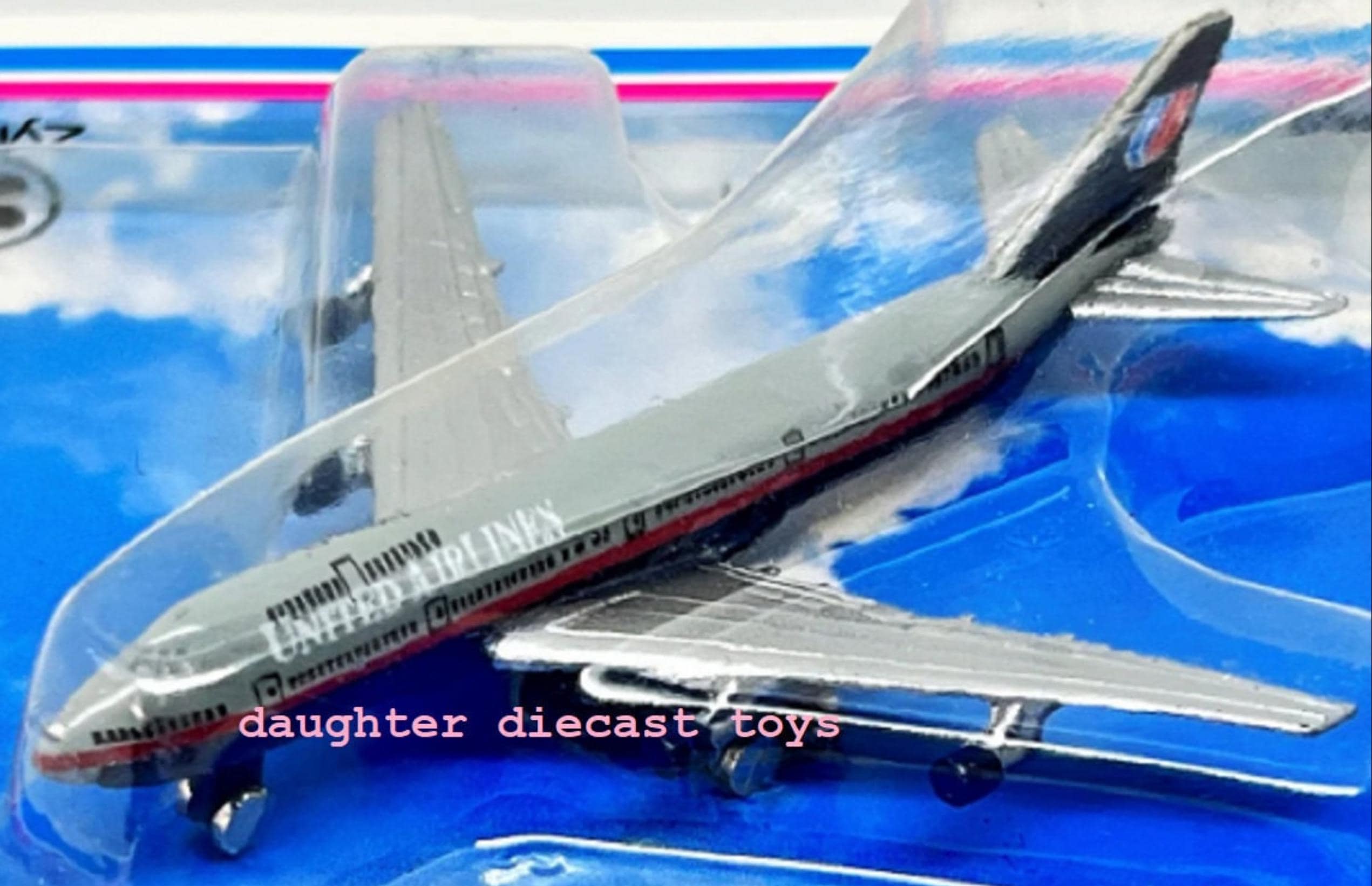
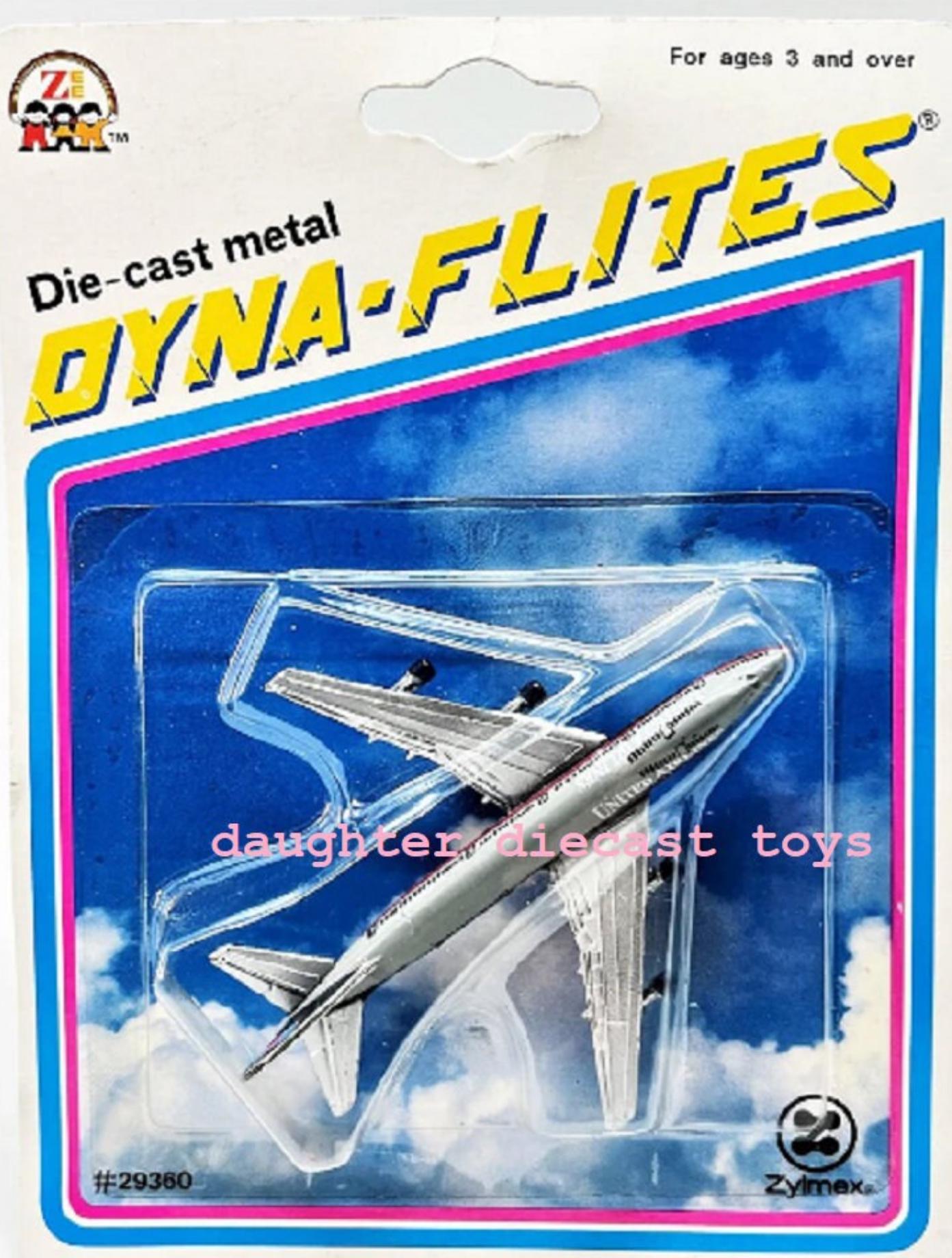
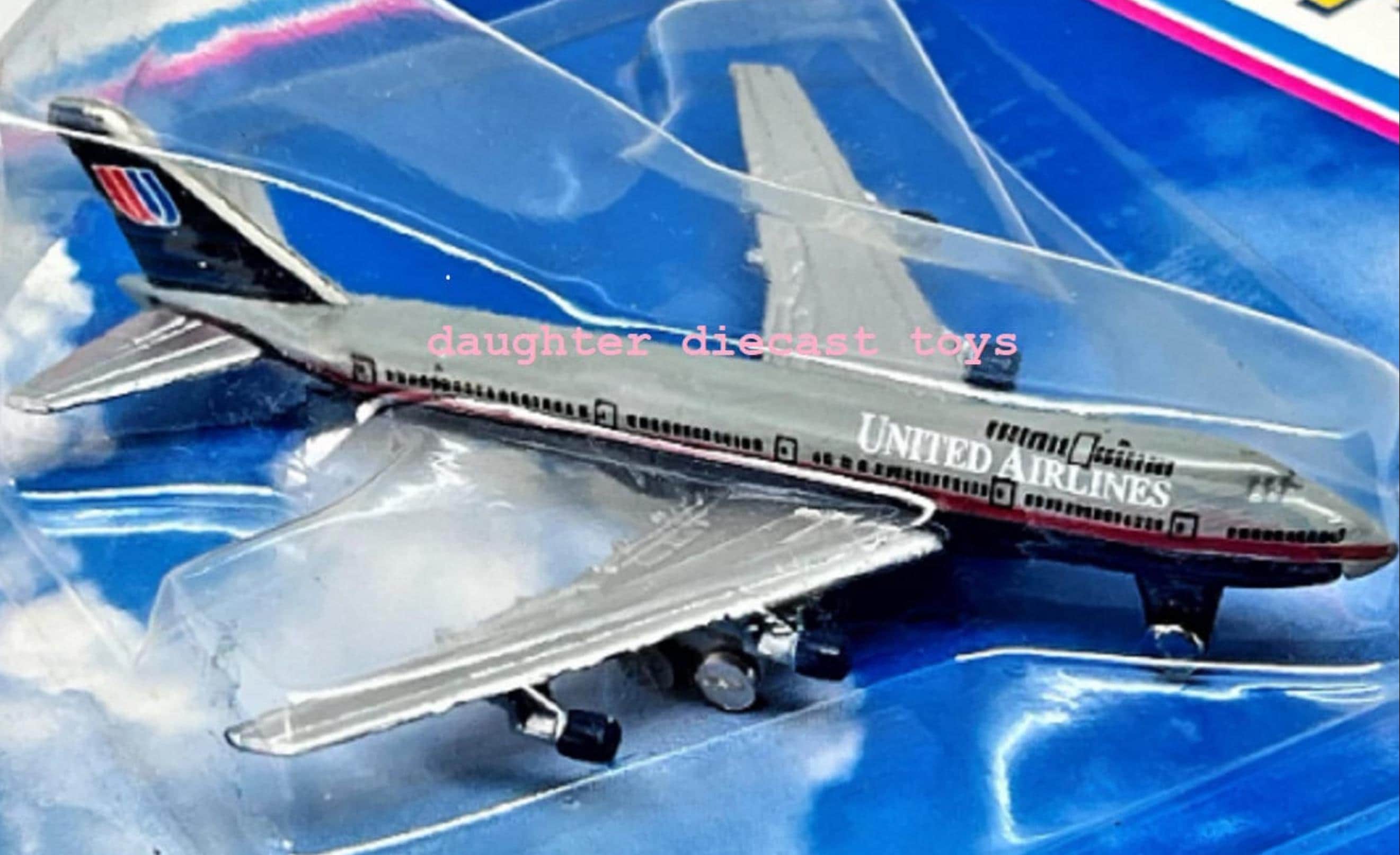
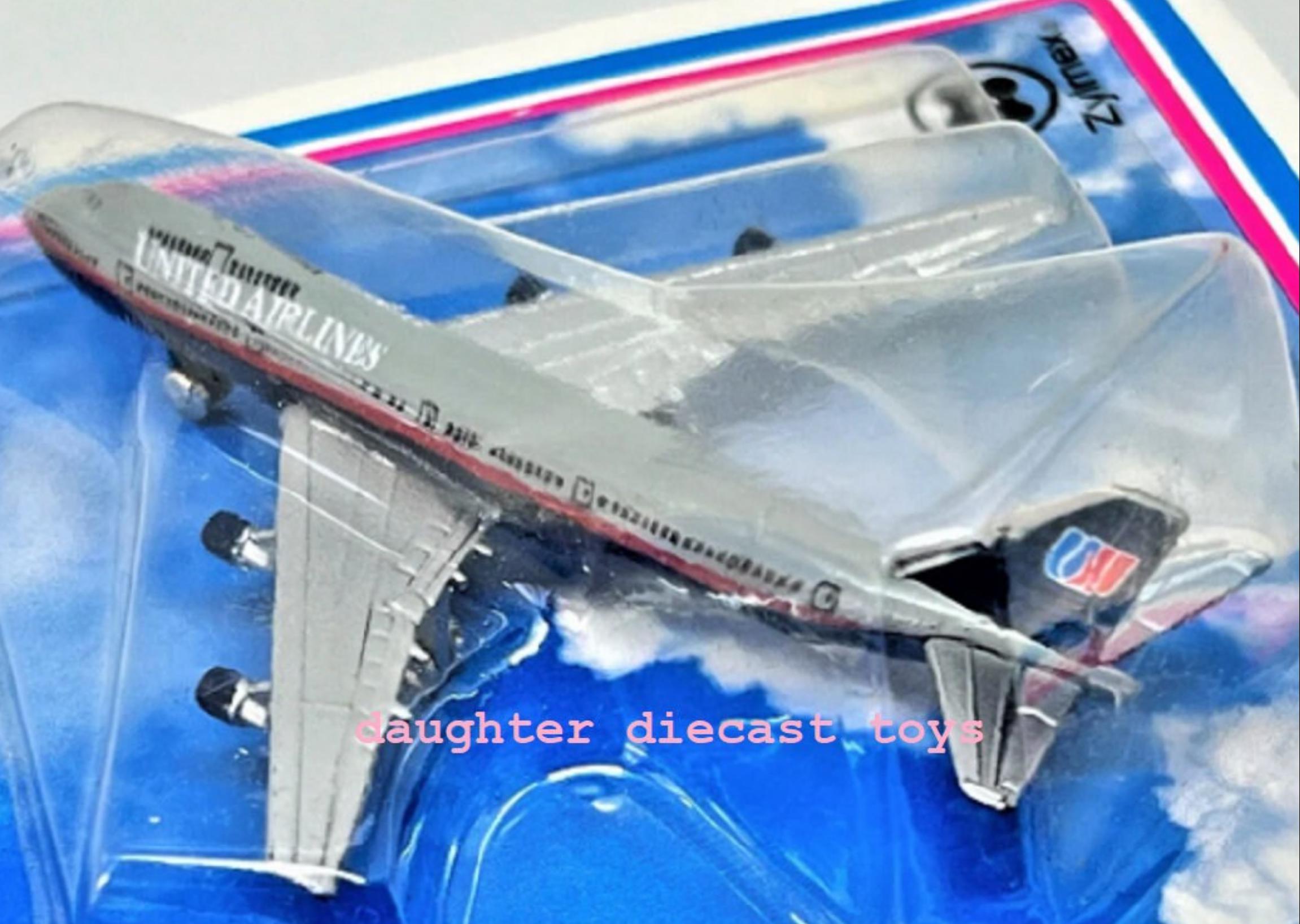
Condition/Factory Sealed! Zlymex Zee Toys Great Gift for Collectors!Fantastic! Vintage UNITED AIRLINES 747SP COMMERCIAL JET AIRLINER. Made by Zee Toys/Constructed of die cast metal. Highly sought-after, very hard to find model! Measures 3 3/4"L x 3 1/4"W x 1 1/4"H. Beautiful rare model- never removed from its factory-sealed card. The Perfect gift for any UA employee or, ZEE, Aerospace, and vintage toy collectors! See aircraft bio below...
•
•
•FOR A LIMITED TIME
•
•
•Purchases totaling $35 and above qualify for FREE shipping to USA! Add more items to your Etsy shopping cart to save $$$.NOTE: My dad owned a Diecast toy store for 30 years. I inherited the store inventory when he passed away many years ago. I am just now, beginning to sell the mint condition vintage models. All are store-inventory is new-old-stock, models have never been "played with". Please visit often-as I adding more cool stuff every day!AIRCRAFT BIO:The Boeing 747 is a large, long-range wide-body airliner manufactured by Boeing Commercial Airplanes in the United States. After introducing the 707 in October 1958, Pan Am wanted a jet 2+1⁄2 times its size, to reduce its seat cost by 30% to democratize air travel.[7] In 1965, Joe Sutter left the 737 development program to design the 747, the first twin aisle airliner. In April 1966, Pan Am ordered 25 Boeing 747-100 aircraft and in late 1966, Pratt & Whitney agreed to develop its JT9D engine, a high-bypass turbofan. On September 30, 1968, the first 747 was rolled out of the custom-built Everett Plant, the world's largest building by volume. The first flight took place on February 9, 1969, and the 747 was certified in December of that year. It entered service with Pan Am on January 22, 1970. The 747 was the first airplane dubbed a "Jumbo Jet", the first wide-body airliner.The 747 is a quadjet, initially powered by JT9D turbofan engines, then GE CF6 and Rolls-Royce RB211 engines for the original variants. With a ten-abreast economy seating, it typically accommodates 366 passengers in three travel classes. It has a pronounced 37.5° wing sweep, allowing a Mach 0.85 (490 kn; 900 km/h) cruise speed, and its heavy weight is supported by four main landing gear legs, each with a four-wheel bogie. The partial double-deck aircraft was designed with a raised cockpit so it could be converted to a freighter airplane by installing a front cargo door, as it was initially thought that it would eventually be superseded by supersonic transports.Boeing introduced the -200 in 1971, with more powerful engines for a heavier maximum takeoff weight (MTOW) of 833,000 lb (378 t) from the initial 735,000 lb (333 t), for a longer 6,560 nmi (12,150 km) range up from 4,620 nmi (8,560 km). It was shortened for the longer-range 747SP in 1976, and the 747-300 followed in 1983 with a stretched upper deck for up to 400 seats in three classes. The heavier 747-400 with improved RB-211 and CF6 versions, along with the PW4000 (the JT9D successor), and a two-crew glass cockpit, was introduced in 1989 and is the most common variant. After several studies, the stretched 747-8 was launched on November 14, 2005, with new General Electric GEnx engines, and was first delivered in October 2011. The 747 is the basis for several government and military variants, such as the VC-25 (Air Force One), E-4 Emergency Airborne Command Post, Shuttle Carrier Aircraft, and some experimental testbeds such as the YAL-1 and SOFIA airborne observatory.By June 2020, 1,556 aircraft had been built, with fifteen 747-8s remaining on order.[8] In 2022, manufacture of the 747 is scheduled to end[9] after a 54-year production run. Initial competition came from the smaller trijet widebodies: the Lockheed L-1011 (introduced in 1972), McDonnell Douglas DC-10 (1971) and later MD-11 (1990). Airbus competed with later variants with the heaviest versions of the A340 until surpassing the 747 in size with the A380, introduced in 2007;[10] while Airbus announced that it will end A380 production in 2021.[11]As of 2020, 61 Boeing 747s have been lost in accidents, in which a total of 3,722 people have died.[12]DesignThree-view diagram of the original Boeing 747-100, showing its general configuration maintained in later variants For design details of a particular generation, see Boeing 747-400, 747-8, and 747SP.The Boeing 747 is a large, wide-body (two-aisle) airliner with four wing-mounted engines. Its wings have a high sweep angle of 37.5° for a fast, efficient cruise speed[30] of Mach 0.84 to 0.88, depending on the variant. The sweep also reduces the wingspan, allowing the 747 to use existing hangars.[1][121] Its seating capacity is over 366 with a 3–4–3 seat arrangement (a cross section of three seats, an aisle, four seats, another aisle, and three seats) in economy class and a 2–3–2 layout in first class on the main deck. The upper deck has a 3–3 seat arrangement in economy class and a 2–2 layout in first class.[122]Raised above the main deck, the cockpit creates a hump. This raised cockpit allows front loading of cargo on freight variants.[30] The upper deck behind the cockpit provides space for a lounge and/or extra seating. The "stretched upper deck" became available as an alternative on the 747-100B variant and later as standard beginning on the 747-300. The upper deck was stretched more on the 747-8. The 747 cockpit roof section also has an escape hatch from which crew can exit during the events of an emergency if they cannot do so through the cabin.The 747's maximum takeoff weight ranges from 735,000 pounds (333,400 kg) for the -100 to 970,000 lb (439,985 kg) for the -8. Its range has increased from 5,300 nautical miles (6,100 mi, 9,800 km) on the -100 to 8,000 nmi (9,200 mi, 14,815 km) on the -8I.[123][124] Front view showing the triple-slotted trailing edge flapsThe 747 has redundant structures along with four redundant hydraulic systems and four main landing gears each with four wheels; these provide a good spread of support on the ground and safety in case of tire blow-outs. The main gear are redundant so that landing can be performed on two opposing landing gears if the others are not functioning properly.[125] The 747 also has split control surfaces and was designed with sophisticated triple-slotted flaps that minimize landing speeds and allow the 747 to use standard-length runways.[126]For transportation of spare engines, the 747 can accommodate a non-functioning fifth-pod engine under the aircraft's port wing between the inner functioning engine and the fuselage.[127][128] This fifth engine mount point is also used by Virgin Orbit's LauncherOne program.[129] Virgin Orbit's 747-400, dubbed Cosmic Girl, carries the orbital-class rocket to cruise altitude, where the rocket is deployed and then carries its small satellite payload the rest of the way to orbit.[
Condition/Factory Sealed! Zlymex Zee Toys Great Gift for Collectors!Fantastic! Vintage UNITED AIRLINES 747SP COMMERCIAL JET AIRLINER. Made by Zee Toys/Constructed of die cast metal. Highly sought-after, very hard to find model! Measures 3 3/4"L x 3 1/4"W x 1 1/4"H. Beautiful rare model- never removed from its factory-sealed card. The Perfect gift for any UA employee or, ZEE, Aerospace, and vintage toy collectors! See aircraft bio below...
•
•
•FOR A LIMITED TIME
•
•
•Purchases totaling $35 and above qualify for FREE shipping to USA! Add more items to your Etsy shopping cart to save $$$.NOTE: My dad owned a Diecast toy store for 30 years. I inherited the store inventory when he passed away many years ago. I am just now, beginning to sell the mint condition vintage models. All are store-inventory is new-old-stock, models have never been "played with". Please visit often-as I adding more cool stuff every day!AIRCRAFT BIO:The Boeing 747 is a large, long-range wide-body airliner manufactured by Boeing Commercial Airplanes in the United States. After introducing the 707 in October 1958, Pan Am wanted a jet 2+1⁄2 times its size, to reduce its seat cost by 30% to democratize air travel.[7] In 1965, Joe Sutter left the 737 development program to design the 747, the first twin aisle airliner. In April 1966, Pan Am ordered 25 Boeing 747-100 aircraft and in late 1966, Pratt & Whitney agreed to develop its JT9D engine, a high-bypass turbofan. On September 30, 1968, the first 747 was rolled out of the custom-built Everett Plant, the world's largest building by volume. The first flight took place on February 9, 1969, and the 747 was certified in December of that year. It entered service with Pan Am on January 22, 1970. The 747 was the first airplane dubbed a "Jumbo Jet", the first wide-body airliner.The 747 is a quadjet, initially powered by JT9D turbofan engines, then GE CF6 and Rolls-Royce RB211 engines for the original variants. With a ten-abreast economy seating, it typically accommodates 366 passengers in three travel classes. It has a pronounced 37.5° wing sweep, allowing a Mach 0.85 (490 kn; 900 km/h) cruise speed, and its heavy weight is supported by four main landing gear legs, each with a four-wheel bogie. The partial double-deck aircraft was designed with a raised cockpit so it could be converted to a freighter airplane by installing a front cargo door, as it was initially thought that it would eventually be superseded by supersonic transports.Boeing introduced the -200 in 1971, with more powerful engines for a heavier maximum takeoff weight (MTOW) of 833,000 lb (378 t) from the initial 735,000 lb (333 t), for a longer 6,560 nmi (12,150 km) range up from 4,620 nmi (8,560 km). It was shortened for the longer-range 747SP in 1976, and the 747-300 followed in 1983 with a stretched upper deck for up to 400 seats in three classes. The heavier 747-400 with improved RB-211 and CF6 versions, along with the PW4000 (the JT9D successor), and a two-crew glass cockpit, was introduced in 1989 and is the most common variant. After several studies, the stretched 747-8 was launched on November 14, 2005, with new General Electric GEnx engines, and was first delivered in October 2011. The 747 is the basis for several government and military variants, such as the VC-25 (Air Force One), E-4 Emergency Airborne Command Post, Shuttle Carrier Aircraft, and some experimental testbeds such as the YAL-1 and SOFIA airborne observatory.By June 2020, 1,556 aircraft had been built, with fifteen 747-8s remaining on order.[8] In 2022, manufacture of the 747 is scheduled to end[9] after a 54-year production run. Initial competition came from the smaller trijet widebodies: the Lockheed L-1011 (introduced in 1972), McDonnell Douglas DC-10 (1971) and later MD-11 (1990). Airbus competed with later variants with the heaviest versions of the A340 until surpassing the 747 in size with the A380, introduced in 2007;[10] while Airbus announced that it will end A380 production in 2021.[11]As of 2020, 61 Boeing 747s have been lost in accidents, in which a total of 3,722 people have died.[12]DesignThree-view diagram of the original Boeing 747-100, showing its general configuration maintained in later variants For design details of a particular generation, see Boeing 747-400, 747-8, and 747SP.The Boeing 747 is a large, wide-body (two-aisle) airliner with four wing-mounted engines. Its wings have a high sweep angle of 37.5° for a fast, efficient cruise speed[30] of Mach 0.84 to 0.88, depending on the variant. The sweep also reduces the wingspan, allowing the 747 to use existing hangars.[1][121] Its seating capacity is over 366 with a 3–4–3 seat arrangement (a cross section of three seats, an aisle, four seats, another aisle, and three seats) in economy class and a 2–3–2 layout in first class on the main deck. The upper deck has a 3–3 seat arrangement in economy class and a 2–2 layout in first class.[122]Raised above the main deck, the cockpit creates a hump. This raised cockpit allows front loading of cargo on freight variants.[30] The upper deck behind the cockpit provides space for a lounge and/or extra seating. The "stretched upper deck" became available as an alternative on the 747-100B variant and later as standard beginning on the 747-300. The upper deck was stretched more on the 747-8. The 747 cockpit roof section also has an escape hatch from which crew can exit during the events of an emergency if they cannot do so through the cabin.The 747's maximum takeoff weight ranges from 735,000 pounds (333,400 kg) for the -100 to 970,000 lb (439,985 kg) for the -8. Its range has increased from 5,300 nautical miles (6,100 mi, 9,800 km) on the -100 to 8,000 nmi (9,200 mi, 14,815 km) on the -8I.[123][124] Front view showing the triple-slotted trailing edge flapsThe 747 has redundant structures along with four redundant hydraulic systems and four main landing gears each with four wheels; these provide a good spread of support on the ground and safety in case of tire blow-outs. The main gear are redundant so that landing can be performed on two opposing landing gears if the others are not functioning properly.[125] The 747 also has split control surfaces and was designed with sophisticated triple-slotted flaps that minimize landing speeds and allow the 747 to use standard-length runways.[126]For transportation of spare engines, the 747 can accommodate a non-functioning fifth-pod engine under the aircraft's port wing between the inner functioning engine and the fuselage.[127][128] This fifth engine mount point is also used by Virgin Orbit's LauncherOne program.[129] Virgin Orbit's 747-400, dubbed Cosmic Girl, carries the orbital-class rocket to cruise altitude, where the rocket is deployed and then carries its small satellite payload the rest of the way to orbit.[
Other Products