
USAF F-111 Aardvark Fighter Bomber-Diecast Metal Airplane Mint Condition/Factory Sealed! Road Champs Toys - Perfect Gift for Collectors
$ 34.99

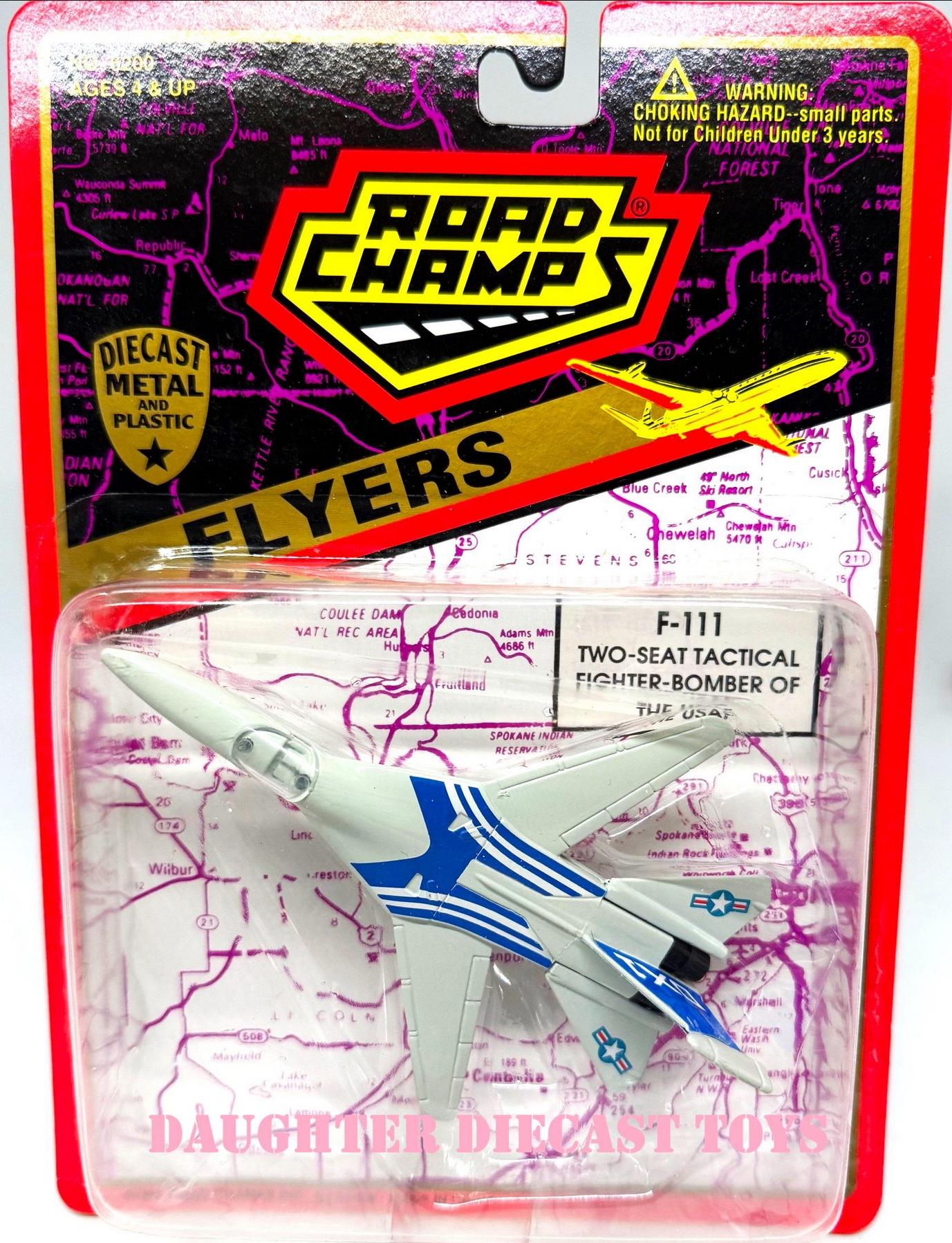
USAF GULF WAR F-111 AARDVARK TACTICAL FIGHTER BOMBER-Diecast Metal Airplane Mint
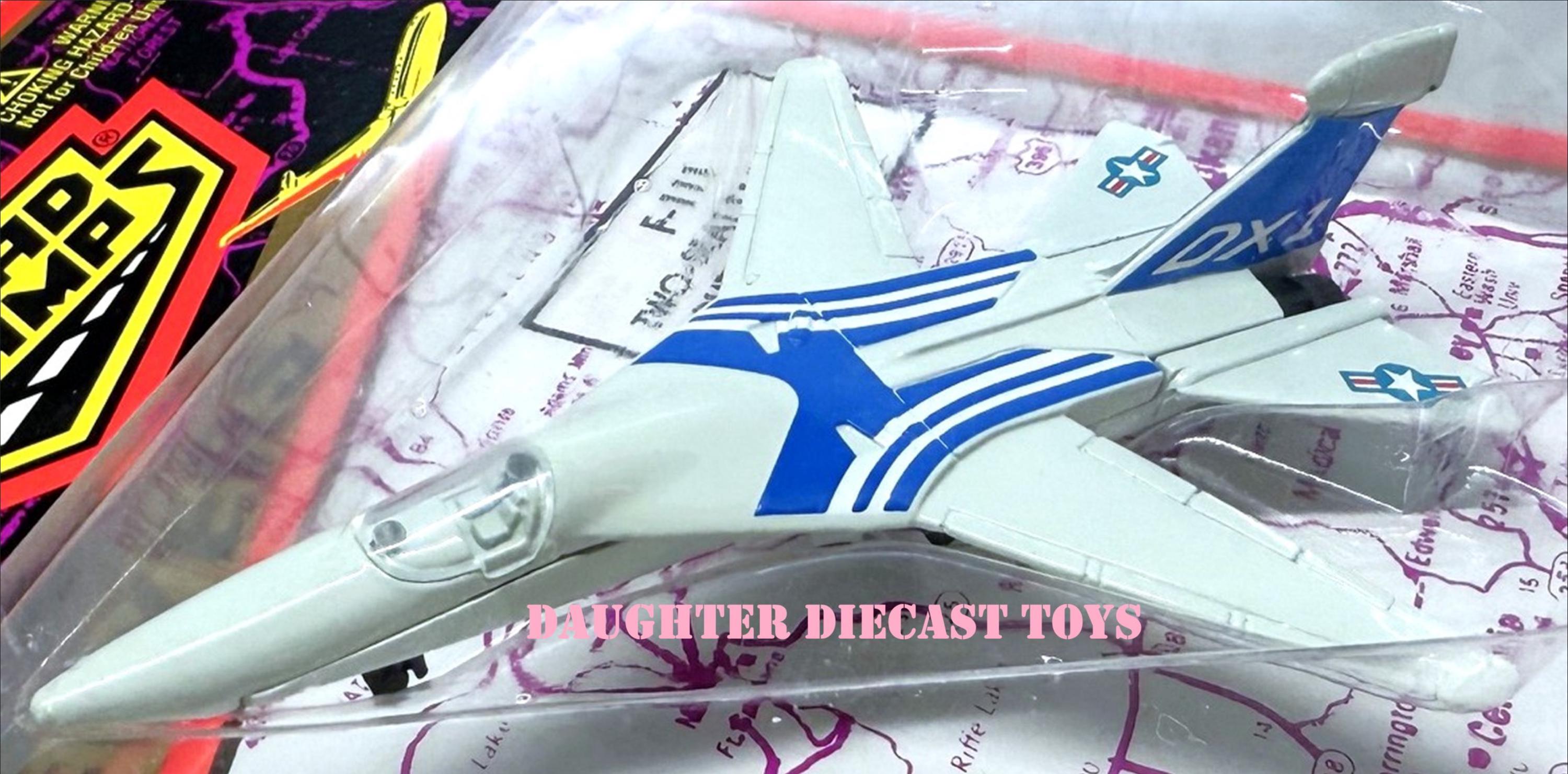
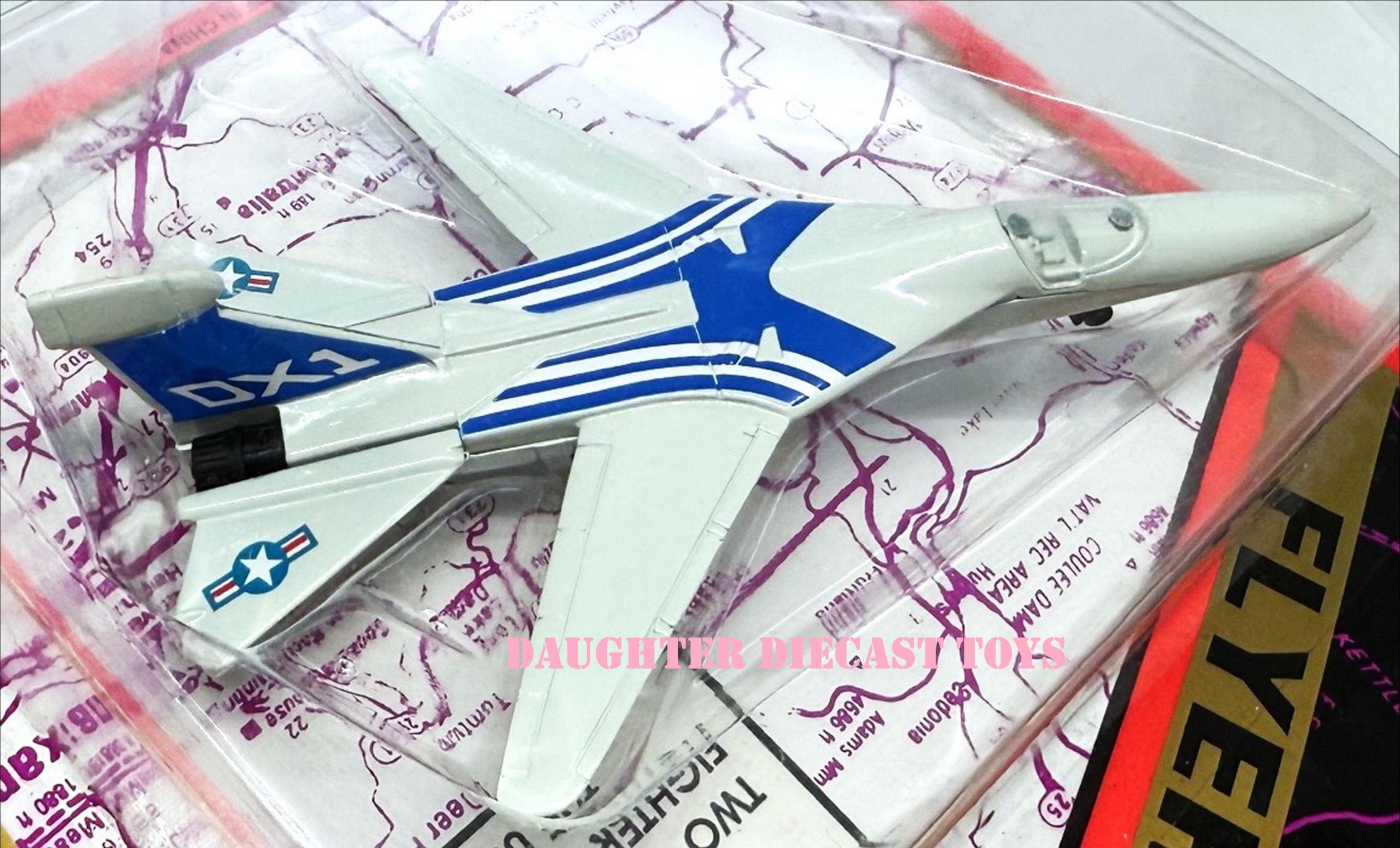
Condition/Factory Sealed! Road Champs Toys - Perfect Gift for CollectorsTruly Awesome! F-111 Aardvark Tactical Fighter Bomber (see bio below). Made by Road Champs. Constructed of die cast metal. Highly sought-after, hard to find vintage model! Nice size...measures 5"L x 3 1/2"W x 1 1/2 "H, mounted on rolling wheels. Beautiful/mint condition. Never removed from its factory-sealed packaging. Perfect gift for Road Champs, aircraft, and vintage toy collectors! We ship fast & safe worldwide every day! See t Aircraft bio below:Note: My dad owned a Diecast toy store for 30 years. I inherited the store inventory when he passed away several years ago. I am (just now) able to bring myself to begin selling his cars-so they can be shared with the world. All pristine and mint condition vintage models will (eventually) be listed here on ETSY. All the inventory is NEW (vintage) merchandise-which was intended for retail sale. Please know-our diecast toys have NEVER been "played-with” we do not sell used, or damaged toys.
•
•
•FOR A LIMITED TIME
•
•
•Purchases totaling $35 and above qualify for FREE shipping to USA! Add more items to your Etsy shopping cart to save $$$.AIRCRAFT BIO:he General Dynamics F-111 Aardvark is a retired supersonic, medium-range, fighter-bomber. Production models of the F-111 had roles that included attack (e.g. interdiction), strategic bombing (including nuclear-weapons capabilities), reconnaissance, and electronic warfare. Its name "Aardvark" comes from a long-nosed, insect-eating South African animal.Developed in the 1960s by General Dynamics under Robert McNamara's TFX Program, the F-111 pioneered variable-sweep wings, afterburning turbofan engines, and automated terrain-following radar for low-level, high-speed flight. Its design influenced later variable-sweep wing aircraft, and some of its advanced features have become commonplace. The F-111 suffered problems during initial development, largely related to the engines. A multirole carrier-based fighter/long-range interception variant intended for the United States Navy, the F-111B, was canceled before production. Several specialized models, such as the FB-111A strategic bomber and the EF-111A electronic warfare aircraft, were also developed.The F-111 entered service in 1967 with the United States Air Force (USAF). In the meantime, the Australian government had ordered the F-111C, to replace the English Electric Canberra then used by the Royal Australian Air Force (RAAF). The F-111C entered service with the RAAF in 1973.As early as March 1968, the USAF was deploying F-111s into active combat situations; the type saw heavy use during the latter half of the Vietnam War to conduct low-level ground-attack missions, flying in excess of 4,000 combat missions while incurring only six combat losses in the theatre. The F-111s also participated in the Gulf War (Operation Desert Storm) in 1991; the F-111Fs completed 3.2 successful strike missions for every unsuccessful one, better than any other US strike aircraft used in the operation. RAAF F-111s never saw offensive action, but were deployed periodically as a deterrent, such as for the Australian-led International Force East Timor.Being relatively expensive to maintain amid post-Cold War budget cuts, the USAF elected to retire its F-111 fleet during the 1990s; the last F-111Fs were withdrawn in 1996, while the remaining EF-111s also departed in 1998. The F-111 was replaced in USAF service by the F-15E Strike Eagle for medium-range precision strike missions, while the supersonic bomber role has been assumed by the B-1B Lancer. The RAAF continued to operate the type until December 2010, when the last F-111C was retired; its role was transitioned to the Boeing F/A-18E/F Super Hornet as an interim measure until the Lockheed Martin F-35 Lightning II became available.General characteristicsCrew: 2 Length: 73 ft 6 in (22.40 m) Wingspan: 63 ft (19 m) Swept wingspan: 32 ft (9.8 m) swept Height: 17 ft 1.5 in (5.220 m) Wing area: 657.4 sq ft (61.07 m2) spread, 525 sq ft (48.8 m2) swept Aspect ratio: 7.56 spread1.95 sweptAirfoil: root: NACA 64-210.68; tip: NACA 64-209.80[215] Empty weight: 47,200 lb (21,410 kg) Gross weight: 82,800 lb (37,557 kg) Max takeoff weight: 100,000 lb (45,359 kg) Zero-lift drag coefficient: 0.0186[216] Zero-lift drag coefficient area: 9.36 sq ft (0.87 m2) Powerplant: 2 × Pratt & Whitney TF30-P-100 afterburning turbofan engines, 17,900 lbf (80 kN) thrust each dry, 25,100 lbf (112 kN) with afterburnerPerformanceMaximum speed: 1,434 kn (1,650 mph, 2,656 km/h) at altitude795 kn (915 mph; 1,472 km/h) / Mach 1.2 at sea levelMaximum speed: Mach 2.5 Range: 3,210 nmi (3,690 mi, 5,940 km) Ferry range: 3,210 nmi (3,690 mi, 5,940 km) with external drop tanks Service ceiling: 66,000 ft (20,000 m) g limits: +7.33 Rate of climb: 25,890 ft/min (131.5 m/s) Wing loading: 126 lb/sq ft (620 kg/m2) spread158 lb/sq ft (771 kg/m2) wings sweptThrust/weight: 0.61ArmamentGuns: 1× 20 mm (0.787 in) M61A1 Vulcan 6-barreled Gatling cannon in weapons bay (seldom fitted) Hardpoints: 9 in total (8× under-wing, 1× under-fuselage between engines) plus 2 attach points in weapons bay with a capacity of 31,500 lb (14,300 kg), with provisions to carry combinations of: Missiles: AGM-69 SRAM thermonuclear air-to-surface missile (FB-111A only) AGM-130 stand-off bomb AIM-9 short range infrared air-to-air missile Bombs: Free-fall general-purpose bombs including Mk 82 (500 lb/227 kg), Mk 83 (1,000 lb/454 kg), Mk 84 (2,000 lb/907 kg), and Mk 117 (750 lb/340 kg) Cluster bombs BLU-109 (2,000 lb/907 kg) hardened penetration bomb Paveway laser-guided bombs, including 2,000 lb (907 kg) GBU-10, 500 lb (227 kg) GBU-12, and 4,800 lb (2,200 kg) GBU-28 penetration bomb BLU-107 Durandal runway-cratering bomb GBU-15 electro-optical bomb B61 or B43 nuclear bombs
Condition/Factory Sealed! Road Champs Toys - Perfect Gift for CollectorsTruly Awesome! F-111 Aardvark Tactical Fighter Bomber (see bio below). Made by Road Champs. Constructed of die cast metal. Highly sought-after, hard to find vintage model! Nice size...measures 5"L x 3 1/2"W x 1 1/2 "H, mounted on rolling wheels. Beautiful/mint condition. Never removed from its factory-sealed packaging. Perfect gift for Road Champs, aircraft, and vintage toy collectors! We ship fast & safe worldwide every day! See t Aircraft bio below:Note: My dad owned a Diecast toy store for 30 years. I inherited the store inventory when he passed away several years ago. I am (just now) able to bring myself to begin selling his cars-so they can be shared with the world. All pristine and mint condition vintage models will (eventually) be listed here on ETSY. All the inventory is NEW (vintage) merchandise-which was intended for retail sale. Please know-our diecast toys have NEVER been "played-with” we do not sell used, or damaged toys.
•
•
•FOR A LIMITED TIME
•
•
•Purchases totaling $35 and above qualify for FREE shipping to USA! Add more items to your Etsy shopping cart to save $$$.AIRCRAFT BIO:he General Dynamics F-111 Aardvark is a retired supersonic, medium-range, fighter-bomber. Production models of the F-111 had roles that included attack (e.g. interdiction), strategic bombing (including nuclear-weapons capabilities), reconnaissance, and electronic warfare. Its name "Aardvark" comes from a long-nosed, insect-eating South African animal.Developed in the 1960s by General Dynamics under Robert McNamara's TFX Program, the F-111 pioneered variable-sweep wings, afterburning turbofan engines, and automated terrain-following radar for low-level, high-speed flight. Its design influenced later variable-sweep wing aircraft, and some of its advanced features have become commonplace. The F-111 suffered problems during initial development, largely related to the engines. A multirole carrier-based fighter/long-range interception variant intended for the United States Navy, the F-111B, was canceled before production. Several specialized models, such as the FB-111A strategic bomber and the EF-111A electronic warfare aircraft, were also developed.The F-111 entered service in 1967 with the United States Air Force (USAF). In the meantime, the Australian government had ordered the F-111C, to replace the English Electric Canberra then used by the Royal Australian Air Force (RAAF). The F-111C entered service with the RAAF in 1973.As early as March 1968, the USAF was deploying F-111s into active combat situations; the type saw heavy use during the latter half of the Vietnam War to conduct low-level ground-attack missions, flying in excess of 4,000 combat missions while incurring only six combat losses in the theatre. The F-111s also participated in the Gulf War (Operation Desert Storm) in 1991; the F-111Fs completed 3.2 successful strike missions for every unsuccessful one, better than any other US strike aircraft used in the operation. RAAF F-111s never saw offensive action, but were deployed periodically as a deterrent, such as for the Australian-led International Force East Timor.Being relatively expensive to maintain amid post-Cold War budget cuts, the USAF elected to retire its F-111 fleet during the 1990s; the last F-111Fs were withdrawn in 1996, while the remaining EF-111s also departed in 1998. The F-111 was replaced in USAF service by the F-15E Strike Eagle for medium-range precision strike missions, while the supersonic bomber role has been assumed by the B-1B Lancer. The RAAF continued to operate the type until December 2010, when the last F-111C was retired; its role was transitioned to the Boeing F/A-18E/F Super Hornet as an interim measure until the Lockheed Martin F-35 Lightning II became available.General characteristicsCrew: 2 Length: 73 ft 6 in (22.40 m) Wingspan: 63 ft (19 m) Swept wingspan: 32 ft (9.8 m) swept Height: 17 ft 1.5 in (5.220 m) Wing area: 657.4 sq ft (61.07 m2) spread, 525 sq ft (48.8 m2) swept Aspect ratio: 7.56 spread1.95 sweptAirfoil: root: NACA 64-210.68; tip: NACA 64-209.80[215] Empty weight: 47,200 lb (21,410 kg) Gross weight: 82,800 lb (37,557 kg) Max takeoff weight: 100,000 lb (45,359 kg) Zero-lift drag coefficient: 0.0186[216] Zero-lift drag coefficient area: 9.36 sq ft (0.87 m2) Powerplant: 2 × Pratt & Whitney TF30-P-100 afterburning turbofan engines, 17,900 lbf (80 kN) thrust each dry, 25,100 lbf (112 kN) with afterburnerPerformanceMaximum speed: 1,434 kn (1,650 mph, 2,656 km/h) at altitude795 kn (915 mph; 1,472 km/h) / Mach 1.2 at sea levelMaximum speed: Mach 2.5 Range: 3,210 nmi (3,690 mi, 5,940 km) Ferry range: 3,210 nmi (3,690 mi, 5,940 km) with external drop tanks Service ceiling: 66,000 ft (20,000 m) g limits: +7.33 Rate of climb: 25,890 ft/min (131.5 m/s) Wing loading: 126 lb/sq ft (620 kg/m2) spread158 lb/sq ft (771 kg/m2) wings sweptThrust/weight: 0.61ArmamentGuns: 1× 20 mm (0.787 in) M61A1 Vulcan 6-barreled Gatling cannon in weapons bay (seldom fitted) Hardpoints: 9 in total (8× under-wing, 1× under-fuselage between engines) plus 2 attach points in weapons bay with a capacity of 31,500 lb (14,300 kg), with provisions to carry combinations of: Missiles: AGM-69 SRAM thermonuclear air-to-surface missile (FB-111A only) AGM-130 stand-off bomb AIM-9 short range infrared air-to-air missile Bombs: Free-fall general-purpose bombs including Mk 82 (500 lb/227 kg), Mk 83 (1,000 lb/454 kg), Mk 84 (2,000 lb/907 kg), and Mk 117 (750 lb/340 kg) Cluster bombs BLU-109 (2,000 lb/907 kg) hardened penetration bomb Paveway laser-guided bombs, including 2,000 lb (907 kg) GBU-10, 500 lb (227 kg) GBU-12, and 4,800 lb (2,200 kg) GBU-28 penetration bomb BLU-107 Durandal runway-cratering bomb GBU-15 electro-optical bomb B61 or B43 nuclear bombs
Other Products