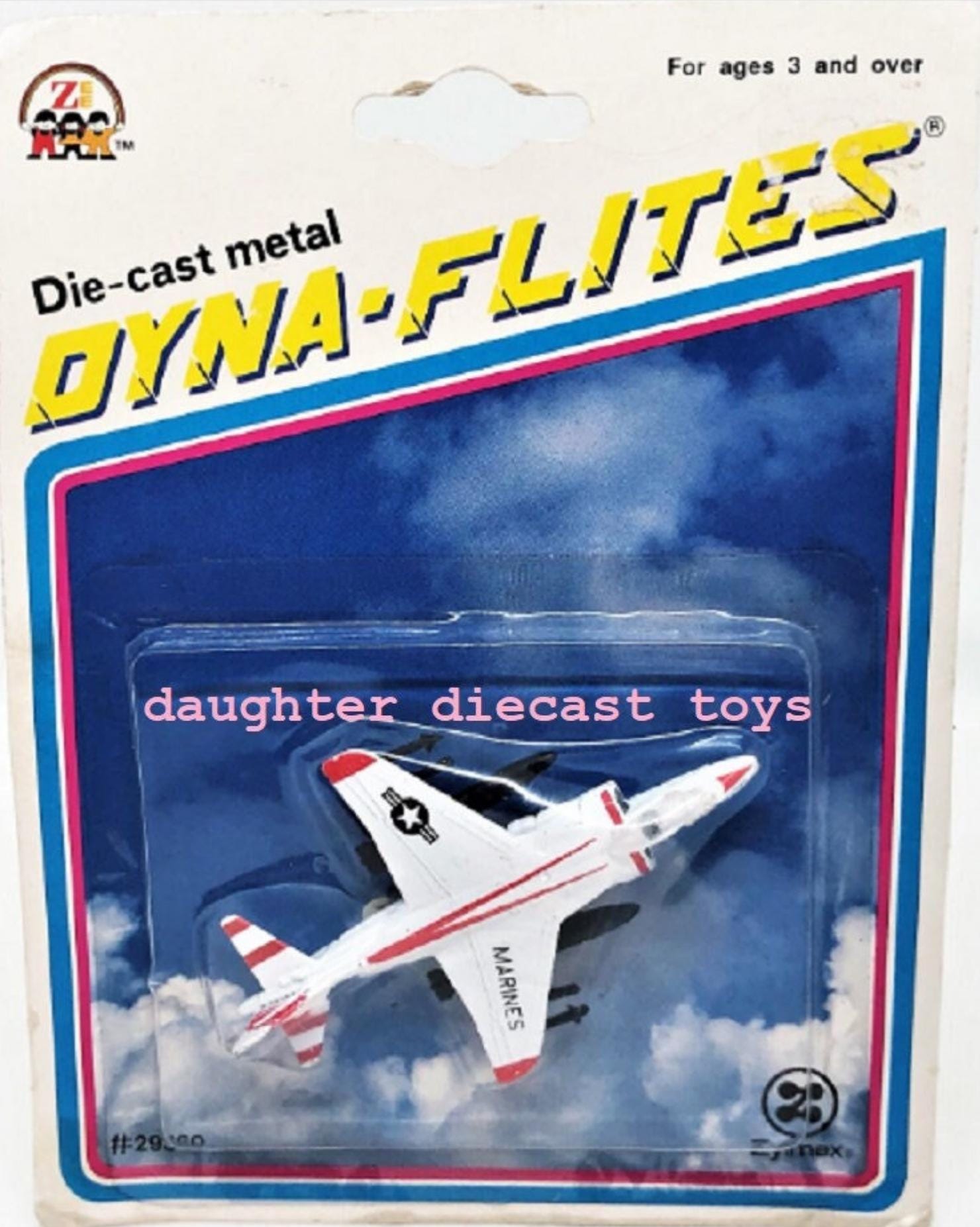
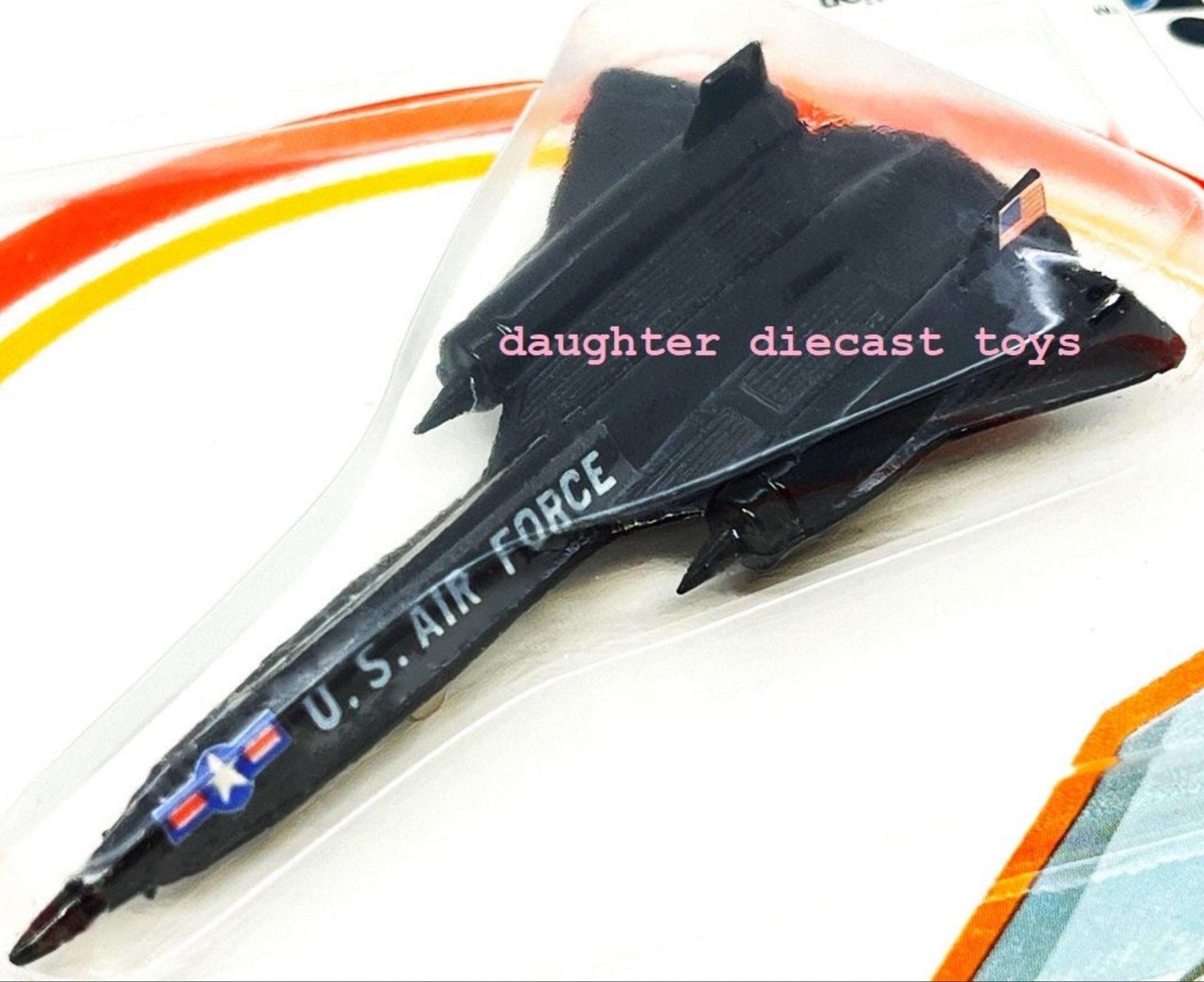
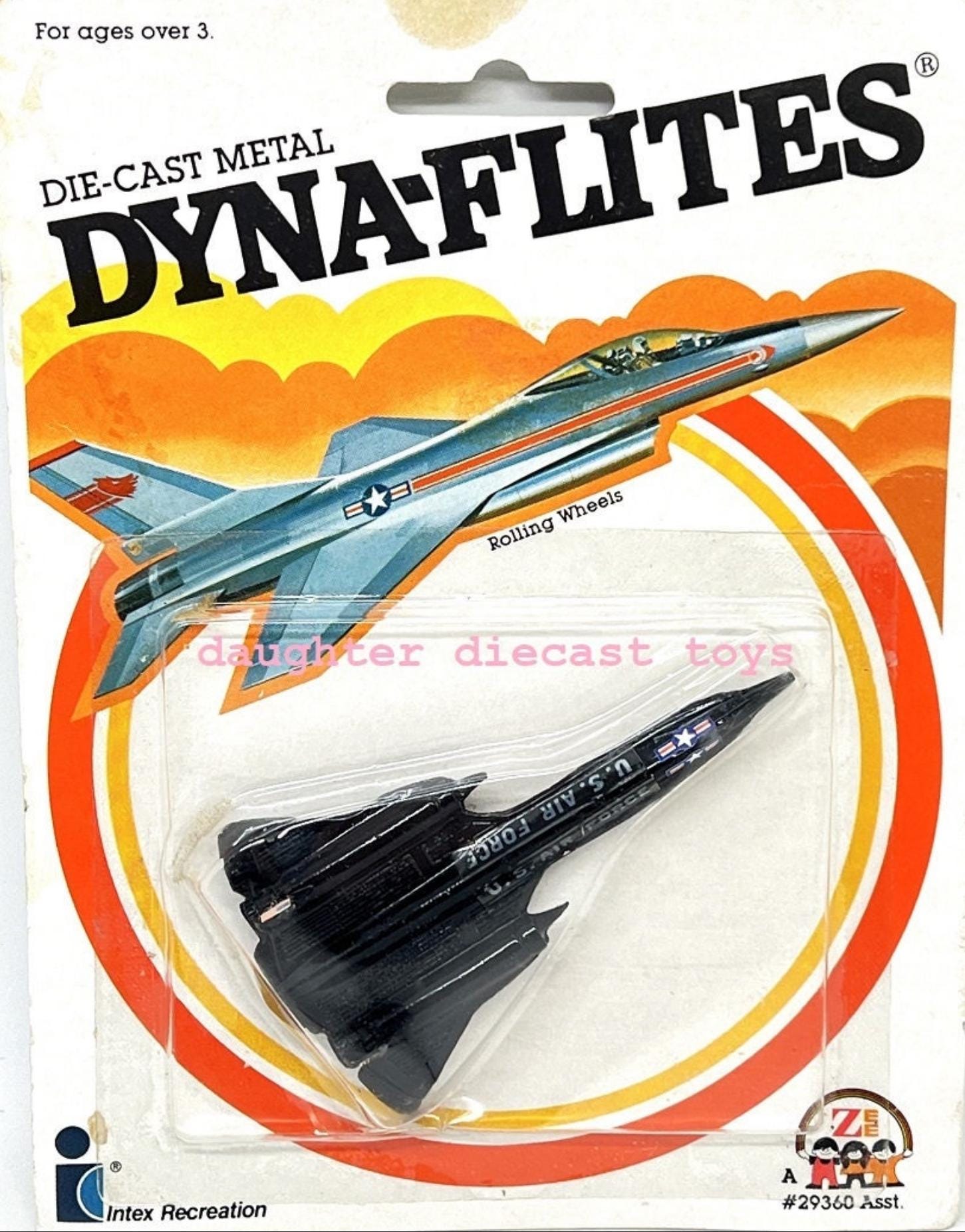
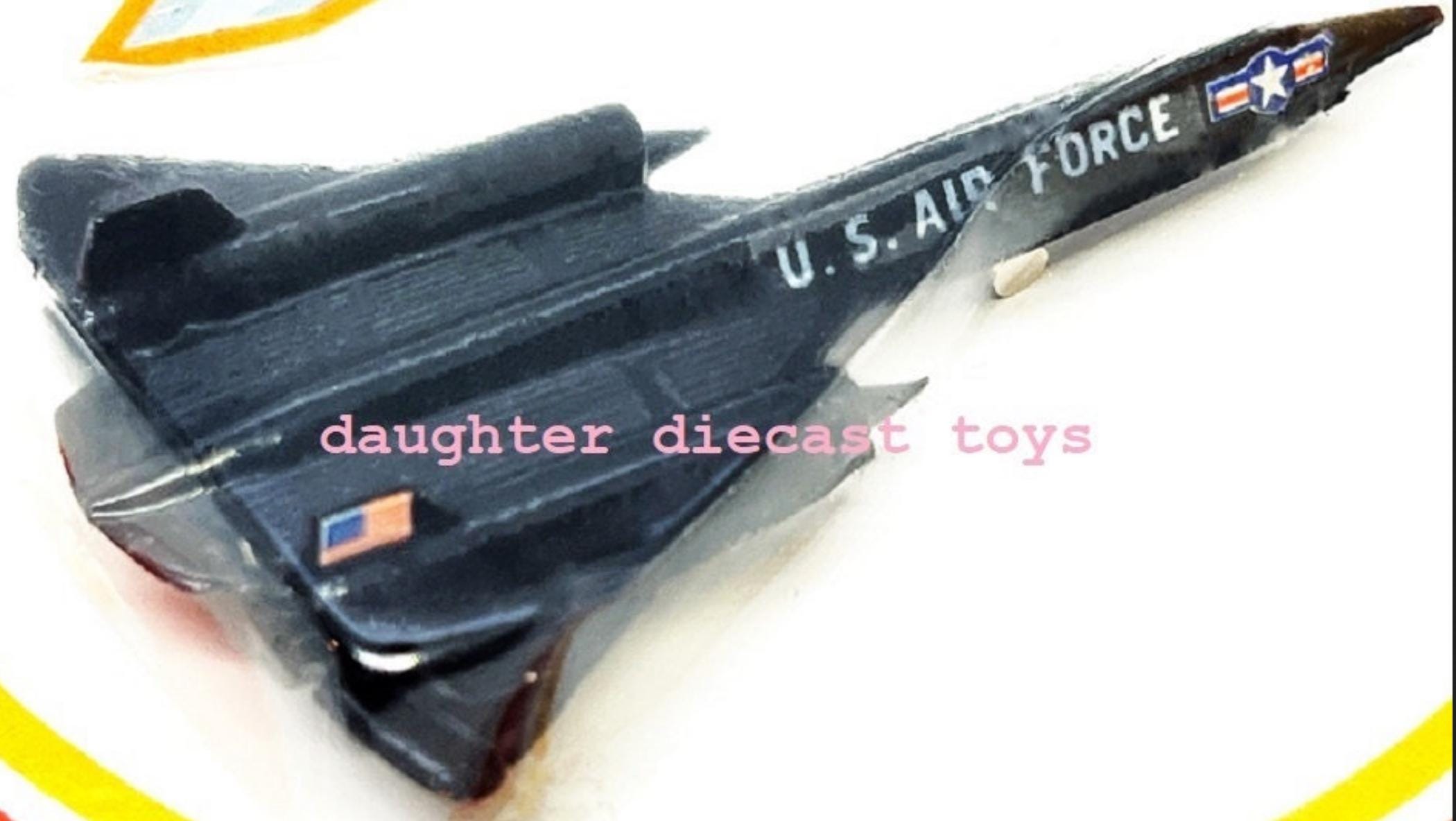
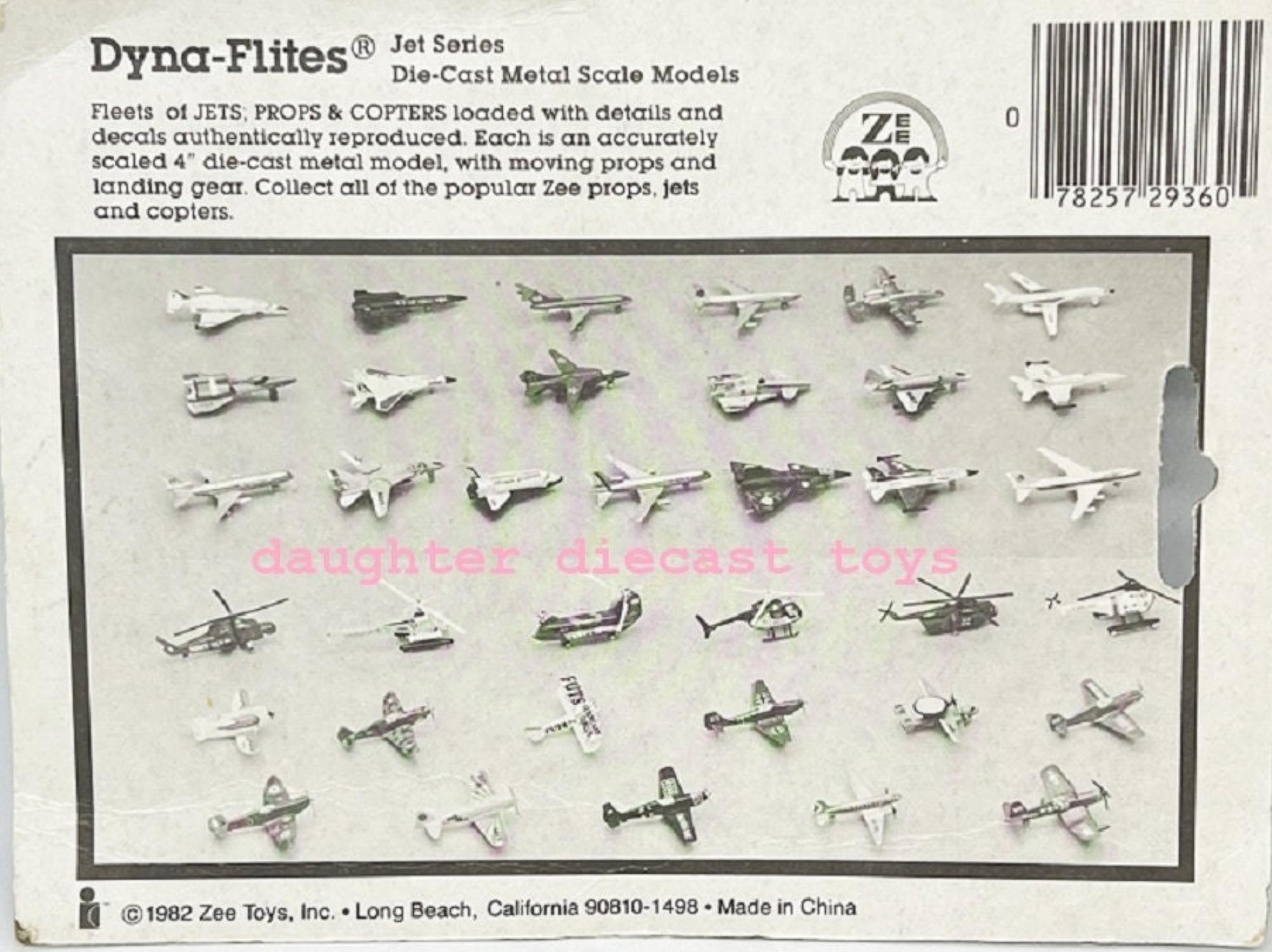

Vintage USAF SR-71 BLACKBIRD Reconnaissance Jet Diecast Metal Airplane Mint Condition/Factory Sealed! Zlymex Zee Toys Great Model!
$ 29.99

Awesome! SR-71 BLACKBIRD - USAF Reconnaissance Jet (see bio below). Made in 1983
by Zee Toys. Constructed of die cast metal. Highly sought-after, hard to find vintage model! Measures 3 1/2"L x 2"W x 1 "H. Mint condition model-never removed from its factory-sealed card. Wonderful gift for ZEE, aircraft, and vintage toy collectors! We ship fast & safe worldwide every day! See aircraft bio Below...Note: My dad owned a Diecast toy store for 30 years. I inherited the store inventory when he passed away several years ago. I am (just now) able to bring myself to begin selling his cars-so they can be shared with the world. All pristine and mint condition vintage models will (eventually) be listed here on ETSY. All the inventory is NEW (vintage) merchandise-which was intended for retail sale. Please know-our diecast toys have NEVER been "played-with” we do not sell used, or damaged toys.
•
•
•FOR A LIMITED TIME
•
•
•Purchases totaling $35 and above qualify for FREE shipping to USA! Add more items to your Etsy shopping cart to save $$$.Aircraft Bio:The Lockheed SR-71 "Blackbird" is a long-range, high-altitude, Mach 3+ strategic reconnaissance aircraft developed and manufactured by the American aerospace company Lockheed Corporation. It was operated by both the United States Air Force (USAF) and NASA.[2]The SR-71 was developed as a black project from the Lockheed A-12 reconnaissance aircraft during the 1960s by Lockheed's Skunk Works division. American aerospace engineer Clarence "Kelly" Johnson was responsible for many of the aircraft's innovative concepts. The shape of the SR-71 was based on that of the A-12, which was one of the first aircraft to be designed with a reduced radar cross-section. At one point, a bomber variant of the aircraft was under consideration, before the program was focused solely on reconnaissance. Mission equipment for the reconnaissance role included signals intelligence sensors, a side-looking airborne radar, and a photo camera; the SR-71 was both longer and heavier than the A-12, allowing it to hold more fuel as well as a two-seat cockpit. The SR-71 designation has been attributed to lobbying efforts by USAF Chief of Staff General Curtis LeMay, who preferred the SR (Strategic Reconnaissance) designation over simply RS (Reconnaissance). The aircraft was introduced to operational service in January 1966.During aerial reconnaissance missions, the SR-71 operated at high speeds and altitudes (Mach 3.2 and 85,000 feet, 25,900 meters) to allow it to outrace threats. If a surface-to-air missile launch was detected, the standard evasive action was simply to accelerate and outfly the missile.[3] On average, each SR-71 could fly once per week due to the extended turnaround required after mission recovery. A total of 32 aircraft were built; 12 were lost in accidents with none lost to enemy action.[4][5] During 1988, the USAF retired the SR-71 largely due to political reasons; several were briefly reactivated during the 1990s before their second retirement in 1998. NASA was the final operator of the type, retiring their examples in 1999. Since its retirement, the SR-71's role has been taken up by a combination of reconnaissance satellites and unmanned aerial vehicles (UAVs); a proposed UAV successor, the SR-72 was under development by Lockheed Martin, and scheduled to fly in 2025.[6] The SR-71 has been given several nicknames, including "Blackbird" and "Habu".[7] As of 2020, the SR-71 continued to hold the world record it set in 1976 for the fastest air-breathing manned aircraft, previously held by the related Lockheed YF-12.[8][9][10][11]SR-71 "Blackbird" Dryden's SR-71B Blackbird, NASA 831, slices across the snow-covered southern Sierra Nevada Mountains of California after being refueled by a USAF tanker during a 1994 flight. SR-71B was the trainer version of the SR-71. The dual cockpit allows the instructor to fly. An SR-71B trainer over the Sierra Nevada Mountains of California in 1994. The raised second cockpit is for the instructor. Role Strategic reconnaissance aircraft National origin United States Manufacturer Lockheed, Skunk Works division Designer Clarence "Kelly" Johnson First flight 22 December 1964 Introduction January 1966 Retired 1998 (USAF), 1999 (NASA) Status Retired Primary users United States Air Force NASA Number built 32 Unit cost $34 million[1] Developed from Lockheed A-12
by Zee Toys. Constructed of die cast metal. Highly sought-after, hard to find vintage model! Measures 3 1/2"L x 2"W x 1 "H. Mint condition model-never removed from its factory-sealed card. Wonderful gift for ZEE, aircraft, and vintage toy collectors! We ship fast & safe worldwide every day! See aircraft bio Below...Note: My dad owned a Diecast toy store for 30 years. I inherited the store inventory when he passed away several years ago. I am (just now) able to bring myself to begin selling his cars-so they can be shared with the world. All pristine and mint condition vintage models will (eventually) be listed here on ETSY. All the inventory is NEW (vintage) merchandise-which was intended for retail sale. Please know-our diecast toys have NEVER been "played-with” we do not sell used, or damaged toys.
•
•
•FOR A LIMITED TIME
•
•
•Purchases totaling $35 and above qualify for FREE shipping to USA! Add more items to your Etsy shopping cart to save $$$.Aircraft Bio:The Lockheed SR-71 "Blackbird" is a long-range, high-altitude, Mach 3+ strategic reconnaissance aircraft developed and manufactured by the American aerospace company Lockheed Corporation. It was operated by both the United States Air Force (USAF) and NASA.[2]The SR-71 was developed as a black project from the Lockheed A-12 reconnaissance aircraft during the 1960s by Lockheed's Skunk Works division. American aerospace engineer Clarence "Kelly" Johnson was responsible for many of the aircraft's innovative concepts. The shape of the SR-71 was based on that of the A-12, which was one of the first aircraft to be designed with a reduced radar cross-section. At one point, a bomber variant of the aircraft was under consideration, before the program was focused solely on reconnaissance. Mission equipment for the reconnaissance role included signals intelligence sensors, a side-looking airborne radar, and a photo camera; the SR-71 was both longer and heavier than the A-12, allowing it to hold more fuel as well as a two-seat cockpit. The SR-71 designation has been attributed to lobbying efforts by USAF Chief of Staff General Curtis LeMay, who preferred the SR (Strategic Reconnaissance) designation over simply RS (Reconnaissance). The aircraft was introduced to operational service in January 1966.During aerial reconnaissance missions, the SR-71 operated at high speeds and altitudes (Mach 3.2 and 85,000 feet, 25,900 meters) to allow it to outrace threats. If a surface-to-air missile launch was detected, the standard evasive action was simply to accelerate and outfly the missile.[3] On average, each SR-71 could fly once per week due to the extended turnaround required after mission recovery. A total of 32 aircraft were built; 12 were lost in accidents with none lost to enemy action.[4][5] During 1988, the USAF retired the SR-71 largely due to political reasons; several were briefly reactivated during the 1990s before their second retirement in 1998. NASA was the final operator of the type, retiring their examples in 1999. Since its retirement, the SR-71's role has been taken up by a combination of reconnaissance satellites and unmanned aerial vehicles (UAVs); a proposed UAV successor, the SR-72 was under development by Lockheed Martin, and scheduled to fly in 2025.[6] The SR-71 has been given several nicknames, including "Blackbird" and "Habu".[7] As of 2020, the SR-71 continued to hold the world record it set in 1976 for the fastest air-breathing manned aircraft, previously held by the related Lockheed YF-12.[8][9][10][11]SR-71 "Blackbird" Dryden's SR-71B Blackbird, NASA 831, slices across the snow-covered southern Sierra Nevada Mountains of California after being refueled by a USAF tanker during a 1994 flight. SR-71B was the trainer version of the SR-71. The dual cockpit allows the instructor to fly. An SR-71B trainer over the Sierra Nevada Mountains of California in 1994. The raised second cockpit is for the instructor. Role Strategic reconnaissance aircraft National origin United States Manufacturer Lockheed, Skunk Works division Designer Clarence "Kelly" Johnson First flight 22 December 1964 Introduction January 1966 Retired 1998 (USAF), 1999 (NASA) Status Retired Primary users United States Air Force NASA Number built 32 Unit cost $34 million[1] Developed from Lockheed A-12
Other Products