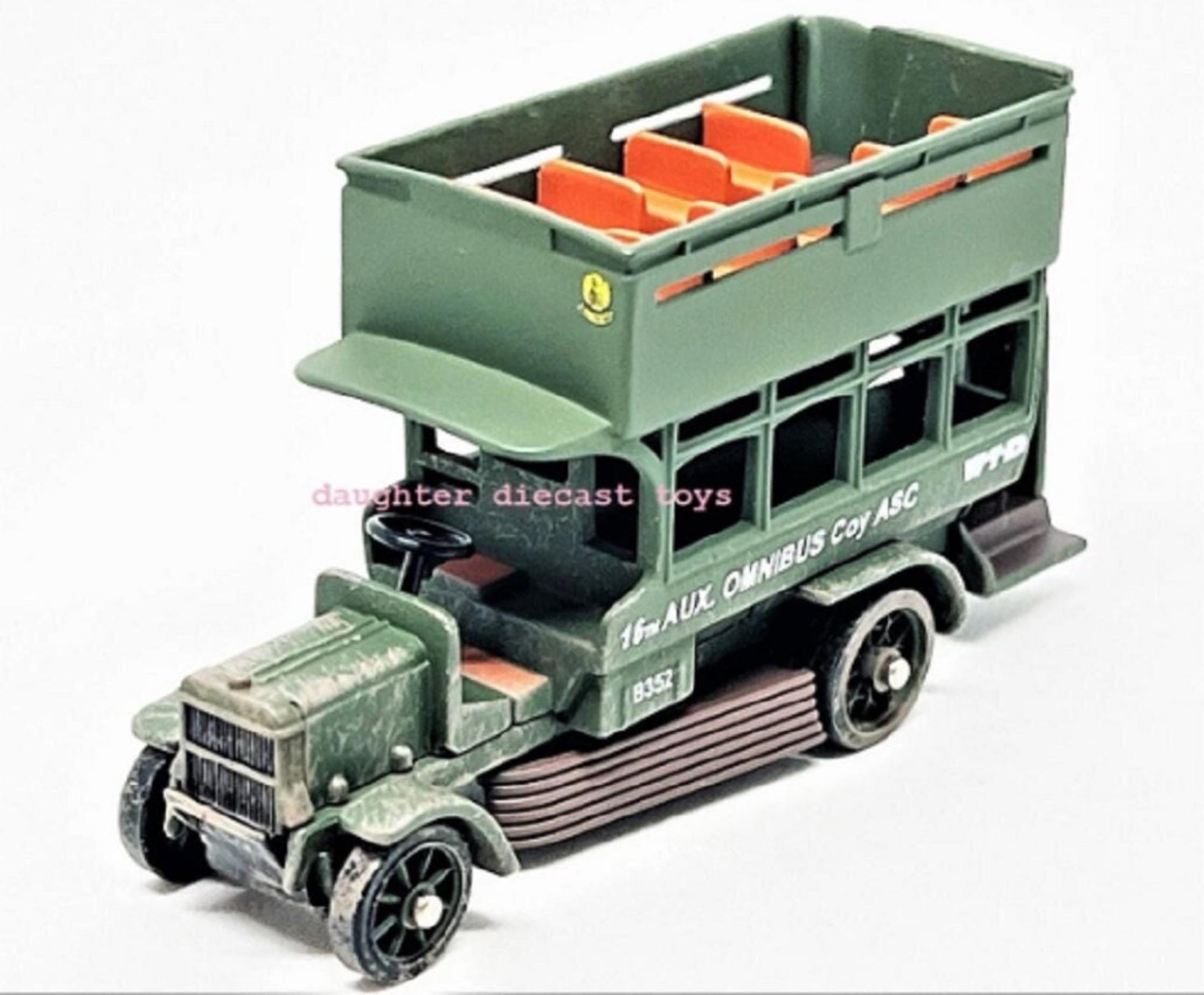
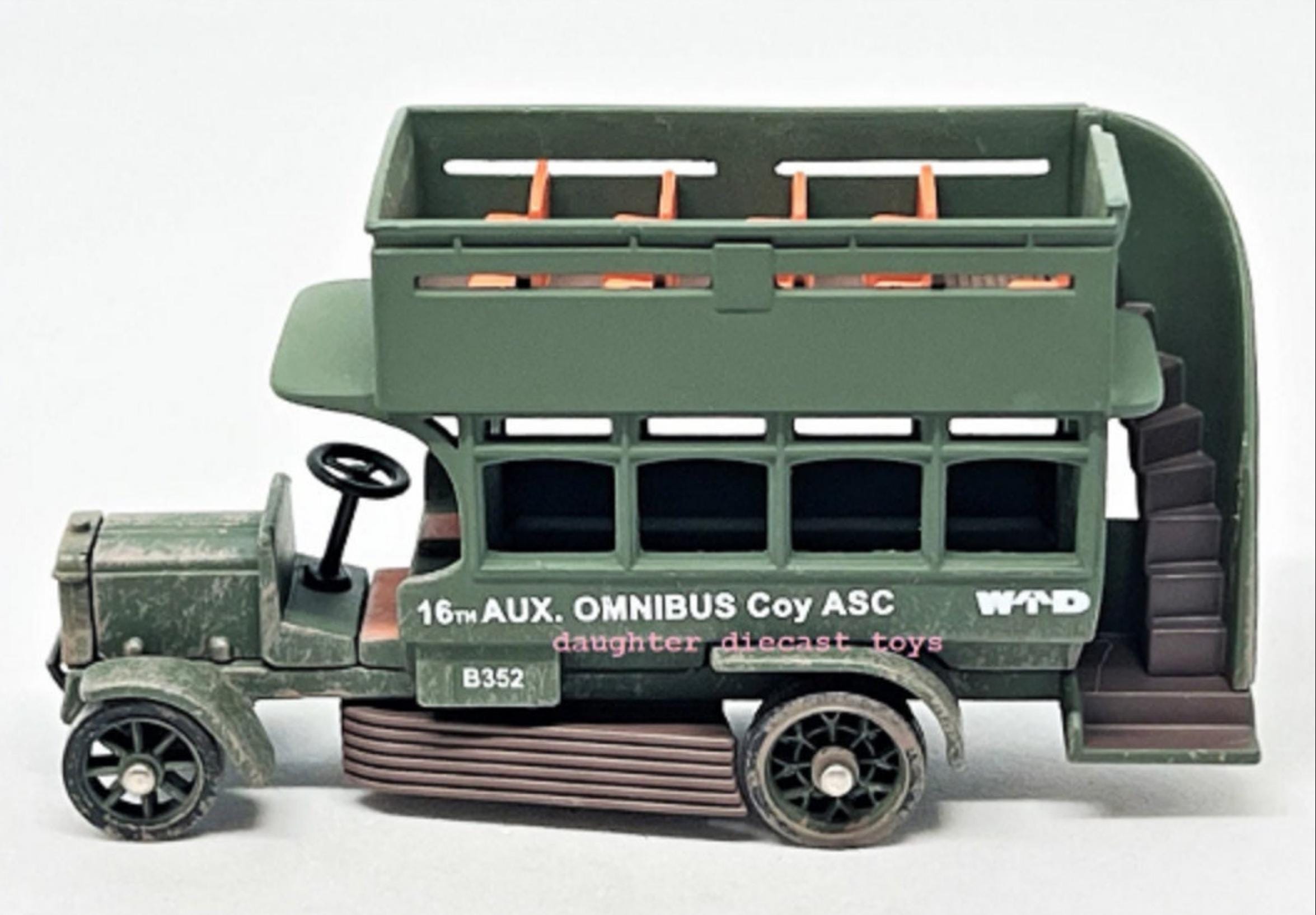
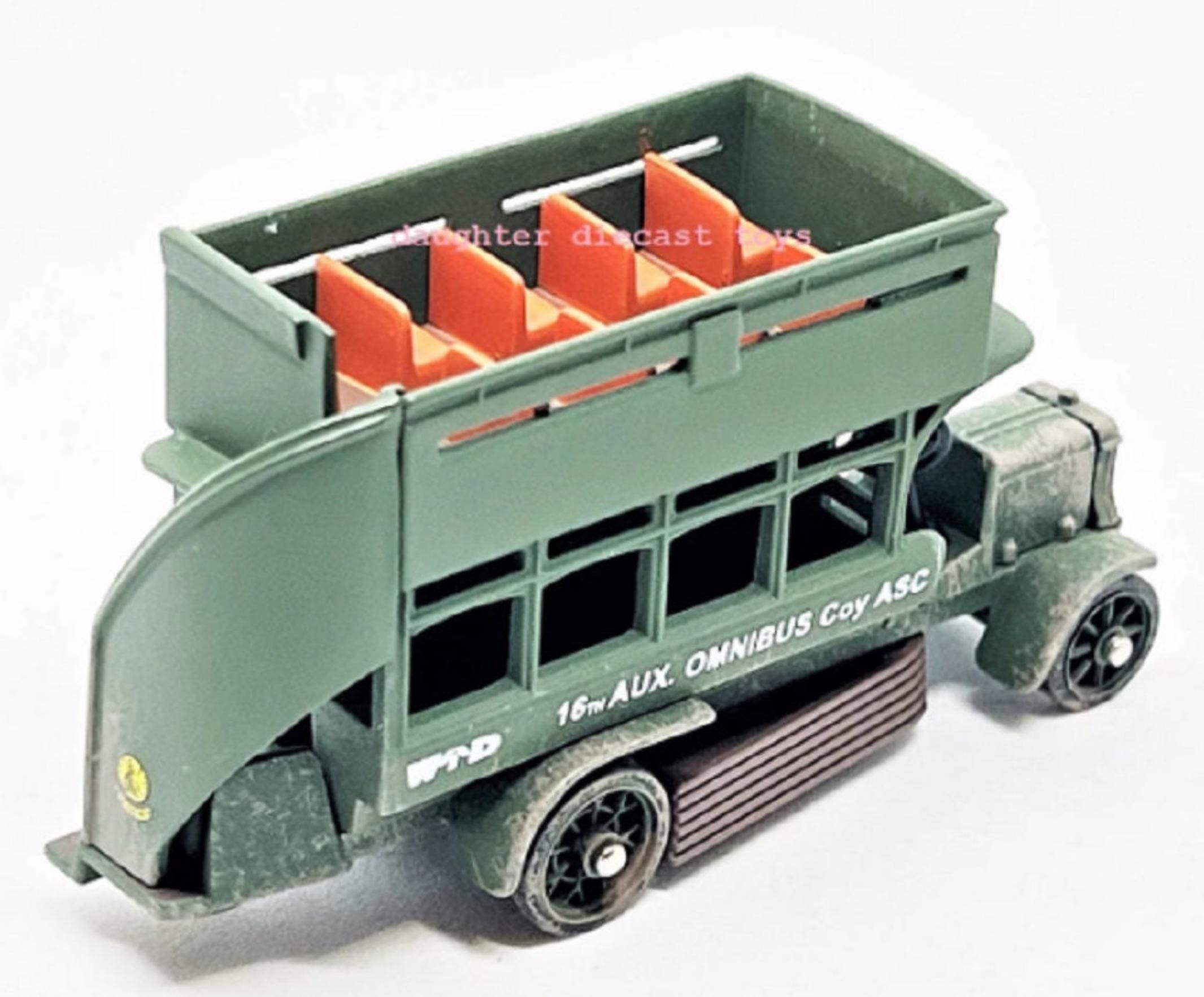
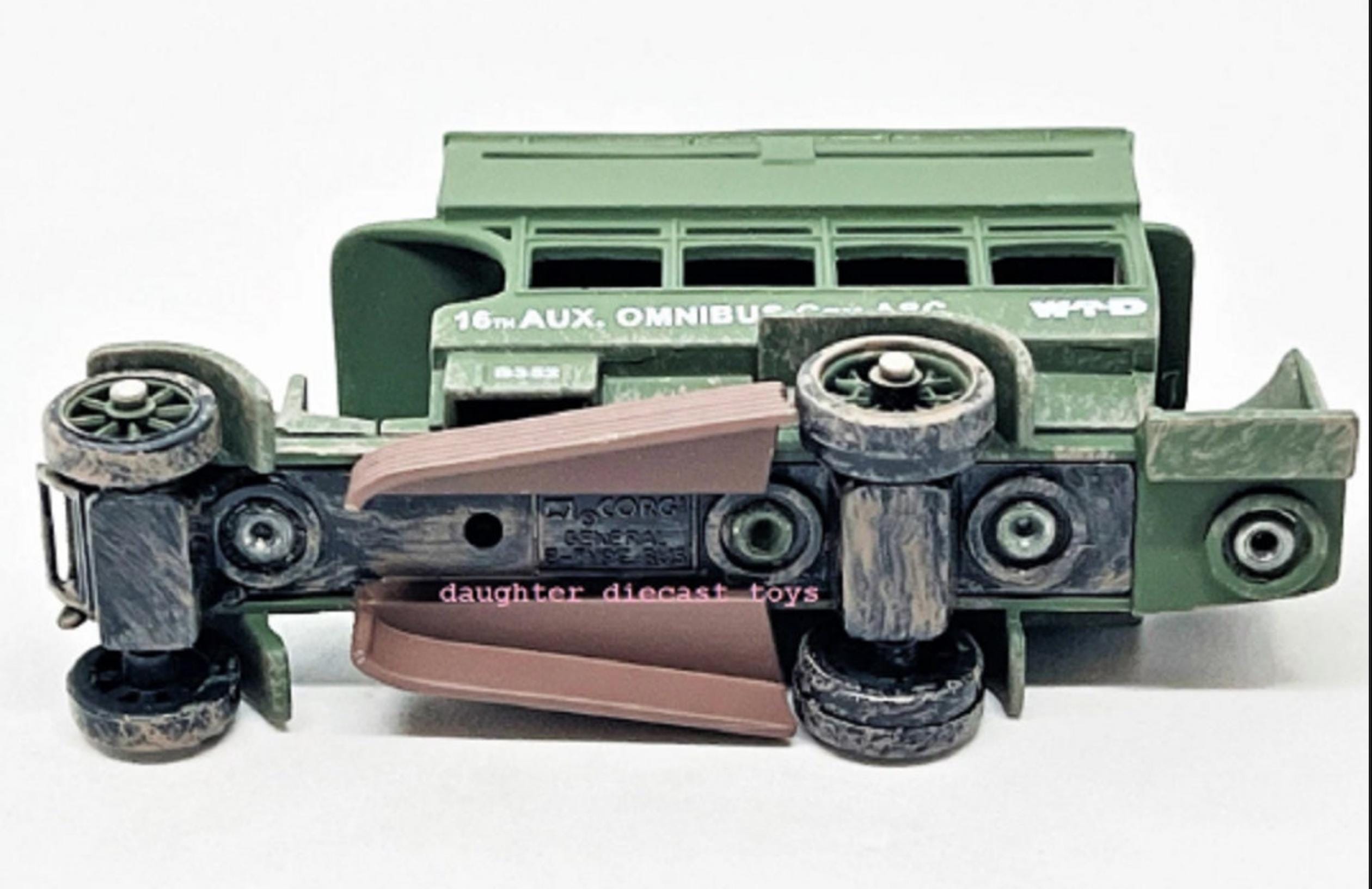

W.W.I. London OMIBUS TROOP TRANSPORT-Intricate Diecast Metal-Pristine Condition-Perfect Gift for Adult Collectors & Military History Buffs!
$ 39.99

Fantastic! WWI LONDON OMIBUS DOUBLE-DECKER TROOP TRANSPORT. Highly sought after,
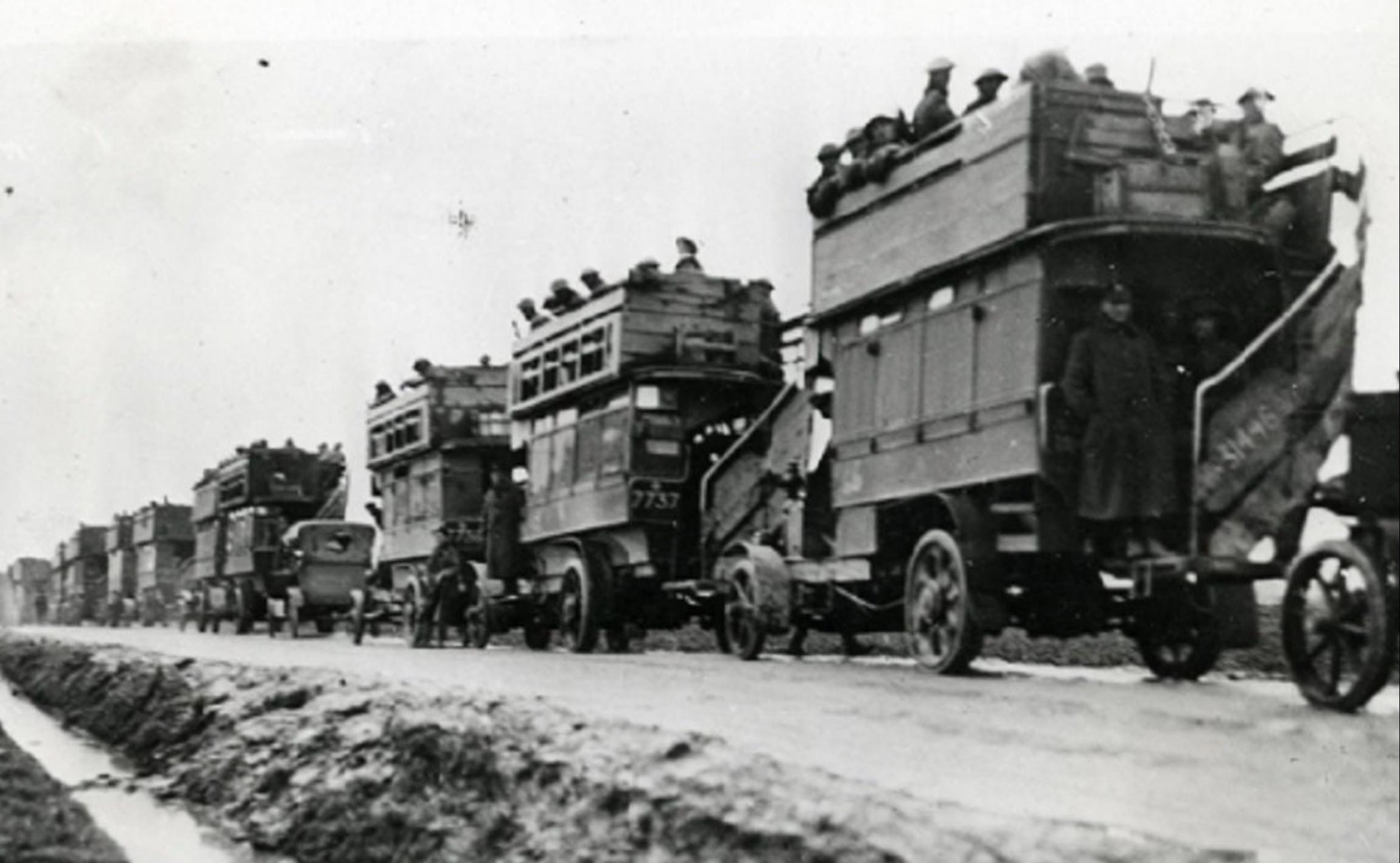
intricately detailed Diecast Metal Replica/Adult Collectors Model-Made by Corgi. Measures 3 1/2"L x 1 1/8W x 2"H. Pristine condition model-has never been displayed until today for the photos in this listing (see all 5 using arrows on sides of the listing photo). Sold loose-comes in collector bag. Perfect gift for vintage toy/tank collectors and Military history buffs! 100% happiness guaranteed. We ship fast & safe worldwide every day! See photo 5 of Omnibus Troop Transports in use during WWI and read transport bio below....Note: My dad owned a Diecast toy store for 30 years. I inherited the store inventory when he passed away several years ago. I am (just now) able to bring myself to begin selling his cars-so they can be shared with the world. All pristine and mint condition vintage models will (eventually) be listed here on ETSY. All the inventory is NEW (vintage) merchandise-which was intended for retail sale. Please know-our diecast toys have NEVER been "played-with” we do not sell used, or damaged toys.
•
•
•FOR A LIMITED TIME
•
•
•Purchases totaling $35 and above qualify for FREE shipping to USA! Add more items to your Etsy shopping cart to save $$$.OMNIBUS TROOP TRANSPORT BIO:The LGOC B-type is a model of double-decker bus that was introduced in London in 1910. It was both built and operated by the London General Omnibus Company (LGOC).Design and pre-war service:B-type buses were built in Walthamstow and replaced the X-type bus. It had a 34-seat capacity and is often considered to be the first mass-produced bus.[1] The first bus began carrying passengers in 1911.[2] By 1913 around 2500 had entered service.The B-type was designed by Frank Searle, who was chief engineer of the LGOC. It had a wooden frame, steel wheels, a worm drive and chain gearbox. Its top speed was 16 miles per hour (26 km/h), which was above the legal speed limit at that time of 12 miles per hour (19 km/h). However the vehicle could reach 30–35 miles per hour (48–56 km/h) under the right conditions.[3]B-types carried 16 passengers inside and had seats for 18 on the uncovered top deck. These outside seats were fitted with wet-weather canvas covers. Electric lighting was introduced from 1912, and headlights in 1913. Before this, it was thought that interior lighting would render the bus sufficiently visible at night.[3]World War I serviceA total of 900 of the buses were used to move troops behind the lines during World War I.[2] After initially serving without any modifications and in their red-and-white livery, they were painted khaki.[2] It was soon found that the glass windows on the lower deck were prone to breakage, mostly from contact with the men's rifles and packs. The glass was therefore removed and replaced by planks nailed to the sides of the vehicle.[4]The B-Type could carry 24 fully equipped infantrymen and their kit. Some were converted into mobile pigeon lofts to house the pigeons used for communication along the front.[3] They served until the end of the war when they were used to bring troops home.
intricately detailed Diecast Metal Replica/Adult Collectors Model-Made by Corgi. Measures 3 1/2"L x 1 1/8W x 2"H. Pristine condition model-has never been displayed until today for the photos in this listing (see all 5 using arrows on sides of the listing photo). Sold loose-comes in collector bag. Perfect gift for vintage toy/tank collectors and Military history buffs! 100% happiness guaranteed. We ship fast & safe worldwide every day! See photo 5 of Omnibus Troop Transports in use during WWI and read transport bio below....Note: My dad owned a Diecast toy store for 30 years. I inherited the store inventory when he passed away several years ago. I am (just now) able to bring myself to begin selling his cars-so they can be shared with the world. All pristine and mint condition vintage models will (eventually) be listed here on ETSY. All the inventory is NEW (vintage) merchandise-which was intended for retail sale. Please know-our diecast toys have NEVER been "played-with” we do not sell used, or damaged toys.
•
•
•FOR A LIMITED TIME
•
•
•Purchases totaling $35 and above qualify for FREE shipping to USA! Add more items to your Etsy shopping cart to save $$$.OMNIBUS TROOP TRANSPORT BIO:The LGOC B-type is a model of double-decker bus that was introduced in London in 1910. It was both built and operated by the London General Omnibus Company (LGOC).Design and pre-war service:B-type buses were built in Walthamstow and replaced the X-type bus. It had a 34-seat capacity and is often considered to be the first mass-produced bus.[1] The first bus began carrying passengers in 1911.[2] By 1913 around 2500 had entered service.The B-type was designed by Frank Searle, who was chief engineer of the LGOC. It had a wooden frame, steel wheels, a worm drive and chain gearbox. Its top speed was 16 miles per hour (26 km/h), which was above the legal speed limit at that time of 12 miles per hour (19 km/h). However the vehicle could reach 30–35 miles per hour (48–56 km/h) under the right conditions.[3]B-types carried 16 passengers inside and had seats for 18 on the uncovered top deck. These outside seats were fitted with wet-weather canvas covers. Electric lighting was introduced from 1912, and headlights in 1913. Before this, it was thought that interior lighting would render the bus sufficiently visible at night.[3]World War I serviceA total of 900 of the buses were used to move troops behind the lines during World War I.[2] After initially serving without any modifications and in their red-and-white livery, they were painted khaki.[2] It was soon found that the glass windows on the lower deck were prone to breakage, mostly from contact with the men's rifles and packs. The glass was therefore removed and replaced by planks nailed to the sides of the vehicle.[4]The B-Type could carry 24 fully equipped infantrymen and their kit. Some were converted into mobile pigeon lofts to house the pigeons used for communication along the front.[3] They served until the end of the war when they were used to bring troops home.
Other Products