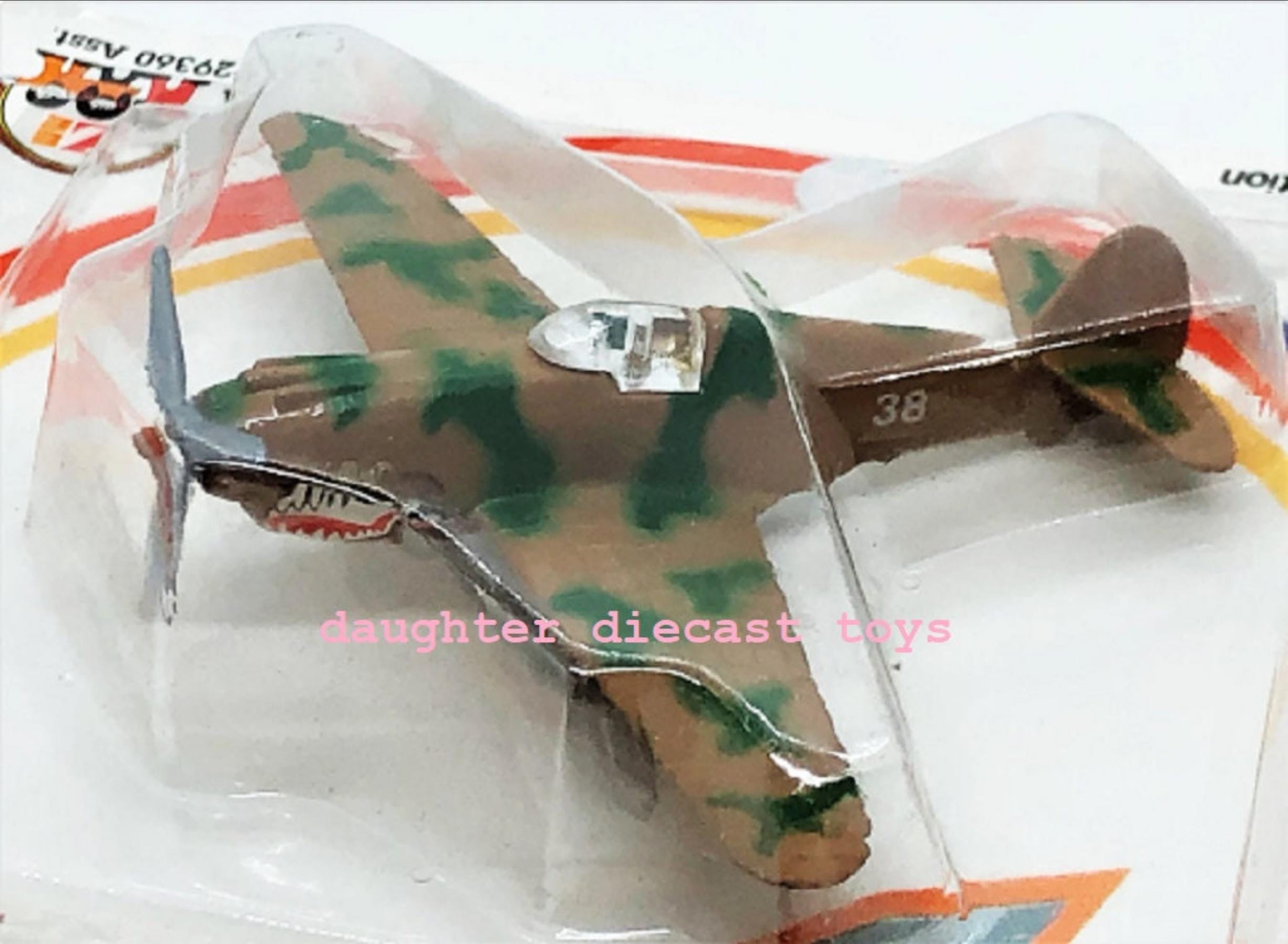
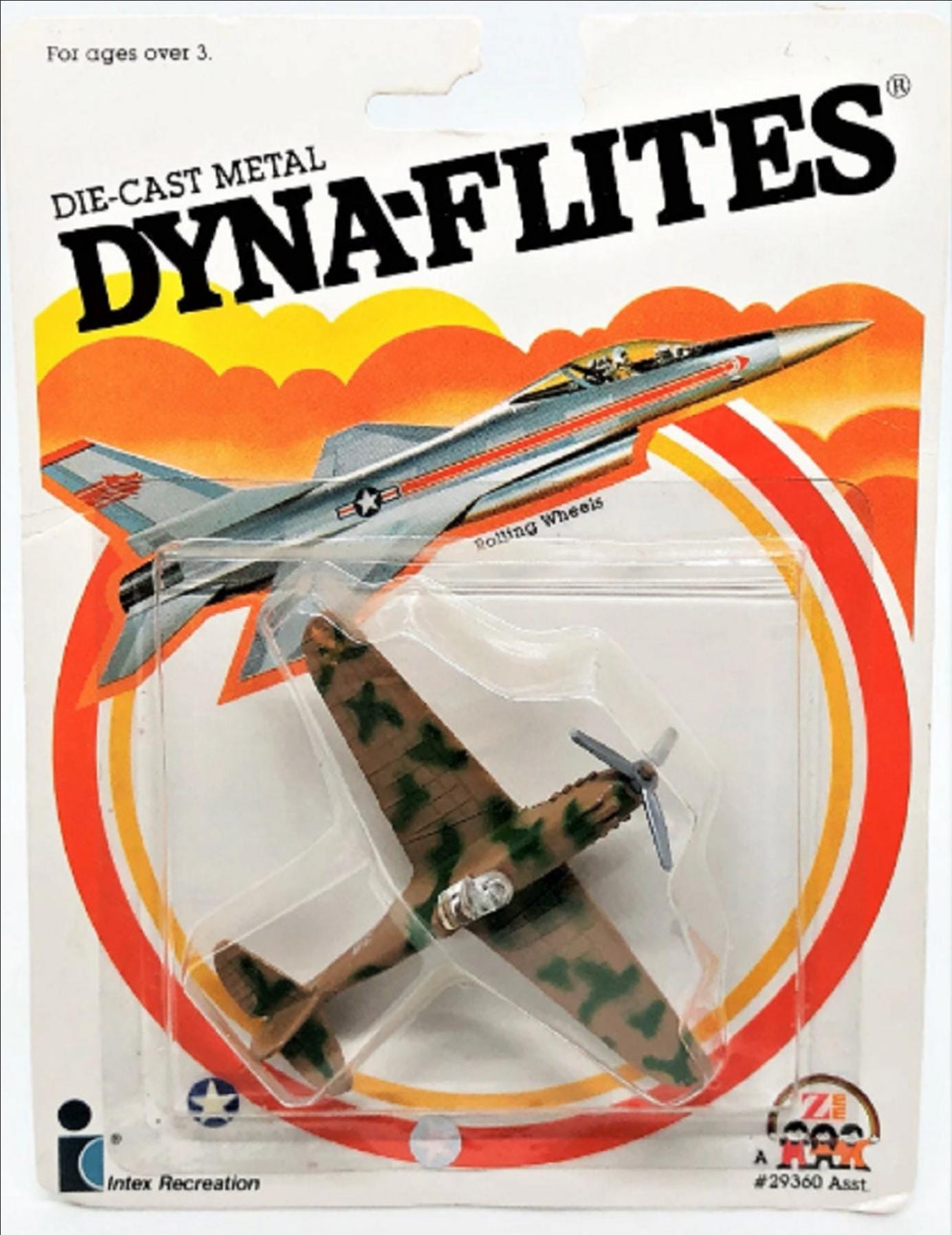
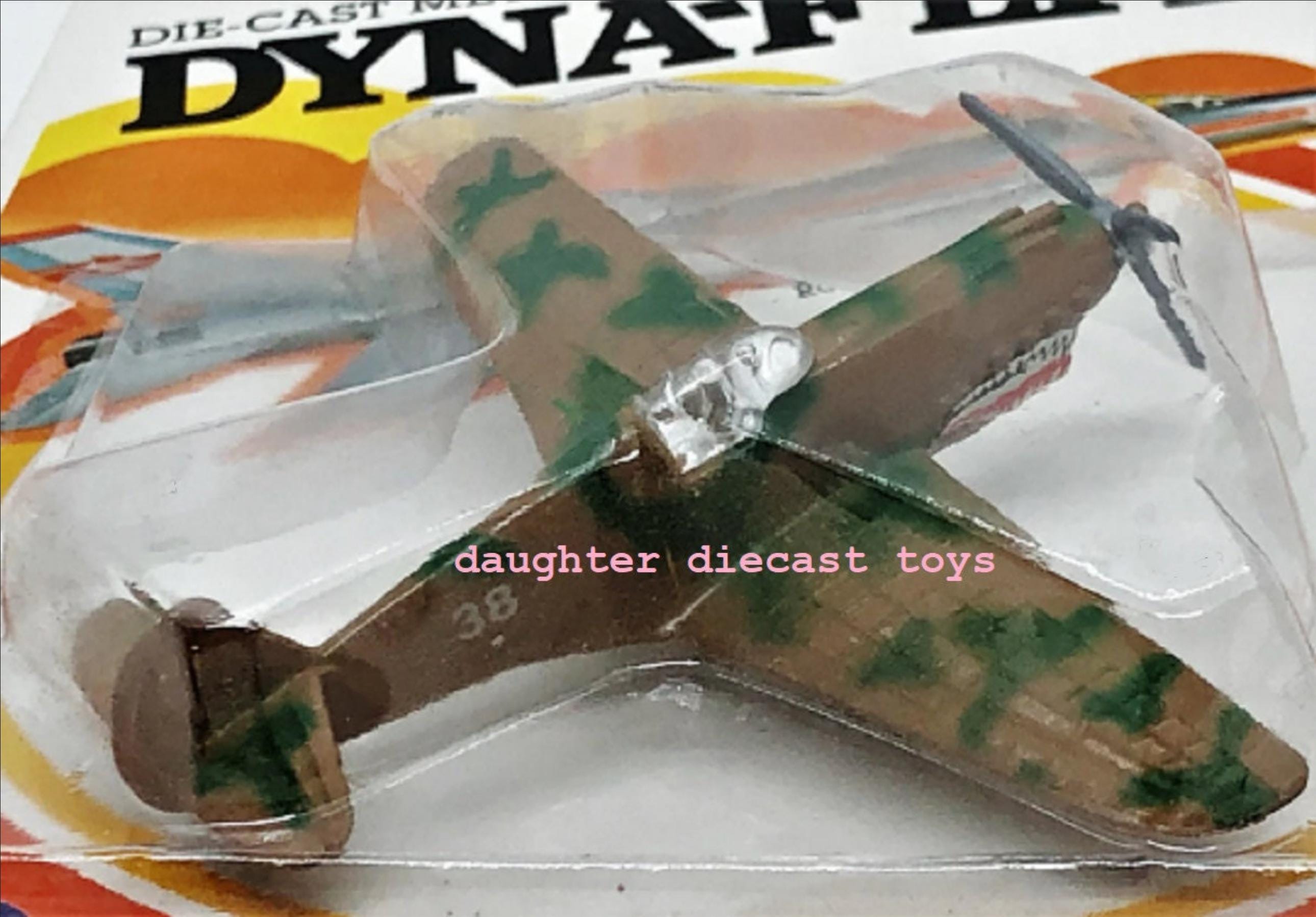
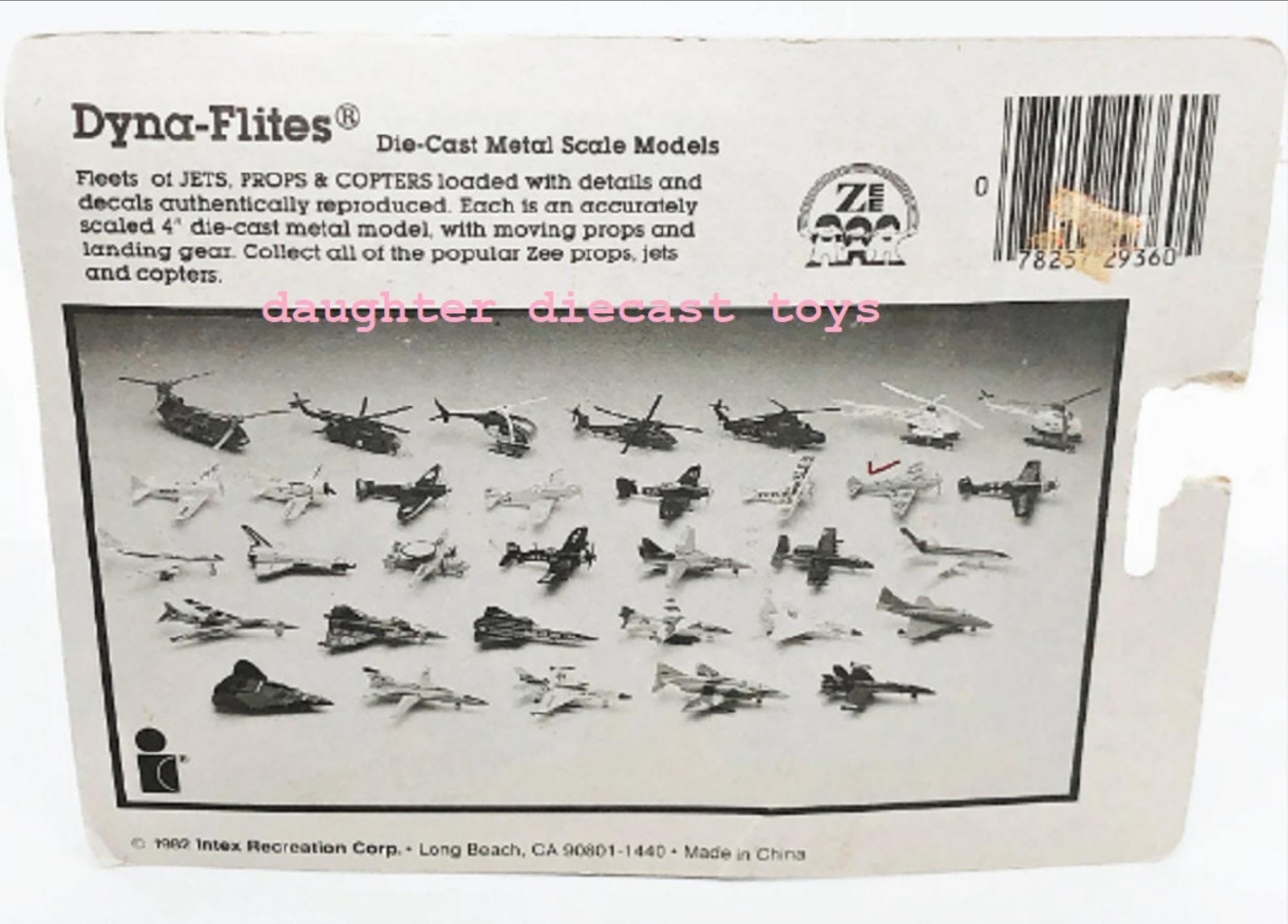

Vintage 1982 Curtiss P-40 FLYING TIGERS Warhawk Fighter PLANE Diecast Metal Airplane Mint Condition/Factory Sealed! Zlymex Zee Toys Rare!
$ 29.99

Awesome! Curtiss P-40 FLYING TIGERS WARHAWK FIGHTER PLANE (see bio below). Made
by Zee Toys in 1982. Constructed of die cast metal. Highly sought-after, hard to find vintage model! Measures 3"L x 3 3/4"W x 1 "H. Beautiful/pristine condition model. Never removed from its factory-sealed card. Perfect gift for ZEE, aircraft, and vintage toy collectors! We ship fast & safe worldwide every day! Read aircraft bio below....
•
•
•FOR A LIMITED TIME
•
•
•Purchases totaling $35 and above qualify for FREE shipping to USA! Add more items to your Etsy shopping cart to save $$$.NOTE: My dad owned a Diecast toy store for 30 years. I inherited the store inventory when he passed away many years ago. I am just now, beginning to sell the mint condition vintage models. All are store-inventory is new-old-stock, models have never been "played with". Please visit often-as I am adding more cool stuff every day!AIRCRAFT BIO:The Curtiss P-40 Warhawk is an American single-engined, single-seat, all-metal fighter and ground-attack aircraft that first flew in 1938. The P-40 design was a modification of the previous Curtiss P-36 Hawk which reduced development time and enabled a rapid entry into production and operational service. The Warhawk was used by most Allied powers during World War II, and remained in frontline service until the end of the war. It was the third most-produced American fighter of World War II, after the P-51 and P-47; by November 1944, when production of the P-40 ceased, 13,738 had been built,[4] all at Curtiss-Wright Corporation's main production facilities at Buffalo, New York.P-40 Warhawk was the name the United States Army Air Corps gave the plane, and after June 1941, the USAAF adopted the name for all models, making it the official name in the U.S. for all P-40s. The British Commonwealth and Soviet air forces used the name Tomahawk for models equivalent to the original P-40, P-40B, and P-40C, while the name Kittyhawk for models equivalent to the P-40D and all later variants.P-40s first saw combat with the British Commonwealth squadrons of the Desert Air Force in the Middle East and North African campaigns, during June 1941.[5][6] No. 112 Squadron Royal Air Force, was among the first to operate Tomahawks in North Africa and the unit was the first Allied military aviation unit to feature the "shark mouth" logo,[7][8] copying similar markings on some Luftwaffe Messerschmitt Bf 110 twin-engine fighters.[7] [N 1]The P-40's lack of a two-speed supercharger made it inferior to Luftwaffe fighters such as the Messerschmitt Bf 109 or the Focke-Wulf Fw 190 in high-altitude combat and it was rarely used in operations in Northwest Europe. However, between 1941 and 1944, the P-40 played a critical role with Allied air forces in three major theaters: North Africa, the Southwest Pacific, and China. It also had a significant role in the Middle East, Southeast Asia, Eastern Europe, Alaska and Italy. The P-40's performance at high altitudes was not as important in those theaters, where it served as an air superiority fighter, bomber escort and fighter-bomber. Although it gained a postwar reputation as a mediocre design, suitable only for close air support, more recent research including scrutiny of the records of individual Allied squadrons indicates that this was not the case: the P-40 performed surprisingly well as an air superiority fighter, at times suffering severe losses, but also inflicting a very heavy toll on enemy aircraft.[10] Based on war-time victory claims, over 200 Allied fighter pilots – from the UK, Australia, New Zealand, Canada, South Africa, the US and the Soviet Union – became aces flying the P-40. These included at least 20 double aces,[11] mostly over North Africa, China, Burma and India, the South West Pacific and Eastern Europe. The P-40 offered the additional advantages of low cost and durability, which kept it in production as a ground-attack aircraft long after it was obsolete as a fighter.ole Fighter aircraft National origin United States Manufacturer Curtiss-Wright Corporation First flight 14 October 1938[1] Retired Brazilian Air Force (1958) Primary users United States Army Air Forces Royal Air Force Royal Australian Air Force Royal Canadian Air Force Produced 1939–1944 Number built 13,738[2] Unit cost US$44,892 in 1944[3] Developed from Curtiss P-36 Hawk Variants Curtiss XP-46 Bin304.1
by Zee Toys in 1982. Constructed of die cast metal. Highly sought-after, hard to find vintage model! Measures 3"L x 3 3/4"W x 1 "H. Beautiful/pristine condition model. Never removed from its factory-sealed card. Perfect gift for ZEE, aircraft, and vintage toy collectors! We ship fast & safe worldwide every day! Read aircraft bio below....
•
•
•FOR A LIMITED TIME
•
•
•Purchases totaling $35 and above qualify for FREE shipping to USA! Add more items to your Etsy shopping cart to save $$$.NOTE: My dad owned a Diecast toy store for 30 years. I inherited the store inventory when he passed away many years ago. I am just now, beginning to sell the mint condition vintage models. All are store-inventory is new-old-stock, models have never been "played with". Please visit often-as I am adding more cool stuff every day!AIRCRAFT BIO:The Curtiss P-40 Warhawk is an American single-engined, single-seat, all-metal fighter and ground-attack aircraft that first flew in 1938. The P-40 design was a modification of the previous Curtiss P-36 Hawk which reduced development time and enabled a rapid entry into production and operational service. The Warhawk was used by most Allied powers during World War II, and remained in frontline service until the end of the war. It was the third most-produced American fighter of World War II, after the P-51 and P-47; by November 1944, when production of the P-40 ceased, 13,738 had been built,[4] all at Curtiss-Wright Corporation's main production facilities at Buffalo, New York.P-40 Warhawk was the name the United States Army Air Corps gave the plane, and after June 1941, the USAAF adopted the name for all models, making it the official name in the U.S. for all P-40s. The British Commonwealth and Soviet air forces used the name Tomahawk for models equivalent to the original P-40, P-40B, and P-40C, while the name Kittyhawk for models equivalent to the P-40D and all later variants.P-40s first saw combat with the British Commonwealth squadrons of the Desert Air Force in the Middle East and North African campaigns, during June 1941.[5][6] No. 112 Squadron Royal Air Force, was among the first to operate Tomahawks in North Africa and the unit was the first Allied military aviation unit to feature the "shark mouth" logo,[7][8] copying similar markings on some Luftwaffe Messerschmitt Bf 110 twin-engine fighters.[7] [N 1]The P-40's lack of a two-speed supercharger made it inferior to Luftwaffe fighters such as the Messerschmitt Bf 109 or the Focke-Wulf Fw 190 in high-altitude combat and it was rarely used in operations in Northwest Europe. However, between 1941 and 1944, the P-40 played a critical role with Allied air forces in three major theaters: North Africa, the Southwest Pacific, and China. It also had a significant role in the Middle East, Southeast Asia, Eastern Europe, Alaska and Italy. The P-40's performance at high altitudes was not as important in those theaters, where it served as an air superiority fighter, bomber escort and fighter-bomber. Although it gained a postwar reputation as a mediocre design, suitable only for close air support, more recent research including scrutiny of the records of individual Allied squadrons indicates that this was not the case: the P-40 performed surprisingly well as an air superiority fighter, at times suffering severe losses, but also inflicting a very heavy toll on enemy aircraft.[10] Based on war-time victory claims, over 200 Allied fighter pilots – from the UK, Australia, New Zealand, Canada, South Africa, the US and the Soviet Union – became aces flying the P-40. These included at least 20 double aces,[11] mostly over North Africa, China, Burma and India, the South West Pacific and Eastern Europe. The P-40 offered the additional advantages of low cost and durability, which kept it in production as a ground-attack aircraft long after it was obsolete as a fighter.ole Fighter aircraft National origin United States Manufacturer Curtiss-Wright Corporation First flight 14 October 1938[1] Retired Brazilian Air Force (1958) Primary users United States Army Air Forces Royal Air Force Royal Australian Air Force Royal Canadian Air Force Produced 1939–1944 Number built 13,738[2] Unit cost US$44,892 in 1944[3] Developed from Curtiss P-36 Hawk Variants Curtiss XP-46 Bin304.1
Other Products