
Vintage WWII P-61 BLACK WIDOW Night Fighter Airplane w/stand-Adult Collector Diecast Metal-Pristine Condition-Perfect Gift for Collectors!
$ 45.00

Vintage WWII P-61 BLACK WIDOW Night Fighter Airplane w/stand-Adult Collector
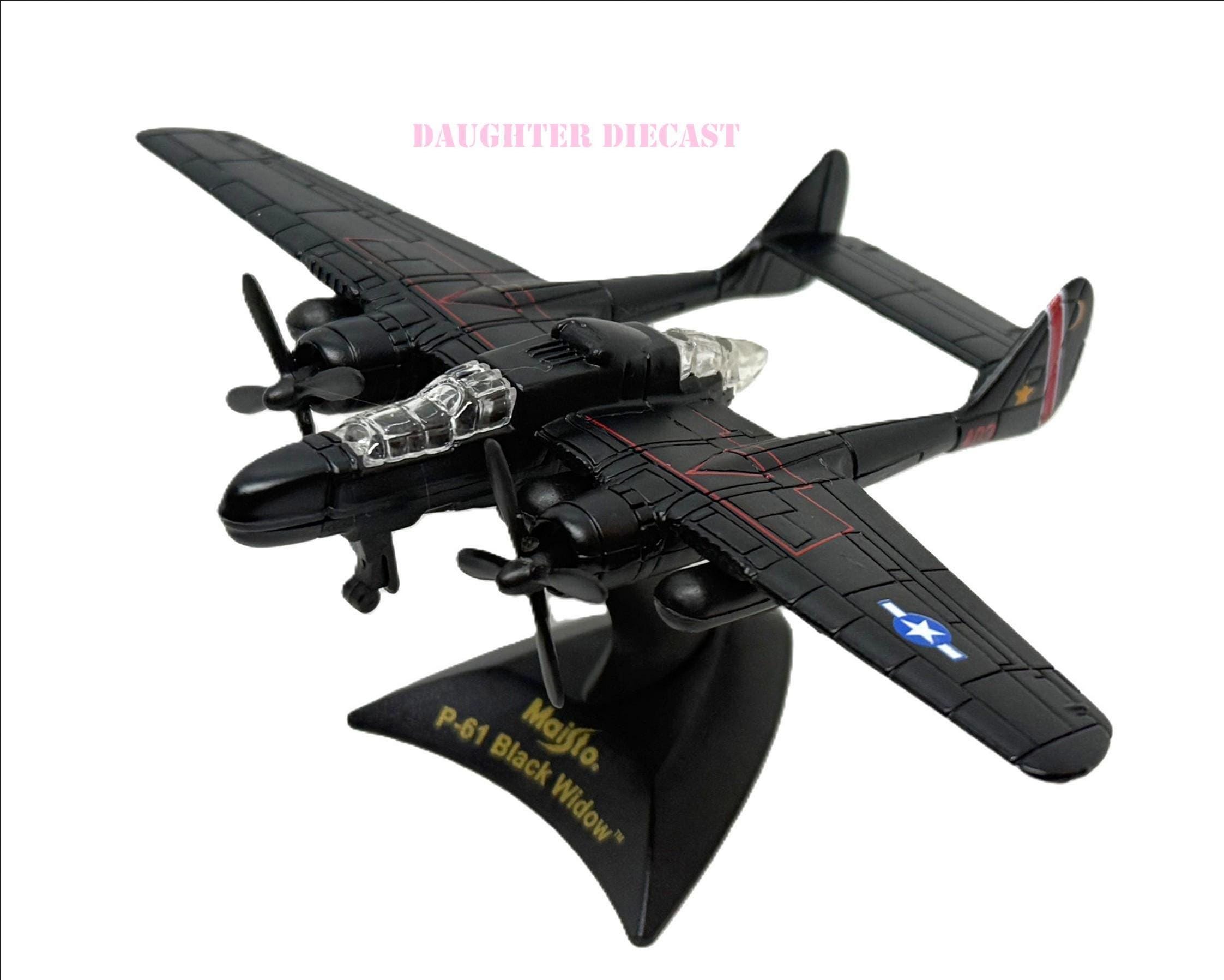
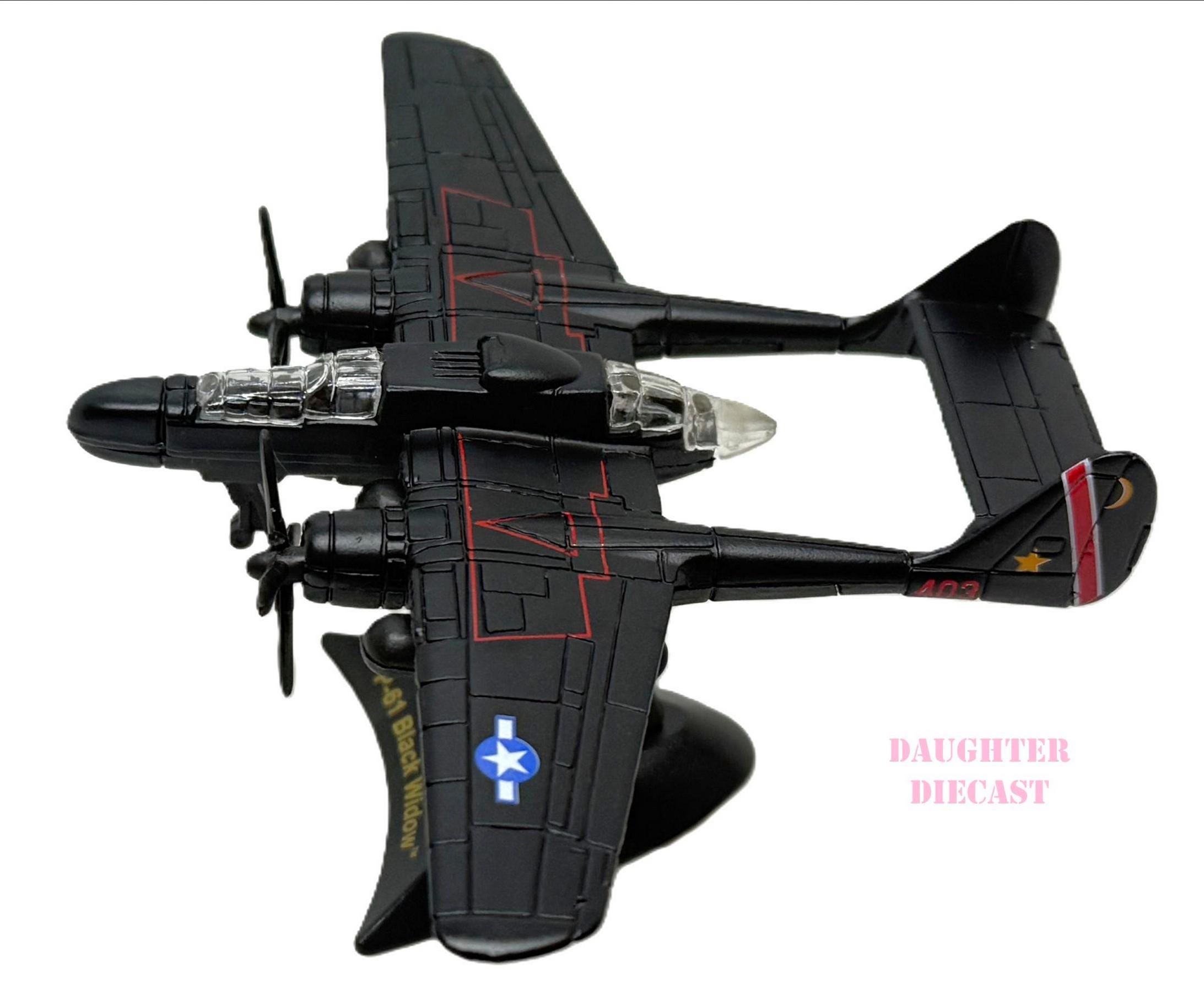
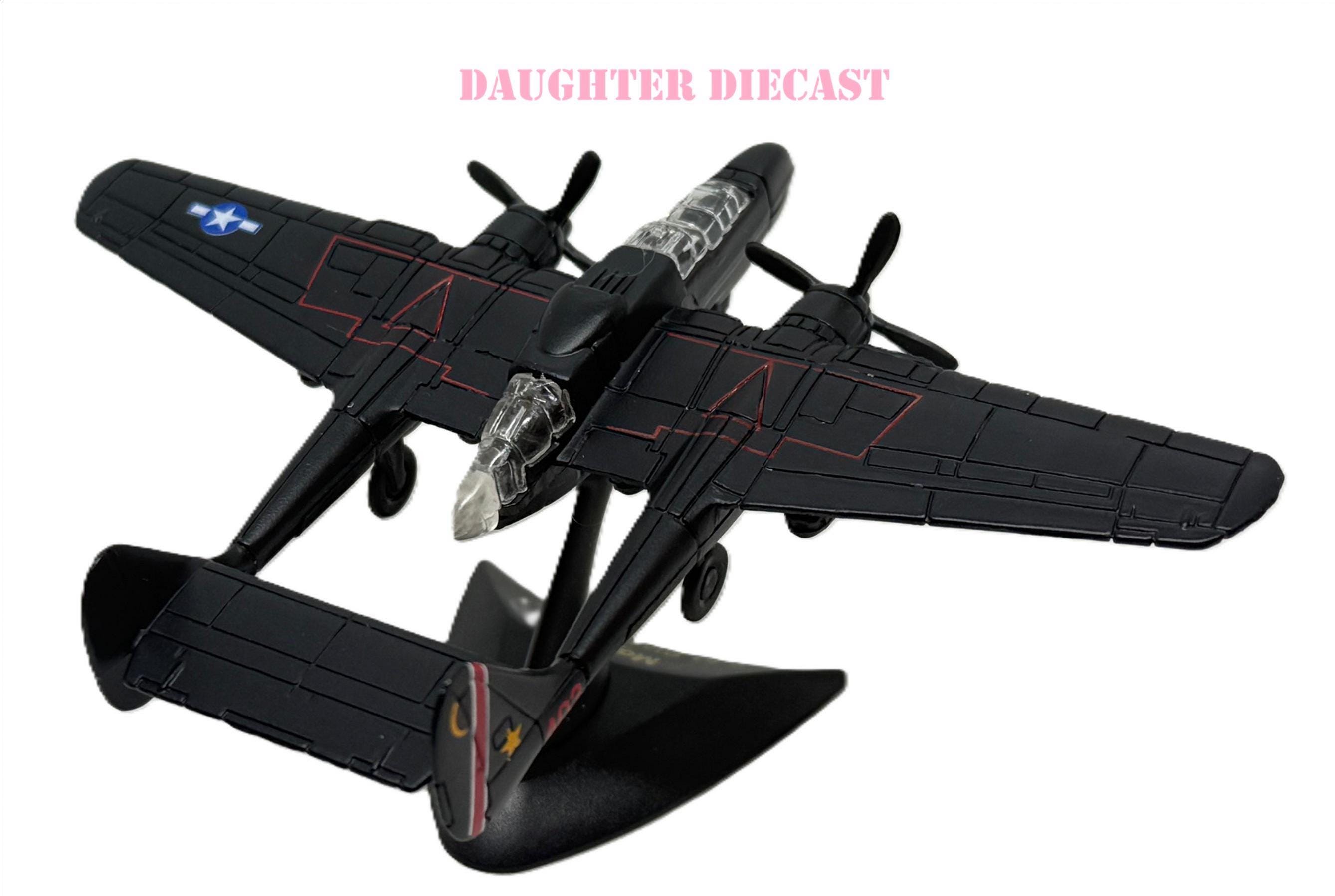
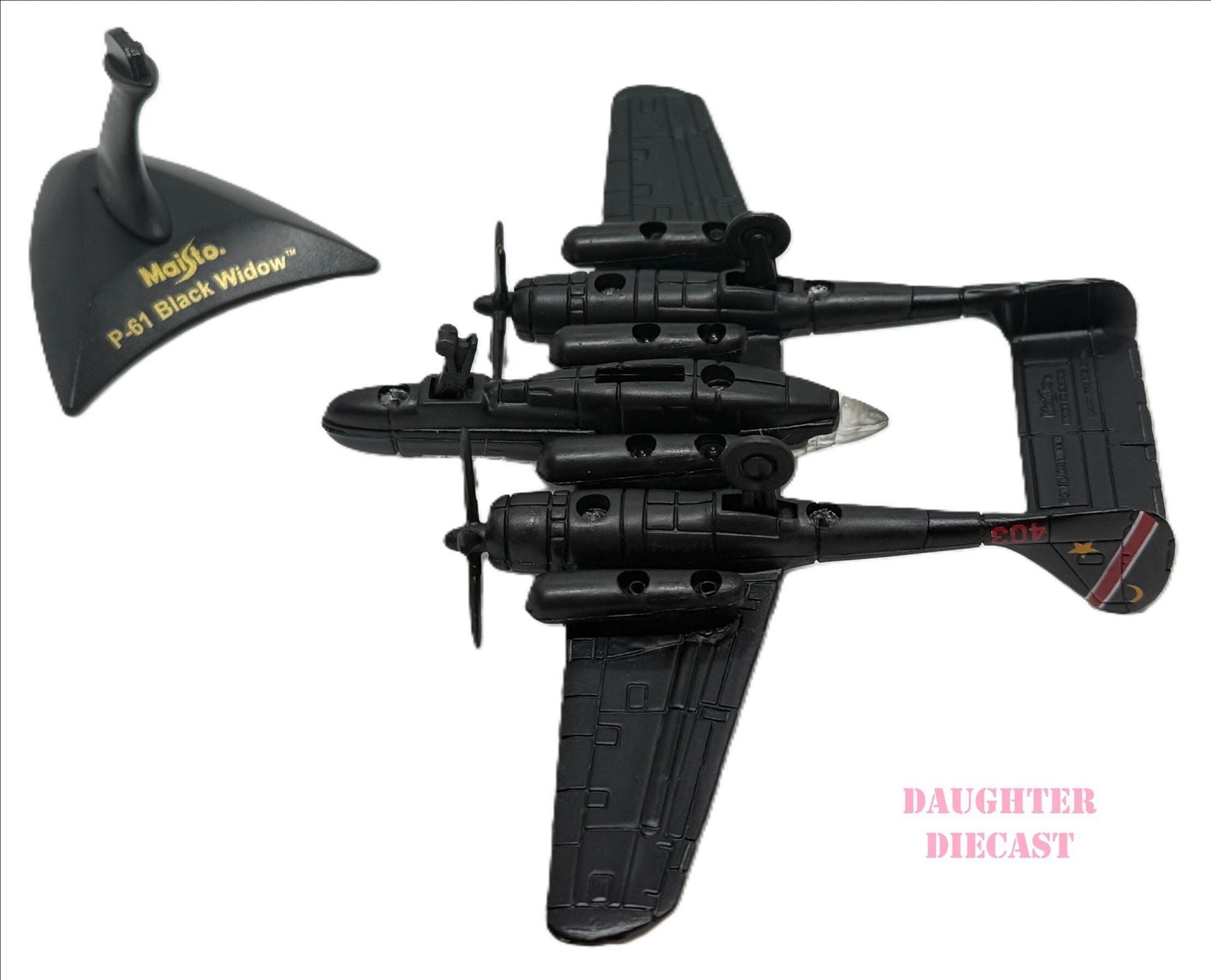
Diecast Metal-Pristine Condition-Perfect Gift for Collectors!Awesome! VINTAGE WWII US ARMY P-61 BLACK WIDOW NIGHT-FIGHTER AIRPLANE WITH STAND. Adult collector model, weighty, constructed of diecast metal. Intricately-detailed, made by Maisto. Hard to find vintage model! Scale=1/72 prox, measures: 4"L x 5 3/8"W x 3 1/2"H (mounted). Pristine/mint condition model-never previously handled or displayed (until today for our photos). Comes in its original factory clam-shell protective packaging. The perfect gift for aviation history fans, vintage toy collectors, and veterans. We ship fast & safe worldwide every day. Read Aircraft Bio below....
•
•
•FOR A LIMITED TIME
•
•
•Purchases totaling $35 and above qualify for FREE shipping to USA! Add more items to your Etsy shopping cart to save $$$.NOTE: My dad owned a Diecast toy store for 30 years. I inherited the store inventory when he passed away many years ago. I am just now, beginning to sell the mint condition vintage models. All are store-inventory is new-old-stock, models have never been "played with". Please visit often-as I am adding more cool stuff every day!AIRCRAFT BIO:The Northrop P-61 Black Widow is a twin-engine United States Army Air Forces fighter aircraft of World War II. It was the first operational U.S. warplane designed as a night fighter.[1]Named for the North American spider Latrodectus mactans, it was an all-metal, twin-engine, twin-boom design armed with four forward-firing 20 mm (.79 in) Hispano M2 autocannon in the lower fuselage, and four .50 in (12.7 mm) M2 Browning machine guns in a dorsal gun turret. Developed during the war, the first test flight was made on May 26, 1942, with the first production aircraft rolling off the assembly line in October 1943.Although not produced in the large numbers of its contemporaries, the Black Widow was operated effectively as a night fighter by United States Army Air Forces squadrons in the European Theater, Pacific Theater, China Burma India Theater, and Mediterranean Theater during World War II. It replaced earlier British-designed night-fighter aircraft that had been updated to incorporate radar when it became available. After the war, the P-61 was redesignated as the F-61 and served in the United States Air Force as a long-range, all-weather, day/night interceptor for Air Defense Command until 1948, and for the Fifth Air Force until 1950. The last aircraft was retired from government service in 1954.On the night of 14 August 1945, a P-61B of the 548th Night Fighter Squadron named Lady in the Dark was unofficially credited with the last Allied air victory before VJ Day.[2][page needed] The P-61 was also modified to create the F-15 Reporter photo-reconnaissance aircraft for the United States Army Air Forces and subsequently the United States Air Force.[3]Operational historyThe first unit to receive production aircraft was the 348th Night Fighter Squadron at Orlando Army Air Base, Florida, which was responsible for training night fighter crews.[11]P-61 crews trained in a variety of ways. Several existing night fighter squadrons operating in the Mediterranean and Pacific theaters were to transition directly into the P-61 from Bristol Beaufighters and Douglas P-70s, though most P-61 crews were to be made up of new recruits operating in newly commissioned squadrons. After receiving flight, gunnery or radar training in bases around the U.S., the crews were finally assembled and received their P-61 operational training in Florida for transfer to the European Theater, or California for operations in the Pacific Theater.[citation needed]European theaterA P-61A of the 425th NFS (RAF Scorton, England) The P-61 had an inauspicious start to its combat in the European theater. Some[who?] believed the P-61 was too slow to effectively engage German fighters and medium bombers, a view which the RAF shared, based on the performance of a single P-61 they had received in early May.The 422d Night Fighter Squadron was the first to complete their training in Florida and, in February 1944, the squadron was shipped to England aboard the RMS Mauretania. The 425th NFS soon followed aboard the RMS Queen Elizabeth.The situation deteriorated in May 1944, when the squadrons learned that several USAAF generals – including General Hoyt Vandenberg – believed the P-61 lacked the capability to successfully engage German fighters and bombers, being too slow. General Spaatz asked for de Havilland Mosquito night fighters to equip two U.S. night fighter squadrons based in the UK. The request was denied due to insufficient supplies of Mosquitoes which were in demand for a number of roles.[12]At the end of May, the USAAF insisted on a competition between the Mosquito and the P-61 for operation in the European theater. RAF crews flew the Mosquito Mk XVII while crews from the 422nd NFS flew the P-61. In the end the USAAF determined that the P-61 had a slightly better rate of climb and could turn more tightly than the Mosquito. Colonel Winston Kratz, director of night fighter training in the USAAF, had organized a similar competition earlier. He said of the results:I'm absolutely sure to this day that the British were lying like troopers. I honestly believe the P-61 was not as fast as the Mosquito, which the British needed because by that time it was the one airplane that could get into Berlin and back without getting shot down. I doubt very seriously that the others knew better. But come what may, the '61 was a good night fighter. In the combat game you've got to be pretty realistic about these things. The P-61 was not a superior night fighter. It was not a poor night fighter. It was a good night fighter. It did not have enough speed.[13]However, on 5 July 1944, General Spaatz ordered a competition be held between the P-61 – using an example from the 422nd which had been "'tweaked' to get maximum performance" for the competition – against a Mosquito NF.XVII[citation needed], and Lieutenant Colonel Kratz made a $500 bet in favor of the Mosquito being a faster and more maneuverable night fighting platform. The "tweaked" P-61 proved Kratz wrong, as according to the 422nd's squadron historian it "... proved faster at all altitudes, outturned the Mossie at every altitude and by a big margin and far surpassed the Mossie in rate of climb."[14]In England, the 422d NFS finally received their first P-61s in late June, and began flying operational missions over England in mid-July. These aircraft arrived without dorsal turrets, so the squadron's gunners were reassigned to another NFS that was to continue flying the P-70. The first P-61 engagement in the European Theater occurred on 15 July when a P-61 piloted by Lieutenant Herman Ernst was directed to intercept a V-1 flying bomb. Diving from above and behind to match the V-1's 350 mph (560 km/h) speed, the P-61's plastic rear cone imploded under the pressure and the attack was aborted. The tail cones failed on several early P-61A models before this problem was corrected. On 16 July, Lieutenant Ernst was again directed to attack a V-1 and, this time, was successful, giving the 422nd NFS and the European Theater its first P-61 kill.[citation needed] P-61 at Étain-Rouvres Air Base, France, with rockets mounted, c. 1944. In early August 1944, the 422nd NFS transferred to Maupertus, France, and began to encounter German aircraft for the first time. On the night of 14–15 August 1944, "Impatient Widow",[b] attempted to intercept a Heinkel He 177A-5 of 5.Staffel/Kampfgeschwader 40, [c] flown by Hptm. Stolle. "Impatient Widow" had its starboard engine shot out along with oil lines and hydraulics, and went down north of Barfleur, Normandy. The downing was witnessed by two other Heinkels.[citation needed]However, a P-61 shot down a Bf 110, and shortly afterwards, the squadron's commanding officer Lieutenant Colonel O. B. Johnson, his P-61 already damaged by anti aircraft land fire, shot down a Fw 190. The 425th NFS scored its first kill shortly afterwards.In October 1944, a P-61 of the 422nd NFS, now operating out of Florennes Air Base (Belgium), abandoned by the Luftwaffe in the German retreat, encountered a Messerschmitt Me 163 attempting to land. The P-61 tried to intercept it but the rocket-powered aircraft was gliding too fast. A week later, another P-61 spotted a Messerschmitt Me 262, but was also unable to intercept the jet. On yet another occasion, a 422nd P-61 spotted a Messerschmitt Me 410 Hornisse flying at tree top level but, as the P-61 dove on it, the "Hornet" sped away and the P-61 was unable to catch it. Contrary to popular stories, no P-61 ever engaged in combat with a German jet or any of the late war advanced Luftwaffe aircraft.The most commonly encountered and destroyed Luftwaffe aircraft types were Junkers Ju 188s, Junkers Ju 52s, Bf 110s, Fw 190s, Dornier Do 217s, and Heinkel He 111s, while P-61 losses were limited to numerous landing accidents, bad weather, friendly and anti aircraft land fire. One researcher suggests 42-39515 may have been shot down by an Fw 190 of Nachtschlachtgruppe 9.[15]
Diecast Metal-Pristine Condition-Perfect Gift for Collectors!Awesome! VINTAGE WWII US ARMY P-61 BLACK WIDOW NIGHT-FIGHTER AIRPLANE WITH STAND. Adult collector model, weighty, constructed of diecast metal. Intricately-detailed, made by Maisto. Hard to find vintage model! Scale=1/72 prox, measures: 4"L x 5 3/8"W x 3 1/2"H (mounted). Pristine/mint condition model-never previously handled or displayed (until today for our photos). Comes in its original factory clam-shell protective packaging. The perfect gift for aviation history fans, vintage toy collectors, and veterans. We ship fast & safe worldwide every day. Read Aircraft Bio below....
•
•
•FOR A LIMITED TIME
•
•
•Purchases totaling $35 and above qualify for FREE shipping to USA! Add more items to your Etsy shopping cart to save $$$.NOTE: My dad owned a Diecast toy store for 30 years. I inherited the store inventory when he passed away many years ago. I am just now, beginning to sell the mint condition vintage models. All are store-inventory is new-old-stock, models have never been "played with". Please visit often-as I am adding more cool stuff every day!AIRCRAFT BIO:The Northrop P-61 Black Widow is a twin-engine United States Army Air Forces fighter aircraft of World War II. It was the first operational U.S. warplane designed as a night fighter.[1]Named for the North American spider Latrodectus mactans, it was an all-metal, twin-engine, twin-boom design armed with four forward-firing 20 mm (.79 in) Hispano M2 autocannon in the lower fuselage, and four .50 in (12.7 mm) M2 Browning machine guns in a dorsal gun turret. Developed during the war, the first test flight was made on May 26, 1942, with the first production aircraft rolling off the assembly line in October 1943.Although not produced in the large numbers of its contemporaries, the Black Widow was operated effectively as a night fighter by United States Army Air Forces squadrons in the European Theater, Pacific Theater, China Burma India Theater, and Mediterranean Theater during World War II. It replaced earlier British-designed night-fighter aircraft that had been updated to incorporate radar when it became available. After the war, the P-61 was redesignated as the F-61 and served in the United States Air Force as a long-range, all-weather, day/night interceptor for Air Defense Command until 1948, and for the Fifth Air Force until 1950. The last aircraft was retired from government service in 1954.On the night of 14 August 1945, a P-61B of the 548th Night Fighter Squadron named Lady in the Dark was unofficially credited with the last Allied air victory before VJ Day.[2][page needed] The P-61 was also modified to create the F-15 Reporter photo-reconnaissance aircraft for the United States Army Air Forces and subsequently the United States Air Force.[3]Operational historyThe first unit to receive production aircraft was the 348th Night Fighter Squadron at Orlando Army Air Base, Florida, which was responsible for training night fighter crews.[11]P-61 crews trained in a variety of ways. Several existing night fighter squadrons operating in the Mediterranean and Pacific theaters were to transition directly into the P-61 from Bristol Beaufighters and Douglas P-70s, though most P-61 crews were to be made up of new recruits operating in newly commissioned squadrons. After receiving flight, gunnery or radar training in bases around the U.S., the crews were finally assembled and received their P-61 operational training in Florida for transfer to the European Theater, or California for operations in the Pacific Theater.[citation needed]European theaterA P-61A of the 425th NFS (RAF Scorton, England) The P-61 had an inauspicious start to its combat in the European theater. Some[who?] believed the P-61 was too slow to effectively engage German fighters and medium bombers, a view which the RAF shared, based on the performance of a single P-61 they had received in early May.The 422d Night Fighter Squadron was the first to complete their training in Florida and, in February 1944, the squadron was shipped to England aboard the RMS Mauretania. The 425th NFS soon followed aboard the RMS Queen Elizabeth.The situation deteriorated in May 1944, when the squadrons learned that several USAAF generals – including General Hoyt Vandenberg – believed the P-61 lacked the capability to successfully engage German fighters and bombers, being too slow. General Spaatz asked for de Havilland Mosquito night fighters to equip two U.S. night fighter squadrons based in the UK. The request was denied due to insufficient supplies of Mosquitoes which were in demand for a number of roles.[12]At the end of May, the USAAF insisted on a competition between the Mosquito and the P-61 for operation in the European theater. RAF crews flew the Mosquito Mk XVII while crews from the 422nd NFS flew the P-61. In the end the USAAF determined that the P-61 had a slightly better rate of climb and could turn more tightly than the Mosquito. Colonel Winston Kratz, director of night fighter training in the USAAF, had organized a similar competition earlier. He said of the results:I'm absolutely sure to this day that the British were lying like troopers. I honestly believe the P-61 was not as fast as the Mosquito, which the British needed because by that time it was the one airplane that could get into Berlin and back without getting shot down. I doubt very seriously that the others knew better. But come what may, the '61 was a good night fighter. In the combat game you've got to be pretty realistic about these things. The P-61 was not a superior night fighter. It was not a poor night fighter. It was a good night fighter. It did not have enough speed.[13]However, on 5 July 1944, General Spaatz ordered a competition be held between the P-61 – using an example from the 422nd which had been "'tweaked' to get maximum performance" for the competition – against a Mosquito NF.XVII[citation needed], and Lieutenant Colonel Kratz made a $500 bet in favor of the Mosquito being a faster and more maneuverable night fighting platform. The "tweaked" P-61 proved Kratz wrong, as according to the 422nd's squadron historian it "... proved faster at all altitudes, outturned the Mossie at every altitude and by a big margin and far surpassed the Mossie in rate of climb."[14]In England, the 422d NFS finally received their first P-61s in late June, and began flying operational missions over England in mid-July. These aircraft arrived without dorsal turrets, so the squadron's gunners were reassigned to another NFS that was to continue flying the P-70. The first P-61 engagement in the European Theater occurred on 15 July when a P-61 piloted by Lieutenant Herman Ernst was directed to intercept a V-1 flying bomb. Diving from above and behind to match the V-1's 350 mph (560 km/h) speed, the P-61's plastic rear cone imploded under the pressure and the attack was aborted. The tail cones failed on several early P-61A models before this problem was corrected. On 16 July, Lieutenant Ernst was again directed to attack a V-1 and, this time, was successful, giving the 422nd NFS and the European Theater its first P-61 kill.[citation needed] P-61 at Étain-Rouvres Air Base, France, with rockets mounted, c. 1944. In early August 1944, the 422nd NFS transferred to Maupertus, France, and began to encounter German aircraft for the first time. On the night of 14–15 August 1944, "Impatient Widow",[b] attempted to intercept a Heinkel He 177A-5 of 5.Staffel/Kampfgeschwader 40, [c] flown by Hptm. Stolle. "Impatient Widow" had its starboard engine shot out along with oil lines and hydraulics, and went down north of Barfleur, Normandy. The downing was witnessed by two other Heinkels.[citation needed]However, a P-61 shot down a Bf 110, and shortly afterwards, the squadron's commanding officer Lieutenant Colonel O. B. Johnson, his P-61 already damaged by anti aircraft land fire, shot down a Fw 190. The 425th NFS scored its first kill shortly afterwards.In October 1944, a P-61 of the 422nd NFS, now operating out of Florennes Air Base (Belgium), abandoned by the Luftwaffe in the German retreat, encountered a Messerschmitt Me 163 attempting to land. The P-61 tried to intercept it but the rocket-powered aircraft was gliding too fast. A week later, another P-61 spotted a Messerschmitt Me 262, but was also unable to intercept the jet. On yet another occasion, a 422nd P-61 spotted a Messerschmitt Me 410 Hornisse flying at tree top level but, as the P-61 dove on it, the "Hornet" sped away and the P-61 was unable to catch it. Contrary to popular stories, no P-61 ever engaged in combat with a German jet or any of the late war advanced Luftwaffe aircraft.The most commonly encountered and destroyed Luftwaffe aircraft types were Junkers Ju 188s, Junkers Ju 52s, Bf 110s, Fw 190s, Dornier Do 217s, and Heinkel He 111s, while P-61 losses were limited to numerous landing accidents, bad weather, friendly and anti aircraft land fire. One researcher suggests 42-39515 may have been shot down by an Fw 190 of Nachtschlachtgruppe 9.[15]
Other Products