
Vintage Stunt Show BI PLANE-Diecast Metal Airplane Mint/Factory Sealed! Zlymex Zee Toys Perfect Gift for Collectors!
$ 29.99

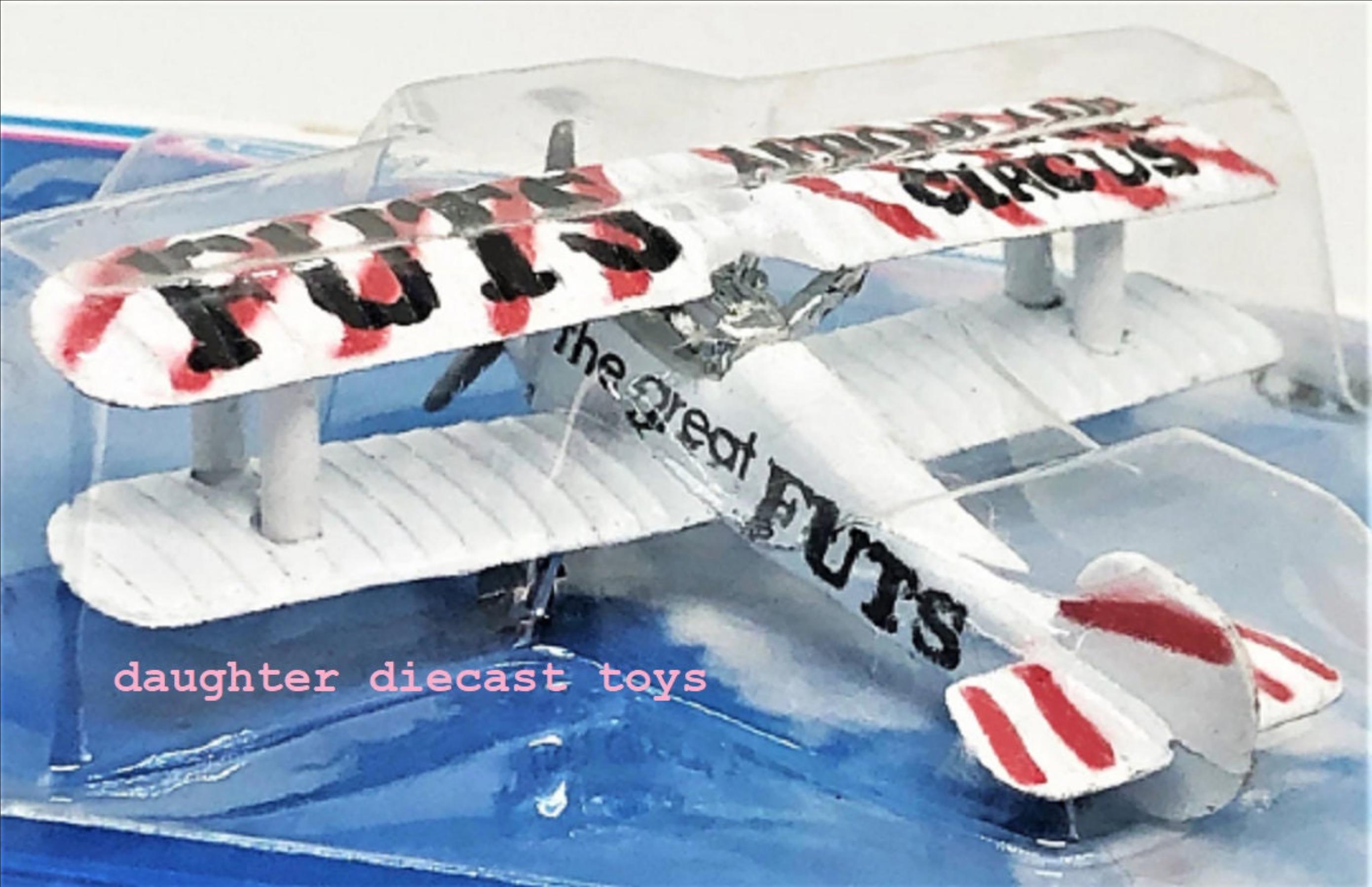
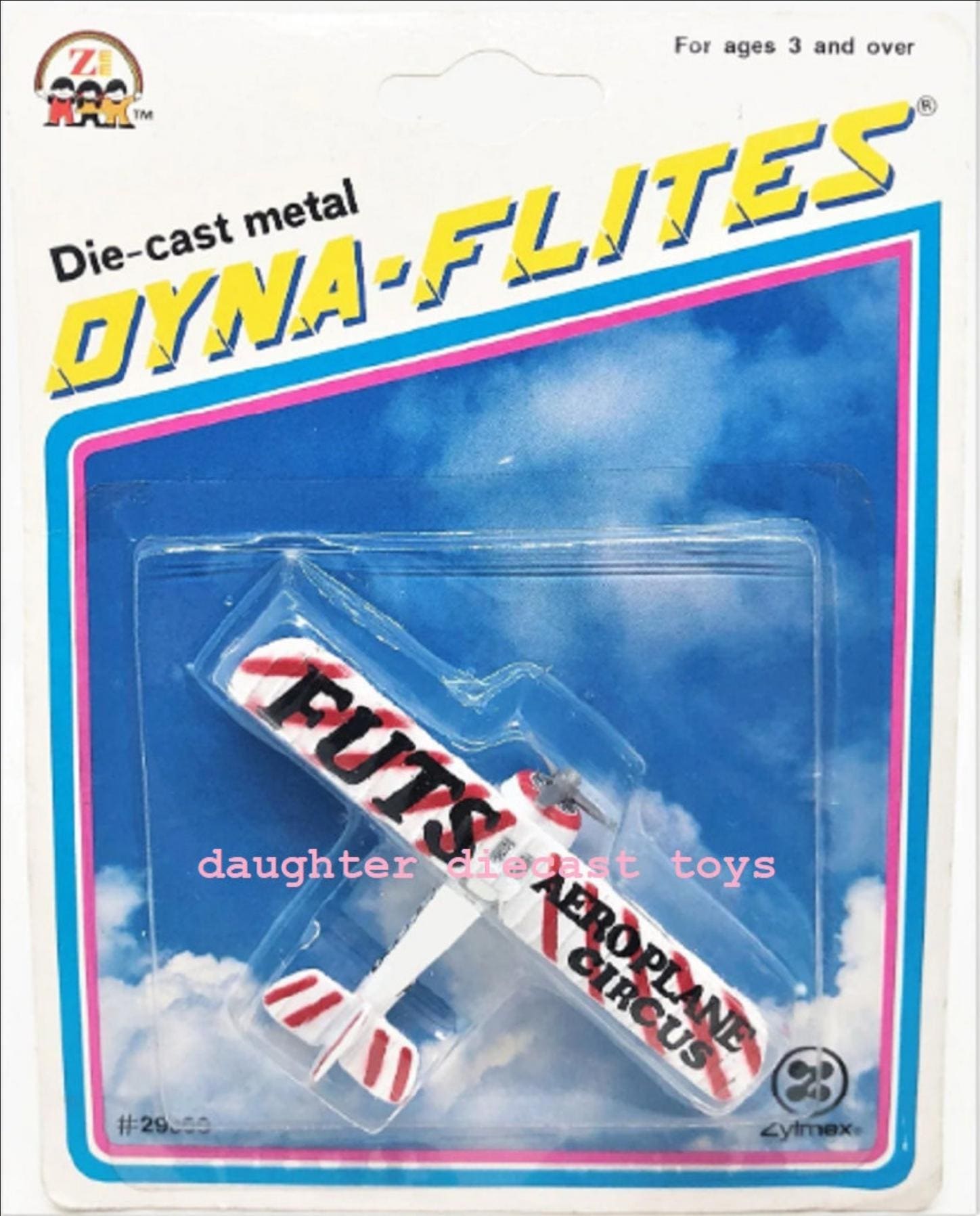
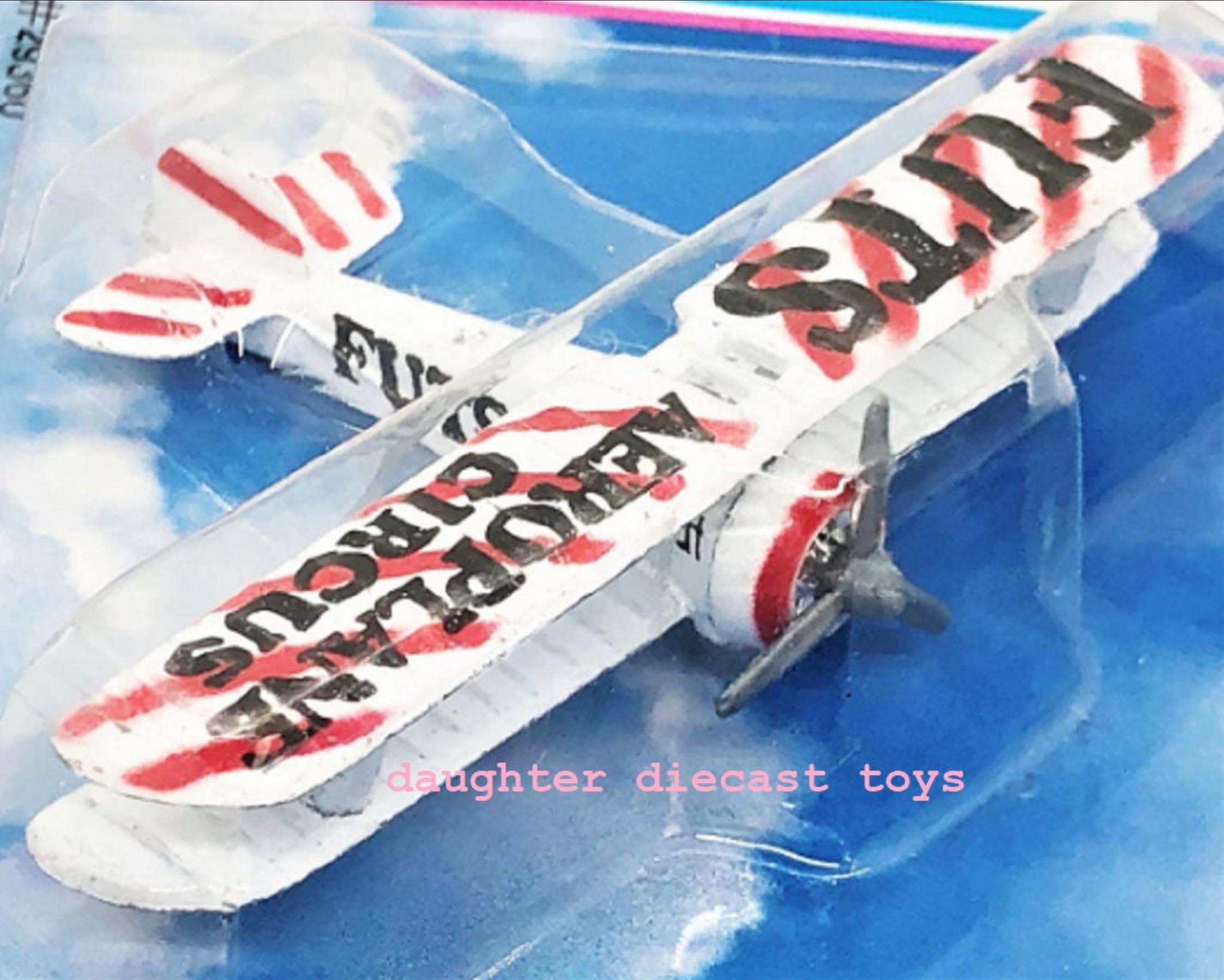
Awesome looking FUTZ CIRCUS STUNT SHOW BI PLANE (See aircraft bio below). Made
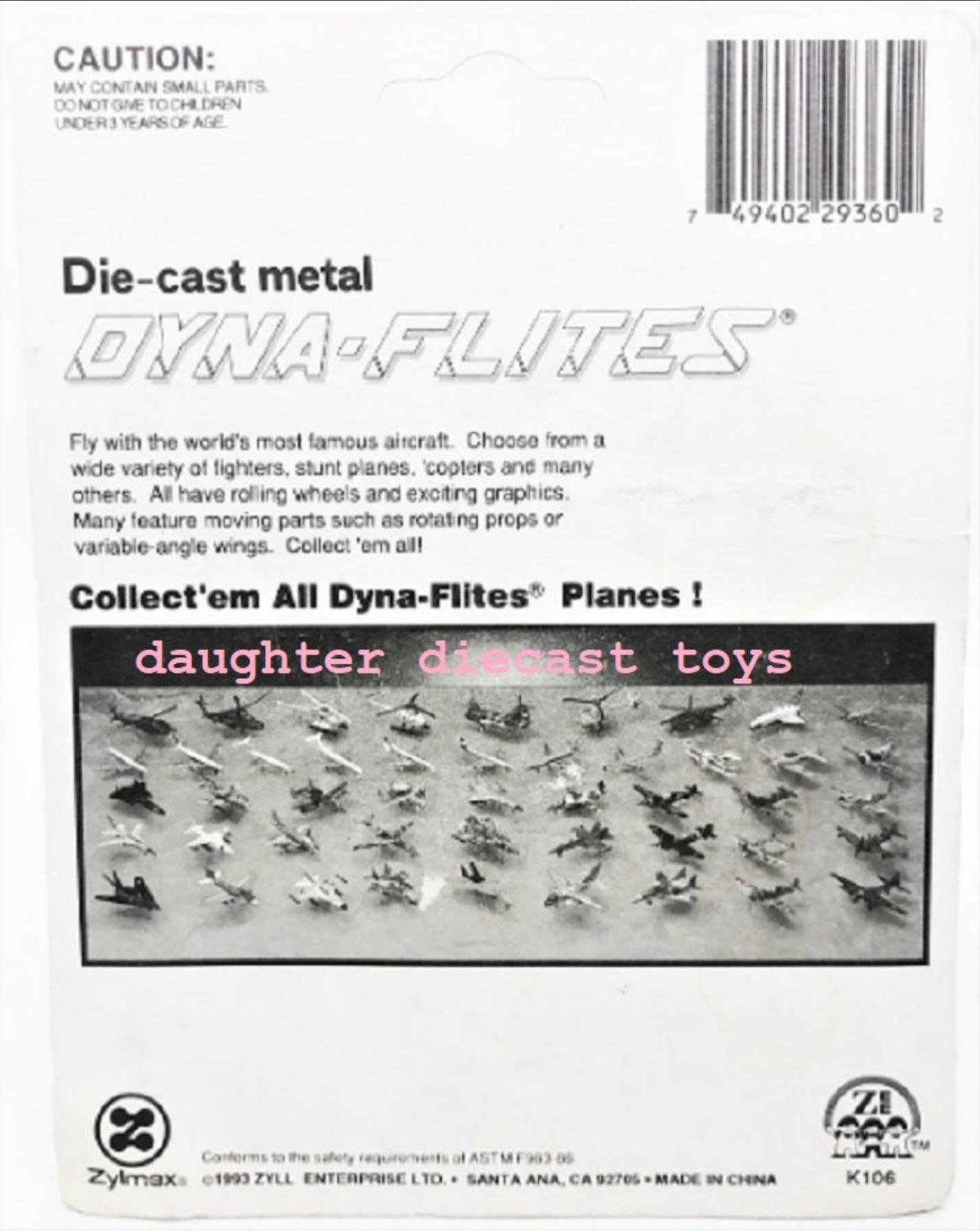
by Zee Toys. Constructed of die cast metal. Highly sought-after, hard to find vintage model! Measures 2 1/2"L x 3 1/2"W x 1 "H. Beautiful/mint condition. Never removed from its factory-sealed card. Perfect gift for ZEE, aircraft, and vintage toy collectors! We ship fast & safe worldwide every day! See Aircraft Bio below....Note: My dad owned a Diecast toy store for 30 years. I inherited the store inventory when he passed away several years ago. I am (just now) able to bring myself to begin selling his cars-so they can be shared with the world. All pristine and mint condition vintage models will (eventually) be listed here on ETSY. All the inventory is NEW (vintage) merchandise-which was intended for retail sale. Please know-our diecast toys have NEVER been "played-with” we do not sell used, or damaged toys.
•
•
•FOR A LIMITED TIME
•
•
•Purchases totaling $35 and above qualify for FREE shipping to USA! Add more items to your Etsy shopping cart to save $$$.AIRCRAFT BIO:A biplane is a fixed-wing aircraft with two main wings stacked one above the other. The first powered, controlled aeroplane to fly, the Wright Flyer, used a biplane wing arrangement, as did many aircraft in the early years of aviation. While a biplane wing structure has a structural advantage over a monoplane, it produces more drag than a monoplane wing. Improved structural techniques, better materials and higher speeds made the biplane configuration obsolete for most purposes by the late 1930s.Biplanes offer several advantages over conventional cantilever monoplane designs: they permit lighter wing structures, low wing loading and smaller span for a given wing area. However, interference between the airflow over each wing increases drag substantially, and biplanes generally need extensive bracing, which causes additional drag.Biplanes are distinguished from tandem wing arrangements, where the wings are placed forward and aft, instead of above and below.The term is also occasionally used in biology, to describe the wings of some flying animals.The stacking of wing planes was suggested by Sir George Cayley in 1843.[21] Hiram Maxim adopted the idea for his steam-powered test rig, which lifted off but was held down by safety rails, in 1894.[22] Otto Lilienthal designed and flew two different biplane hang gliders in 1895,[23] though he is better known for his monoplanes.[24] By 1896 a group of young men in the United States, led by Octave Chanute, were flying hang gliders including biplanes and concluded that the externally braced biplane offered better prospects for powered flight than the monoplane. In 1903, the Wright Flyer biplane became the first successful powered aeroplane.[25]Throughout the pioneer years, both biplanes and monoplanes were common, but by the outbreak of the First World War biplanes had gained favour after several monoplane structural failures resulted in the RFC's "Monoplane Ban" when all monoplanes in military service were grounded,[26] while the French also withdrew most monoplanes from combat roles and relegated them to training. Figures such as aviation author Bruce observed that there was an apparent prejudice held even against newly-designed monoplanes, such as the Bristol M.1, that caused even those with relatively high performance attributes to be overlooked in favour of 'orthodox' biplanes, and there was an allegedly widespread belief held at that time that monoplane aircraft were inherently unsafe during combat.[27][28]Between the years of 1914 and 1925, a clear majority of new aircraft introduced were biplanes; however, during the latter years of the First World War, the Germans had been experimenting with a new generation of monoplanes, such as the Fokker D.VIII, that might have ended the biplane's advantages earlier had the conflict not ended when it had.[29] The French were also introducing the Morane-Saulnier AI, a strut-braced parasol monoplane, although the type was quickly relegated to the advanced trainer role following the resolution of structural issues.[30] Sesquiplane types, which were biplanes with abbreviated lower wings such as the French Nieuport 17 and German Albatros D.III, offered lower drag than a conventional biplane while being stronger than a monoplane.During the Interwar period, numerous biplane airliners were introduced. The British de Havilland Dragon was a particularly successful aircraft, using straightforward design to could carry six passengers on busy routes, such as London-Paris services.[31] During early August 1934, one such aircraft, named Trail of the Caribou, performed the first non-stop flight between the Canadian mainland and Britain in 30 hours 55 minutes, although the intended target for this long distance flight had originally been Baghdad, Iraq.[32][33] Despite its relative success, British production of the Dragon was quickly ended when in favour of the more powerful and elegant de Havilland Dragon Rapide, which had been specifically designed to be a faster and more comfortable successor to the Dragon.[34]As the available engine power and speed increased, the drag penalty of external bracing increasingly limited aircraft performance. To fly faster, it would be necessary to reduce external bracing to create an aerodynamically clean design; however, early cantilever designs were either too weak or too heavy. The 1917 Junkers J.I sesquiplane utilized corrugated aluminum for all flying surfaces, with a minimum of struts; however, it was relatively easy to damage the thin metal skin and required careful handling by ground crews.[35] The 1918 Zeppelin-Lindau D.I fighter was an all-metal stressed-skin monocoque fully cantilevered biplane, but its arrival had come too late to see combat use in the conflict.[8]By the 1930s, biplanes had reached their performance limits, and monoplanes become increasingly predominant, particularly in continental Europe where monoplanes had been increasingly common from the end of World War I. At the start of World War II, several air forces still had biplane combat aircraft in front line service but they were no longer competitive, and most were used in niche roles, such as training or shipboard operation, until shortly after the end of the war. The British Gloster Gladiator biplane, the Italian Fiat CR.42 Falco and Soviet I-153 sesquiplane fighters were all still operational after 1939.[36][37] According to aviation author Gianni Cattaneo, the CR.42 was able to achieve success in the defensive night fighter role against RAF bombers that were striking industrial targets throughout northern Italy.[38][39] Boeing-Stearman Model 75 PT-13D biplane trainer from the 30s and 40sThe British Fleet Air Arm operated the Fairey Swordfish torpedo bomber from its aircraft carriers, and used the type in the anti-submarine warfare role until the end of the conflict, largely due to their ability to operate from the relatively compact decks of escort carriers. Its low stall speed and inherently tough design made it ideal for operations even in the often severe mid-Atlantic weather conditions.[40] By the end of the conflict, the Swordfish held the distinction of having caused the destruction of a greater tonnage of Axis shipping than any other Allied aircraft.[41]Both the German Heinkel He 50 and the Soviet Polikarpov Po-2 were used with relative success in the night ground attack role throughout the Second World War. In the case of the Po-2, production of the aircraft continued even after the end of the conflict, not ending until around 1952.[42] A significant number of Po-2s were fielded by the Korean People's Air Force during the Korean War, inflicting serious damage during night raids on United Nations bases.[43] The Po-2 is also the only biplane to be credited with a documented jet-kill, as one Lockheed F-94 Starfire was lost while slowing down to 161 km/h (100 mph) – below its stall speed – during an intercept in order to engage the low flying Po-2.[44]Later biplane trainers included the de Havilland Tiger Moth in the Royal Air Force (RAF), Royal Canadian Air Force (RCAF) and others and the Stampe SV.4, which saw service postwar in the French and Belgian Air Forces. The Stearman PT-13 was widely used by the United States Army Air Force (USAAF) while the US Navy operated the Naval Aircraft Factory N3N. In later civilian use in the US, the Stearman became particularly associated with stunt flying such as wing-walking, and with crop dusting, where its compactness worked well at low levels, where it had to dodge obstacles. Polikarpov Po-2, of which over 20,000 were built by the Soviet Union
by Zee Toys. Constructed of die cast metal. Highly sought-after, hard to find vintage model! Measures 2 1/2"L x 3 1/2"W x 1 "H. Beautiful/mint condition. Never removed from its factory-sealed card. Perfect gift for ZEE, aircraft, and vintage toy collectors! We ship fast & safe worldwide every day! See Aircraft Bio below....Note: My dad owned a Diecast toy store for 30 years. I inherited the store inventory when he passed away several years ago. I am (just now) able to bring myself to begin selling his cars-so they can be shared with the world. All pristine and mint condition vintage models will (eventually) be listed here on ETSY. All the inventory is NEW (vintage) merchandise-which was intended for retail sale. Please know-our diecast toys have NEVER been "played-with” we do not sell used, or damaged toys.
•
•
•FOR A LIMITED TIME
•
•
•Purchases totaling $35 and above qualify for FREE shipping to USA! Add more items to your Etsy shopping cart to save $$$.AIRCRAFT BIO:A biplane is a fixed-wing aircraft with two main wings stacked one above the other. The first powered, controlled aeroplane to fly, the Wright Flyer, used a biplane wing arrangement, as did many aircraft in the early years of aviation. While a biplane wing structure has a structural advantage over a monoplane, it produces more drag than a monoplane wing. Improved structural techniques, better materials and higher speeds made the biplane configuration obsolete for most purposes by the late 1930s.Biplanes offer several advantages over conventional cantilever monoplane designs: they permit lighter wing structures, low wing loading and smaller span for a given wing area. However, interference between the airflow over each wing increases drag substantially, and biplanes generally need extensive bracing, which causes additional drag.Biplanes are distinguished from tandem wing arrangements, where the wings are placed forward and aft, instead of above and below.The term is also occasionally used in biology, to describe the wings of some flying animals.The stacking of wing planes was suggested by Sir George Cayley in 1843.[21] Hiram Maxim adopted the idea for his steam-powered test rig, which lifted off but was held down by safety rails, in 1894.[22] Otto Lilienthal designed and flew two different biplane hang gliders in 1895,[23] though he is better known for his monoplanes.[24] By 1896 a group of young men in the United States, led by Octave Chanute, were flying hang gliders including biplanes and concluded that the externally braced biplane offered better prospects for powered flight than the monoplane. In 1903, the Wright Flyer biplane became the first successful powered aeroplane.[25]Throughout the pioneer years, both biplanes and monoplanes were common, but by the outbreak of the First World War biplanes had gained favour after several monoplane structural failures resulted in the RFC's "Monoplane Ban" when all monoplanes in military service were grounded,[26] while the French also withdrew most monoplanes from combat roles and relegated them to training. Figures such as aviation author Bruce observed that there was an apparent prejudice held even against newly-designed monoplanes, such as the Bristol M.1, that caused even those with relatively high performance attributes to be overlooked in favour of 'orthodox' biplanes, and there was an allegedly widespread belief held at that time that monoplane aircraft were inherently unsafe during combat.[27][28]Between the years of 1914 and 1925, a clear majority of new aircraft introduced were biplanes; however, during the latter years of the First World War, the Germans had been experimenting with a new generation of monoplanes, such as the Fokker D.VIII, that might have ended the biplane's advantages earlier had the conflict not ended when it had.[29] The French were also introducing the Morane-Saulnier AI, a strut-braced parasol monoplane, although the type was quickly relegated to the advanced trainer role following the resolution of structural issues.[30] Sesquiplane types, which were biplanes with abbreviated lower wings such as the French Nieuport 17 and German Albatros D.III, offered lower drag than a conventional biplane while being stronger than a monoplane.During the Interwar period, numerous biplane airliners were introduced. The British de Havilland Dragon was a particularly successful aircraft, using straightforward design to could carry six passengers on busy routes, such as London-Paris services.[31] During early August 1934, one such aircraft, named Trail of the Caribou, performed the first non-stop flight between the Canadian mainland and Britain in 30 hours 55 minutes, although the intended target for this long distance flight had originally been Baghdad, Iraq.[32][33] Despite its relative success, British production of the Dragon was quickly ended when in favour of the more powerful and elegant de Havilland Dragon Rapide, which had been specifically designed to be a faster and more comfortable successor to the Dragon.[34]As the available engine power and speed increased, the drag penalty of external bracing increasingly limited aircraft performance. To fly faster, it would be necessary to reduce external bracing to create an aerodynamically clean design; however, early cantilever designs were either too weak or too heavy. The 1917 Junkers J.I sesquiplane utilized corrugated aluminum for all flying surfaces, with a minimum of struts; however, it was relatively easy to damage the thin metal skin and required careful handling by ground crews.[35] The 1918 Zeppelin-Lindau D.I fighter was an all-metal stressed-skin monocoque fully cantilevered biplane, but its arrival had come too late to see combat use in the conflict.[8]By the 1930s, biplanes had reached their performance limits, and monoplanes become increasingly predominant, particularly in continental Europe where monoplanes had been increasingly common from the end of World War I. At the start of World War II, several air forces still had biplane combat aircraft in front line service but they were no longer competitive, and most were used in niche roles, such as training or shipboard operation, until shortly after the end of the war. The British Gloster Gladiator biplane, the Italian Fiat CR.42 Falco and Soviet I-153 sesquiplane fighters were all still operational after 1939.[36][37] According to aviation author Gianni Cattaneo, the CR.42 was able to achieve success in the defensive night fighter role against RAF bombers that were striking industrial targets throughout northern Italy.[38][39] Boeing-Stearman Model 75 PT-13D biplane trainer from the 30s and 40sThe British Fleet Air Arm operated the Fairey Swordfish torpedo bomber from its aircraft carriers, and used the type in the anti-submarine warfare role until the end of the conflict, largely due to their ability to operate from the relatively compact decks of escort carriers. Its low stall speed and inherently tough design made it ideal for operations even in the often severe mid-Atlantic weather conditions.[40] By the end of the conflict, the Swordfish held the distinction of having caused the destruction of a greater tonnage of Axis shipping than any other Allied aircraft.[41]Both the German Heinkel He 50 and the Soviet Polikarpov Po-2 were used with relative success in the night ground attack role throughout the Second World War. In the case of the Po-2, production of the aircraft continued even after the end of the conflict, not ending until around 1952.[42] A significant number of Po-2s were fielded by the Korean People's Air Force during the Korean War, inflicting serious damage during night raids on United Nations bases.[43] The Po-2 is also the only biplane to be credited with a documented jet-kill, as one Lockheed F-94 Starfire was lost while slowing down to 161 km/h (100 mph) – below its stall speed – during an intercept in order to engage the low flying Po-2.[44]Later biplane trainers included the de Havilland Tiger Moth in the Royal Air Force (RAF), Royal Canadian Air Force (RCAF) and others and the Stampe SV.4, which saw service postwar in the French and Belgian Air Forces. The Stearman PT-13 was widely used by the United States Army Air Force (USAAF) while the US Navy operated the Naval Aircraft Factory N3N. In later civilian use in the US, the Stearman became particularly associated with stunt flying such as wing-walking, and with crop dusting, where its compactness worked well at low levels, where it had to dodge obstacles. Polikarpov Po-2, of which over 20,000 were built by the Soviet Union
Other Products