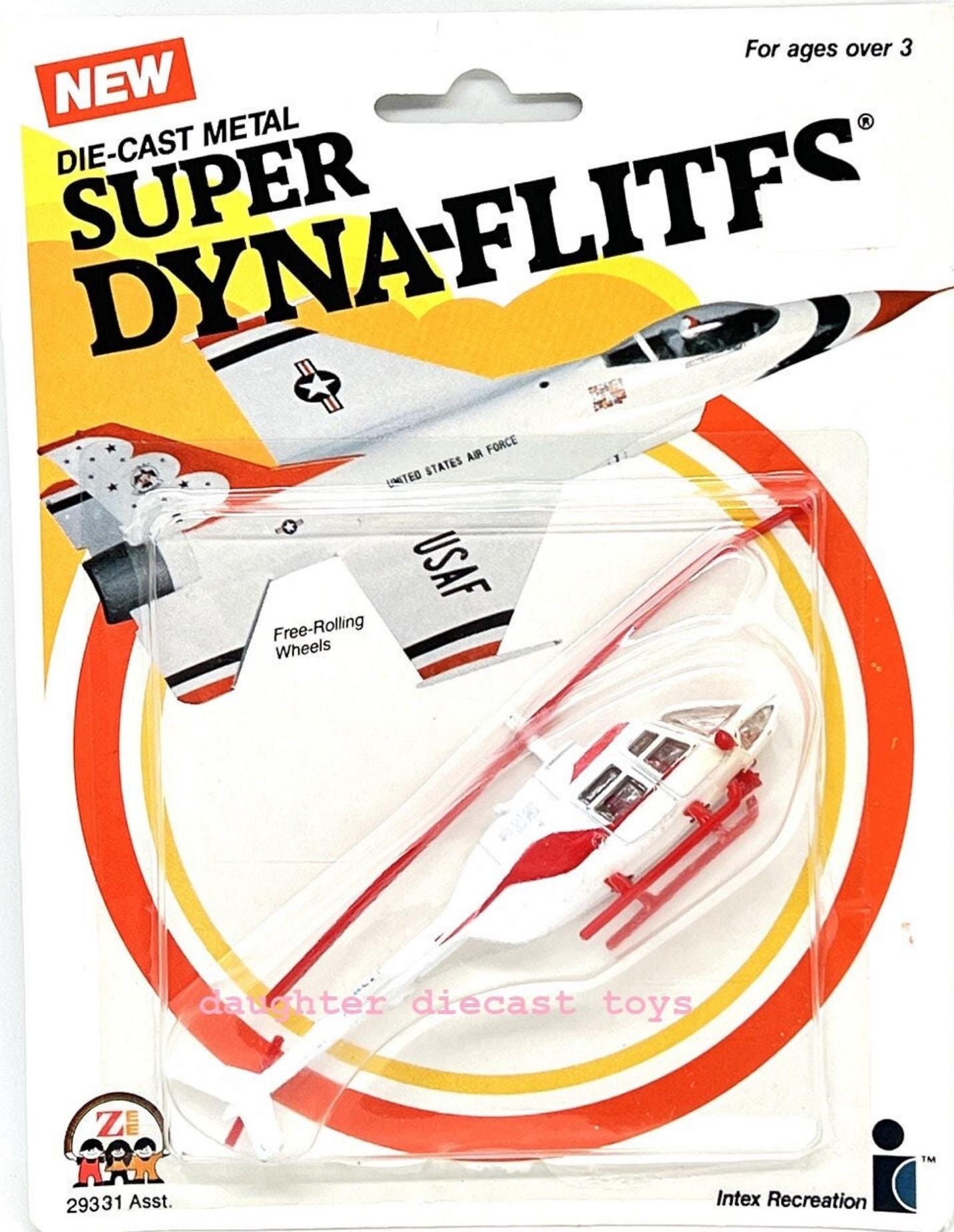
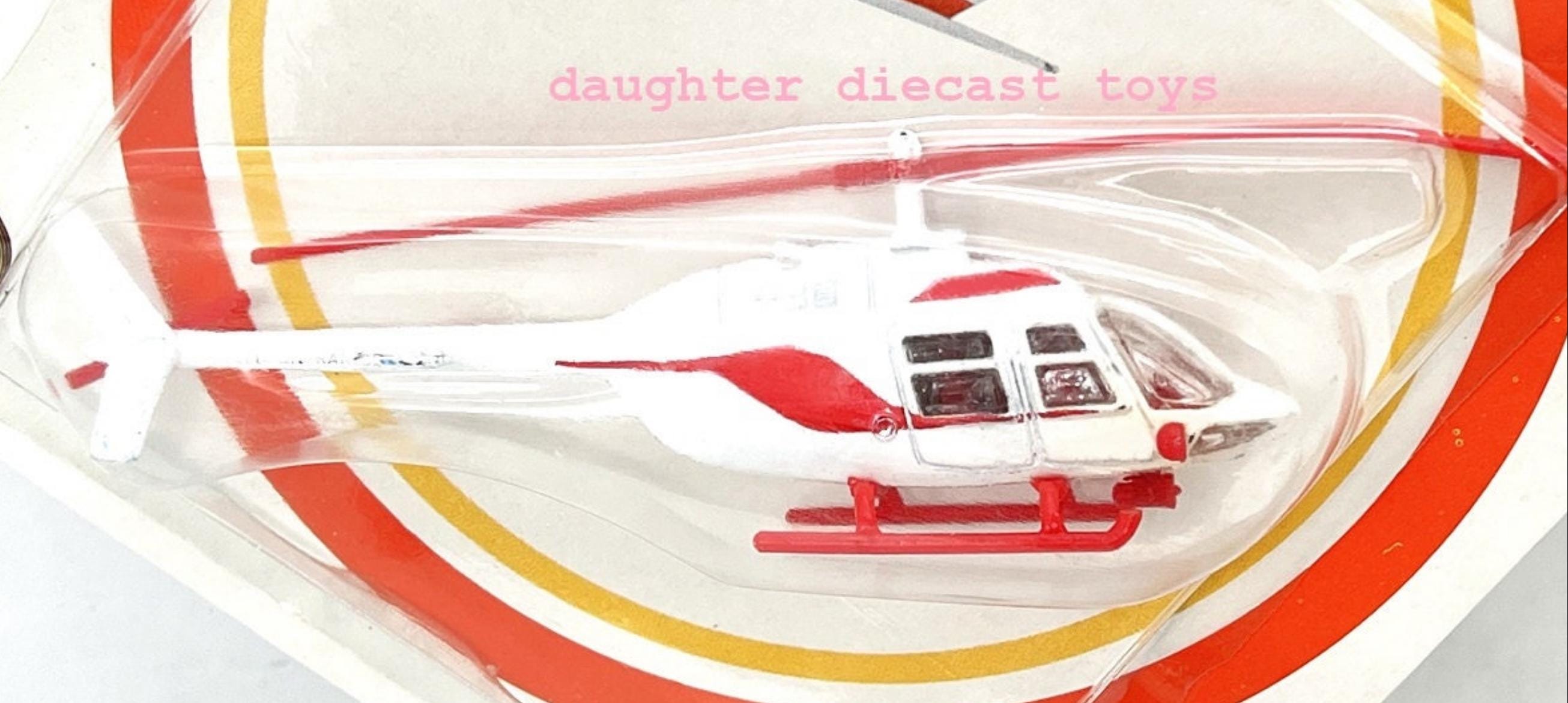
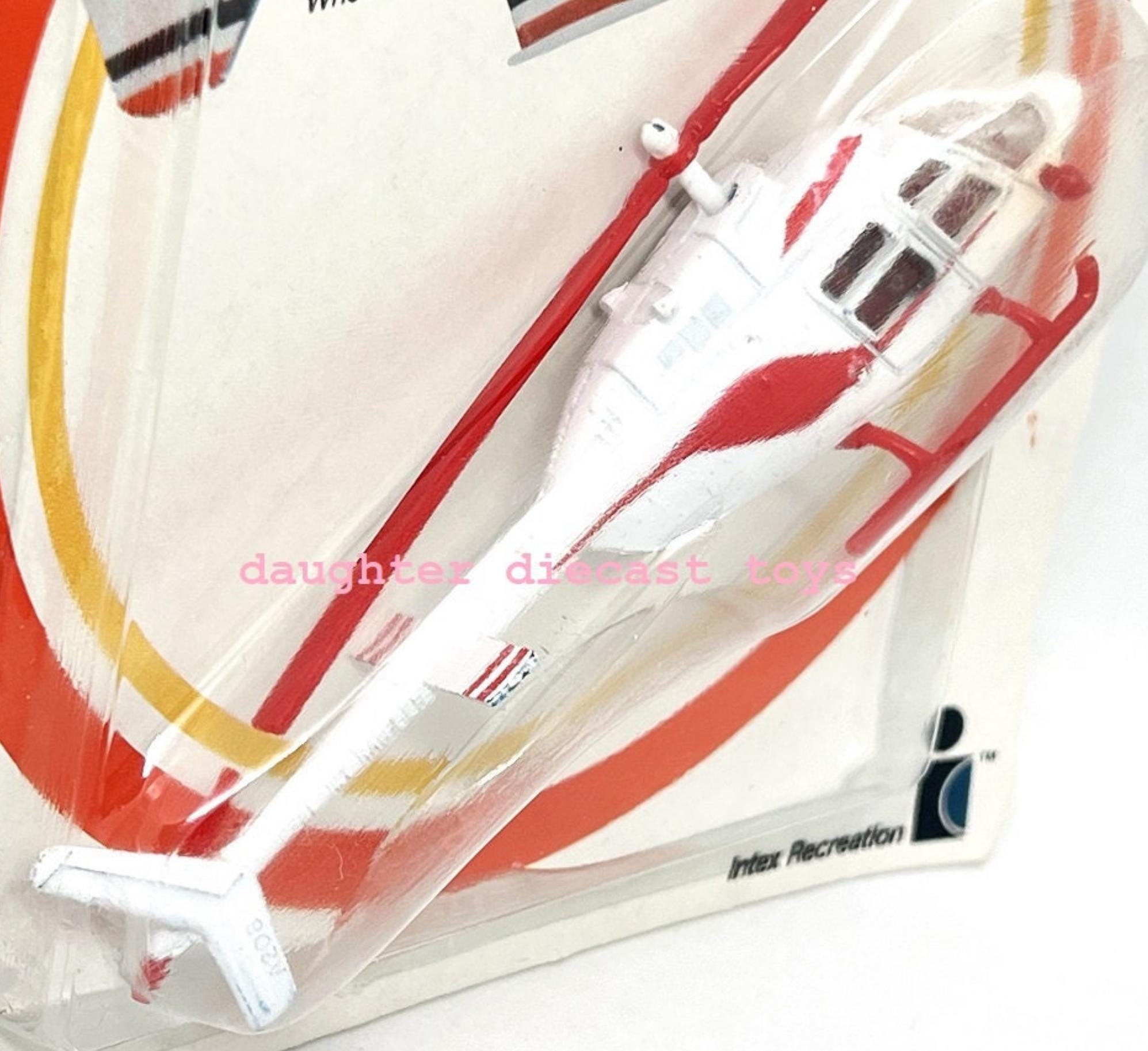
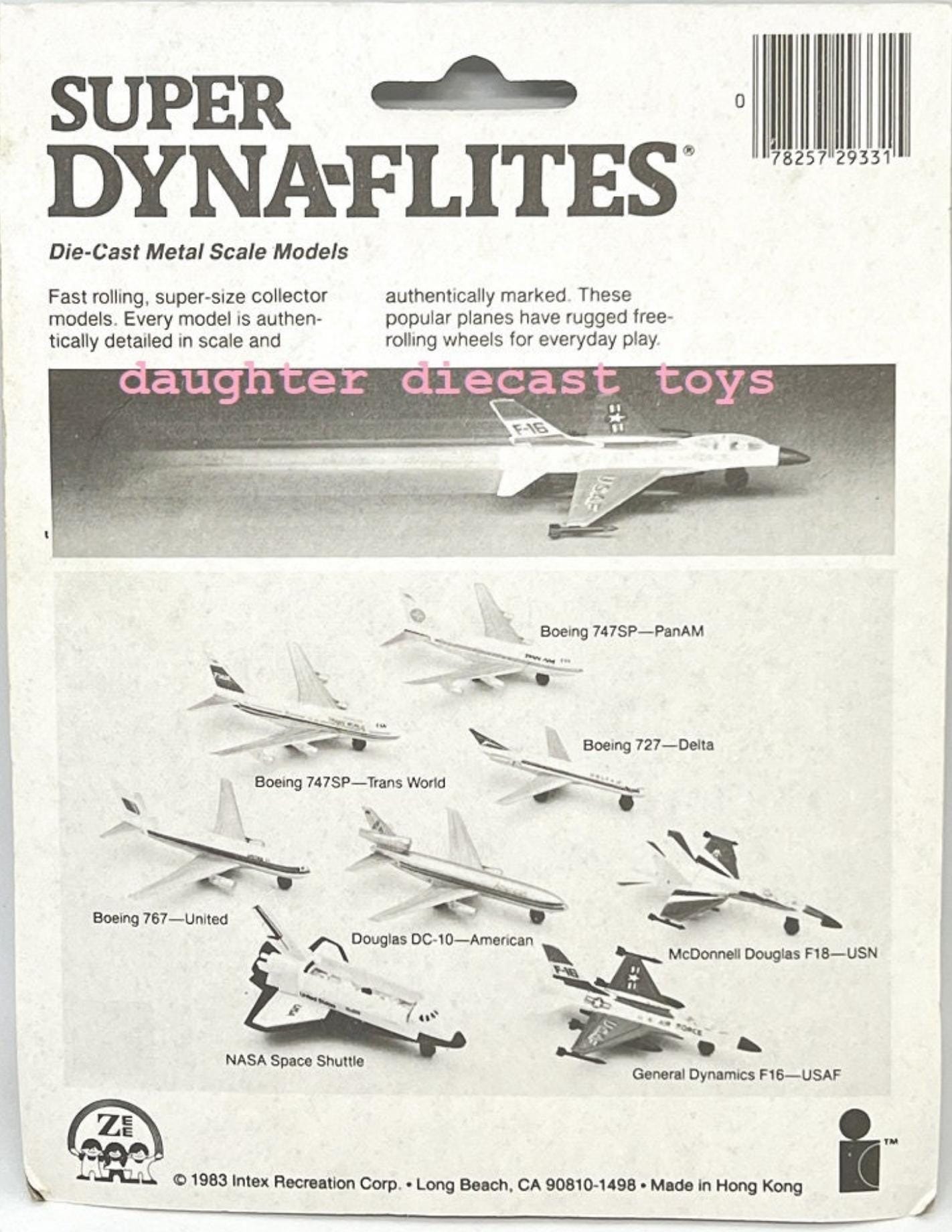

Bell A206 JETRANGER HELICOPTER-Diecast Metal Aircraft-Mint Condition/Factory Sealed! Zlymex Zee Toys Great Model! Perfect gift!
$ 34.99

Awesome! BELL A206 JETRANGER HELICOPTER. Made in 1983 by Zee Toys. Constructed
of die cast metal. Highly sought-after, hard to find vintage model! Measures 4 1/2"L x 1"W x 1 ", blade length is 5". Mint condition model-never removed from its factory-sealed card. Wonderful gift for ZEE, aircraft, vintage toy collectors, and pilots! We ship fast & safe worldwide every day! See aircraft bio Below...Note: My dad owned a Diecast toy store for 30 years. I inherited the store inventory when he passed away several years ago. I am (just now) able to bring myself to begin selling his cars-so they can be shared with the world. All pristine and mint condition vintage models will (eventually) be listed here on ETSY. All the inventory is NEW (vintage) merchandise-which was intended for retail sale. Please know-our diecast toys have NEVER been "played-with” we do not sell used, or damaged toys.
•
•
•FOR A LIMITED TIME
•
•
•Purchases totaling $35 and above qualify for FREE shipping to USA! Add more items to your Etsy shopping cart to save $$$.Aircraft bio:Role: Multipurpose utility helicopter National origin: United States/Canada Manufacturer: Bell Helicopter First flight: December 8, 1962 Status: In service Produced: 1962–2017 Number built: 7,300 Developed from: Bell YOH-4 Variants: Bell OH-58 Kiowa Developed into: Bell 407The Bell 206 is a family of two-bladed, single- and twin-engined helicopters, manufactured by Bell Helicopter at its Mirabel, Quebec, plant. Originally developed as the Bell YOH-4 for the United States Army's Light Observation Helicopter program, it was not selected by the Army. Bell redesigned the airframe and successfully marketed the aircraft commercially as the five-place Bell 206A JetRanger. The new design was eventually selected by the Army as the OH-58 Kiowa.Bell also developed a seven-place LongRanger, which was later offered with a twin-engined option as the TwinRanger, while Tridair Helicopters offers a similar conversion of the LongRanger called the Gemini ST. The ICAO-assigned model designation "B06" is used on flight plans for the JetRanger and LongRanger, and the designation "B06T" is used for the twin-engined TwinRangers. Development Origins and JetRangerOn October 14, 1960, the United States Navy solicited responses from 25 aircraft manufacturers to a request for proposals (RFP) on behalf of the Army for the Light Observation Helicopter (LOH). Bell entered the competition along with 12 other manufacturers, including Hiller Aircraft and Hughes Tool Co., Aircraft Division.[5] Bell submitted the D-250 design, which would be designated as the YHO-4.[6] On May 19, 1961, Bell and Hiller were announced as winners of the design competition.[7][8]Bell developed the D-250 design into the Bell 206 aircraft, redesignated as YOH-4A in 1962, and produced five prototype aircraft for the Army's test and evaluation phase. The first prototype flew on December 8, 1962.[1] The YOH-4A also came to be known as "The Ugly Duckling" in comparison to the other contending aircraft.[1] Following a fly-off of the Bell, Hughes and Fairchild-Hiller prototypes, the Hughes OH-6 was selected in May 1965.[9]When the YOH-4A was eliminated by the Army, Bell went about solving the problem of marketing the aircraft. In addition to the image problem, the helicopter lacked cargo space and only provided cramped seating for the planned three passengers. The solution was a redesigned fuselage, sleeker and aesthetically appealing, adding 16 ft3 (0.45 m3) of cargo space in the process.[10] A Bell executive contributed to this redesign by drawing on a sketch two lines extending the fuselage to where it meets the tail.[11] The redesign was designated Bell 206A, and Bell President Edwin J. Ducayet named it the JetRanger, denoting an evolution from the popular Model 47J Ranger.Bell Helicopter ended production of the Bell 206B-3 version in 2010.[12][3] In 2011, used 206B-3s sold for around $1.4 million depending upon the equipment and configuration.[13] Bell intends for the Bell 505 Jet Ranger X to replace the 206 five-seat versions from around 2015 and compete with the Robinson R66.[14] LongRanger The 206L LongRanger is a stretched variant with seating for seven. The fuselage, stretched a total of 30 inches (760 mm), adds two rear-facing seats between the front and rear seats. Since 1975, Bell has produced more than 1,700 LongRangers across all variant types. In 1981, a military version, the 206L TexasRanger was released. The original 206L used an Allison 250-C20B engine, and a series of model upgrades replaced this engine with more powerful versions; the 206L-1 used a 250-C28, and the 206L-3 and 206L-4 used the 250-C30P.In both applications, the 250-C30P is derated from 650 hp for takeoff and 501 hp continuous. The 206L-3 is transmission-limited to 435 hp for take-off, and the 206L-4 is transmission-limited to 495 hp. The derating of the C30P produces an advantage in hot-day and high-altitude operations as it can produce the rated horsepower at higher altitudes and temperatures where applications that use the maximum rating of the engine at sea level suffer accelerated performance deterioration with increases in temperature and altitude. The 206L-3 and L-4 have not been offered in a twin configuration under those model designations.[citation needed]In 2007, Bell announced an upgrade program for the 206L-1 and 206L-3 which is designed to modify the aircraft to the 206L-4 configuration; modified aircraft are designated 206L-1+ and 206L-3+. Modifications include strengthened airframe structural components (including a new tailboom), improved transmission, upgraded engine for the L-1, all of which result in a maximum gross weight increase of 300 pounds and increased performance.[15]Production of the 206L-4 ended in June 2017
of die cast metal. Highly sought-after, hard to find vintage model! Measures 4 1/2"L x 1"W x 1 ", blade length is 5". Mint condition model-never removed from its factory-sealed card. Wonderful gift for ZEE, aircraft, vintage toy collectors, and pilots! We ship fast & safe worldwide every day! See aircraft bio Below...Note: My dad owned a Diecast toy store for 30 years. I inherited the store inventory when he passed away several years ago. I am (just now) able to bring myself to begin selling his cars-so they can be shared with the world. All pristine and mint condition vintage models will (eventually) be listed here on ETSY. All the inventory is NEW (vintage) merchandise-which was intended for retail sale. Please know-our diecast toys have NEVER been "played-with” we do not sell used, or damaged toys.
•
•
•FOR A LIMITED TIME
•
•
•Purchases totaling $35 and above qualify for FREE shipping to USA! Add more items to your Etsy shopping cart to save $$$.Aircraft bio:Role: Multipurpose utility helicopter National origin: United States/Canada Manufacturer: Bell Helicopter First flight: December 8, 1962 Status: In service Produced: 1962–2017 Number built: 7,300 Developed from: Bell YOH-4 Variants: Bell OH-58 Kiowa Developed into: Bell 407The Bell 206 is a family of two-bladed, single- and twin-engined helicopters, manufactured by Bell Helicopter at its Mirabel, Quebec, plant. Originally developed as the Bell YOH-4 for the United States Army's Light Observation Helicopter program, it was not selected by the Army. Bell redesigned the airframe and successfully marketed the aircraft commercially as the five-place Bell 206A JetRanger. The new design was eventually selected by the Army as the OH-58 Kiowa.Bell also developed a seven-place LongRanger, which was later offered with a twin-engined option as the TwinRanger, while Tridair Helicopters offers a similar conversion of the LongRanger called the Gemini ST. The ICAO-assigned model designation "B06" is used on flight plans for the JetRanger and LongRanger, and the designation "B06T" is used for the twin-engined TwinRangers. Development Origins and JetRangerOn October 14, 1960, the United States Navy solicited responses from 25 aircraft manufacturers to a request for proposals (RFP) on behalf of the Army for the Light Observation Helicopter (LOH). Bell entered the competition along with 12 other manufacturers, including Hiller Aircraft and Hughes Tool Co., Aircraft Division.[5] Bell submitted the D-250 design, which would be designated as the YHO-4.[6] On May 19, 1961, Bell and Hiller were announced as winners of the design competition.[7][8]Bell developed the D-250 design into the Bell 206 aircraft, redesignated as YOH-4A in 1962, and produced five prototype aircraft for the Army's test and evaluation phase. The first prototype flew on December 8, 1962.[1] The YOH-4A also came to be known as "The Ugly Duckling" in comparison to the other contending aircraft.[1] Following a fly-off of the Bell, Hughes and Fairchild-Hiller prototypes, the Hughes OH-6 was selected in May 1965.[9]When the YOH-4A was eliminated by the Army, Bell went about solving the problem of marketing the aircraft. In addition to the image problem, the helicopter lacked cargo space and only provided cramped seating for the planned three passengers. The solution was a redesigned fuselage, sleeker and aesthetically appealing, adding 16 ft3 (0.45 m3) of cargo space in the process.[10] A Bell executive contributed to this redesign by drawing on a sketch two lines extending the fuselage to where it meets the tail.[11] The redesign was designated Bell 206A, and Bell President Edwin J. Ducayet named it the JetRanger, denoting an evolution from the popular Model 47J Ranger.Bell Helicopter ended production of the Bell 206B-3 version in 2010.[12][3] In 2011, used 206B-3s sold for around $1.4 million depending upon the equipment and configuration.[13] Bell intends for the Bell 505 Jet Ranger X to replace the 206 five-seat versions from around 2015 and compete with the Robinson R66.[14] LongRanger The 206L LongRanger is a stretched variant with seating for seven. The fuselage, stretched a total of 30 inches (760 mm), adds two rear-facing seats between the front and rear seats. Since 1975, Bell has produced more than 1,700 LongRangers across all variant types. In 1981, a military version, the 206L TexasRanger was released. The original 206L used an Allison 250-C20B engine, and a series of model upgrades replaced this engine with more powerful versions; the 206L-1 used a 250-C28, and the 206L-3 and 206L-4 used the 250-C30P.In both applications, the 250-C30P is derated from 650 hp for takeoff and 501 hp continuous. The 206L-3 is transmission-limited to 435 hp for take-off, and the 206L-4 is transmission-limited to 495 hp. The derating of the C30P produces an advantage in hot-day and high-altitude operations as it can produce the rated horsepower at higher altitudes and temperatures where applications that use the maximum rating of the engine at sea level suffer accelerated performance deterioration with increases in temperature and altitude. The 206L-3 and L-4 have not been offered in a twin configuration under those model designations.[citation needed]In 2007, Bell announced an upgrade program for the 206L-1 and 206L-3 which is designed to modify the aircraft to the 206L-4 configuration; modified aircraft are designated 206L-1+ and 206L-3+. Modifications include strengthened airframe structural components (including a new tailboom), improved transmission, upgraded engine for the L-1, all of which result in a maximum gross weight increase of 300 pounds and increased performance.[15]Production of the 206L-4 ended in June 2017
Other Products