AUGUSTUS - Vintage 5x7 Framed Classical Art Print - Beautiful Ancient Marble Statue-Vatican, Rome- Perfect Gift for Art Lovers & Students!
$ 24.99

AUGUSTUS - Vintage 5x7 Framed Classical Art Print - Beautiful Ancient Marble
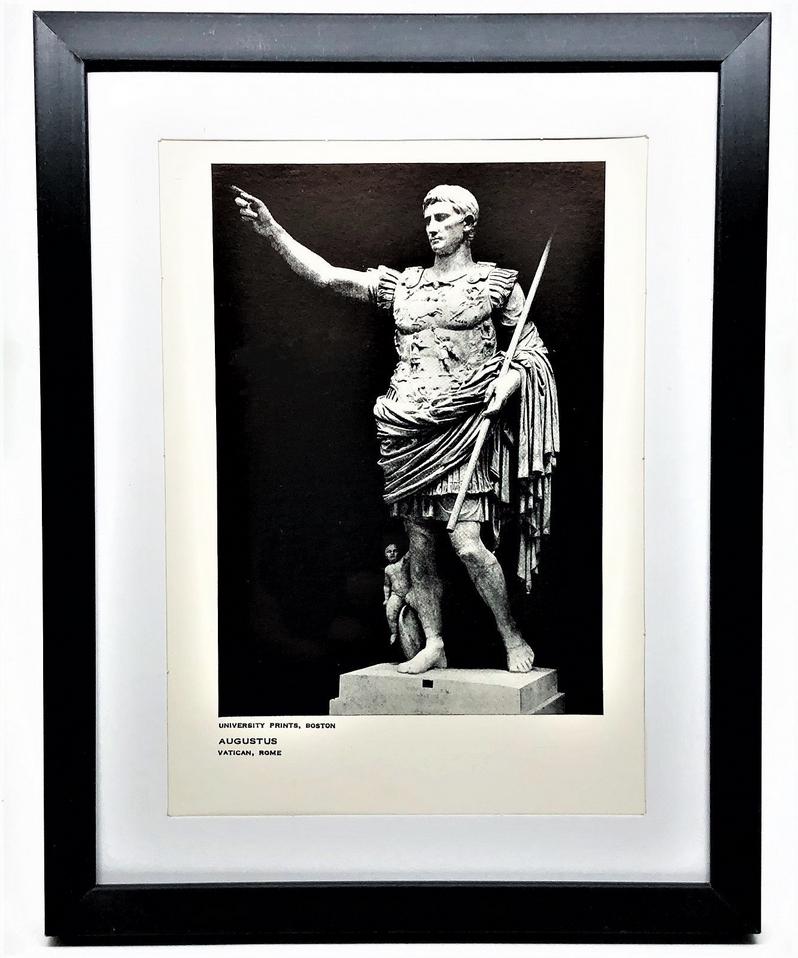
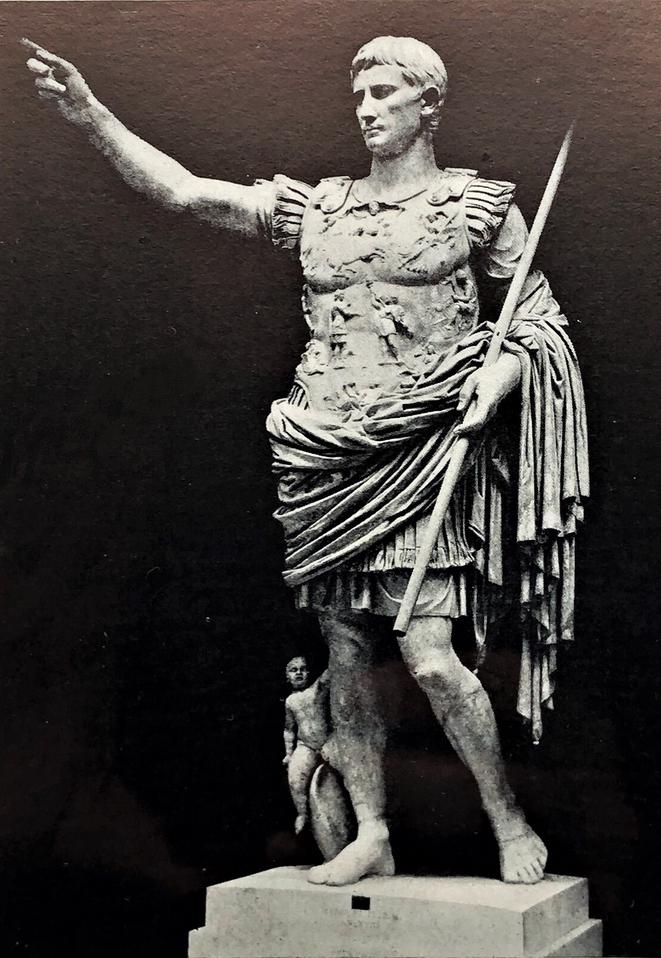
Statue-Vatican, Rome- Perfect Gift for Art Lovers & Students!Vintage 1960's art print of AUGUSTUS-magnificent ancient Marble Statue located at the Vatican in Rome. Stunning black and white print is in mint condition and measures 7" long x 5" wide. The glass frame measures 9 1/4"L x 7 1/4"W and has easel on back for table display and eye hooks for wall hanging. Adds instant retro/classic charm to any room. Perfect gift for lovers of Rome, Art Students. We ship fast & safe worldwide everyday! Read Art history below....NOTE: Purchases totaling $35 and above qualify for FREE shipping. Add more items to your Etsy shopping cart and save $$$.ART HISTORY: Augustus of Prima Porta (Italian: Augusto di Prima Porta) is a full-length portrait statue of Augustus Caesar, the first emperor of the Roman Empire. The marble statue stands 2.08 meters tall and weighs 1,000 kg. The statue was discovered on April 20, 1863 at the Villa of Livia owned by Augustus’ third wife, Livia Drusilla in Prima Porta. Livia had retired to the villa after Augustus's death in AD 14. Carved by expert Greek sculptors, the statue is assumed to be a copy of a lost bronze original displayed in Rome. The Augustus of Prima Porta is now displayed in the Braccio Nuovo (New Arm) of the Vatican Museums.The imagery on the leather cuirass refers to the Parthian restitution of the Roman eagles, or insignia, in 20 BC, one of Augustus’ most significant diplomatic accomplishments. The date of the (hypothetical) bronze original is therefore later than 20 BC. The fact that Augustus is depicted barefooted, a convention signifying divinity, indicates the original was created after his apotheosis in AD 14. The date of the marble copy would presumably fall between that date and Livia's death in AD 29.The statue might have been commissioned by Tiberius, the son of Livia and successor to Augustus. This hypothesis is based on the fact that Tiberius, who served as an intermediary in the recovery of the eagles, is also depicted on the cuirass. As this act was the greatest service he had performed for Augustus, the breastplate imagery would remind viewers of Tiberius's connection to the deified emperor and suggest continuity between both reigns.
Statue-Vatican, Rome- Perfect Gift for Art Lovers & Students!Vintage 1960's art print of AUGUSTUS-magnificent ancient Marble Statue located at the Vatican in Rome. Stunning black and white print is in mint condition and measures 7" long x 5" wide. The glass frame measures 9 1/4"L x 7 1/4"W and has easel on back for table display and eye hooks for wall hanging. Adds instant retro/classic charm to any room. Perfect gift for lovers of Rome, Art Students. We ship fast & safe worldwide everyday! Read Art history below....NOTE: Purchases totaling $35 and above qualify for FREE shipping. Add more items to your Etsy shopping cart and save $$$.ART HISTORY: Augustus of Prima Porta (Italian: Augusto di Prima Porta) is a full-length portrait statue of Augustus Caesar, the first emperor of the Roman Empire. The marble statue stands 2.08 meters tall and weighs 1,000 kg. The statue was discovered on April 20, 1863 at the Villa of Livia owned by Augustus’ third wife, Livia Drusilla in Prima Porta. Livia had retired to the villa after Augustus's death in AD 14. Carved by expert Greek sculptors, the statue is assumed to be a copy of a lost bronze original displayed in Rome. The Augustus of Prima Porta is now displayed in the Braccio Nuovo (New Arm) of the Vatican Museums.The imagery on the leather cuirass refers to the Parthian restitution of the Roman eagles, or insignia, in 20 BC, one of Augustus’ most significant diplomatic accomplishments. The date of the (hypothetical) bronze original is therefore later than 20 BC. The fact that Augustus is depicted barefooted, a convention signifying divinity, indicates the original was created after his apotheosis in AD 14. The date of the marble copy would presumably fall between that date and Livia's death in AD 29.The statue might have been commissioned by Tiberius, the son of Livia and successor to Augustus. This hypothesis is based on the fact that Tiberius, who served as an intermediary in the recovery of the eagles, is also depicted on the cuirass. As this act was the greatest service he had performed for Augustus, the breastplate imagery would remind viewers of Tiberius's connection to the deified emperor and suggest continuity between both reigns.
Other Products