
WWII B-24 BOMBER - Adult Collector Diecast Metal Airplane-Pristine Condition-Perfect Gift for Aviation History Buffs!
$ 45.00

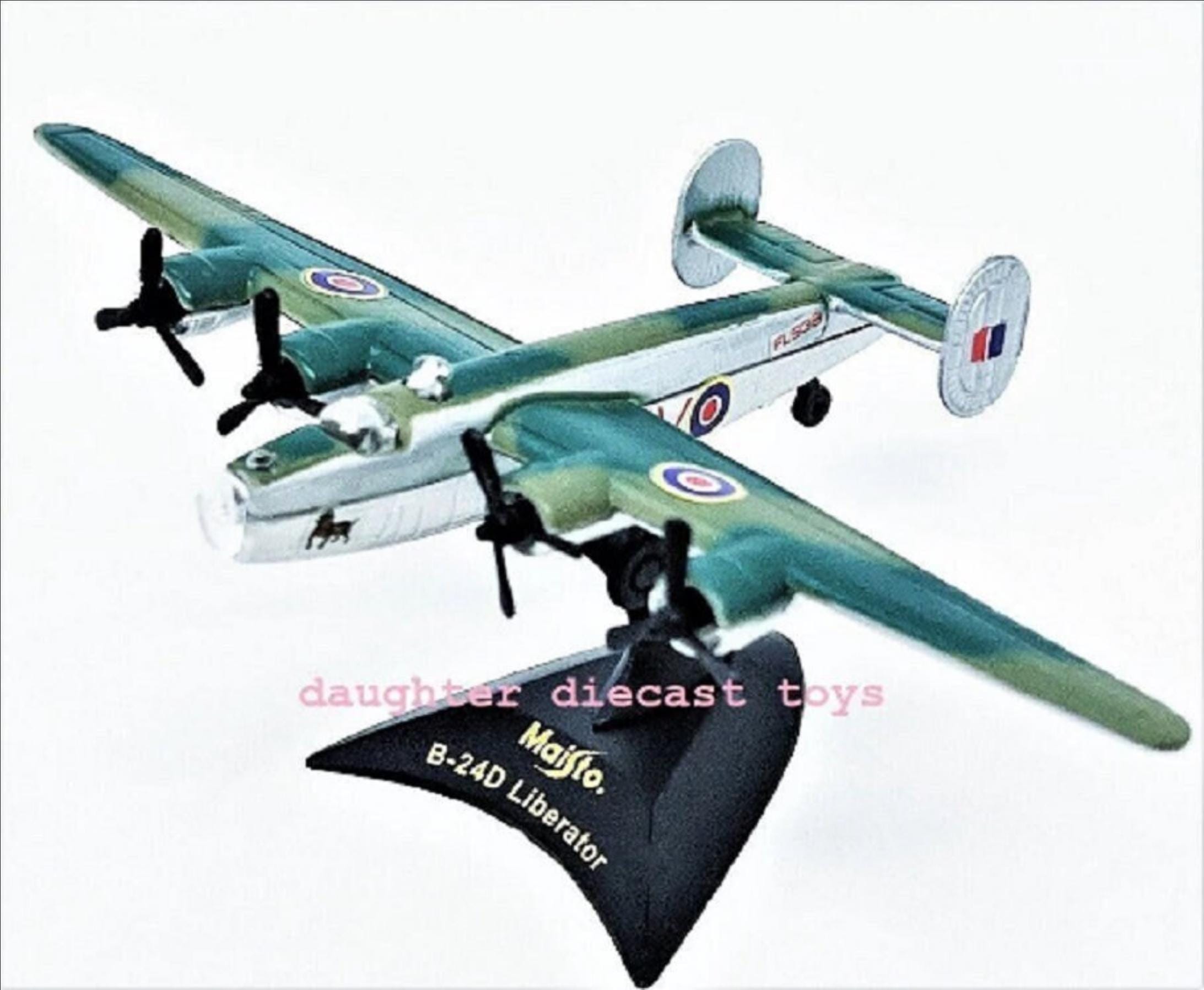
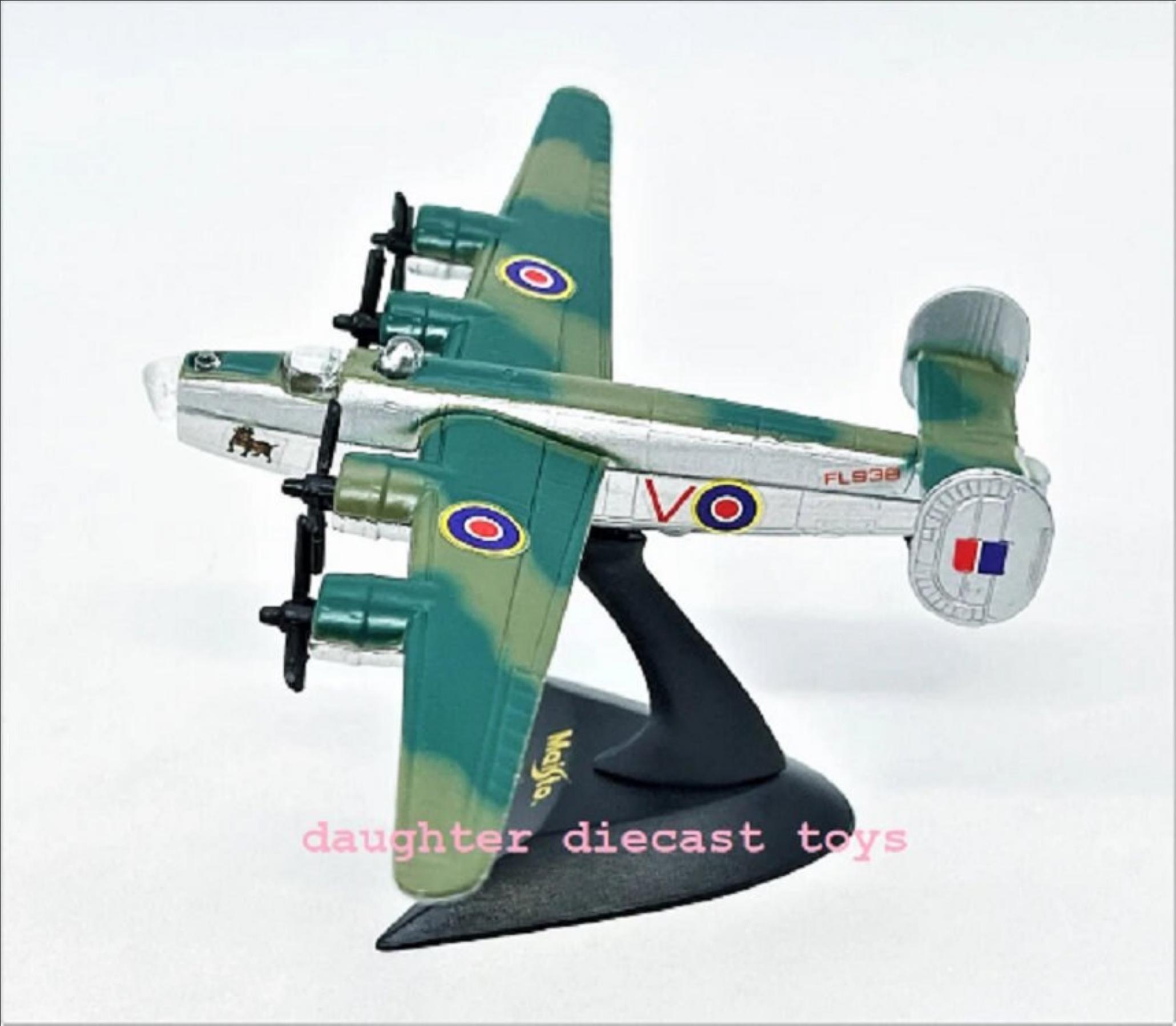
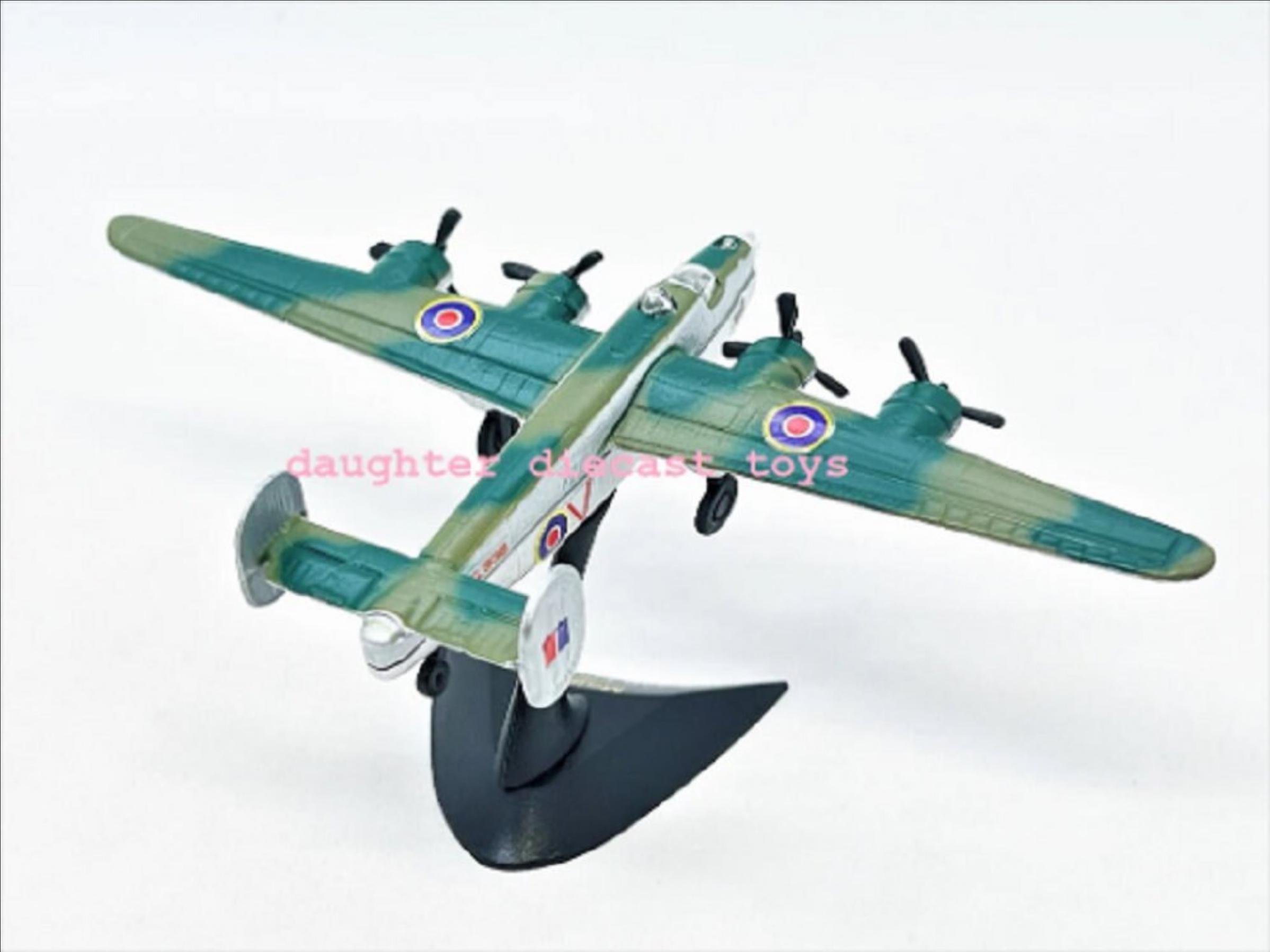
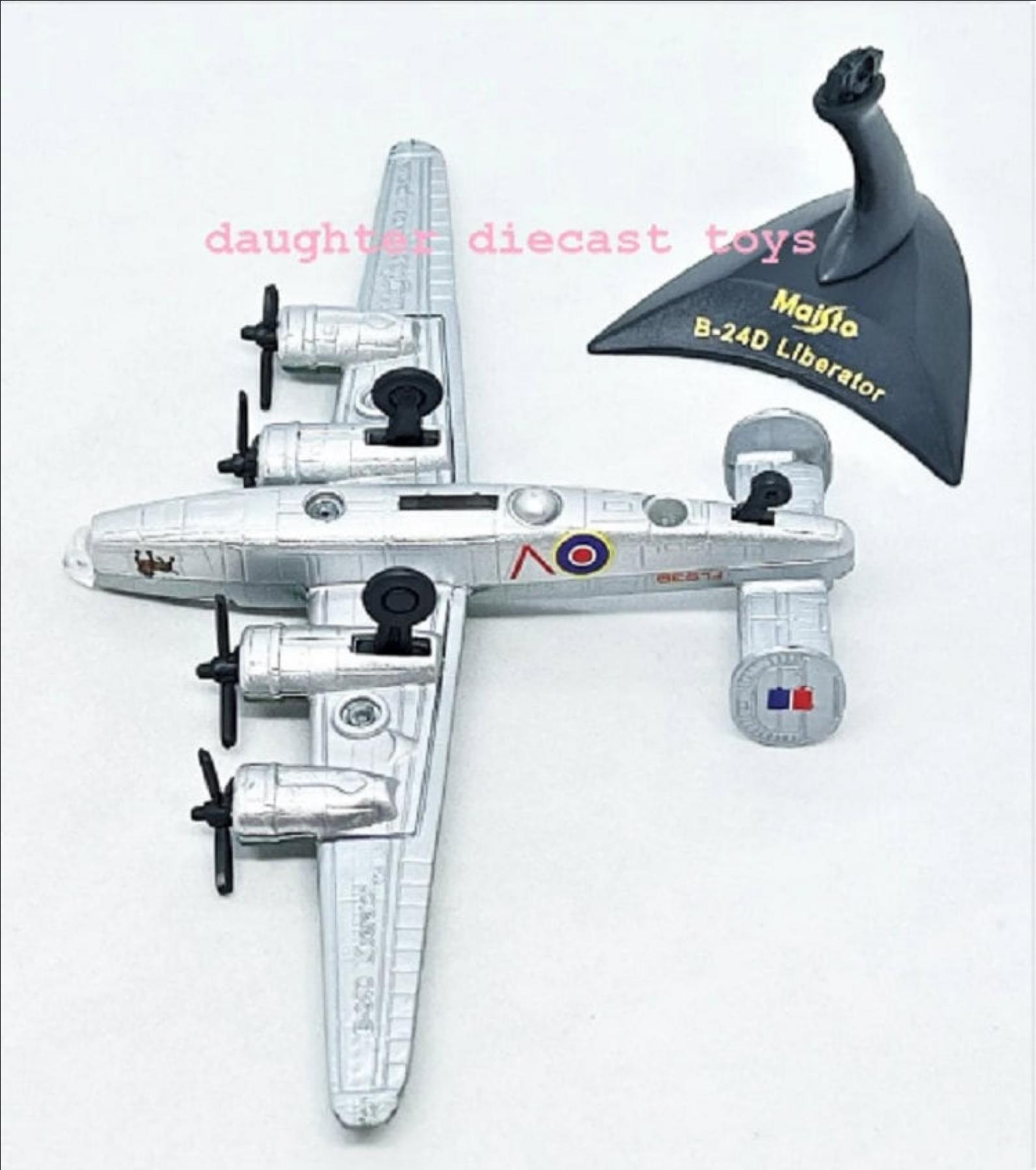
RAF WWII LIBERATOR HEAVY BOMBER B-24D. Adult collector-constructed of die cast
metal. Made by Maisto. Highly sought-after, hard to find vintage model! Scale=1/72 prox-measures 3 1/2"L x 5 3/4"W x 2 1/4" (mounted). This model is in pristine condition and has never been handled or displayed (until today for your photos). Perfect gift for Military aircraft, vintage toy collectors and Aviation History buffs (like me)! We ship fast & safe worldwide every day! READ Aircraft bio below...
•
•
•FOR A LIMITED TIME
•
•
•Purchases totaling $35 and above qualify for FREE shipping to USA! Add more items to your Etsy shopping cart to save $$$.NOTE: My dad owned a Diecast toy store for 30 years. I inherited the store inventory when he passed away many years ago. I am just now, beginning to sell the mint condition vintage models. All are store-inventory is new-old-stock, models have never been "played with". Please visit often-as I am adding more cool stuff every day!AIRCRAFT BIO:The Consolidated B-24 Liberator is an American heavy bomber, designed by Consolidated Aircraft of San Diego, California. It was known within the company as the Model 32, and some initial production aircraft were laid down as export models designated as various LB-30s, in the Land Bomber design category.At its inception, the B-24 was a modern design featuring a highly efficient shoulder-mounted, high aspect ratio Davis wing. The wing gave the Liberator a high cruise speed, long range and the ability to carry a heavy bomb load. Early RAF Liberators were the first aircraft to cross the Atlantic Ocean as a matter of routine. In comparison with its contemporaries, the B-24 was relatively difficult to fly and had poor low-speed performance; it also had a lower ceiling and was less robust than the Boeing B-17 Flying Fortress. While aircrews tended to prefer the B-17, General Staff favored the B-24 and procured it in huge numbers for a wide variety of roles.[3][4] At approximately 18,500 units – including 8,685 manufactured by Ford Motor Company – it holds records as the world's most produced bomber, heavy bomber, multi-engine aircraft, and American military aircraft in history.The B-24 was used extensively in World War II. It served in every branch of the American armed forces as well as several Allied air forces and navies. It saw use in every theater of operations. Along with the B-17, the B-24 was the mainstay of the US strategic bombing campaign in the Western European theater. Due to its range, it proved useful in bombing operations in the Pacific, including the bombing of Japan. Long-range anti-submarine Liberators played an instrumental role in closing the Mid-Atlantic gap in the Battle of the Atlantic. The C-87 transport derivative served as a longer range, higher capacity counterpart to the Douglas C-47 Skytrain.By the end of World War II, the technological breakthroughs of the Boeing B-29 Superfortress and other modern types had surpassed the bombers that served from the start of the war. The B-24 was rapidly phased out of U.S. service, although the PB4Y-2 Privateer maritime patrol derivative carried on in service with the U.S. Navy in the Korean War.USAAFThe United States Army Air Forces (USAAF) took delivery of its first B-24As in mid-1941. Over the next three years, B-24 squadrons deployed to all theaters of the war: African, European, China-Burma-India, the Anti-submarine Campaign, the Southwest Pacific Theater and the Pacific Theater. In the Pacific, to simplify logistics and to take advantage of its longer range, the B-24 (and its twin, the U.S. Navy PB4Y) was the chosen standard heavy bomber. By mid-1943, the shorter-range B-17 was phased out. The Liberators which had served early in the war in the Pacific continued the efforts from the Philippines, Australia, Espiritu Santo, Guadalcanal, Hawaii, and Midway Island. The Liberator peak overseas deployment was 45.5 bomb groups in June 1944. Additionally, the Liberator equipped a number of independent squadrons in a variety of special combat roles. The cargo versions, C-87 and C-109 tanker, further increased its overseas presence, especially in Asia in support of the XX Bomber Command air offensive against Japan.So vital was the need for long-range operations, that at first USAAF used the type as transports. The sole B-24 in Hawaii was destroyed by the Japanese attack on Pearl Harbor on 7 December 1941. It had been sent to the Central Pacific for a very long-range reconnaissance mission that was preempted by the Japanese attack.The first USAAF Liberators to carry out combat missions were 12 repossessed LB-30s deployed to Java with the 11th Bombardment Squadron (7th Bombardment Group) that flew their first combat mission in mid-January. Two were shot up by Japanese fighters, but both managed to land safely. One was written off due to battle damage and the other crash-landed on a beach.US-based Liberators entered combat service in 1942 when on 6 June, four LB-30s from Hawaii staging through Midway Island attempted an attack on Wake Island, but were unable to find it.[29] The B-24 came to dominate the heavy bombardment role in the Pacific because compared to the B-17, the B-24 was faster, had longer range, and could carry a ton more bombs.[30] Strategic bombing, 1942–1945 The bomb bay of a surviving B-24J Liberator in 2016On 12 June 1942, 13 B-24s of the Halverson Project (HALPRO) flying from Egypt attacked the Axis-controlled oil fields and refineries around Ploiești, Romania. Within weeks, the First Provisional Bombardment Group formed from the remnants of the Halverson and China detachments. This unit then was formalized as the 376th Bombardment Group, Heavy, and along with the 98th BG formed the nucleus of the IX Bomber Command of the Ninth Air Force, operating from Africa until absorbed into the Twelfth Air Force briefly, and then the Fifteenth Air Force, operating from Italy. The Ninth Air Force moved to England in late 1943. This was a major component of the USSTAF and took a major role in strategic bombing. Fifteen of the 15th AF's 21 bombardment groups flew B-24s.For much of 1944, the B-24 was the predominant bomber of U.S. Strategic Air Forces (USSTAF) formerly the Eighth Air Force in the Combined Bomber Offensive against Germany, forming nearly half of its heavy bomber strength in the ETO prior to August and most of the Italian-based force. Thousands of B-24s flying from bases in Europe dropped hundreds of thousands of tons of high explosive and incendiary bombs on German military and industrial targets.The 44th Bombardment Group was one of the first two heavy bombardment groups flying the B-24 with the 8th Air Force in the fall/winter air campaigns in the European Theater of Operations.[13] The 44th Bomb Group flew the first of its 344 combat missions against the Axis powers in World War II on 7 November 1942.[13] 15th Air Force B-24s fly through flak and over the destruction created by preceding waves of bombers.The first B-24 loss over German territory occurred on 26 February 1943. Earlier in the war, both the Luftwaffe and the Royal Air Force had abandoned daylight bombing raids because neither could sustain the losses suffered. The Americans persisted, however, at great cost in men and aircraft. In the period between 7 November 1942 and 8 March 1943, the 44th Bomb Group lost 13 of its original 27 B-24s.[13] For some time, newspapers had been requesting permission for a reporter to go on one of the missions. Robert B. Post and five other reporters of The New York Times were granted permission. Post was the only reporter assigned to a B-24-equipped group, the 44th Bomb Group. He flew in B-24 41-23777 ("Maisey") on Mission No. 37 to Bremen, Germany. Intercepted just short of the target, the B-24 came under attack from JG 1's Messerschmitt Bf 109s. Leutnant Heinz Knoke (who finished the war with 31 kills) shot down the Liberator. Post and all but two of the 11 men aboard were killed. Knoke reported: "The fire spread out along the right wing. The inboard propeller windmilled to a stop. And then, suddenly, the whole wing broke off. At an altitude of 900 metres there was a tremendous explosion. The bomber had disintegrated. The blazing wreckage landed just outside Bad Zwischenahn airfield."[31] A B-24M of the 448th Bombardment Group, serial number 44-50838, downed by a Messerschmitt Me 262 jet fighterA total of 177 B-24s carried out the famous second attack on Ploiești (Operation Tidal Wave) on 1 August 1943. This was the B-24's most costly mission. In late June 1943, the three B-24 Liberator groups of the 8th Air Force were sent to North Africa on temporary duty with the 9th Air Force:[13] the 44th Bomb Group joined the 93rd and the 389th Bomb Groups. These three units then joined the two 9th Air Force B-24 Liberator groups for low-level attack on the German-held Romanian oil complex at Ploiești. This daring assault by high-altitude bombers at treetop level was a costly success. The attack became disorganized after a navigational error which alerted the defenders and protracted the bomb run from the initial point. The 44th destroyed both of its assigned targets, but lost 11 of its 37 bombers and their crews. Colonel Leon W. Johnson, the 44th's commander, was awarded the Medal of Honor for his leadership, as was Col. John Riley "Killer" Kane, commander of the 98th Bomb Group. Kane and Johnson survived the mission but three other recipients of the Medal of Honor for their actions in the mission—Lt. Lloyd H. Hughes, Maj. John L. Jerstad and Col. Addison E. Baker—were killed in action. For its actions on the Ploiești mission, the 44th was awarded its second Distinguished Unit Citation.[13] Of the 177 B-24s that were dispatched on this operation, 54 were lost.[13]B-24DFirst to see large scale production; ordered from 1940 to 1942, as a B-24C with more powerful R-1830-43 supercharged engines. The D model was initially equipped with a remotely operated and periscopically sighted Bendix belly turret, as the first examples of the B-17E Flying Fortress and some early models of the B-25 Mitchell medium bomber had used, but this was unsatisfactory and was discontinued after the 287th aircraft. Later aircraft reverted to the earlier manually operated "tunnel" mounting with a single .50 in (12.7 mm) machine gun. The tunnel gun was eventually replaced by the Sperry ball turret, which had also been adopted by the later B-17E Fortresses, but made retractable for the Liberator as the fuselage was very close to the ground. Late B-24Ds had "cheek" guns mounted on either side of the nose, just behind the "greenhouse". (Total: 2,696: 2,381 Consolidated, San Diego; 305 Consolidated, Fort Worth; 10 Douglas, Tulsa, Oklahoma).fter a complete restoration, flew once again 10 years after her recovery.
metal. Made by Maisto. Highly sought-after, hard to find vintage model! Scale=1/72 prox-measures 3 1/2"L x 5 3/4"W x 2 1/4" (mounted). This model is in pristine condition and has never been handled or displayed (until today for your photos). Perfect gift for Military aircraft, vintage toy collectors and Aviation History buffs (like me)! We ship fast & safe worldwide every day! READ Aircraft bio below...
•
•
•FOR A LIMITED TIME
•
•
•Purchases totaling $35 and above qualify for FREE shipping to USA! Add more items to your Etsy shopping cart to save $$$.NOTE: My dad owned a Diecast toy store for 30 years. I inherited the store inventory when he passed away many years ago. I am just now, beginning to sell the mint condition vintage models. All are store-inventory is new-old-stock, models have never been "played with". Please visit often-as I am adding more cool stuff every day!AIRCRAFT BIO:The Consolidated B-24 Liberator is an American heavy bomber, designed by Consolidated Aircraft of San Diego, California. It was known within the company as the Model 32, and some initial production aircraft were laid down as export models designated as various LB-30s, in the Land Bomber design category.At its inception, the B-24 was a modern design featuring a highly efficient shoulder-mounted, high aspect ratio Davis wing. The wing gave the Liberator a high cruise speed, long range and the ability to carry a heavy bomb load. Early RAF Liberators were the first aircraft to cross the Atlantic Ocean as a matter of routine. In comparison with its contemporaries, the B-24 was relatively difficult to fly and had poor low-speed performance; it also had a lower ceiling and was less robust than the Boeing B-17 Flying Fortress. While aircrews tended to prefer the B-17, General Staff favored the B-24 and procured it in huge numbers for a wide variety of roles.[3][4] At approximately 18,500 units – including 8,685 manufactured by Ford Motor Company – it holds records as the world's most produced bomber, heavy bomber, multi-engine aircraft, and American military aircraft in history.The B-24 was used extensively in World War II. It served in every branch of the American armed forces as well as several Allied air forces and navies. It saw use in every theater of operations. Along with the B-17, the B-24 was the mainstay of the US strategic bombing campaign in the Western European theater. Due to its range, it proved useful in bombing operations in the Pacific, including the bombing of Japan. Long-range anti-submarine Liberators played an instrumental role in closing the Mid-Atlantic gap in the Battle of the Atlantic. The C-87 transport derivative served as a longer range, higher capacity counterpart to the Douglas C-47 Skytrain.By the end of World War II, the technological breakthroughs of the Boeing B-29 Superfortress and other modern types had surpassed the bombers that served from the start of the war. The B-24 was rapidly phased out of U.S. service, although the PB4Y-2 Privateer maritime patrol derivative carried on in service with the U.S. Navy in the Korean War.USAAFThe United States Army Air Forces (USAAF) took delivery of its first B-24As in mid-1941. Over the next three years, B-24 squadrons deployed to all theaters of the war: African, European, China-Burma-India, the Anti-submarine Campaign, the Southwest Pacific Theater and the Pacific Theater. In the Pacific, to simplify logistics and to take advantage of its longer range, the B-24 (and its twin, the U.S. Navy PB4Y) was the chosen standard heavy bomber. By mid-1943, the shorter-range B-17 was phased out. The Liberators which had served early in the war in the Pacific continued the efforts from the Philippines, Australia, Espiritu Santo, Guadalcanal, Hawaii, and Midway Island. The Liberator peak overseas deployment was 45.5 bomb groups in June 1944. Additionally, the Liberator equipped a number of independent squadrons in a variety of special combat roles. The cargo versions, C-87 and C-109 tanker, further increased its overseas presence, especially in Asia in support of the XX Bomber Command air offensive against Japan.So vital was the need for long-range operations, that at first USAAF used the type as transports. The sole B-24 in Hawaii was destroyed by the Japanese attack on Pearl Harbor on 7 December 1941. It had been sent to the Central Pacific for a very long-range reconnaissance mission that was preempted by the Japanese attack.The first USAAF Liberators to carry out combat missions were 12 repossessed LB-30s deployed to Java with the 11th Bombardment Squadron (7th Bombardment Group) that flew their first combat mission in mid-January. Two were shot up by Japanese fighters, but both managed to land safely. One was written off due to battle damage and the other crash-landed on a beach.US-based Liberators entered combat service in 1942 when on 6 June, four LB-30s from Hawaii staging through Midway Island attempted an attack on Wake Island, but were unable to find it.[29] The B-24 came to dominate the heavy bombardment role in the Pacific because compared to the B-17, the B-24 was faster, had longer range, and could carry a ton more bombs.[30] Strategic bombing, 1942–1945 The bomb bay of a surviving B-24J Liberator in 2016On 12 June 1942, 13 B-24s of the Halverson Project (HALPRO) flying from Egypt attacked the Axis-controlled oil fields and refineries around Ploiești, Romania. Within weeks, the First Provisional Bombardment Group formed from the remnants of the Halverson and China detachments. This unit then was formalized as the 376th Bombardment Group, Heavy, and along with the 98th BG formed the nucleus of the IX Bomber Command of the Ninth Air Force, operating from Africa until absorbed into the Twelfth Air Force briefly, and then the Fifteenth Air Force, operating from Italy. The Ninth Air Force moved to England in late 1943. This was a major component of the USSTAF and took a major role in strategic bombing. Fifteen of the 15th AF's 21 bombardment groups flew B-24s.For much of 1944, the B-24 was the predominant bomber of U.S. Strategic Air Forces (USSTAF) formerly the Eighth Air Force in the Combined Bomber Offensive against Germany, forming nearly half of its heavy bomber strength in the ETO prior to August and most of the Italian-based force. Thousands of B-24s flying from bases in Europe dropped hundreds of thousands of tons of high explosive and incendiary bombs on German military and industrial targets.The 44th Bombardment Group was one of the first two heavy bombardment groups flying the B-24 with the 8th Air Force in the fall/winter air campaigns in the European Theater of Operations.[13] The 44th Bomb Group flew the first of its 344 combat missions against the Axis powers in World War II on 7 November 1942.[13] 15th Air Force B-24s fly through flak and over the destruction created by preceding waves of bombers.The first B-24 loss over German territory occurred on 26 February 1943. Earlier in the war, both the Luftwaffe and the Royal Air Force had abandoned daylight bombing raids because neither could sustain the losses suffered. The Americans persisted, however, at great cost in men and aircraft. In the period between 7 November 1942 and 8 March 1943, the 44th Bomb Group lost 13 of its original 27 B-24s.[13] For some time, newspapers had been requesting permission for a reporter to go on one of the missions. Robert B. Post and five other reporters of The New York Times were granted permission. Post was the only reporter assigned to a B-24-equipped group, the 44th Bomb Group. He flew in B-24 41-23777 ("Maisey") on Mission No. 37 to Bremen, Germany. Intercepted just short of the target, the B-24 came under attack from JG 1's Messerschmitt Bf 109s. Leutnant Heinz Knoke (who finished the war with 31 kills) shot down the Liberator. Post and all but two of the 11 men aboard were killed. Knoke reported: "The fire spread out along the right wing. The inboard propeller windmilled to a stop. And then, suddenly, the whole wing broke off. At an altitude of 900 metres there was a tremendous explosion. The bomber had disintegrated. The blazing wreckage landed just outside Bad Zwischenahn airfield."[31] A B-24M of the 448th Bombardment Group, serial number 44-50838, downed by a Messerschmitt Me 262 jet fighterA total of 177 B-24s carried out the famous second attack on Ploiești (Operation Tidal Wave) on 1 August 1943. This was the B-24's most costly mission. In late June 1943, the three B-24 Liberator groups of the 8th Air Force were sent to North Africa on temporary duty with the 9th Air Force:[13] the 44th Bomb Group joined the 93rd and the 389th Bomb Groups. These three units then joined the two 9th Air Force B-24 Liberator groups for low-level attack on the German-held Romanian oil complex at Ploiești. This daring assault by high-altitude bombers at treetop level was a costly success. The attack became disorganized after a navigational error which alerted the defenders and protracted the bomb run from the initial point. The 44th destroyed both of its assigned targets, but lost 11 of its 37 bombers and their crews. Colonel Leon W. Johnson, the 44th's commander, was awarded the Medal of Honor for his leadership, as was Col. John Riley "Killer" Kane, commander of the 98th Bomb Group. Kane and Johnson survived the mission but three other recipients of the Medal of Honor for their actions in the mission—Lt. Lloyd H. Hughes, Maj. John L. Jerstad and Col. Addison E. Baker—were killed in action. For its actions on the Ploiești mission, the 44th was awarded its second Distinguished Unit Citation.[13] Of the 177 B-24s that were dispatched on this operation, 54 were lost.[13]B-24DFirst to see large scale production; ordered from 1940 to 1942, as a B-24C with more powerful R-1830-43 supercharged engines. The D model was initially equipped with a remotely operated and periscopically sighted Bendix belly turret, as the first examples of the B-17E Flying Fortress and some early models of the B-25 Mitchell medium bomber had used, but this was unsatisfactory and was discontinued after the 287th aircraft. Later aircraft reverted to the earlier manually operated "tunnel" mounting with a single .50 in (12.7 mm) machine gun. The tunnel gun was eventually replaced by the Sperry ball turret, which had also been adopted by the later B-17E Fortresses, but made retractable for the Liberator as the fuselage was very close to the ground. Late B-24Ds had "cheek" guns mounted on either side of the nose, just behind the "greenhouse". (Total: 2,696: 2,381 Consolidated, San Diego; 305 Consolidated, Fort Worth; 10 Douglas, Tulsa, Oklahoma).fter a complete restoration, flew once again 10 years after her recovery.
Other Products