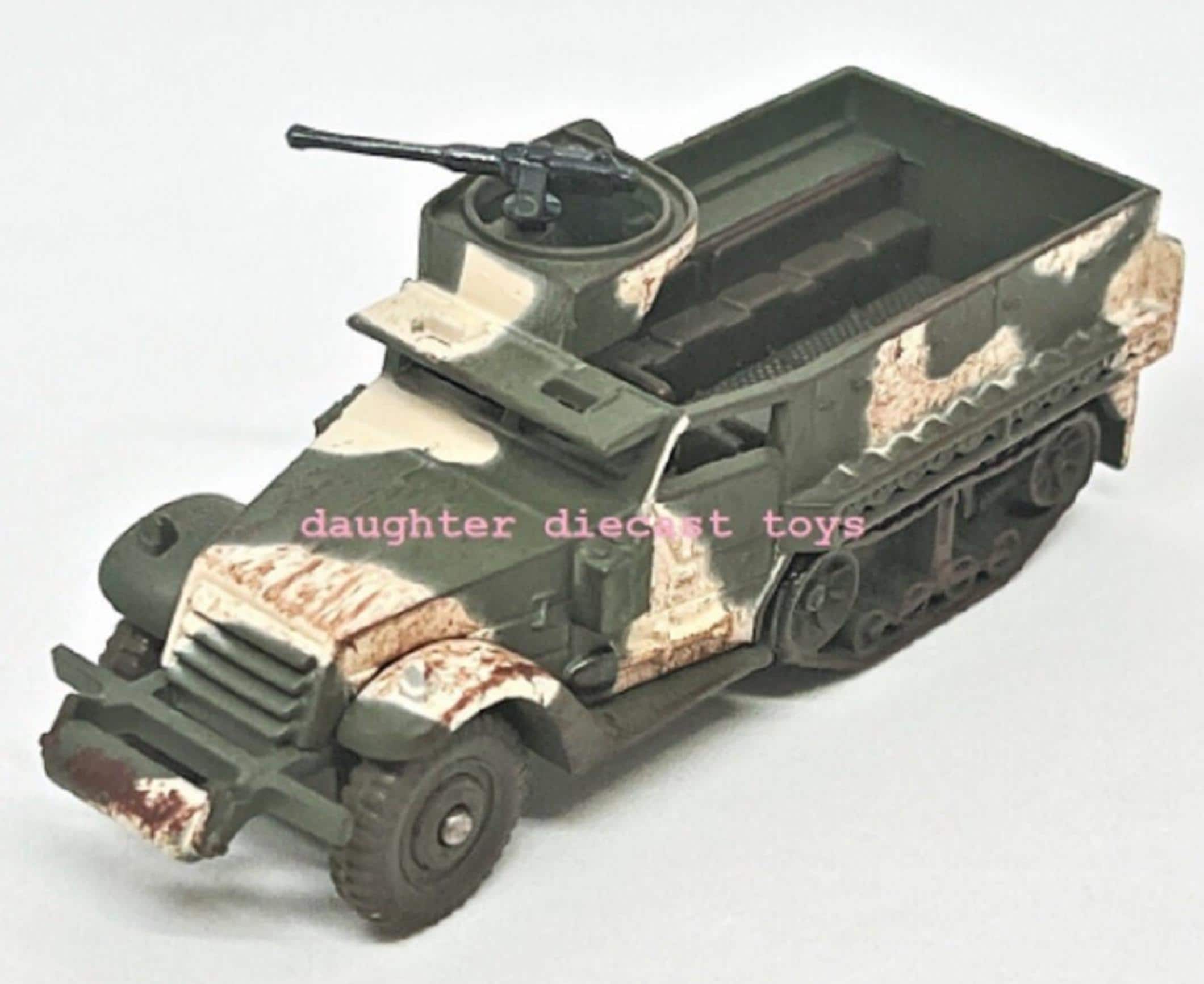
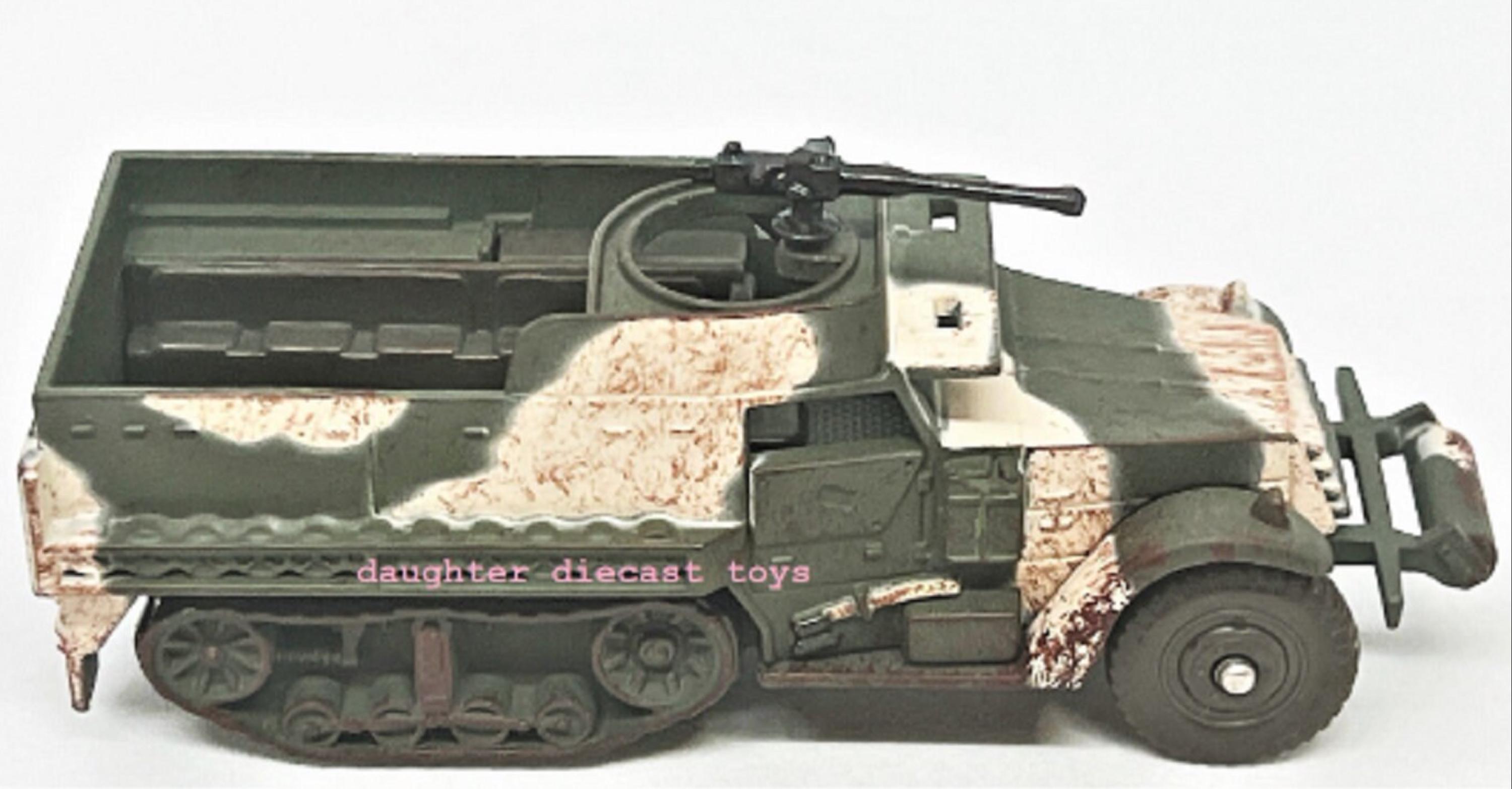
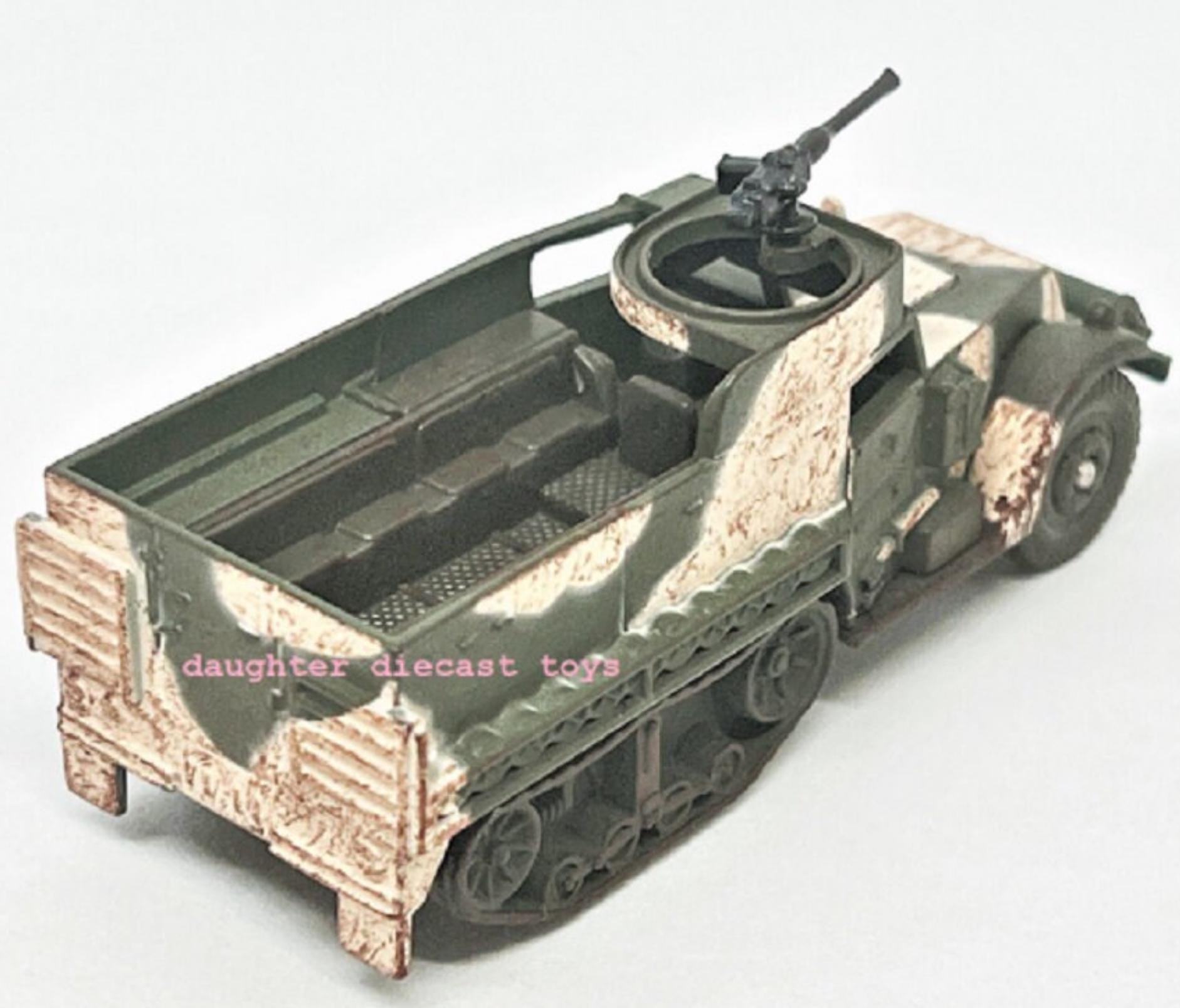
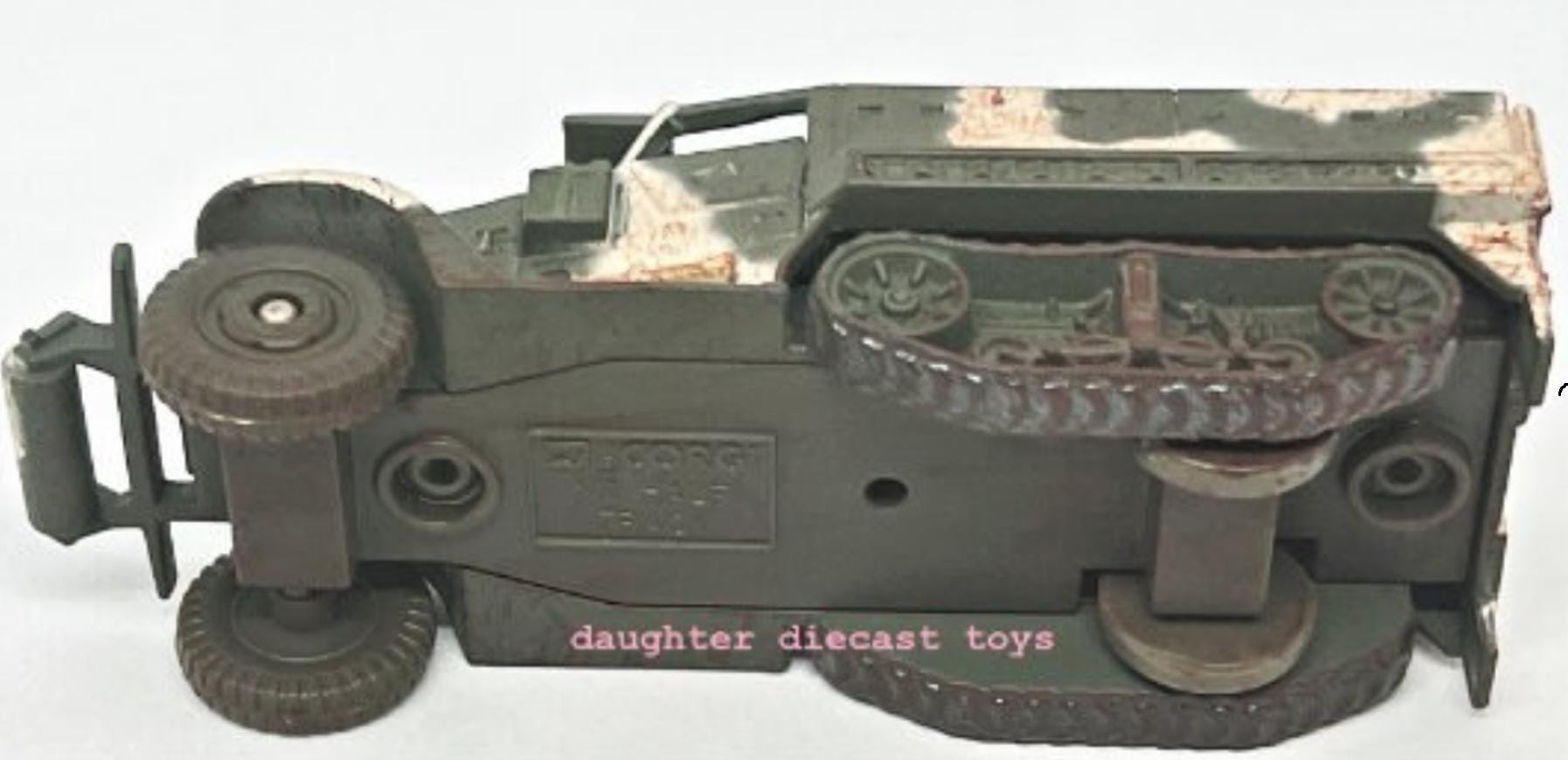

Vintage WWII HALF TRACK -Adult Collector Model-Intricate Detail Diecast Metal-Pristine Condition-Corgi-Perfect Gift for Collectors and Vets!
$ 49.99

Awesome! Vintage US ARMY M3 A1 HALF-TRACK CARRIER. Highly sought-after,
Intricately-detailed, weighty Diecast Metal Vehicle/Adult Collectors Model. Made by Corgi. Features rolling wheels and movable gun turret. Half Track Measures 3 1/2"L x 1 1/4"W x 1 1/2"H. Sold loose in collectors' bag. Pristine condition model-has never been handled or displayed until today for the photos in this listing. Perfect gift for military toy collectors, history buffs, and Veterans! 100% happiness guaranteed. We ship fast & safe worldwide every day! a collectors and race history fans! 100% happiness guaranteed. We ship fast & safe worldwide every day! Read car bio below....
•
•
•FOR A LIMITED TIME
•
•
•Purchases totaling $35 and above qualify for FREE shipping to USA! Add more items to your Etsy shopping cart to save $$$.NOTE: My dad owned a Diecast toy store for 30 years. I inherited the store inventory when he passed away many years ago. I am just now, beginning to sell the mint condition vintage models. All are store-inventory is new-old-stock, models have never been "played with". Please visit often-as I am adding more cool stuff every day!Vehicle bio:The M3 half-track was an American armored personnel carrier half-track widely used by the Allies during World War II and in the Cold War. Derived from the M2 half-track car, the M3 was extensively produced, with about 15,000 standard M3s and more than 38,000 variant units manufactured.The M3 was extensively modified with several dozen variant designs produced for different purposes. During World War II, the M3 and its variants were supplied to the U.S. Army and Marines, as well as British Commonwealth and Soviet Red Army forces, serving on all major fronts throughout the war. The M3 and its variants were produced by many manufacturers including Diamond T, White Motor Company, and Autocar. They were adapted for a wide variety of uses, such as a self-propelled anti-aircraft weapon or self-propelled artillery. Although initially unpopular due to its lack of significant armor or a roof to protect the crew from shrapnel, it was used by most of the Allies during the war.In the Cold War era, the vehicle was used by a variety of state and non-state operators in conflicts in South America, the Middle East, Africa, and Asia, remaining in service until as late as the mid-1990s.In US service, it was intended that the M3 would be issued to armored infantry regiments. It was also quickly put into action with the Provisional Tank Group when the Japanese Army began their invasion of the Philippines. At first, there were multiple complaints due to several mechanical difficulties. These were rectified by the Ordnance Department after receiving field reports from the Philippines. The M3s first use in its intended role was during Operation Torch. Each armored division had 433 M2s or M3s, 200 in the armored regiments and 233 in the armored infantry regiment.[12]The half-tracks were initially unpopular and nicknamed "Purple Heart boxes" (a grim reference to the US Army decoration for combat wounds) by American troops. The chief complaints centered on the complete lack of overhead protection from artillery shells bursting overhead and that the armor was inadequate against machine gun fire. Omar Bradley quoted in his report about half-tracks that it was "a competent and dependable contrivance. Its bad name resulted from the inexperience of our troops who attempted to use it for too many things".[12] Another major issue with the M3 was its fixed rear idler, which often broke on rough terrain. Commanders in North Africa bought parts to build spring-loaded rear idlers that could handle the rough terrain, which the Ordnance Department then approved as an official fix.[13][14] In 1943, the M3 served in Sicily and Italy and received positive reports of it in action. It operated in Operation Overlord and served in Europe for the remainder of the war.[15]The vehicle was generally considered very mechanically reliable, although there were two major complaints: the vehicle had a wide turning radius and lacked power steering, the latter especially evident when using narrow European streets. The unique design of the track, made up of steel bands with a rubber contact surface vulcanized to them, made replacement difficult; if the track became damaged or the steel bands stretched out, the entire track had to be replaced. A track with replaceable blocks was suggested as an alternative.[16]Total production of the M3 and its variants ran to nearly 54,000 vehicles.[17] To supply the Allied nations, International Harvester produced several thousand of a very similar vehicle, the M5 half-track, for Lend-Lease.[18]
Intricately-detailed, weighty Diecast Metal Vehicle/Adult Collectors Model. Made by Corgi. Features rolling wheels and movable gun turret. Half Track Measures 3 1/2"L x 1 1/4"W x 1 1/2"H. Sold loose in collectors' bag. Pristine condition model-has never been handled or displayed until today for the photos in this listing. Perfect gift for military toy collectors, history buffs, and Veterans! 100% happiness guaranteed. We ship fast & safe worldwide every day! a collectors and race history fans! 100% happiness guaranteed. We ship fast & safe worldwide every day! Read car bio below....
•
•
•FOR A LIMITED TIME
•
•
•Purchases totaling $35 and above qualify for FREE shipping to USA! Add more items to your Etsy shopping cart to save $$$.NOTE: My dad owned a Diecast toy store for 30 years. I inherited the store inventory when he passed away many years ago. I am just now, beginning to sell the mint condition vintage models. All are store-inventory is new-old-stock, models have never been "played with". Please visit often-as I am adding more cool stuff every day!Vehicle bio:The M3 half-track was an American armored personnel carrier half-track widely used by the Allies during World War II and in the Cold War. Derived from the M2 half-track car, the M3 was extensively produced, with about 15,000 standard M3s and more than 38,000 variant units manufactured.The M3 was extensively modified with several dozen variant designs produced for different purposes. During World War II, the M3 and its variants were supplied to the U.S. Army and Marines, as well as British Commonwealth and Soviet Red Army forces, serving on all major fronts throughout the war. The M3 and its variants were produced by many manufacturers including Diamond T, White Motor Company, and Autocar. They were adapted for a wide variety of uses, such as a self-propelled anti-aircraft weapon or self-propelled artillery. Although initially unpopular due to its lack of significant armor or a roof to protect the crew from shrapnel, it was used by most of the Allies during the war.In the Cold War era, the vehicle was used by a variety of state and non-state operators in conflicts in South America, the Middle East, Africa, and Asia, remaining in service until as late as the mid-1990s.In US service, it was intended that the M3 would be issued to armored infantry regiments. It was also quickly put into action with the Provisional Tank Group when the Japanese Army began their invasion of the Philippines. At first, there were multiple complaints due to several mechanical difficulties. These were rectified by the Ordnance Department after receiving field reports from the Philippines. The M3s first use in its intended role was during Operation Torch. Each armored division had 433 M2s or M3s, 200 in the armored regiments and 233 in the armored infantry regiment.[12]The half-tracks were initially unpopular and nicknamed "Purple Heart boxes" (a grim reference to the US Army decoration for combat wounds) by American troops. The chief complaints centered on the complete lack of overhead protection from artillery shells bursting overhead and that the armor was inadequate against machine gun fire. Omar Bradley quoted in his report about half-tracks that it was "a competent and dependable contrivance. Its bad name resulted from the inexperience of our troops who attempted to use it for too many things".[12] Another major issue with the M3 was its fixed rear idler, which often broke on rough terrain. Commanders in North Africa bought parts to build spring-loaded rear idlers that could handle the rough terrain, which the Ordnance Department then approved as an official fix.[13][14] In 1943, the M3 served in Sicily and Italy and received positive reports of it in action. It operated in Operation Overlord and served in Europe for the remainder of the war.[15]The vehicle was generally considered very mechanically reliable, although there were two major complaints: the vehicle had a wide turning radius and lacked power steering, the latter especially evident when using narrow European streets. The unique design of the track, made up of steel bands with a rubber contact surface vulcanized to them, made replacement difficult; if the track became damaged or the steel bands stretched out, the entire track had to be replaced. A track with replaceable blocks was suggested as an alternative.[16]Total production of the M3 and its variants ran to nearly 54,000 vehicles.[17] To supply the Allied nations, International Harvester produced several thousand of a very similar vehicle, the M5 half-track, for Lend-Lease.[18]
Other Products