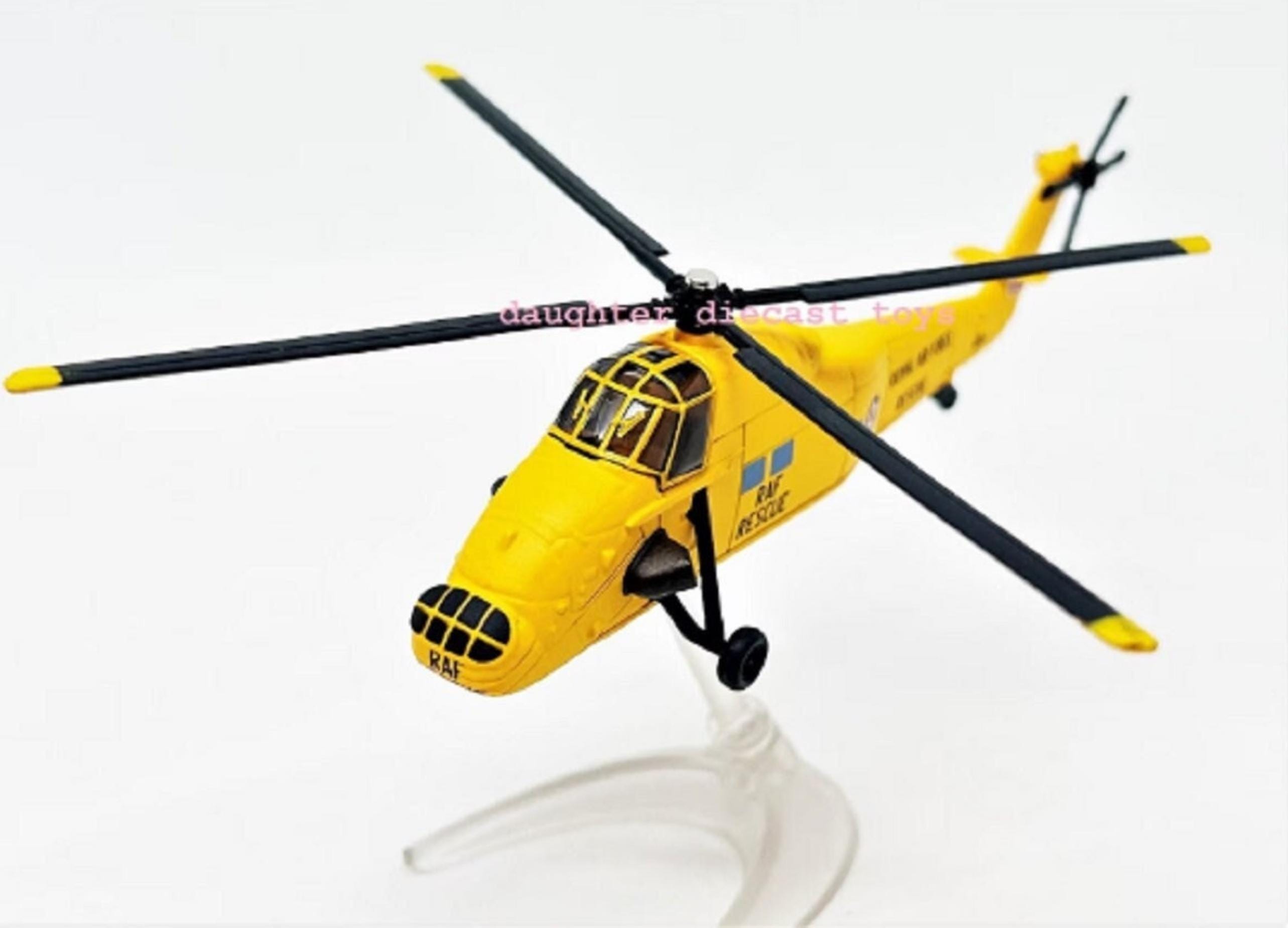
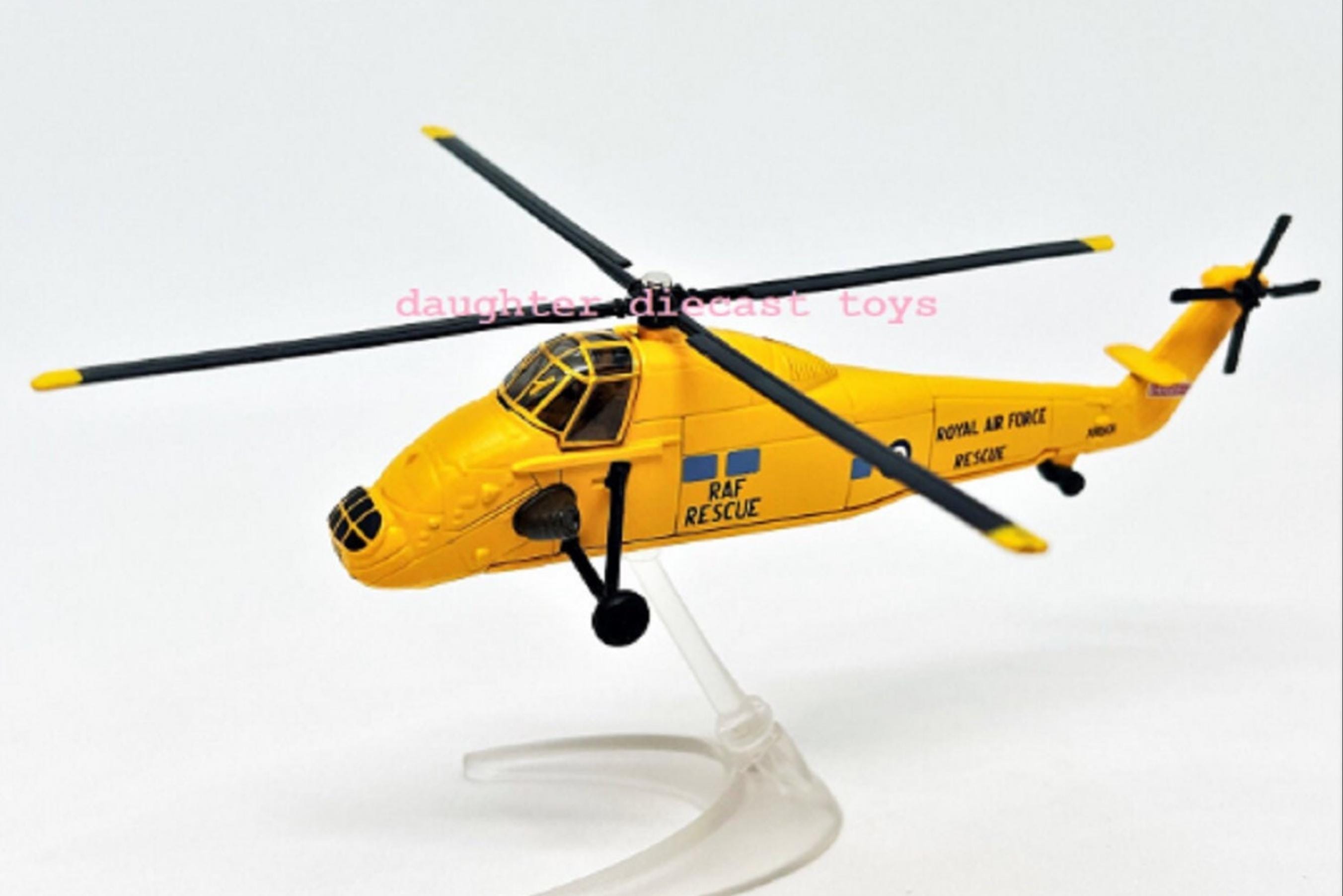
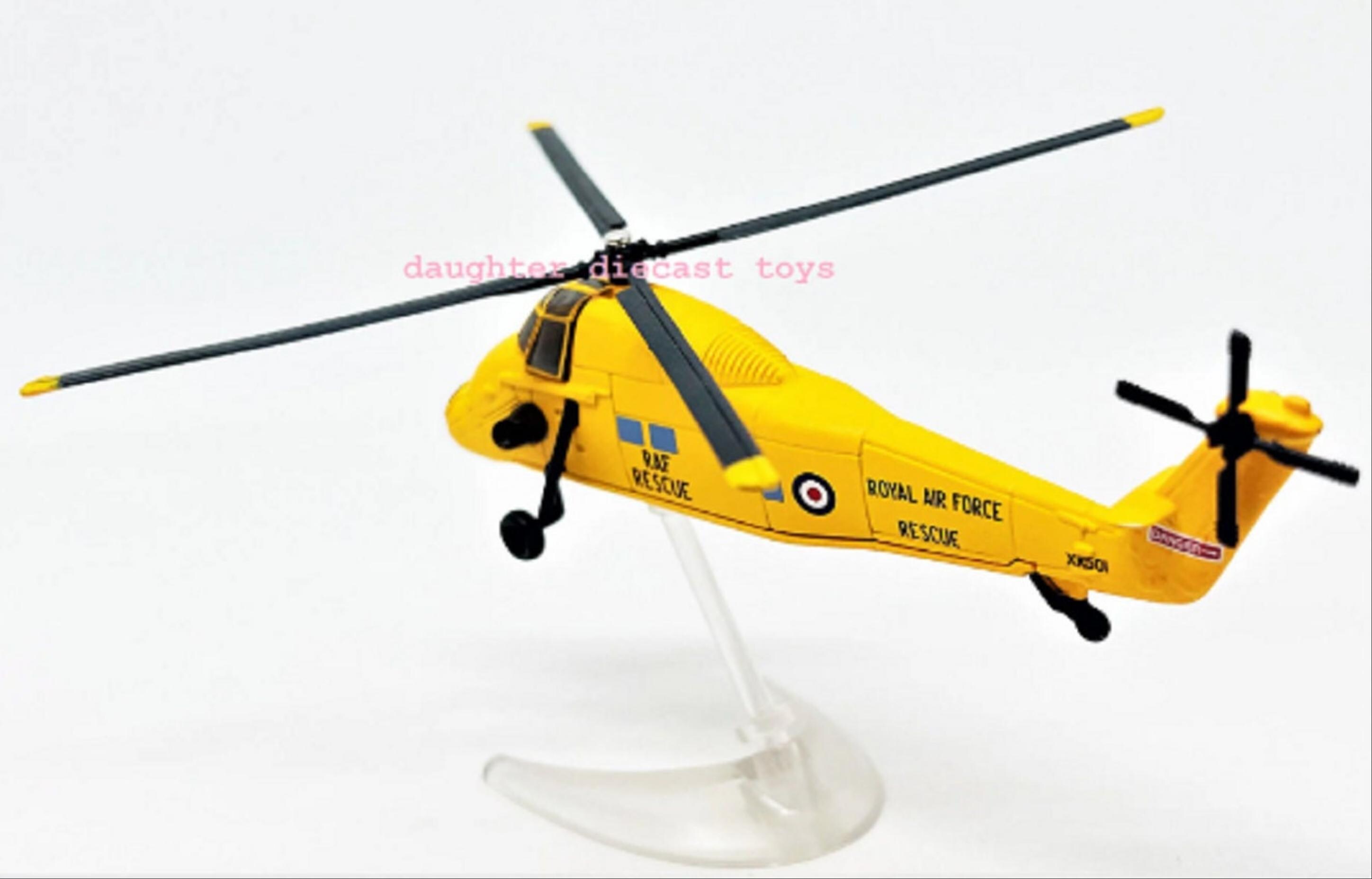
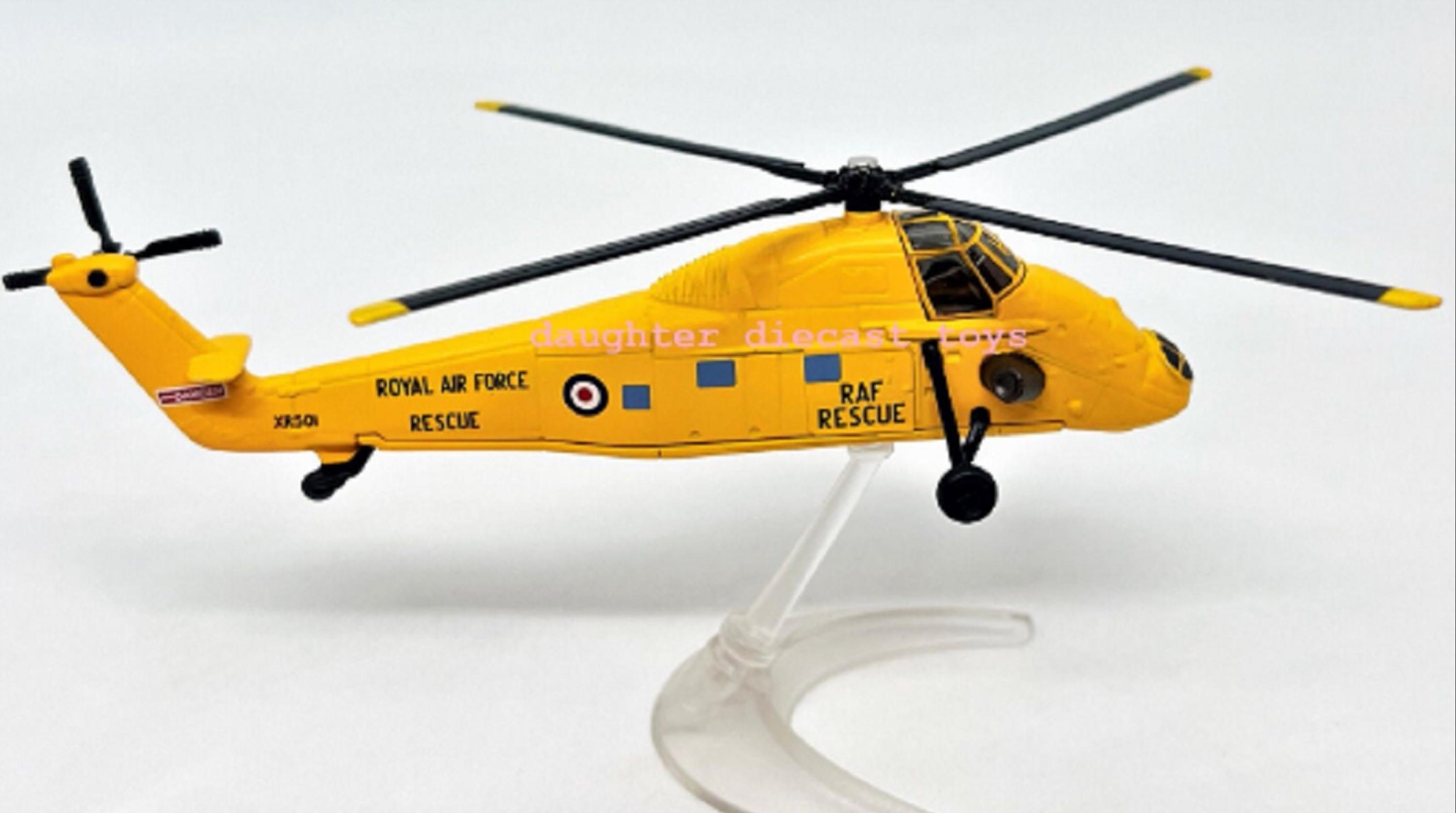
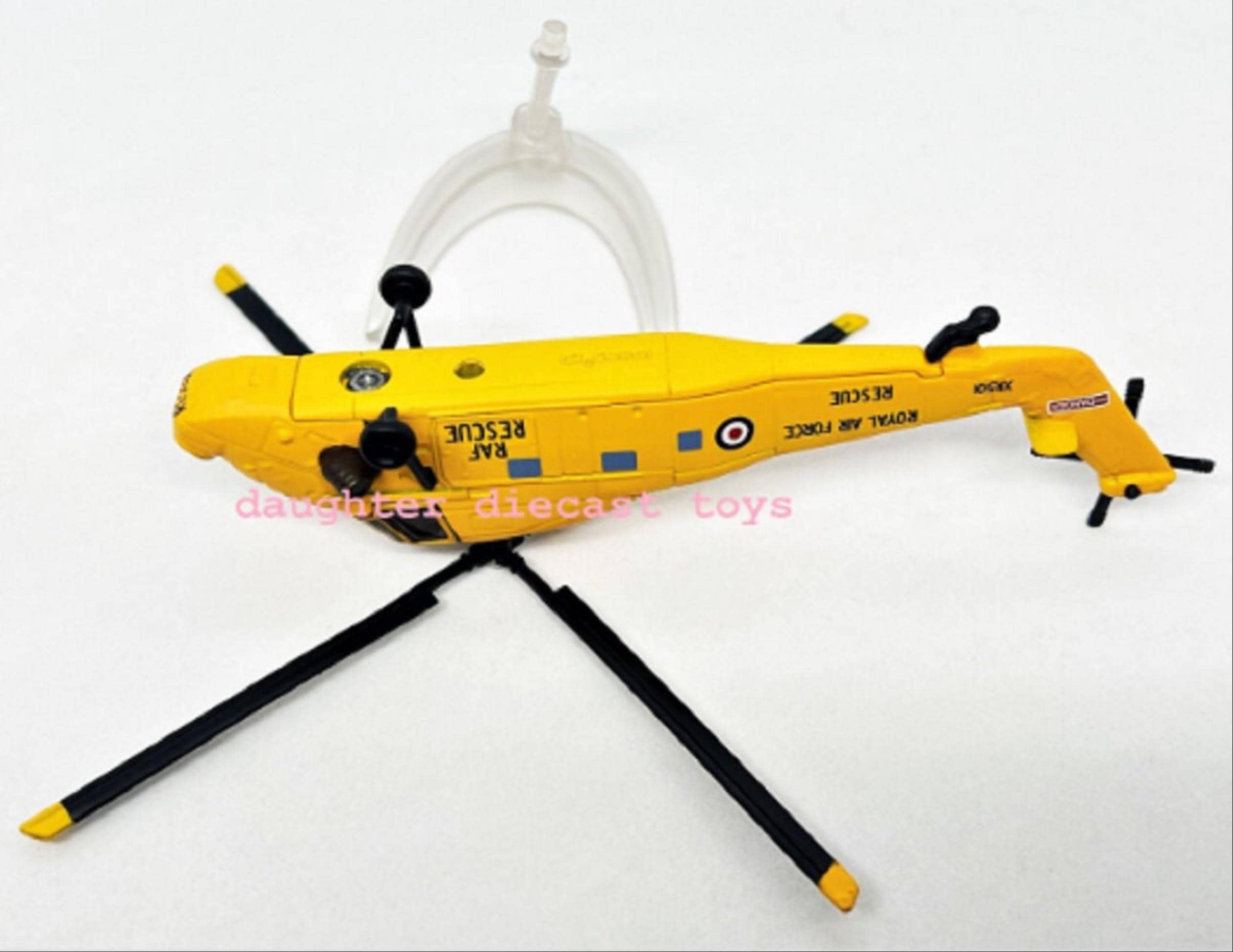

1961 R.A.F RESCUE HELICOPTER with Display Stand! Intricate Diecast Metal Adult Model-Pristine Condition-Corgi-Perfect Gift for Collectors!
$ 49.99

961 R.A.F RESCUE HELICOPTER with Display Stand! Intricate Diecast Metal Adult
Model-Pristine Condition-Corgi-Perfect Gift for Collectors!Awesome! Vintage RAF WESTLAND WESSEX RESCUE HELICOPTER. Highly sought after, Intricately-detailed Diecast Metal Helicopter/Adult Collectors Model-with Display Stand & Data Card (see photo 5). Made by Corgi. Chopper Measures 5"L x 1 "W x 3"H (mounted). Rotor diameter (blades tip to tip) is 5". Pristine condition model-has never been displayed until today for the photos in this listing (see all 5 pics-using arrows on sides of the main listing photo). Sold loose-on stand with data card. Perfect gift for vintage toy collectors, aviation history buffs, Veterans and Medical/Rescue personnel! 100% happiness guaranteed. We ship fast & safe worldwide everyday! Read Aircraft bio below....Note: My dad owned a Diecast toy store for 30 years. I inherited the store inventory when he passed away several years ago. I am (just now) able to bring myself to begin selling his cars-so they can be shared with the world. All pristine and mint condition vintage models will (eventually) be listed here on ETSY. All the inventory is NEW (vintage) merchandise-which was intended for retail sale. Please know-our diecast toys have NEVER been "played-with” we do not sell used, or damaged toys.
•
•
•FOR A LIMITED TIME
•
•
•Purchases totaling $35 and above qualify for FREE shipping to USA! Add more items to your Etsy shopping cart to save $$$.Aircraft bio:The Westland Wessex is a British-built turbine-powered development of the Sikorsky H-34 (in US service known as Choctaw). It was developed and produced under licence by Westland Aircraft (later Westland Helicopters). One of the main changes from Sikorsky's H-34 was the replacement of the piston-engine powerplant with a turboshaft engine. Early models were powered by a single Napier Gazelle engine, while later builds used a pair of de Havilland Gnome engines.The Wessex was initially produced for the Royal Navy (RN) and later for the Royal Air Force (RAF); a limited number of civilian aircraft were also produced, as well as some export sales. The Wessex operated as an anti-submarine warfare and utility helicopter; it is perhaps best recognised for its use as a search and rescue (SAR) helicopter. The type entered operational service in 1961, and had a service life in excess of 40 years before being retired in Britain.Design and development CockpitIn 1956, an American-built S-58 was shipped to Britain for Westland to use as a pattern aircraft. Initially assembled with its Wright Cyclone, it was demonstrated to the British armed services leading to a preliminary order for the Royal Navy.[1] For British production, it was re-engined with a single Napier Gazelle turboshaft engine, first flying in that configuration on 17 May 1957.[2] The lighter (by 600 lb) Gazelle engine required some redistribution of weight. The first Westland-built Wessex serial XL727, designated a Wessex HAS.1, first flew on 20 June 1958.[2] The first production Wessex HAS1 were delivered to Royal Navy's Fleet Air Arm (FAA) in early 1960; the Wessex was the first helicopter operated by the FAA to be purpose-designed from scratch as an anti-submarine platform.[3]In service, the Wessex was found to be a major improvement over the older Westland Whirlwind. The decision made by Westland to install a modern gas-turbine powerplant gave the Wessex a greater load capacity, was quieter and generated less vibration, the latter quality being highly beneficial when treating casualties during flight. The Gazelle engine allowed for rapid starting and thus faster response times.[3] The Wessex could also operate in a wide range of weather conditions as well as at night, partly due to its use of an automatic pilot. These same qualities that made the Wessex well-suited to the anti-submarine role also lent themselves to the search and rescue (SAR) mission, which the type would become heavily used for.[3] A pair of Royal Navy Wessex helicopters on the flight deck of HMS Intrepid, 1968An improved variant, the Wessex HAS.3, succeeded the HAS.1 in the anti-submarine role; it had a more capable radar and better avionics, greater engine power, improved navigational features and a more advanced weapon system; the original HAS.1 were re-tasked for SAR duties.[3] A commando assault variant, the Wessex HU.5, was also developed as a battlefield transportation helicopter; it was deployed on the navy's amphibious assault ships, such as the commando carrier HMS Albion, and used to transport Royal Marines.[4] The Wessex HU.5 was powered by coupled de Havilland Gnome engines, which provided nearly double the power of the original HAS.1 model and significantly extended its range. This enabled it to operate in a wider range of conditions; during the 1970s, the HU.5 also started to be used for the SAR mission.[3]As an anti-submarine helicopter, the Wessex could be either equipped with a dipping sonar to detect and track submarines or be armed with either depth charges or torpedoes; a single Wessex could not search for and attack submarines as this was beyond its carrying capability. It was this limitation that soon led the Royal Navy to search for a more capable helicopter that could provide this capability. This ultimately resulted in Westland proceeding with the adaptation and production of another Sikorsky-designed helicopter in the form of the Westland Sea King.[5][6]The Wessex was also used as a general-purpose helicopter for the RAF, for troop-carrying, air ambulance and ground support roles. The Wessex was the first of the RAF's helicopters in which instrument flying, and thus night operations, were possible.[7] Unlike the Navy's Wessex fleet, which was largely composed of early single-engine models, the RAF mandated that its Wessex helicopters should be all twin-engined; this was a major factor in the RAF's decision to reject the adoption of ex-FAA Wessex helicopters as the Navy migrated to the newer Sea King.[8]
Model-Pristine Condition-Corgi-Perfect Gift for Collectors!Awesome! Vintage RAF WESTLAND WESSEX RESCUE HELICOPTER. Highly sought after, Intricately-detailed Diecast Metal Helicopter/Adult Collectors Model-with Display Stand & Data Card (see photo 5). Made by Corgi. Chopper Measures 5"L x 1 "W x 3"H (mounted). Rotor diameter (blades tip to tip) is 5". Pristine condition model-has never been displayed until today for the photos in this listing (see all 5 pics-using arrows on sides of the main listing photo). Sold loose-on stand with data card. Perfect gift for vintage toy collectors, aviation history buffs, Veterans and Medical/Rescue personnel! 100% happiness guaranteed. We ship fast & safe worldwide everyday! Read Aircraft bio below....Note: My dad owned a Diecast toy store for 30 years. I inherited the store inventory when he passed away several years ago. I am (just now) able to bring myself to begin selling his cars-so they can be shared with the world. All pristine and mint condition vintage models will (eventually) be listed here on ETSY. All the inventory is NEW (vintage) merchandise-which was intended for retail sale. Please know-our diecast toys have NEVER been "played-with” we do not sell used, or damaged toys.
•
•
•FOR A LIMITED TIME
•
•
•Purchases totaling $35 and above qualify for FREE shipping to USA! Add more items to your Etsy shopping cart to save $$$.Aircraft bio:The Westland Wessex is a British-built turbine-powered development of the Sikorsky H-34 (in US service known as Choctaw). It was developed and produced under licence by Westland Aircraft (later Westland Helicopters). One of the main changes from Sikorsky's H-34 was the replacement of the piston-engine powerplant with a turboshaft engine. Early models were powered by a single Napier Gazelle engine, while later builds used a pair of de Havilland Gnome engines.The Wessex was initially produced for the Royal Navy (RN) and later for the Royal Air Force (RAF); a limited number of civilian aircraft were also produced, as well as some export sales. The Wessex operated as an anti-submarine warfare and utility helicopter; it is perhaps best recognised for its use as a search and rescue (SAR) helicopter. The type entered operational service in 1961, and had a service life in excess of 40 years before being retired in Britain.Design and development CockpitIn 1956, an American-built S-58 was shipped to Britain for Westland to use as a pattern aircraft. Initially assembled with its Wright Cyclone, it was demonstrated to the British armed services leading to a preliminary order for the Royal Navy.[1] For British production, it was re-engined with a single Napier Gazelle turboshaft engine, first flying in that configuration on 17 May 1957.[2] The lighter (by 600 lb) Gazelle engine required some redistribution of weight. The first Westland-built Wessex serial XL727, designated a Wessex HAS.1, first flew on 20 June 1958.[2] The first production Wessex HAS1 were delivered to Royal Navy's Fleet Air Arm (FAA) in early 1960; the Wessex was the first helicopter operated by the FAA to be purpose-designed from scratch as an anti-submarine platform.[3]In service, the Wessex was found to be a major improvement over the older Westland Whirlwind. The decision made by Westland to install a modern gas-turbine powerplant gave the Wessex a greater load capacity, was quieter and generated less vibration, the latter quality being highly beneficial when treating casualties during flight. The Gazelle engine allowed for rapid starting and thus faster response times.[3] The Wessex could also operate in a wide range of weather conditions as well as at night, partly due to its use of an automatic pilot. These same qualities that made the Wessex well-suited to the anti-submarine role also lent themselves to the search and rescue (SAR) mission, which the type would become heavily used for.[3] A pair of Royal Navy Wessex helicopters on the flight deck of HMS Intrepid, 1968An improved variant, the Wessex HAS.3, succeeded the HAS.1 in the anti-submarine role; it had a more capable radar and better avionics, greater engine power, improved navigational features and a more advanced weapon system; the original HAS.1 were re-tasked for SAR duties.[3] A commando assault variant, the Wessex HU.5, was also developed as a battlefield transportation helicopter; it was deployed on the navy's amphibious assault ships, such as the commando carrier HMS Albion, and used to transport Royal Marines.[4] The Wessex HU.5 was powered by coupled de Havilland Gnome engines, which provided nearly double the power of the original HAS.1 model and significantly extended its range. This enabled it to operate in a wider range of conditions; during the 1970s, the HU.5 also started to be used for the SAR mission.[3]As an anti-submarine helicopter, the Wessex could be either equipped with a dipping sonar to detect and track submarines or be armed with either depth charges or torpedoes; a single Wessex could not search for and attack submarines as this was beyond its carrying capability. It was this limitation that soon led the Royal Navy to search for a more capable helicopter that could provide this capability. This ultimately resulted in Westland proceeding with the adaptation and production of another Sikorsky-designed helicopter in the form of the Westland Sea King.[5][6]The Wessex was also used as a general-purpose helicopter for the RAF, for troop-carrying, air ambulance and ground support roles. The Wessex was the first of the RAF's helicopters in which instrument flying, and thus night operations, were possible.[7] Unlike the Navy's Wessex fleet, which was largely composed of early single-engine models, the RAF mandated that its Wessex helicopters should be all twin-engined; this was a major factor in the RAF's decision to reject the adoption of ex-FAA Wessex helicopters as the Navy migrated to the newer Sea King.[8]
Other Products