
Vietnam Era M48 PATTON TANK Allied Forces -Adult Collector Model-Heavy Diecast Metal Replica-Pristine Condition-Perfect Gift for Collectors!
$ 49.99

VIETNAM ERA M48-A3 PATTON TANK Allied Forces -Adult Collector Model-Heavy
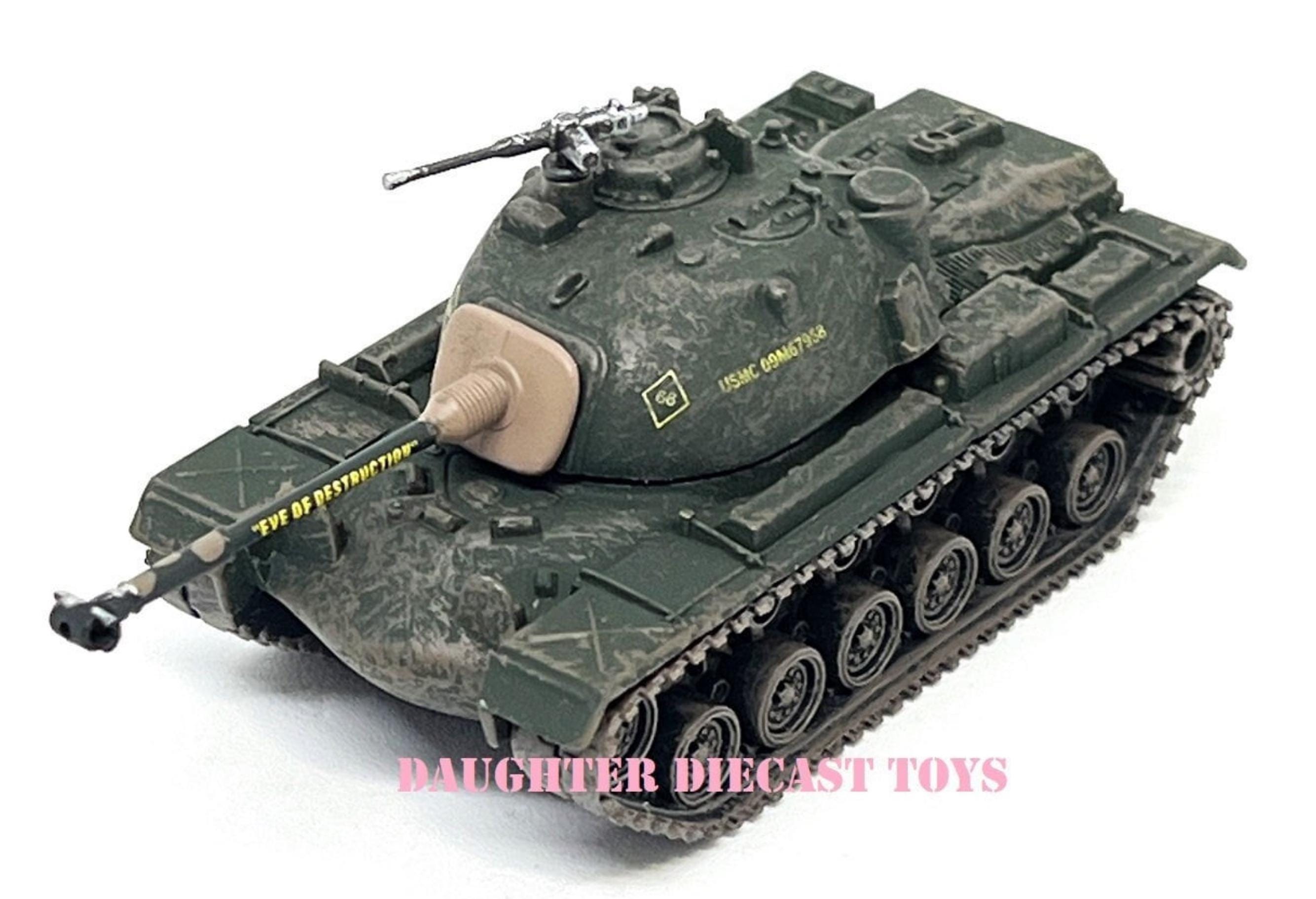
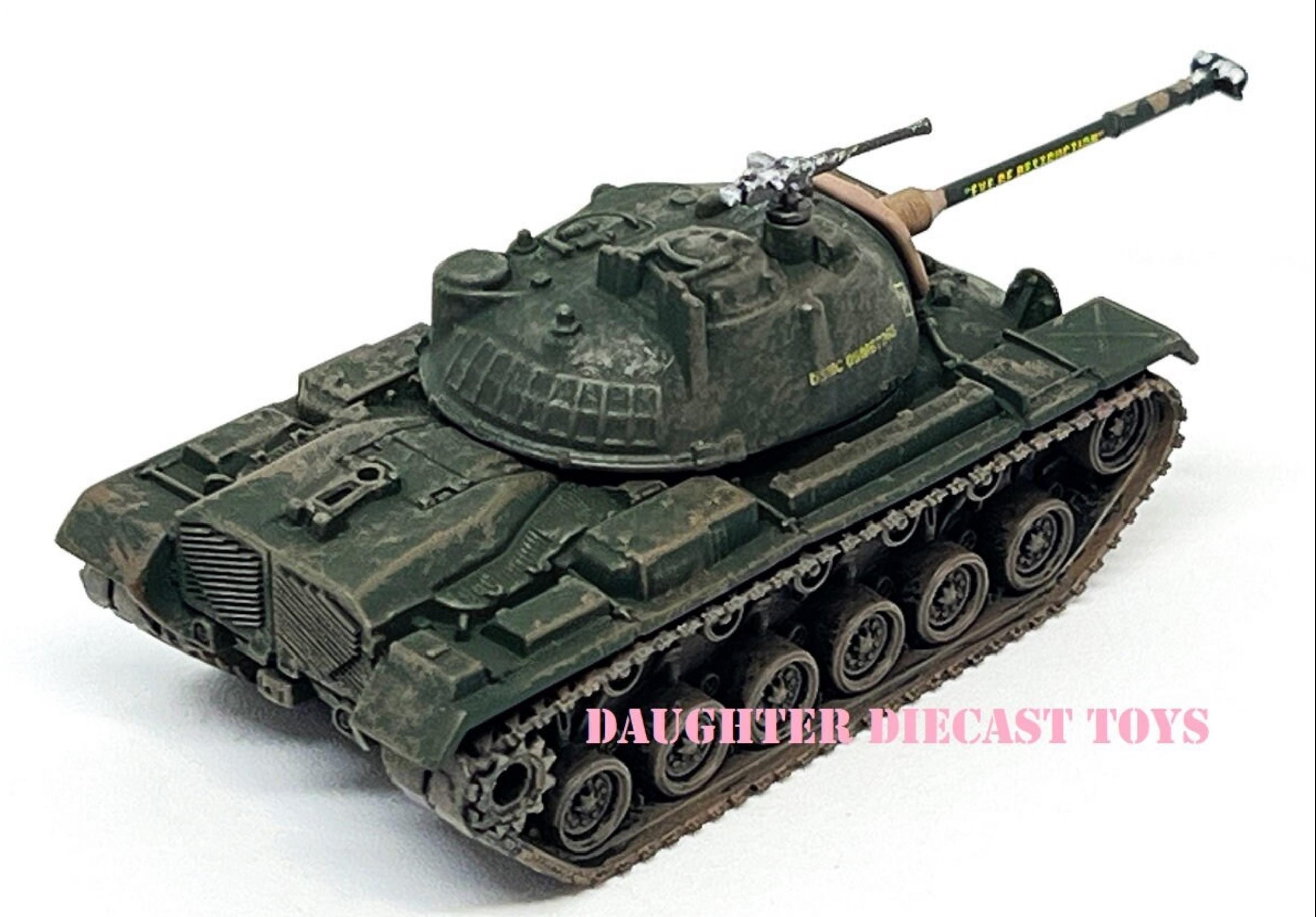
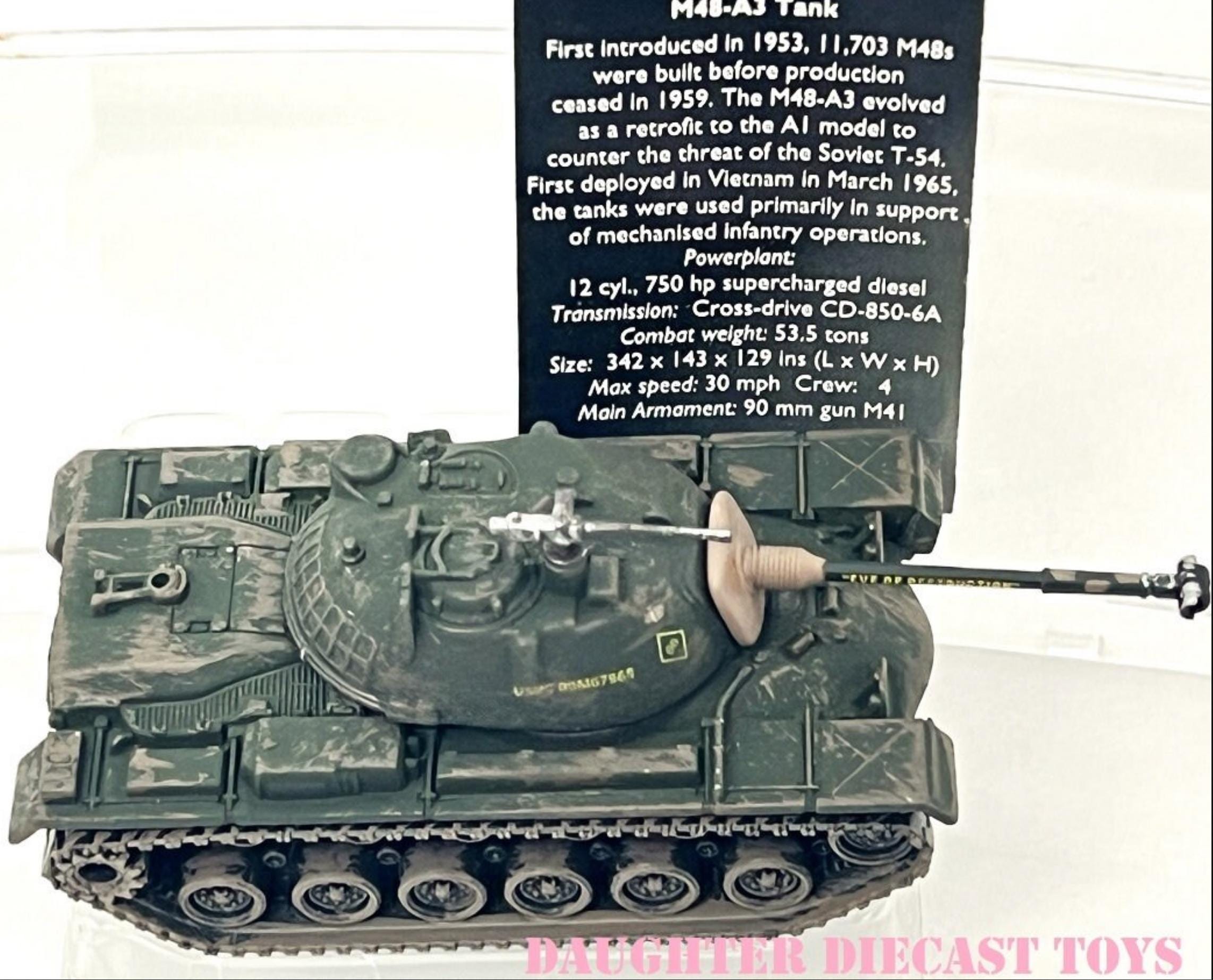
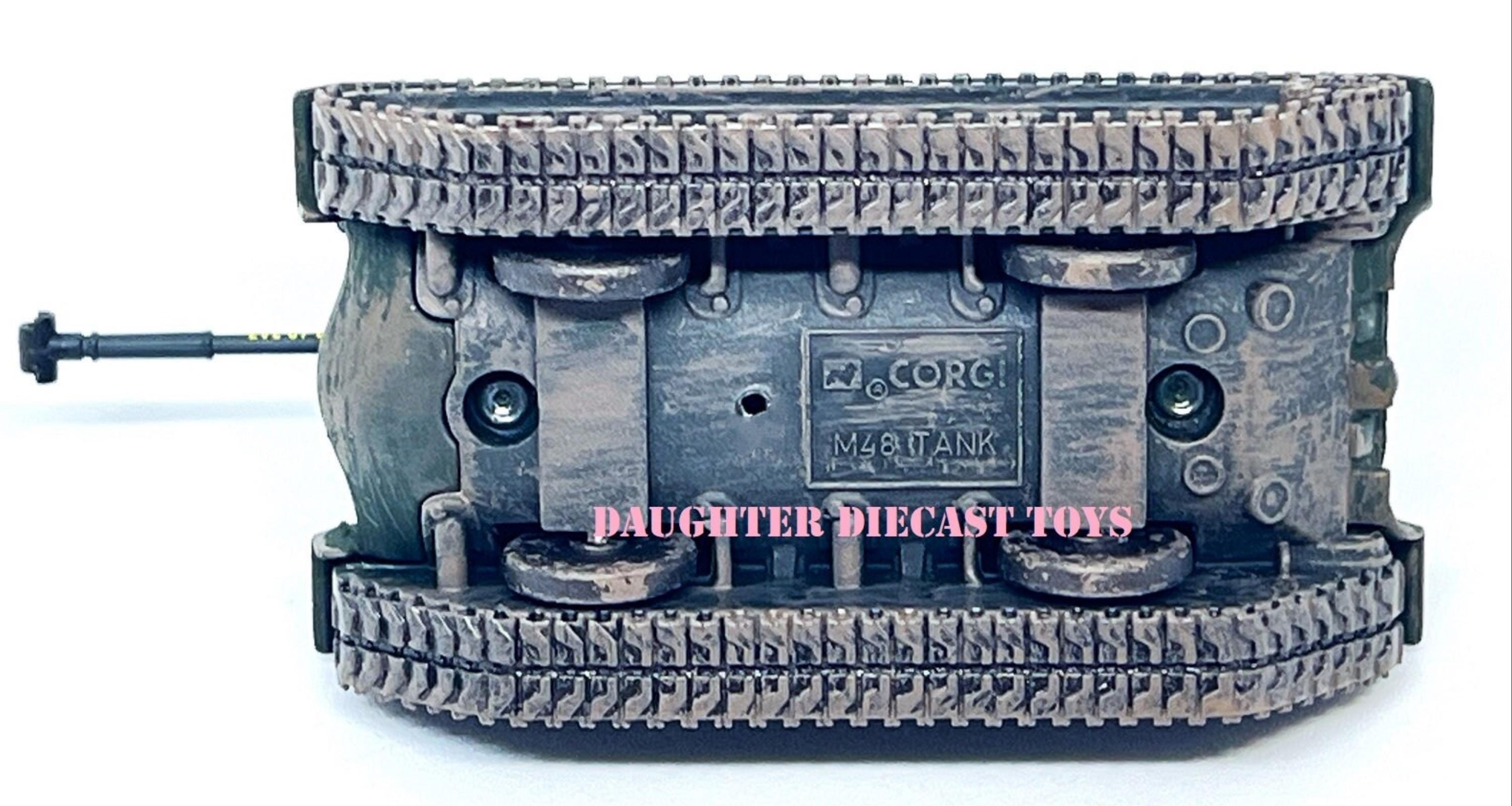
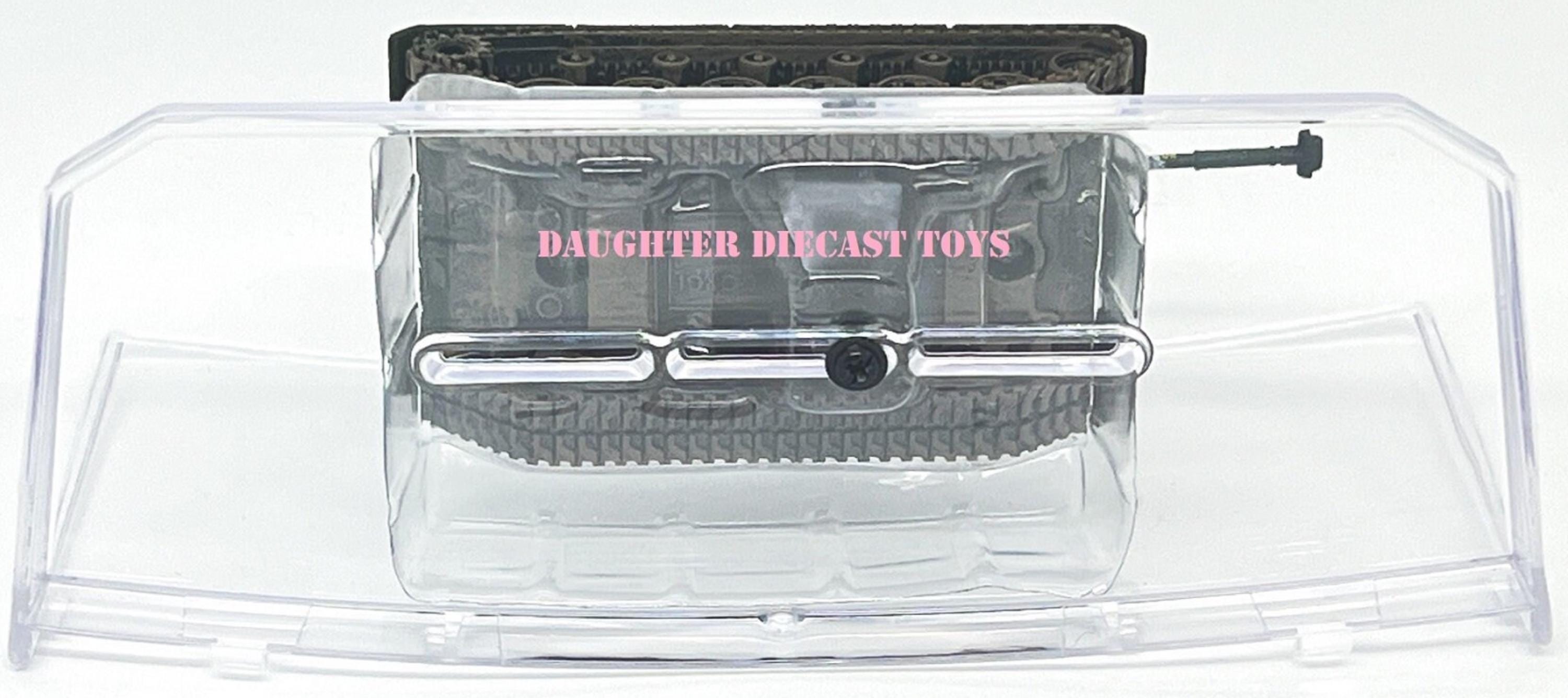
Diecast Metal Replica-Pristine Condition-Perfect Gift for Collectors!Awesome! VIETNAM ERA M48-A3 PATTON TANK. Intricately detailed Adult Collector Model/Heavy Diecast Metal Replica-Made by Corgi. Measures 3"1/2L x 1 1/2"W x 2"H (mounted). Tank has rolling wheels and moveable gun turret. Pristine condition never handled or displayed (until today for our listing photos). Sold loose, mounted on showcase with data card (see photos 2) in collectors' bag. Tank can be easily removed from display stand by removing screw-located on bottom (see photo 5). Perfect gift for vintage toy/tank collectors, Military history buffs and veterans! 100% happiness guaranteed. Our shipping origin is Rolling Prairie, IN-located in Midwest USA-We ship fast & safe worldwide every day! Read tank bio below....Note: My dad owned a Diecast toy store for 30 years. I inherited the store inventory when he passed away several years ago. I am (just now) able to bring myself to begin selling his cars-so they can be shared with the world. All pristine and mint condition vintage models will (eventually) be listed here on ETSY. All the inventory is NEW (vintage) merchandise-which was intended for retail sale. Please know-our diecast toys have NEVER been "played-with” we do not sell used, or damaged toys.
•
•
•FOR A LIMITED TIME
•
•
•Purchases totaling $35 and above qualify for FREE shipping to USA! Add more items to your Etsy shopping cart to save $$$. TANK BIO:The M48 Patton is an American first-generation main battle tank (MBT) introduced in February 1952, being designated as the 90mm Gun Tank: M48. It was designed as a replacement for the M26 Pershing, M4 Sherman, M46 and M47 Patton tanks, and was the main battle tank of the U.S. Army and U.S. Marine Corps in the Vietnam War (and the first American MBT).[6][7]: 5 Nearly 12,000 M48s were built, mainly by Chrysler and American Locomotive Company, from 1952 to 1961. The M48 Patton was the first U.S. medium gun tank[8] with a four-man crew, featuring a centerline driver's compartment and no bow machine gunner.[9] As with nearly all new armored vehicles it had a wide variety of suspension systems, cupola styles, power packs, fenders and other details among individual tanks.The early designs, up to the M48A2C, were powered by a gasoline engine. The M48A3 and A5 versions used a diesel engine, however, gasoline engine versions were still in use in the US Army National Guard through 1968 and through 1975 by many West German Army units. Numerous examples of the M48 saw combat use in various Arab–Israeli conflicts and the Vietnam War. Beginning in 1959, most American M48A1s and A2s were upgraded to the M48A3 model.The M48 Patton-series saw widespread service with the United States and NATO until it was superseded by the M60 tank. It was widely exported. The tank's hull also developed a wide variety of experimental, utility and support vehicles such as armored recovery vehicles and bridge layers. Some M48A5 models served into the mid-1980s with US Army National Guard units, and M48A3s were used as targets for weapons and radar testing into the mid-1990s.Many M48s remain in service in countries other than the US. Most of these have been modified and their firepower, mobility and protection upgraded to increase their combat effectiveness on the modern battlefield. As of 2015, Turkey is the largest operator with over 750 units in service, Taiwan is second with approximately 500 upgraded variants, and Greece is third with 390 in service.Citing high fuel consumption, poor low-end torque, and the extreme fuel flammability of gasoline engines, ARCOVE industrial representatives had expressed desires for a diesel engine for the M48 since 1953.[14] Continental Motors and OTAC began to develop an experimental X-shaped vapour-cycled engine design powered by hydrocarbons in 1954 for the T95 tank but it remained unreliable. In June 1955, OTAC adopted the recommendations and allowed a diesel engine to be used if it significantly improved fuel economy.[15]: 31 M48A3By August 1956 the diesel powered AVDS-1790 was recommended as meeting this requirement,[18][page needed] and the Army requested the initial retrofitting of approximately 1,020 older M48A1s and A2s with the new engine in December.[22] By February 1957, the Army had around 600 converted M48A3 Patton tanks and the Marine Corps had received 419.[46] Because many M48A3 tanks were conversions from earlier models many details varied among individual examples of this type. M48A3 tanks could have either three or five support rollers on each side and might have either the early or later type headlight assemblies, some retained their earlier Mod A turrets and different cupola styles. [18][page needed]During the Hungarian Revolution of 1956, a Soviet T-54A medium tank was driven onto the grounds of the UK's embassy in Budapest by the Hungarians.[47] After a brief examination of this tank's armor and 100 mm gun by a British military attaché, the UK decided that their 20 pounder (84mm L/66.7) was apparently incapable of defeating it. There were also rumors of an even larger 115 mm gun in the works.[48] In response to this the US Army started development of the XM60 to replace the M48 tank series and incorporating the ARCOVE recommendation of a more powerful main gun, the Royal Ordnance L7 (105mm T254). Instead of immediately getting a 105mm main gun, large stockpiles of 90 mm main gun ammunition and funding shortfalls that made it impossible to supply enough 105mm main gun rounds for all the planned tank conversions left the M48A3s with their M41 90mm guns.In addition to the conversion of older model M48s, Chrysler continued to build new vehicles. These used the M48A2 hull design (with 3 return rollers) and had redesigned fenders and mudguards, armored boxes around the taillights among other minor details. They were fitted with another re-designed commander's cupola, the M1E1. It had a modified hatch to allow more room in comparison to the previous M1 cupola and the two rear vision blocks were eliminated.[49] The driver's steering wheel was replaced with a T-bar control and received a padded seat.[22] M48 procurement for the Army ceased and M48A2 hull production ended in May 1961. The Newark Tank plant was closed in October.[50] This newest version of the M48 series received the designation Tank, Combat, Full-Tracked; 90mm Gun, M48A3 on 19 March 1958.[7]: 29 The M48A3 was withdrawn from Europe by October 1961, being replaced by the M60 tank. As US armored and cavalry units rotated out of combat deployments to South Vietnam most of their M48A3s were either directly transferred to the South Vietnamese Army or to Thailand. FORSCOM withdrew the M48A3 from combat service with both the US Army and US Marine Corps in 1973, replacing them with the M60A1. Some M48A3s continued in service with National Guard units until 1979. Some were repurposed as Armoured vehicle-launched bridges (AVLBs). Afterwards they were relegated to target use for the testing of radar and weapons systems until the mid 1990s.[51] They were replaced in this role by the QM60.
Diecast Metal Replica-Pristine Condition-Perfect Gift for Collectors!Awesome! VIETNAM ERA M48-A3 PATTON TANK. Intricately detailed Adult Collector Model/Heavy Diecast Metal Replica-Made by Corgi. Measures 3"1/2L x 1 1/2"W x 2"H (mounted). Tank has rolling wheels and moveable gun turret. Pristine condition never handled or displayed (until today for our listing photos). Sold loose, mounted on showcase with data card (see photos 2) in collectors' bag. Tank can be easily removed from display stand by removing screw-located on bottom (see photo 5). Perfect gift for vintage toy/tank collectors, Military history buffs and veterans! 100% happiness guaranteed. Our shipping origin is Rolling Prairie, IN-located in Midwest USA-We ship fast & safe worldwide every day! Read tank bio below....Note: My dad owned a Diecast toy store for 30 years. I inherited the store inventory when he passed away several years ago. I am (just now) able to bring myself to begin selling his cars-so they can be shared with the world. All pristine and mint condition vintage models will (eventually) be listed here on ETSY. All the inventory is NEW (vintage) merchandise-which was intended for retail sale. Please know-our diecast toys have NEVER been "played-with” we do not sell used, or damaged toys.
•
•
•FOR A LIMITED TIME
•
•
•Purchases totaling $35 and above qualify for FREE shipping to USA! Add more items to your Etsy shopping cart to save $$$. TANK BIO:The M48 Patton is an American first-generation main battle tank (MBT) introduced in February 1952, being designated as the 90mm Gun Tank: M48. It was designed as a replacement for the M26 Pershing, M4 Sherman, M46 and M47 Patton tanks, and was the main battle tank of the U.S. Army and U.S. Marine Corps in the Vietnam War (and the first American MBT).[6][7]: 5 Nearly 12,000 M48s were built, mainly by Chrysler and American Locomotive Company, from 1952 to 1961. The M48 Patton was the first U.S. medium gun tank[8] with a four-man crew, featuring a centerline driver's compartment and no bow machine gunner.[9] As with nearly all new armored vehicles it had a wide variety of suspension systems, cupola styles, power packs, fenders and other details among individual tanks.The early designs, up to the M48A2C, were powered by a gasoline engine. The M48A3 and A5 versions used a diesel engine, however, gasoline engine versions were still in use in the US Army National Guard through 1968 and through 1975 by many West German Army units. Numerous examples of the M48 saw combat use in various Arab–Israeli conflicts and the Vietnam War. Beginning in 1959, most American M48A1s and A2s were upgraded to the M48A3 model.The M48 Patton-series saw widespread service with the United States and NATO until it was superseded by the M60 tank. It was widely exported. The tank's hull also developed a wide variety of experimental, utility and support vehicles such as armored recovery vehicles and bridge layers. Some M48A5 models served into the mid-1980s with US Army National Guard units, and M48A3s were used as targets for weapons and radar testing into the mid-1990s.Many M48s remain in service in countries other than the US. Most of these have been modified and their firepower, mobility and protection upgraded to increase their combat effectiveness on the modern battlefield. As of 2015, Turkey is the largest operator with over 750 units in service, Taiwan is second with approximately 500 upgraded variants, and Greece is third with 390 in service.Citing high fuel consumption, poor low-end torque, and the extreme fuel flammability of gasoline engines, ARCOVE industrial representatives had expressed desires for a diesel engine for the M48 since 1953.[14] Continental Motors and OTAC began to develop an experimental X-shaped vapour-cycled engine design powered by hydrocarbons in 1954 for the T95 tank but it remained unreliable. In June 1955, OTAC adopted the recommendations and allowed a diesel engine to be used if it significantly improved fuel economy.[15]: 31 M48A3By August 1956 the diesel powered AVDS-1790 was recommended as meeting this requirement,[18][page needed] and the Army requested the initial retrofitting of approximately 1,020 older M48A1s and A2s with the new engine in December.[22] By February 1957, the Army had around 600 converted M48A3 Patton tanks and the Marine Corps had received 419.[46] Because many M48A3 tanks were conversions from earlier models many details varied among individual examples of this type. M48A3 tanks could have either three or five support rollers on each side and might have either the early or later type headlight assemblies, some retained their earlier Mod A turrets and different cupola styles. [18][page needed]During the Hungarian Revolution of 1956, a Soviet T-54A medium tank was driven onto the grounds of the UK's embassy in Budapest by the Hungarians.[47] After a brief examination of this tank's armor and 100 mm gun by a British military attaché, the UK decided that their 20 pounder (84mm L/66.7) was apparently incapable of defeating it. There were also rumors of an even larger 115 mm gun in the works.[48] In response to this the US Army started development of the XM60 to replace the M48 tank series and incorporating the ARCOVE recommendation of a more powerful main gun, the Royal Ordnance L7 (105mm T254). Instead of immediately getting a 105mm main gun, large stockpiles of 90 mm main gun ammunition and funding shortfalls that made it impossible to supply enough 105mm main gun rounds for all the planned tank conversions left the M48A3s with their M41 90mm guns.In addition to the conversion of older model M48s, Chrysler continued to build new vehicles. These used the M48A2 hull design (with 3 return rollers) and had redesigned fenders and mudguards, armored boxes around the taillights among other minor details. They were fitted with another re-designed commander's cupola, the M1E1. It had a modified hatch to allow more room in comparison to the previous M1 cupola and the two rear vision blocks were eliminated.[49] The driver's steering wheel was replaced with a T-bar control and received a padded seat.[22] M48 procurement for the Army ceased and M48A2 hull production ended in May 1961. The Newark Tank plant was closed in October.[50] This newest version of the M48 series received the designation Tank, Combat, Full-Tracked; 90mm Gun, M48A3 on 19 March 1958.[7]: 29 The M48A3 was withdrawn from Europe by October 1961, being replaced by the M60 tank. As US armored and cavalry units rotated out of combat deployments to South Vietnam most of their M48A3s were either directly transferred to the South Vietnamese Army or to Thailand. FORSCOM withdrew the M48A3 from combat service with both the US Army and US Marine Corps in 1973, replacing them with the M60A1. Some M48A3s continued in service with National Guard units until 1979. Some were repurposed as Armoured vehicle-launched bridges (AVLBs). Afterwards they were relegated to target use for the testing of radar and weapons systems until the mid 1990s.[51] They were replaced in this role by the QM60.
Other Products