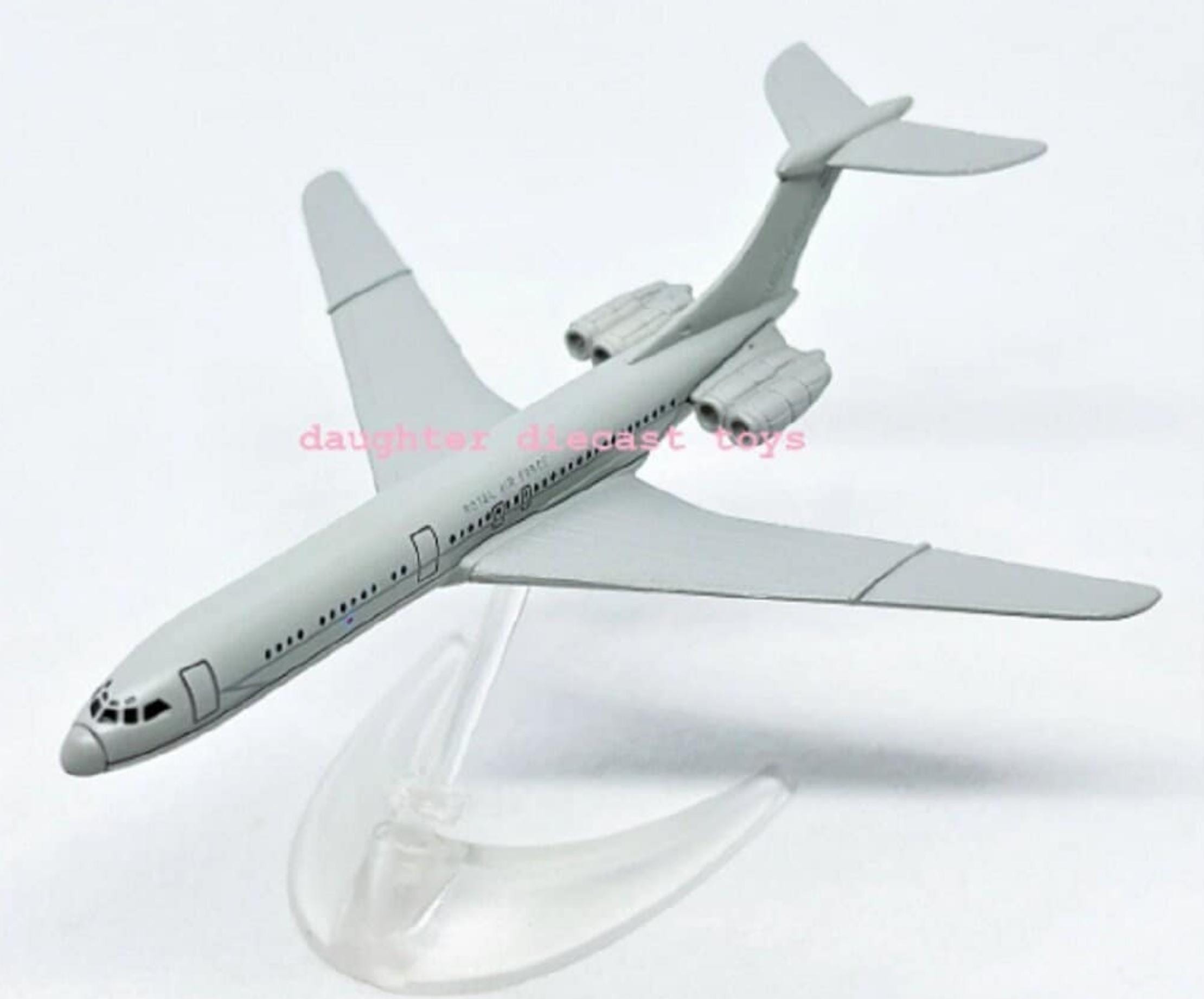
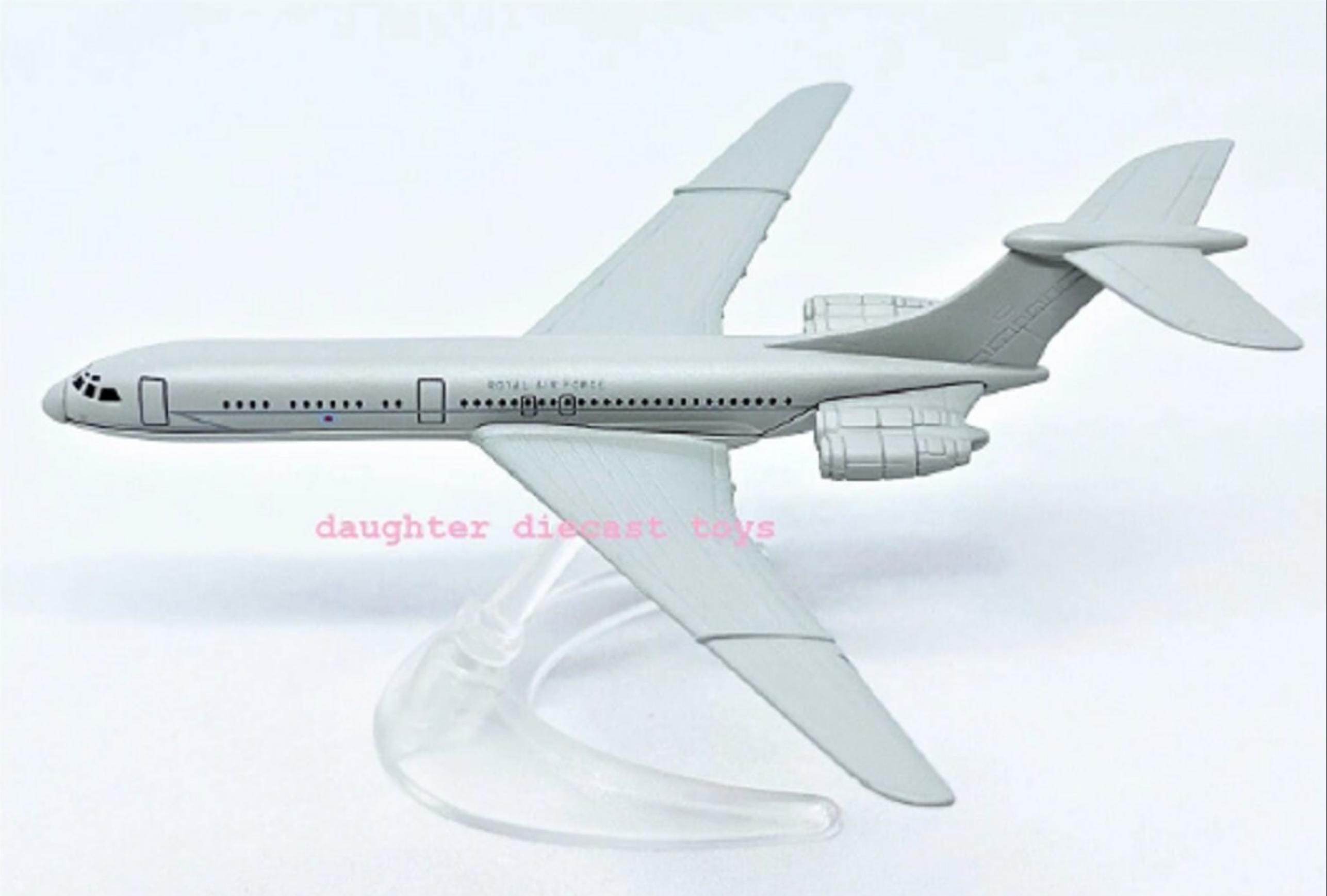
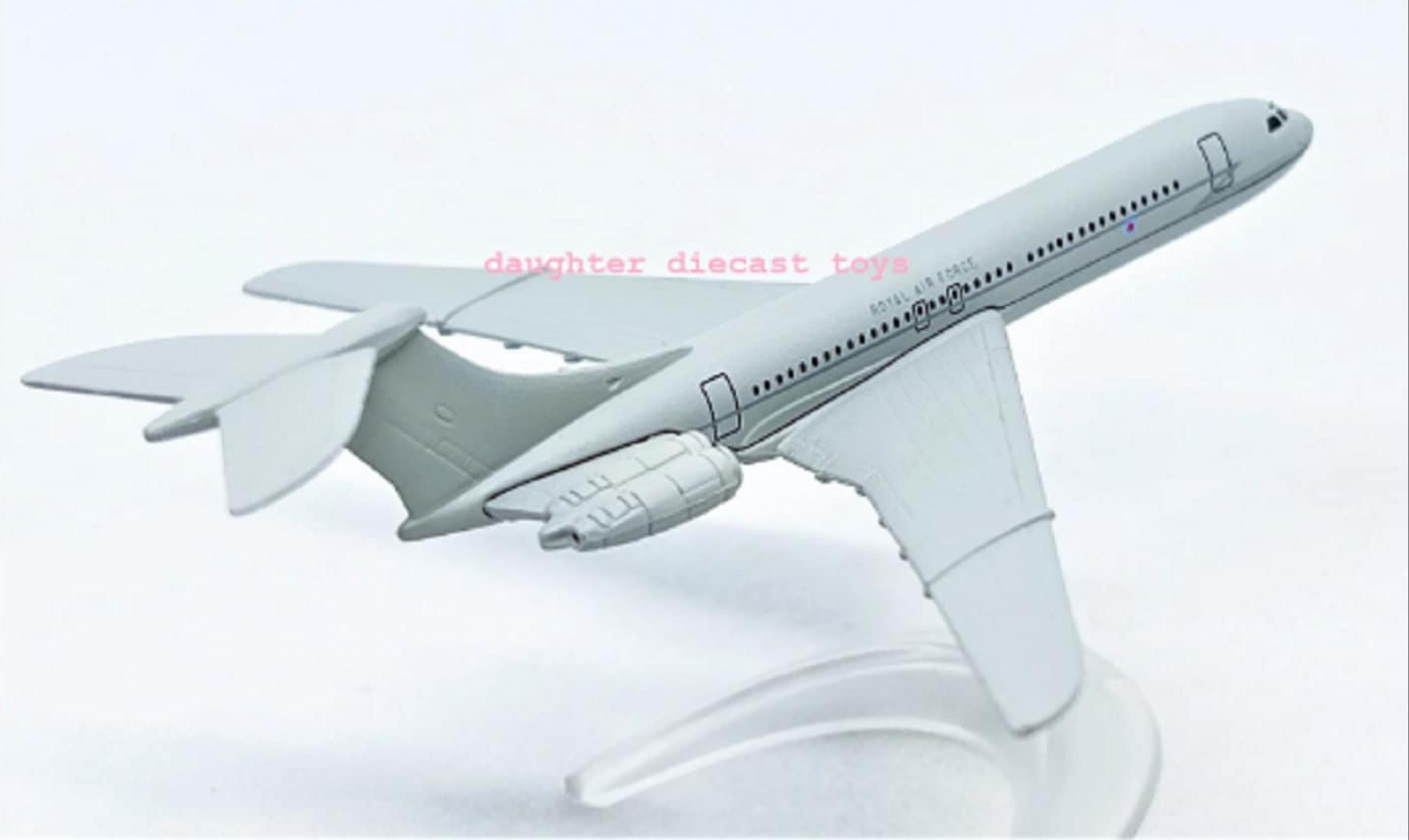
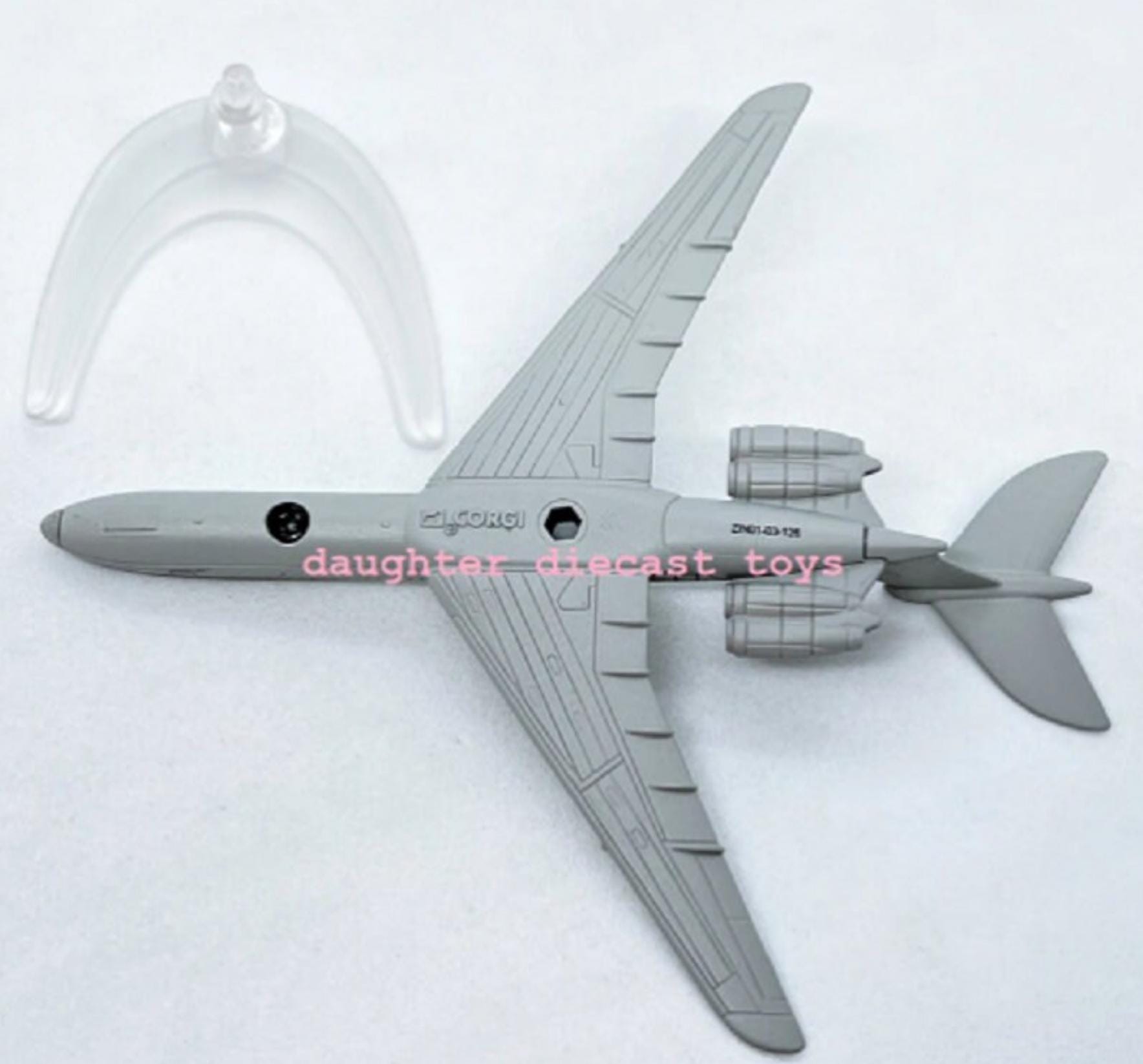

Vintage RAF VICKERS VC-10 Jet -Adult Collector/Diecast Metal Airplane with Stand/Pristine Condition! Corgi Toys-Perfect Gift for Collectors!
$ 34.99

Vintage RAF VICKERS VC-10 Jet -Adult Collector/Diecast Metal Airplane with
Stand/Pristine Condition! Corgi Toys-Perfect Gift for Collectors!Awesome! Vintage RAF VICKERS VC-10 JET. Adult collector-constructed of die cast metal, made by Corgi. Beautifully detailed, highly sought-after model! Measures 4 1/4"L x 4"W x 2 1/4"H (mounted). Comes complete with stand. Pristine condition-this model has never been handled or displayed until today for the photos in this listing. Perfect gift for Military aircraft, vintage toy collectors and fans of aviation history (like me!). We ship fast & save worldwide. Read plane bio below....Note: My dad owned a Diecast toy store for 30 years. I inherited the store inventory when he passed away several years ago. I am (just now) able to bring myself to begin selling his cars-so they can be shared with the world. All pristine and mint condition vintage models will (eventually) be listed here on ETSY. All the inventory is NEW (vintage) merchandise-which was intended for retail sale. Please know-our diecast toys have NEVER been "played-with” we do not sell used, or damaged toys.
•
•
•FOR A LIMITED TIME
•
•
•Purchases totaling $35 and above qualify for FREE shipping to USA! Add more items to your Etsy shopping cart to save $$$.Aircraft bio:The Vickers VC10 is a mid-sized, narrow-body long-range British jet airliner designed and built by Vickers-Armstrongs (Aircraft) Ltd and first flown at Brooklands, Surrey, in 1962. The airliner was designed to operate on long-distance routes from the shorter runways of the era and commanded excellent hot and high performance for operations from African airports. The performance of the VC10 was such that it achieved the fastest crossing of the Atlantic by a subsonic jet airliner of 5 hours and 1 minute, a record that was held for 41 years, until February 2020 when a British Airways Boeing 747 broke the record at 4 hours 56 minutes due to Storm Ciara.[1][2][3] Only the supersonic Concorde was faster. The VC10 is often compared to the larger Soviet Ilyushin Il-62, the two types being the only airliners to use a rear-engined quad layout. The smaller business jet Lockheed JetStar also has this engine arrangement.Although only a relatively small number of VC10s were built, they provided long service with BOAC and other airlines from the 1960s to 1981. They were also used from 1965 as strategic air transports for the Royal Air Force, and ex-passenger models and others were used as aerial refueling aircraft. The 50th anniversary of the first flight of the prototype VC10, G-ARTA, was celebrated with a "VC10 Retrospective" Symposium and the official opening of a VC10 exhibition at Brooklands Museum on 29 June 2012. The type was retired from RAF service on 20 September 2013.[4] It has been succeeded in the aerial refueling role by the Airbus Voyager. VC10 K.3 ZA147 performed the final flight of the type on 25 September 2013.Military service-1960s and 1970sIn 1960, the RAF issued Specification 239 for a strategic transport, which resulted in an order being placed by the Air Ministry with Vickers in September 1961 for five VC10s. The order was increased by an additional six in August 1962, with a further three aircraft cancelled by BOAC added in July 1964.[41] The military version (Type 1106) was a combination of the Standard combi airframe with the more powerful engines and fin fuel tank of the Super VC10.[42] It also had a detachable in-flight refueling nose probe and an auxiliary power unit in the tail cone. Another difference from the civil specification was that all the passenger seats faced backwards for safety reasons.[43] VC10 C.1 of No. 10 Squadron RAF at the Queen's Silver Jubilee display at RAF Finningley in 1977The first RAF aircraft, designated VC10 C Mk.1, often abbreviated to VC10 C.1, was delivered for testing on 26 November 1965;[44] deliveries to No. 10 Squadron began in December 1966 and ended in August 1968. The VC10s were named after Victoria Cross (VC) medal holders, the names were displayed above the forward passenger door. During the 1960s, the VC10s of No. 10 Squadron operated two regular routes, one to the Far East to Singapore and Hong Kong, and the other to New York.[45] By 1970, roughly 10,000 passengers and 730,000 lb of freight were being carried monthly by the VC10 fleet.[46]In addition to the strategic transport role, the VC10 routinely served in the aeromedical evacuation and VIP roles. In its VIP role, the aircraft was commonly used by members of the British Royal Family, such as during Elizabeth II's bicentennial tour of America, and by several British Prime Ministers; Margaret Thatcher reportedly insisted on flying by VC10.[47][48] The aircraft proved capable of being flown non-stop by two flight crews, enabling several round-the-world flights, one such VC10 circumnavigated the globe in less than 48 hours.[47]One aircraft (XR809) was leased to Rolls-Royce for flight testing of the RB211 turbofan between 1969 and 1975.[46][49] On return to the RAF, it was discovered that the airframe was distorted, possibly due to the power difference between the RB211 on one side and the Conways on the other. It was considered uneconomical to repair and was partially scrapped, part of the airframe retained for load training.[50]In 1977, studies began into converting redundant commercial VC10s into aerial refueling tankers;[51] the RAF subsequently issued a contract to British Aerospace to convert five former BOAC VC10s and four former East African Airways Super VC10s,[52] designated VC10 K.2 and VC10 K.3 respectively. During conversion, extra fuel tanks were installed in the former passenger cabin; these increased the theoretical maximum fuel load to 85 tons/77 tonnes (K.2) and 90 tons/82 tonnes (K.3), the Super VC10's fin fuel tank making the difference. In practice, the fuel load was capped by the maximum take-off weight before the tanks were full. Both variants featured a pair of wing-mounted refueling pods and a single centreline refueling point, known as a Hose Drum Unit (HDU), installed in the rear freight bay; nose-mounted refueling probes were also fitted.
Stand/Pristine Condition! Corgi Toys-Perfect Gift for Collectors!Awesome! Vintage RAF VICKERS VC-10 JET. Adult collector-constructed of die cast metal, made by Corgi. Beautifully detailed, highly sought-after model! Measures 4 1/4"L x 4"W x 2 1/4"H (mounted). Comes complete with stand. Pristine condition-this model has never been handled or displayed until today for the photos in this listing. Perfect gift for Military aircraft, vintage toy collectors and fans of aviation history (like me!). We ship fast & save worldwide. Read plane bio below....Note: My dad owned a Diecast toy store for 30 years. I inherited the store inventory when he passed away several years ago. I am (just now) able to bring myself to begin selling his cars-so they can be shared with the world. All pristine and mint condition vintage models will (eventually) be listed here on ETSY. All the inventory is NEW (vintage) merchandise-which was intended for retail sale. Please know-our diecast toys have NEVER been "played-with” we do not sell used, or damaged toys.
•
•
•FOR A LIMITED TIME
•
•
•Purchases totaling $35 and above qualify for FREE shipping to USA! Add more items to your Etsy shopping cart to save $$$.Aircraft bio:The Vickers VC10 is a mid-sized, narrow-body long-range British jet airliner designed and built by Vickers-Armstrongs (Aircraft) Ltd and first flown at Brooklands, Surrey, in 1962. The airliner was designed to operate on long-distance routes from the shorter runways of the era and commanded excellent hot and high performance for operations from African airports. The performance of the VC10 was such that it achieved the fastest crossing of the Atlantic by a subsonic jet airliner of 5 hours and 1 minute, a record that was held for 41 years, until February 2020 when a British Airways Boeing 747 broke the record at 4 hours 56 minutes due to Storm Ciara.[1][2][3] Only the supersonic Concorde was faster. The VC10 is often compared to the larger Soviet Ilyushin Il-62, the two types being the only airliners to use a rear-engined quad layout. The smaller business jet Lockheed JetStar also has this engine arrangement.Although only a relatively small number of VC10s were built, they provided long service with BOAC and other airlines from the 1960s to 1981. They were also used from 1965 as strategic air transports for the Royal Air Force, and ex-passenger models and others were used as aerial refueling aircraft. The 50th anniversary of the first flight of the prototype VC10, G-ARTA, was celebrated with a "VC10 Retrospective" Symposium and the official opening of a VC10 exhibition at Brooklands Museum on 29 June 2012. The type was retired from RAF service on 20 September 2013.[4] It has been succeeded in the aerial refueling role by the Airbus Voyager. VC10 K.3 ZA147 performed the final flight of the type on 25 September 2013.Military service-1960s and 1970sIn 1960, the RAF issued Specification 239 for a strategic transport, which resulted in an order being placed by the Air Ministry with Vickers in September 1961 for five VC10s. The order was increased by an additional six in August 1962, with a further three aircraft cancelled by BOAC added in July 1964.[41] The military version (Type 1106) was a combination of the Standard combi airframe with the more powerful engines and fin fuel tank of the Super VC10.[42] It also had a detachable in-flight refueling nose probe and an auxiliary power unit in the tail cone. Another difference from the civil specification was that all the passenger seats faced backwards for safety reasons.[43] VC10 C.1 of No. 10 Squadron RAF at the Queen's Silver Jubilee display at RAF Finningley in 1977The first RAF aircraft, designated VC10 C Mk.1, often abbreviated to VC10 C.1, was delivered for testing on 26 November 1965;[44] deliveries to No. 10 Squadron began in December 1966 and ended in August 1968. The VC10s were named after Victoria Cross (VC) medal holders, the names were displayed above the forward passenger door. During the 1960s, the VC10s of No. 10 Squadron operated two regular routes, one to the Far East to Singapore and Hong Kong, and the other to New York.[45] By 1970, roughly 10,000 passengers and 730,000 lb of freight were being carried monthly by the VC10 fleet.[46]In addition to the strategic transport role, the VC10 routinely served in the aeromedical evacuation and VIP roles. In its VIP role, the aircraft was commonly used by members of the British Royal Family, such as during Elizabeth II's bicentennial tour of America, and by several British Prime Ministers; Margaret Thatcher reportedly insisted on flying by VC10.[47][48] The aircraft proved capable of being flown non-stop by two flight crews, enabling several round-the-world flights, one such VC10 circumnavigated the globe in less than 48 hours.[47]One aircraft (XR809) was leased to Rolls-Royce for flight testing of the RB211 turbofan between 1969 and 1975.[46][49] On return to the RAF, it was discovered that the airframe was distorted, possibly due to the power difference between the RB211 on one side and the Conways on the other. It was considered uneconomical to repair and was partially scrapped, part of the airframe retained for load training.[50]In 1977, studies began into converting redundant commercial VC10s into aerial refueling tankers;[51] the RAF subsequently issued a contract to British Aerospace to convert five former BOAC VC10s and four former East African Airways Super VC10s,[52] designated VC10 K.2 and VC10 K.3 respectively. During conversion, extra fuel tanks were installed in the former passenger cabin; these increased the theoretical maximum fuel load to 85 tons/77 tonnes (K.2) and 90 tons/82 tonnes (K.3), the Super VC10's fin fuel tank making the difference. In practice, the fuel load was capped by the maximum take-off weight before the tanks were full. Both variants featured a pair of wing-mounted refueling pods and a single centreline refueling point, known as a Hose Drum Unit (HDU), installed in the rear freight bay; nose-mounted refueling probes were also fitted.
Other Products