
1918 Antique Brass SHIP COMPASS BINNACLE with Electric and Oil Lamps Kelvin & Wilfrid O. White Co.
$ 2500.00

1918 Genuine Antique Brass SHIP COMPASS BINNACLE with Electric and Oil Lamps
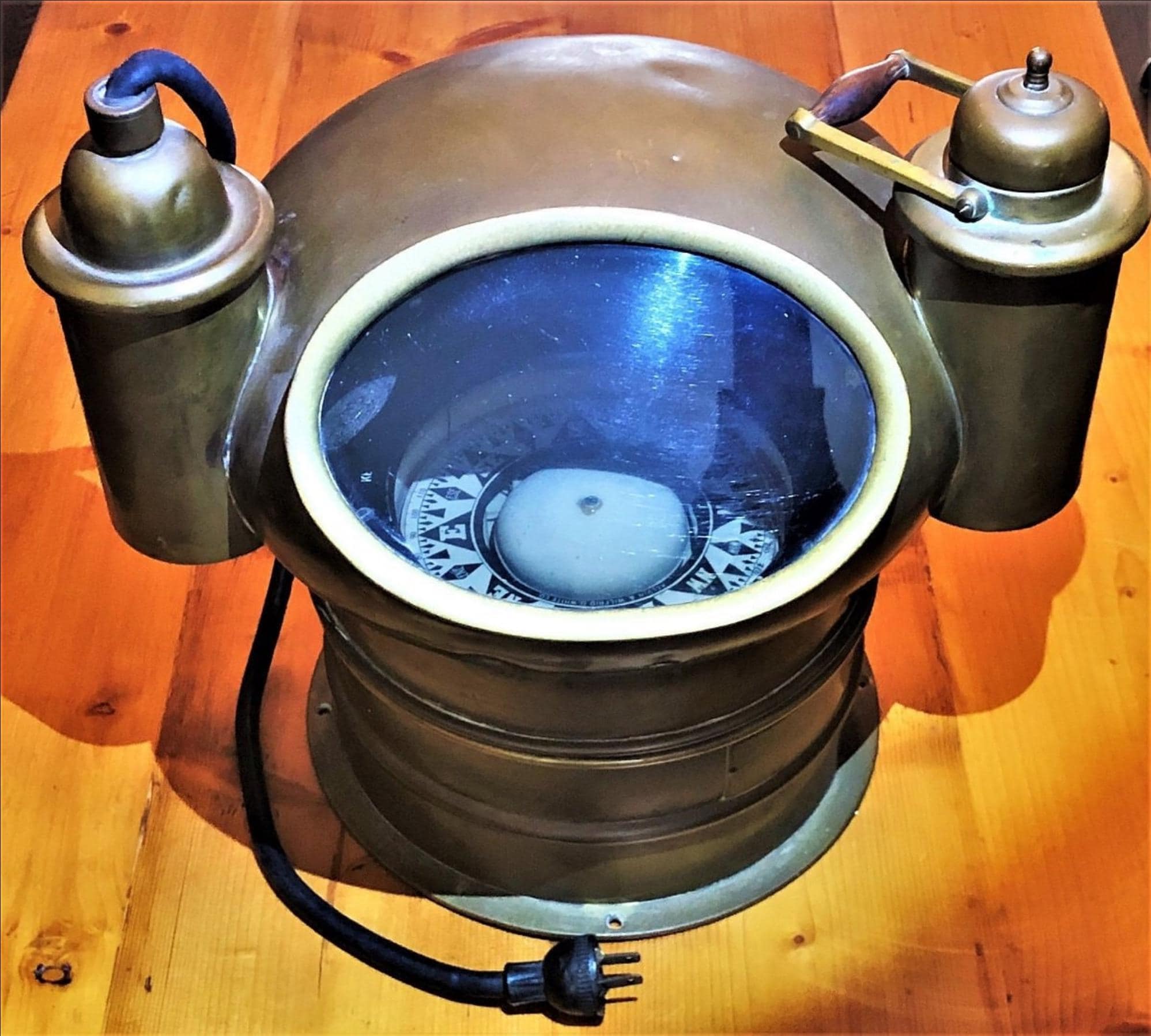
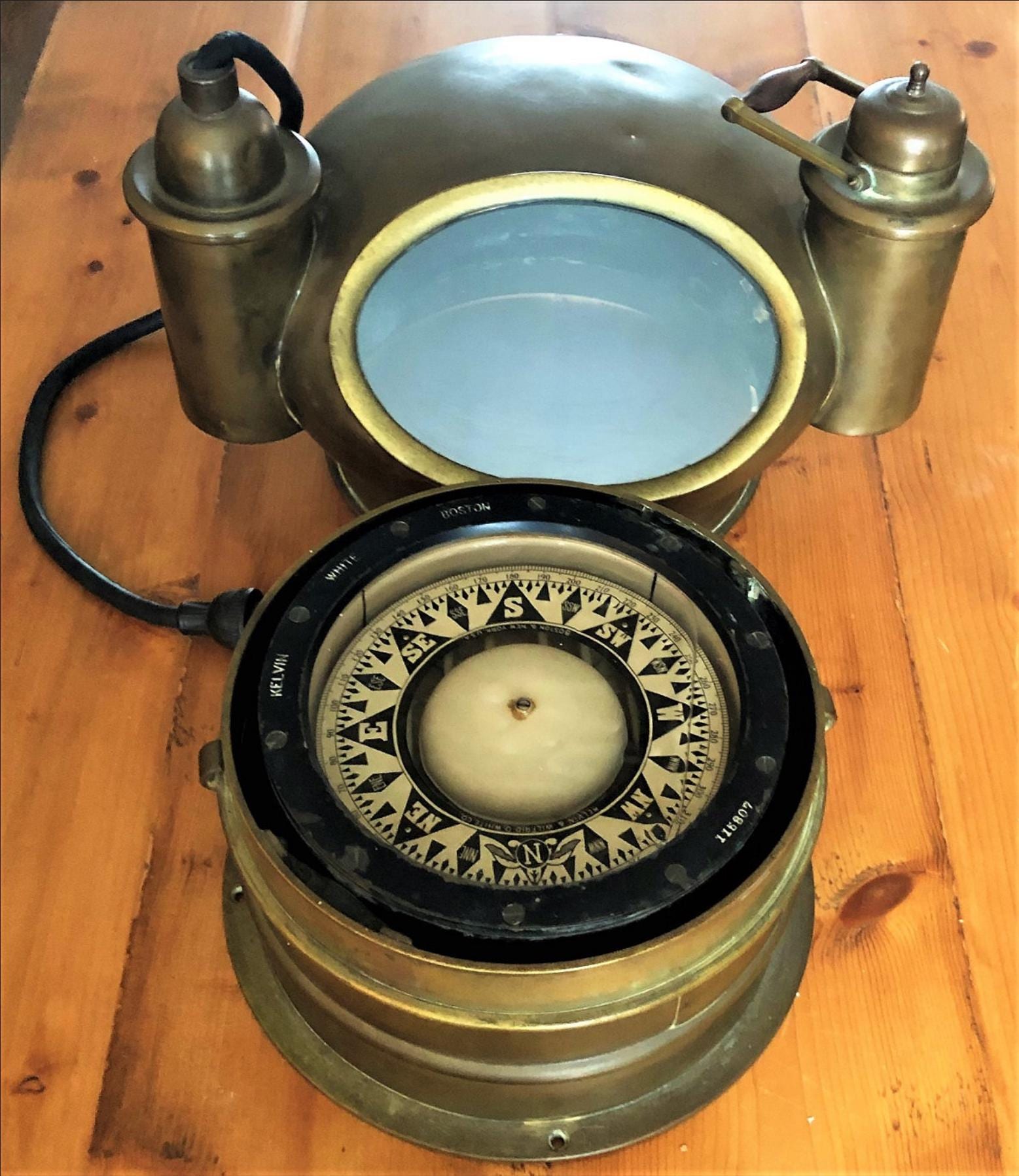
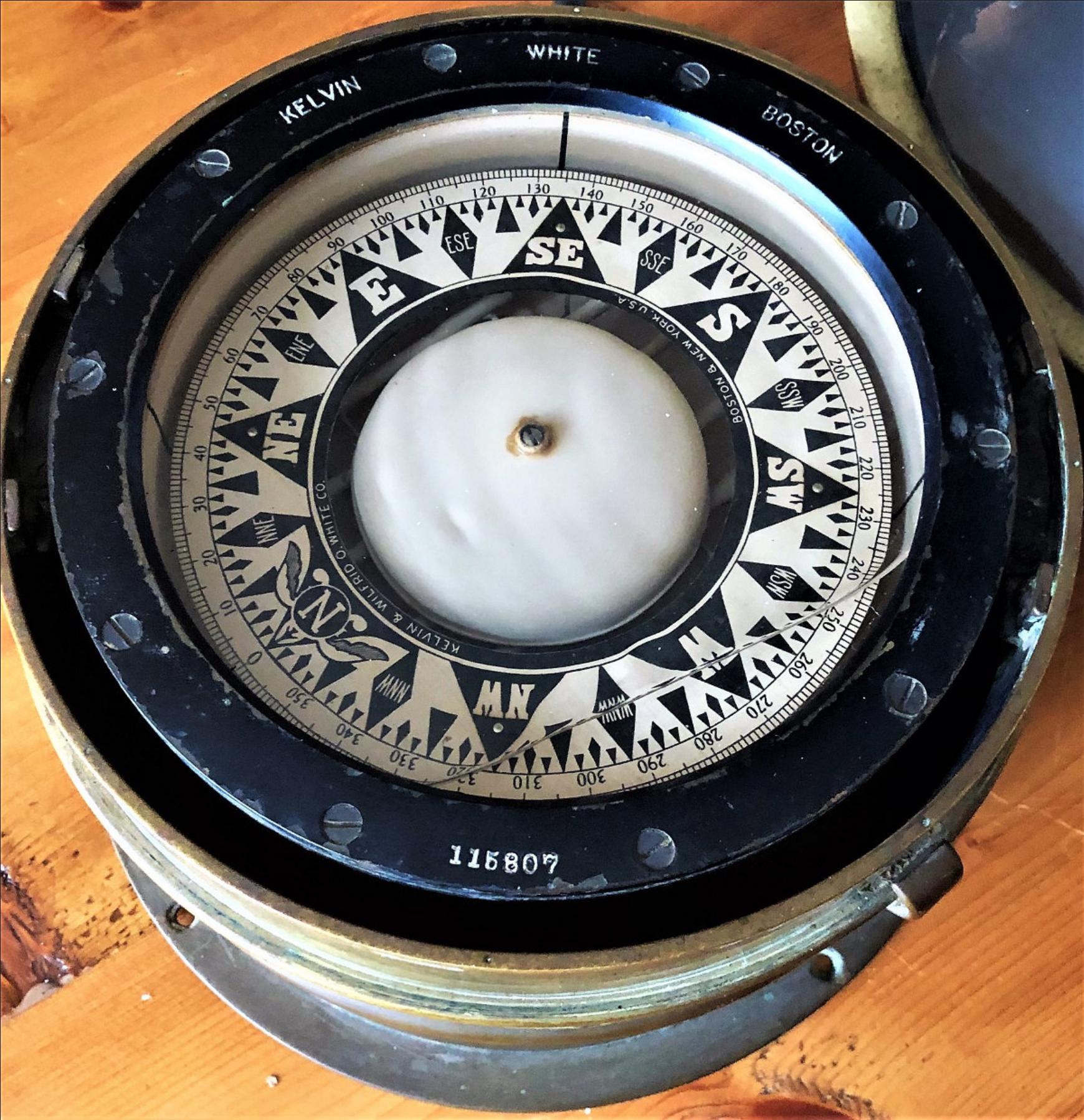
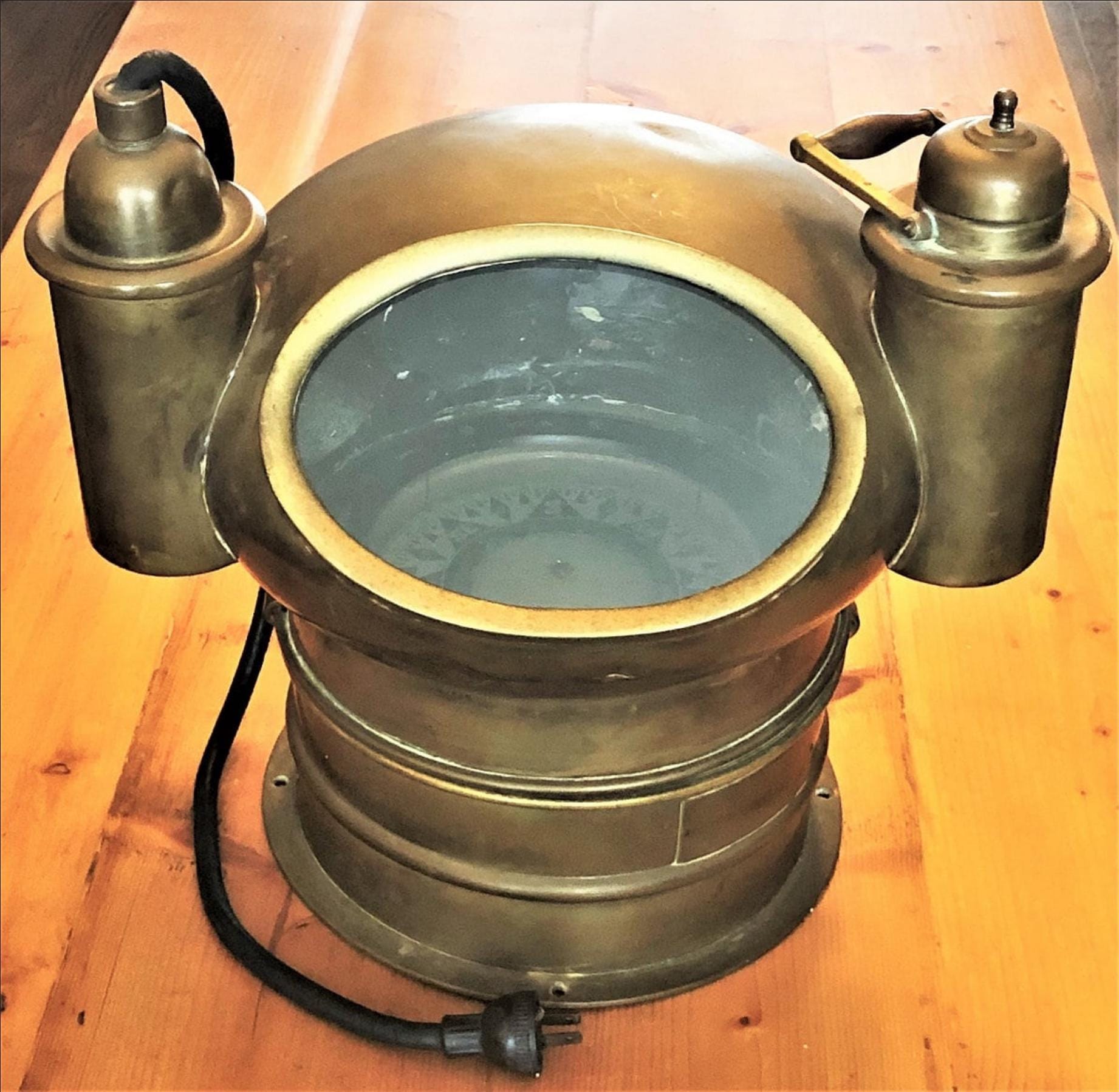
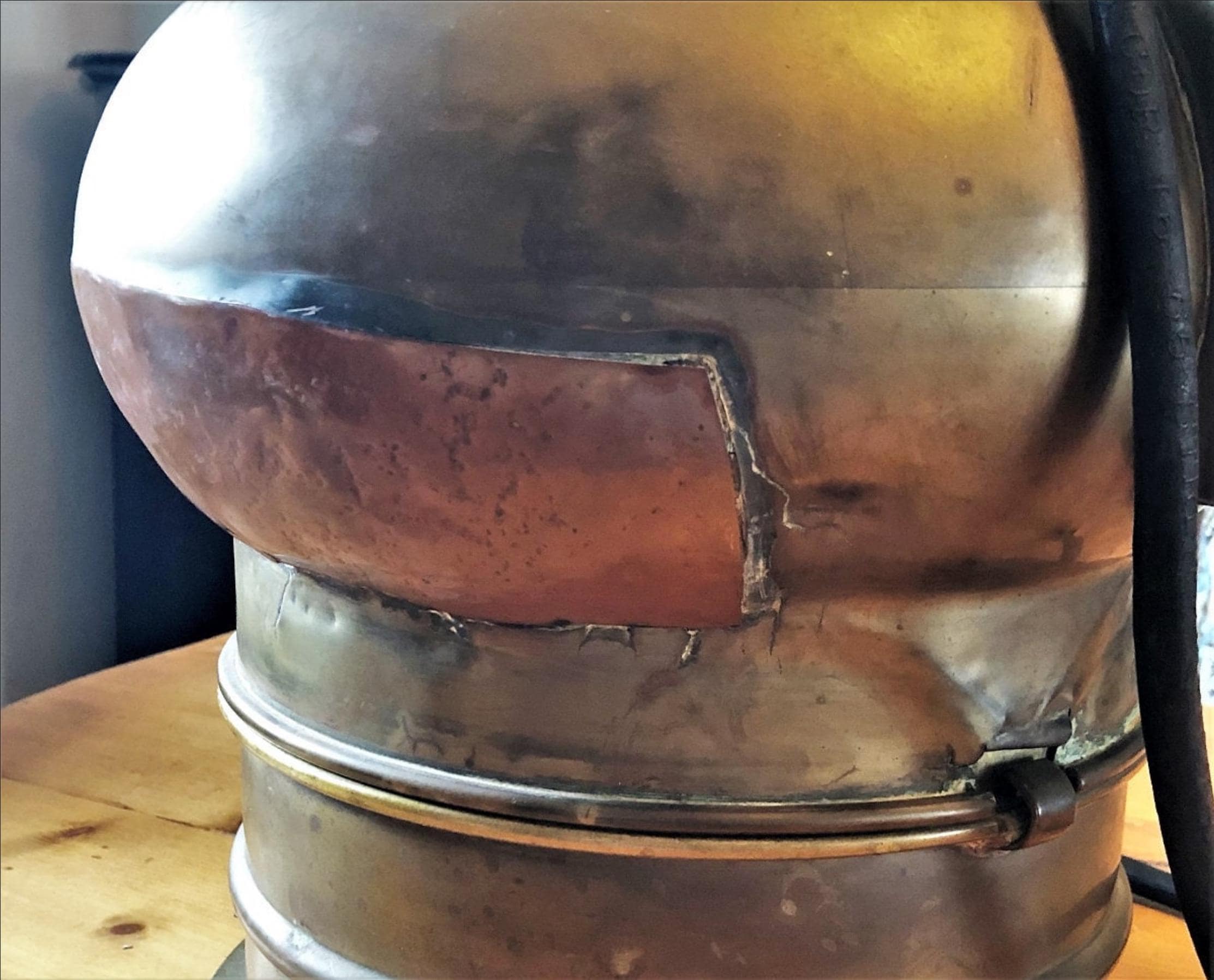
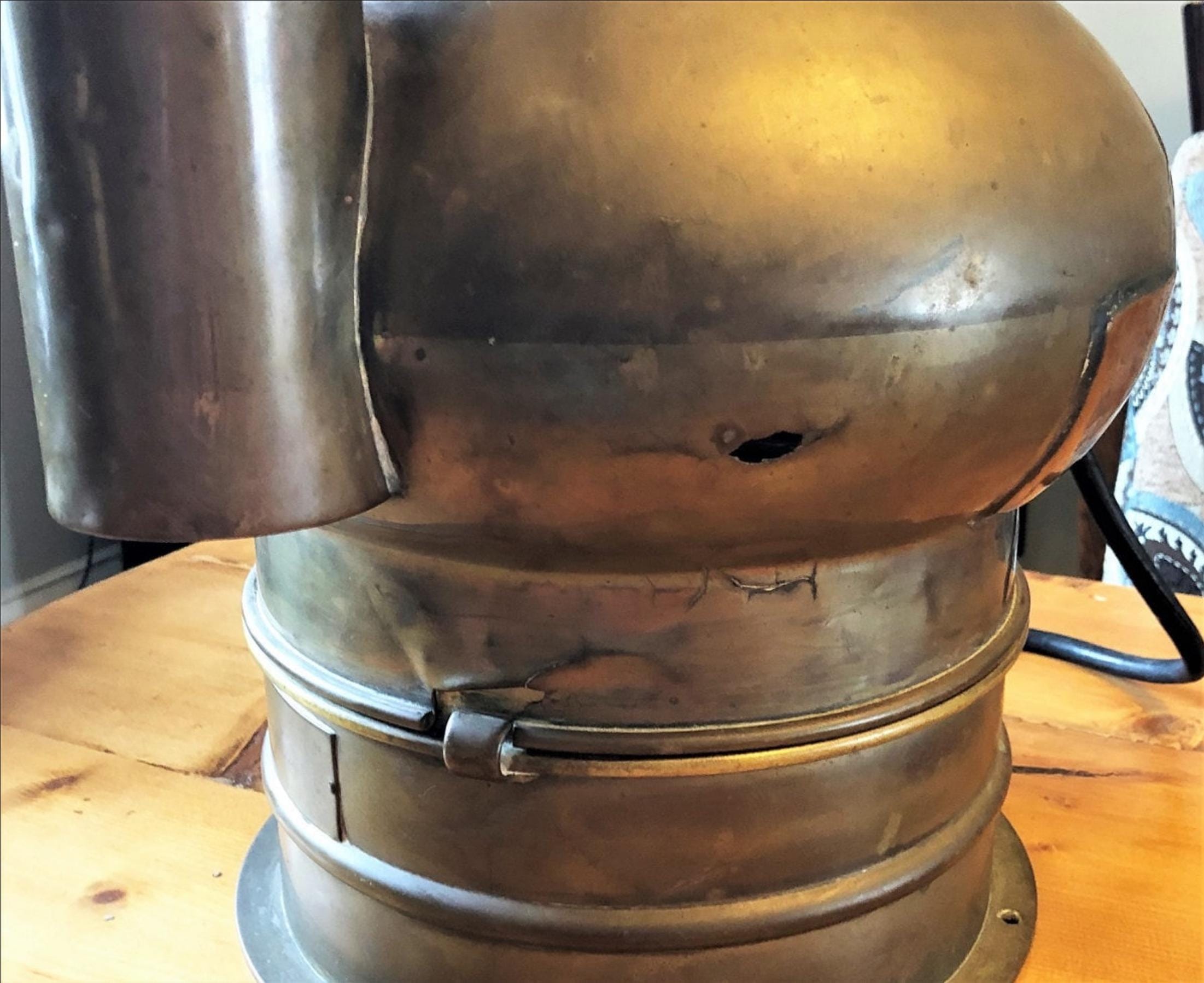
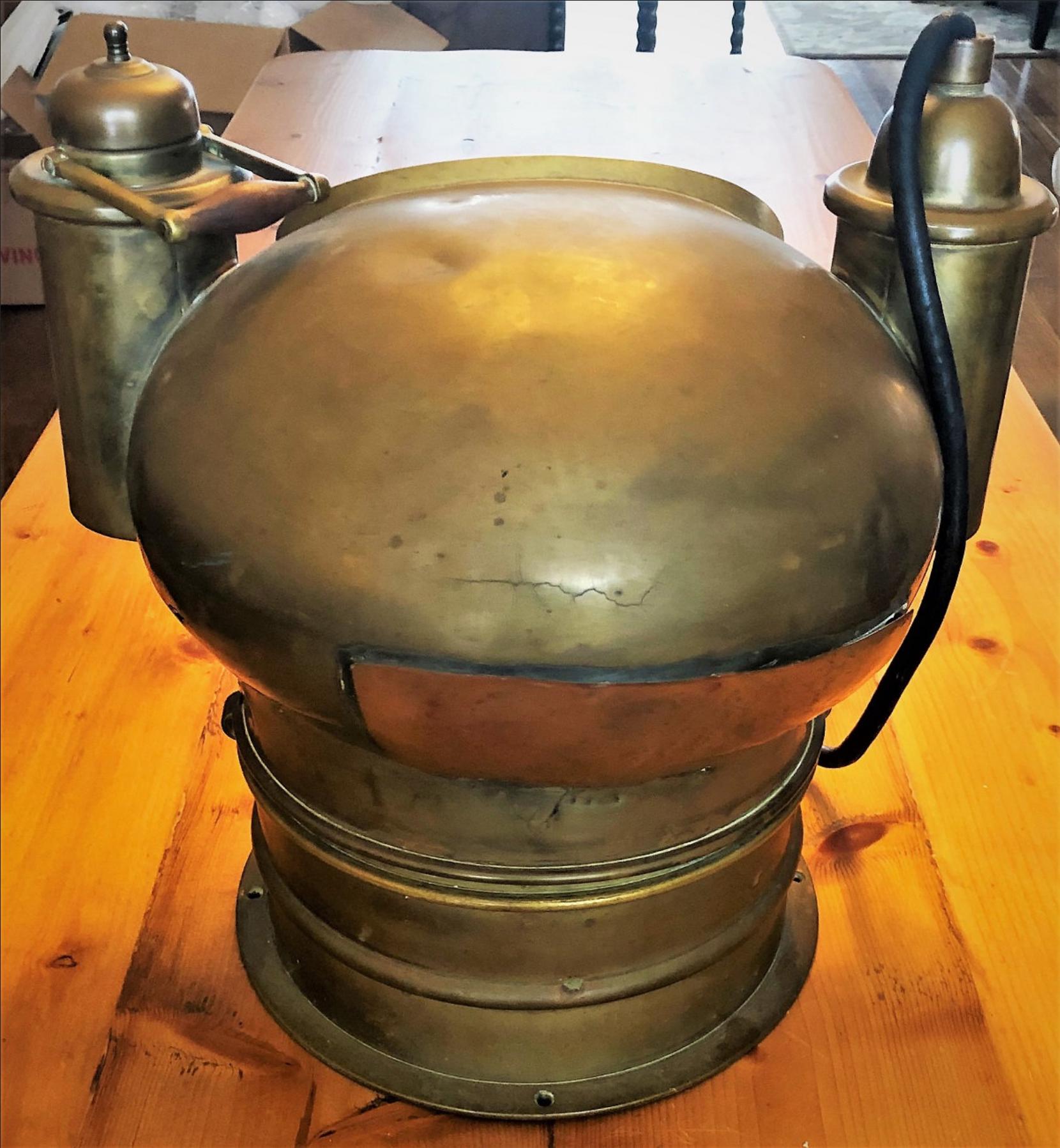
Kelvin & Wilfrid O. White Co.A very rare find indeed...1918 Brass Mushroom Binnacle with fully function wet compass made by Kelvin & Wilfrid O. White Co of Boston & New York. Binnacle measures 16" tall x 16" wide with 9" x 6 1/4" glass viewing pane. Excellent working compass measures 8 1/2" in diameter and its heavy brass casing/base measures 10 1/2".The compass is filled with water and alcohol (to keep it from freezing). Serial number 115807. Hard to find combination of electric and oil lamps were used on this binnacle to light up the compass. The oil lamp is made by Bar BB Tons circa 1870. The electric lamp uses a standard size bulb, and can be easily re-rewired to make it functional. Beautiful, authentic antique.Many photos in the gallery-please look at all-including some defects and vintage repairs on the back of the binnacle (photos 6&7). Please feel free to email us if you have any questions. Perfect gift for collectors of nautical history. We ship fast & safe worldwide everyday.History: Kelvin & Wilfrid O. White CompanyThe Kelvin connection is based upon the professional relationship between William Thomson (later-Lord Kelvin) (1824–1907), Professor of Natural Philosophy at Glasgow University from 1846–1899 and James White (1824–1884), a Glasgow-based Optical Instrument Maker. White's association with Thomson lasted until he died, but without any legal deeds of co-partnership White bore the financial risks of their working partnership.James White founded the firm of James White, Optician and Philosophical Instrument Makers in Glasgow in 1850 and was involved in the supply and maintenance of apparatus for Thomson's university laboratory and worked with him on experimental constructions. By 1854, White was producing electrical instruments such as electrometers and electrical balances from Thomson's designs.William Thomson was appointed a director of the Atlantic Telegraph Company in 1856 and in 1858 was 'electrician' on HMS Agamemnon that laid the first transatlantic telegraph cable. Unfortunately this cable failed soon after it was laid.In 1857, White entered into a short-lived partnership, White & Barr, with John Barr. The partnership lasted until 1860 when it was dissolved and White reverted to his previous company name of James White. White was declared bankrupt in August 1861, and then discharged four months later.In 1866 the Great Eastern laid the first successful transatlantic telegraph cable and Thomson was knighted. During this time White was involved in the production of machinery that Thomson had designed to address problems encountered in laying cables at sea, helping to make possible the first transatlantic cable connection. At the same time, he continued to make a whole range of more conventional instruments such as microscopes, telescopes and surveying equipment.During 1870 White was largely responsible for equipping Sir William's laboratory in the new University premises at Gilmorehill in his capacity as Philosophical Instrument Maker to the University of Glasgow.In 1874 Sir William investigated the Mariner's compass for a magazine article. This initiated his extensive work on compasses and marine instruments. From 1876 White was producing accurate compasses for metal ships to Sir William's design, and this became an important part of his business in the latter years of his life.After White's death in 1884, Sir William continued to maintain his interest in the White business and raised most of the capital needed to construct and equip new workshops in Cambridge Street, Glasgow. At the Cambridge Street premises, the company continued to make the compass Sir William had designed during the 1870s and to supply it in some quantity, especially to the Admiralty. The Admiralty adopted the patent compass as a standard for Royal Navy use in 1889. At the same time, the firm became increasingly involved in the design, production and sale of electrical apparatus. White's business continued under the same name, being administered by Matthew Edwards and David Reid. This continues until 1891 when Matthew Edward left to set up his own company. In 1890 the company sued Alexander Hughes for infringement of compass patents.Sir William was raised to Peerage as Baron Kelvin of Largs in 1892. In 1899, Lord Kelvin resigned from his University chair and, in 1900 became a director in the newly formed private limited liability Company, Kelvin & James White Ltd, which acquired the business of James White. At the same time, Lord Kelvin's nephew, James Thomson Bottomley FRSE (1845–1926), joined the firm. The firm manufacture binnacle compasses and deep sea sounding machines, many of which were installed on the great ships built on Clyde side.Around 1904, a London branch office was opened which by 1915 had taken the name Kelvin, White & Hutton Ltd.From 1918 Wilfred O. White sold Kelvin and White compasses in the USA under the name of Kelvin and Wilfred O. White Co., Boston and New York. Wilfred O. White also sold his own patented compasses under the same name.
Kelvin & Wilfrid O. White Co.A very rare find indeed...1918 Brass Mushroom Binnacle with fully function wet compass made by Kelvin & Wilfrid O. White Co of Boston & New York. Binnacle measures 16" tall x 16" wide with 9" x 6 1/4" glass viewing pane. Excellent working compass measures 8 1/2" in diameter and its heavy brass casing/base measures 10 1/2".The compass is filled with water and alcohol (to keep it from freezing). Serial number 115807. Hard to find combination of electric and oil lamps were used on this binnacle to light up the compass. The oil lamp is made by Bar BB Tons circa 1870. The electric lamp uses a standard size bulb, and can be easily re-rewired to make it functional. Beautiful, authentic antique.Many photos in the gallery-please look at all-including some defects and vintage repairs on the back of the binnacle (photos 6&7). Please feel free to email us if you have any questions. Perfect gift for collectors of nautical history. We ship fast & safe worldwide everyday.History: Kelvin & Wilfrid O. White CompanyThe Kelvin connection is based upon the professional relationship between William Thomson (later-Lord Kelvin) (1824–1907), Professor of Natural Philosophy at Glasgow University from 1846–1899 and James White (1824–1884), a Glasgow-based Optical Instrument Maker. White's association with Thomson lasted until he died, but without any legal deeds of co-partnership White bore the financial risks of their working partnership.James White founded the firm of James White, Optician and Philosophical Instrument Makers in Glasgow in 1850 and was involved in the supply and maintenance of apparatus for Thomson's university laboratory and worked with him on experimental constructions. By 1854, White was producing electrical instruments such as electrometers and electrical balances from Thomson's designs.William Thomson was appointed a director of the Atlantic Telegraph Company in 1856 and in 1858 was 'electrician' on HMS Agamemnon that laid the first transatlantic telegraph cable. Unfortunately this cable failed soon after it was laid.In 1857, White entered into a short-lived partnership, White & Barr, with John Barr. The partnership lasted until 1860 when it was dissolved and White reverted to his previous company name of James White. White was declared bankrupt in August 1861, and then discharged four months later.In 1866 the Great Eastern laid the first successful transatlantic telegraph cable and Thomson was knighted. During this time White was involved in the production of machinery that Thomson had designed to address problems encountered in laying cables at sea, helping to make possible the first transatlantic cable connection. At the same time, he continued to make a whole range of more conventional instruments such as microscopes, telescopes and surveying equipment.During 1870 White was largely responsible for equipping Sir William's laboratory in the new University premises at Gilmorehill in his capacity as Philosophical Instrument Maker to the University of Glasgow.In 1874 Sir William investigated the Mariner's compass for a magazine article. This initiated his extensive work on compasses and marine instruments. From 1876 White was producing accurate compasses for metal ships to Sir William's design, and this became an important part of his business in the latter years of his life.After White's death in 1884, Sir William continued to maintain his interest in the White business and raised most of the capital needed to construct and equip new workshops in Cambridge Street, Glasgow. At the Cambridge Street premises, the company continued to make the compass Sir William had designed during the 1870s and to supply it in some quantity, especially to the Admiralty. The Admiralty adopted the patent compass as a standard for Royal Navy use in 1889. At the same time, the firm became increasingly involved in the design, production and sale of electrical apparatus. White's business continued under the same name, being administered by Matthew Edwards and David Reid. This continues until 1891 when Matthew Edward left to set up his own company. In 1890 the company sued Alexander Hughes for infringement of compass patents.Sir William was raised to Peerage as Baron Kelvin of Largs in 1892. In 1899, Lord Kelvin resigned from his University chair and, in 1900 became a director in the newly formed private limited liability Company, Kelvin & James White Ltd, which acquired the business of James White. At the same time, Lord Kelvin's nephew, James Thomson Bottomley FRSE (1845–1926), joined the firm. The firm manufacture binnacle compasses and deep sea sounding machines, many of which were installed on the great ships built on Clyde side.Around 1904, a London branch office was opened which by 1915 had taken the name Kelvin, White & Hutton Ltd.From 1918 Wilfred O. White sold Kelvin and White compasses in the USA under the name of Kelvin and Wilfred O. White Co., Boston and New York. Wilfred O. White also sold his own patented compasses under the same name.